

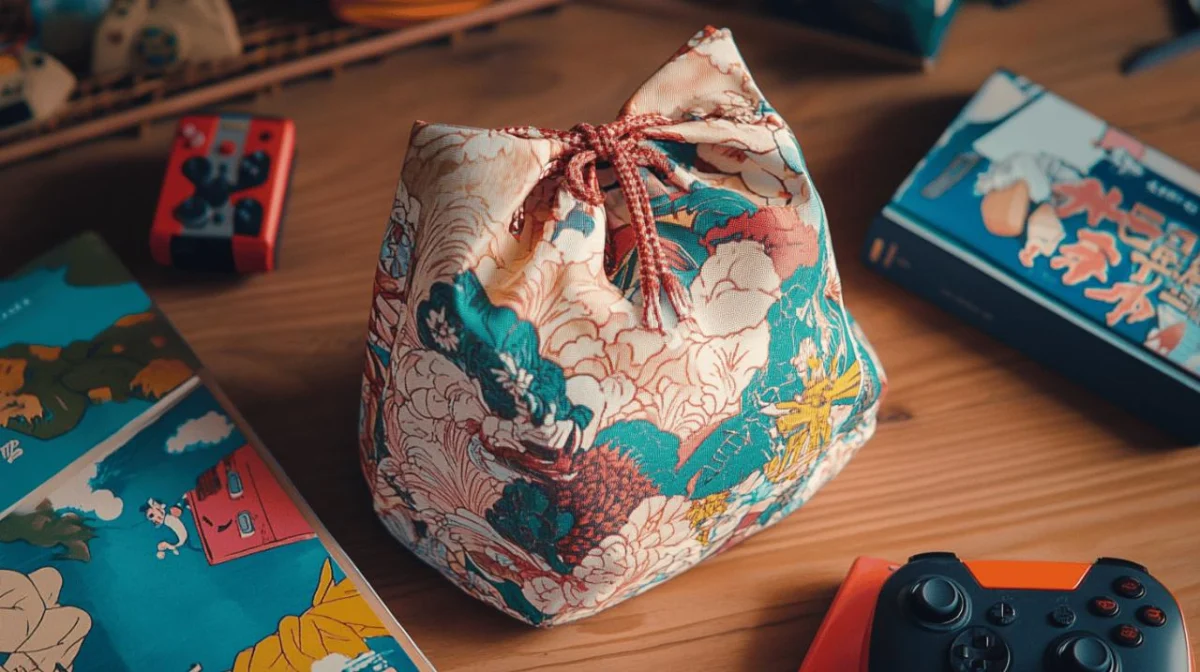
The Japanese tea ceremony (chanoyu or sadō) is far more than a simple act of preparing a beverage; it is a profound philosophical discipline. At the heart of this ritual lies a delicate balance of aesthetics, mindfulness, and precise movement. Central to the practitioner’s experience—often overlooked by the casual observer but vital to the master—is the tea ceremony bag. These meticulously crafted vessels are not merely containers; they are essential instruments that ensure the safety, purity, and spiritual integrity of the tools required for the matcha ritual.
Main Facts: The Essence of the Ceremony Bag
The tea ceremony bag is a functional masterpiece designed to protect the delicate accoutrements of the chanoyu. In a tradition governed by the four pillars of wa, kei, sei, and jaku (harmony, respect, purity, and tranquility), the bag serves as the bridge between the practitioner and their tools.
These bags are constructed from premium textiles, often sourced from regions like Uji—the historical cradle of Japanese matcha production. They are engineered to house specific items, including the chawan (tea bowl), chasen (bamboo whisk), and chashaku (tea scoop). Far from being mass-produced, these bags are often the result of generational artisan knowledge, representing a confluence of textile art and ritualistic necessity.
A Chronological Evolution: From Kamakura to Contemporary Practice
The history of the tea ceremony bag is inextricably linked to the development of Zen Buddhism in Japan.
The Kamakura Period (1192–1333): The Genesis of Ritual
The practice of drinking powdered green tea (matcha) was introduced to Japan by Zen monks returning from China. During the Kamakura period, the need to transport fragile tea bowls and bamboo tools became paramount for monks traveling between monasteries. The early ancestors of the modern tea bag were utilitarian, yet they established the fundamental principle that the tea tools were sacred and required protection from the elements and the rigors of travel.
The Muromachi and Momoyama Periods: The Rise of Aesthetic Refinement
As the tea ceremony evolved from a monastic ritual into a sophisticated cultural practice for the samurai and merchant classes, the storage vessels evolved accordingly. During these eras, the tea bag became a canvas for status and artistic expression. Intricate brocades and silk linings were introduced, reflecting the status of the owner and the solemnity of the occasion.
The Modern Era: Preserving Tradition in a Globalized World
Today, the production of these bags remains anchored in traditional craft centers. While modern materials have been integrated for durability, the fundamental design remains faithful to the Muromachi aesthetic. Organizations and artisans in regions like Uji continue to standardize these designs, ensuring that even as the practice reaches a global audience, the integrity of the ritual is maintained.
Supporting Data: The Anatomy of a Perfect Bag
To understand the complexity of these accessories, one must look at the specifications demanded by the iemoto (grand masters) of the tea schools.
Material Selection and Ethical Sourcing
Artisans favor natural fibers such as silk, linen, and high-density cotton. Increasingly, there is a movement toward fair-trade, organic textiles that mirror the purity of the matcha itself. The durability of these materials is not merely for longevity; it is to prevent synthetic fibers from shedding or contaminating the tea environment, adhering to the principle of sei (purity).
Dimensional Precision
A professional-grade ceremony bag typically follows standardized measurements to ensure the safety of the ceramic chawan:
- Height: 25 to 30 centimeters, providing a vertical buffer to prevent crushing.
- Width: Approximately 20 centimeters, allowing for the stable storage of the chasen and chashaku without crowding.
- Interior Architecture: Modern, high-end bags feature segmented compartments lined with soft, non-abrasive fabrics to prevent the porcelain from clicking against the bamboo tools.
Official Perspectives: The Philosophy of the Iemoto
According to practitioners of the Urasenke and Omotesenke schools, the bag is an extension of the host’s kokoro (heart/mind). "The way one stores their tools reflects the way one approaches the guest," notes a senior instructor of the Uji tea traditions. "If the vessel for the tools is handled with carelessness, the spirit of the tea is compromised before the water is even boiled."
The official stance of traditional guilds is that the bag serves a twofold purpose:
- Protective: Shielding the porous ceramics and delicate bamboo from humidity, temperature fluctuations, and physical impact.
- Psychological: The act of unpacking the bag is a meditative sequence that signals to both host and guest that the mundane world is being left behind in favor of the sacred space of the tea room.
Implications: Why the Choice Matters
The selection of a tea bag is a significant decision for any practitioner, carrying implications for both the longevity of their tools and the authenticity of their practice.
The Impact on Tool Longevity
Using a bag with improper padding or synthetic, non-breathable lining can accelerate the degradation of bamboo tools. A chasen (whisk) is highly sensitive to moisture; if stored in a non-breathable container, it risks developing mold. Conversely, a well-ventilated, high-quality bag ensures the longevity of these items, some of which are considered family heirlooms.
Cultural and Spiritual Alignment
Choosing an authentic, artisan-made bag acts as a support for the preservation of Japanese heritage. When a student purchases a bag crafted in a region like Uji, they are participating in a circular economy that keeps traditional weaving and sewing techniques alive. It represents an investment in wa (harmony), as the practitioner aligns their personal habits with the historical flow of the tradition.
The Future of the Craft
As the tea ceremony gains popularity in Western wellness circles, there is an influx of "tea-themed" bags that lack the necessary structural integrity for true ceremony tools. Experts emphasize that for those serious about the practice, discernment is required. A truly functional bag must prioritize:
- Structural integrity: Rigid enough to protect, flexible enough to handle.
- Natural composition: To maintain the environment inside the bag.
- Cultural authenticity: Reflecting the motifs (floral or geometric) that have historically signified the connection between the tea and the natural world.
Conclusion: A Vessel for Tranquility
The Japanese tea ceremony bag is a silent participant in one of the world’s most enduring rituals. Through its meticulous design, historical lineage, and the quiet values it upholds, it serves as more than a simple carrier. It is an essential component of the tea path—a reminder that in the world of chanoyu, every detail, from the largest tea room to the smallest stitch in a storage bag, is an opportunity to practice mindfulness and show respect. By choosing these accessories with care, the modern practitioner continues a legacy that stretches back nearly a millennium, ensuring that the spirit of the tea remains protected, pure, and profoundly tranquil.












No comments yet. Be the first to join the conversation!