Laily UPN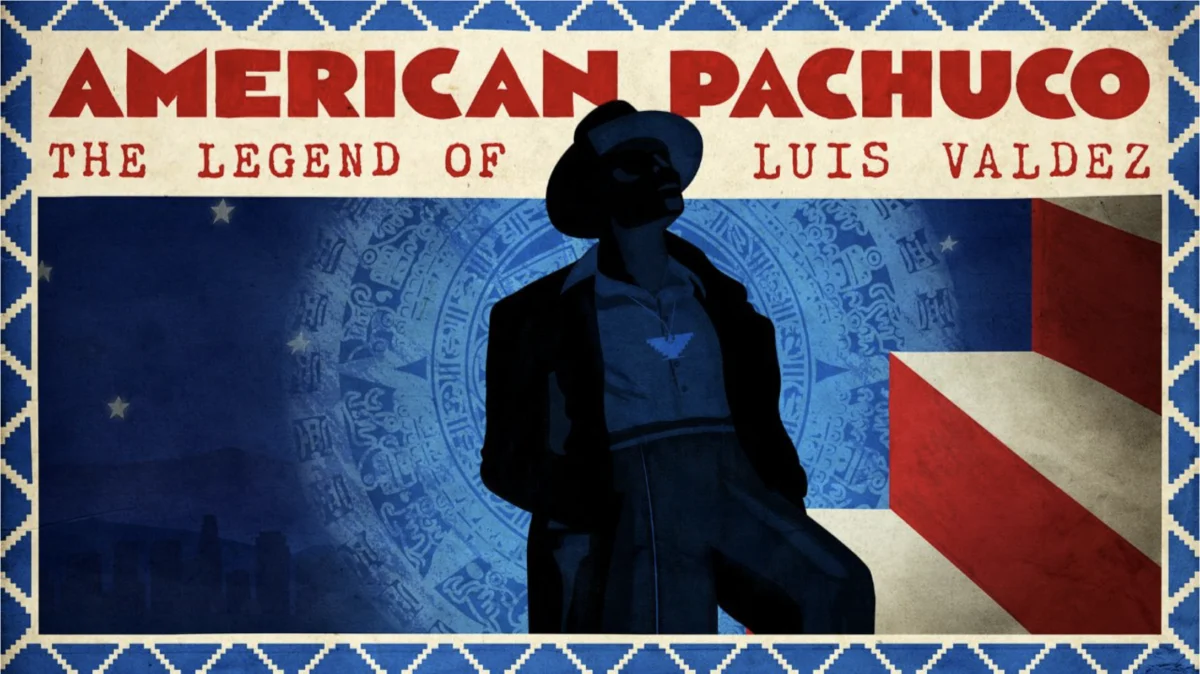
The cultural landscape of the United States is often defined by the stories we choose to tell and, more importantly, by the voices we choose to amplify. For over six decades, playwright, director, and filmmaker Luis Valdez has been the driving force behind a profound shift in American theater and cinema, placing the Mexican American experience firmly at the center of the national narrative. Now, his storied life and career are being honored in the acclaimed documentary American Pachuco: The Legend of Luis Valdez, which is set to begin its nationwide theatrical rollout on July 17 at the Film Forum in New York City.
Directed by David Alvarado, the documentary is more than a biographical sketch; it is a sweeping examination of how one artist’s vision transformed the American cultural consciousness. Having already secured top honors—including the Festival Favorite Award and the Audience Award for U.S. Documentary at the Sundance Film Festival—the film is poised to reach audiences across more than 20 cities, cementing Valdez’s status as a foundational figure in the arts.
A Legacy of Firsts: The Chronology of a Visionary
To understand the weight of American Pachuco, one must first understand the trajectory of Luis Valdez. Born in 1940 in Delano, California, Valdez was a child of the fields, raised in a family of migrant farmworkers. This early exposure to the harsh realities of labor exploitation and the resilience of the human spirit would become the bedrock of his creative output.
Valdez’s journey from the fields to the pinnacle of American entertainment is a masterclass in perseverance. By the time he was a student at San Jose State University, he was already producing his own work. However, his most significant early contribution came in the mid-1960s when he joined forces with César Chávez and the United Farm Workers (UFW). It was there that he created El Teatro Campesino (The Farmworkers’ Theater). By staging plays on the backs of flatbed trucks in the fields where workers toiled, Valdez brought art directly to the people, effectively birthed the Chicano theater movement, and utilized performance as a potent tool for social change.
The 1970s and 80s saw Valdez break through barriers that had long excluded artists of Mexican descent. In 1979, he achieved a historic milestone when his play Zoot Suit was mounted on Broadway—the first time a Chicano director had reached such heights on the Great White Way. The play, which explored the 1943 Zoot Suit Riots in Los Angeles, became an instant classic, later adapted into a feature film that served as a career-defining moment for actors like Edward James Olmos and Tyne Daly.
The momentum continued in 1987 with the release of La Bamba, a biopic of rock-and-roll legend Ritchie Valens. The film, written and directed by Valdez, was not merely a commercial success; it was a cultural phenomenon that proved, once and for all, that the Mexican American story was a global story. By bringing the life of a young Latino musician to the mainstream, Valdez ensured that the next generation of storytellers would have a template for success.
The Production: A Deep Dive into the Documentary
The documentary American Pachuco is a collaborative effort of immense scale, co-produced by Insignia Films, ITVS, Latino Public Broadcasting, and Firelight Media in association with American Masters, PBS, and Ford Foundation Just Films. This institutional backing highlights the significance of the subject matter, treating Valdez’s life with the historical rigor usually reserved for national icons.
Director David Alvarado, known for his work on Bill Nye: Science Guy and The Immortalists, brings a nuanced, investigative eye to the project. The film is as much an oral history as it is a visual biography, featuring testimonials from heavyweights who were touched by Valdez’s influence, including Dolores Huerta, Cheech Marin, Lou Diamond Phillips, Taylor Hackford, and Linda Ronstadt.

Perhaps most notably, the film is narrated by Edward James Olmos, reprising his iconic character "El Pachuco" from Zoot Suit. This narrative device acts as a bridge between the historical subject and the mythic figure of the Pachuco, providing a voice that is both authoritative and deeply embedded in the history of the movement.
Official Responses and Creative Intent
For David Alvarado, the creation of this documentary was a decades-long pursuit of closure and tribute. "I was 21 when I heard Luis Valdez speak, and it rearranged what I thought was possible for my life," Alvarado noted in an official statement. "Twenty years later, putting his story on the big screen is the best way I know to pay that forward."
Alvarado emphasizes that the film’s theatrical distribution strategy was as important as the content itself. By securing bookings in cities like Salinas, Fresno, and Bakersfield—towns where Valdez performed his early work on flatbed trucks—the filmmakers are honoring the geography of the Chicano experience.
"Luis has spent 60 years proving that Chicanos aren’t on the margins of the American story," Alvarado added. "We are the American story. This film is about who gets to be American, and a movie theater is one of the last rooms in this country where strangers still sit together and experience something new and something wonderful."
The film has already been recognized by the highest tiers of the archival and intellectual community, having won the prestigious Library of Congress Lavine/Ken Burns Prize for Film earlier this year. This award serves as a formal recognition of the documentary’s contribution to American historical preservation.
The Cultural and Social Implications
The release of American Pachuco comes at a critical time in the American cultural conversation. As debates regarding representation, immigration, and the nature of "American identity" continue to dominate the headlines, the film serves as a timely reminder of the historical foundations of these discussions.
Redefining the "Mainstream"
Valdez did not wait for Hollywood to invite him in; he built his own infrastructure. By centering the Mexican American experience, he expanded the definition of what constitutes an "American classic." American Pachuco documents this process, showing that the "marginalized" experience, when told with authenticity and craft, is actually universal.
The Role of Public Media
The involvement of entities like ITVS, PBS, and the National Endowment for the Humanities underscores the importance of public funding in the arts. Without this support, the life of a seminal figure like Valdez might have been relegated to academic footnotes rather than celebrated in theaters across the nation. The film serves as a testament to the fact that public media remains the most effective vehicle for preserving the stories that define our collective identity.

A Call for Future Generations
The film is expected to serve as an educational touchstone. By chronicling the transition from the farmworker movement to the bright lights of Broadway and Hollywood, the documentary provides a roadmap for young artists. It demonstrates that political activism and artistic excellence are not mutually exclusive; rather, they are the two pillars upon which great, enduring art is built.
Exhibition Details: Where to Catch the Film
Following its New York premiere on July 17, American Pachuco: The Legend of Luis Valdez will begin an aggressive expansion. On the week of July 24, the film will hit major Los Angeles venues, including Laemmle, AMC, Maya Cinemas, and Alamo Drafthouse.
On July 31, the focus shifts to Northern California, with screenings scheduled at the Roxie Theater in San Francisco, the Smith Rafael in San Rafael, the Rialto Elmwood Theater in Berkeley, and various Alamo Drafthouse locations in the South Bay and San Jose area.
The theatrical release, managed by mTuckman media, reflects a concerted effort to reach diverse demographics, with additional screenings set for Dallas, Austin, Houston, Chicago, Tucson, and a wide array of California cities including San Diego, Santa Barbara, and Salinas.
Conclusion: The Story Continues
American Pachuco: The Legend of Luis Valdez is not just a film about a man who changed theater; it is a film about the power of the stage to mirror society back to itself. As the trailer suggests, the documentary captures the fire, the wit, and the revolutionary spirit of a man who refused to be told his story didn’t belong in the canon.
As audiences prepare to fill theaters from New York to California, the message is clear: Luis Valdez is no longer just a legend of Chicano theater. He is an essential architect of the modern American cultural experience. Whether you are a lifelong fan of Zoot Suit or someone encountering the name for the first time, this documentary offers a rare, essential look at how one person can, quite literally, rewrite the script of a nation.

 Nana Wu
 Jia Lissa