
In the surreal and mechanically dense world of D-topia, developed by Marumittu Games and published by Annapurna Interactive, the daily grind is far more than just a narrative backdrop. As players navigate the whimsical yet challenging environment of this puzzle-adventure title, they quickly realize that their primary source of income—essential for acquiring home decor, essential items, and food—is tied directly to their proficiency in daily work puzzles.

Efficiently solving these enigmas is the key to financial stability within the game. Performance is measured by speed and accuracy; the faster you resolve a puzzle, the higher your payout. To assist players in maximizing their daily earnings, we have compiled a comprehensive, day-by-day breakdown of the required solutions.

The Economics of Efficiency: Understanding D-topia’s Work Mechanics
Before diving into the solutions, it is vital to understand the stakes. In D-topia, work is a mandatory daily routine. Upon completing the required puzzles, players are granted the opportunity to take on "extra challenges." While these are technically optional, they are the primary method for high-stakes earning.

The puzzles generally fall into four distinct categories: Block Manipulation, Pathfinding/Maze logic, Arithmetic Sequencing, and Grid-based Logic (Minesweeper-style). Each requires a different mental approach, and as the game progresses from Day 1 to Day 6, these mechanics frequently overlap, introducing obstacles that must be cleared or bypassed.
Day 1: The Foundations of Block Manipulation
The first day serves as an introductory period, teaching the player the fundamentals of block movement. On PC, these are controlled via a click-and-drag mechanic.
1-1 to 1-2
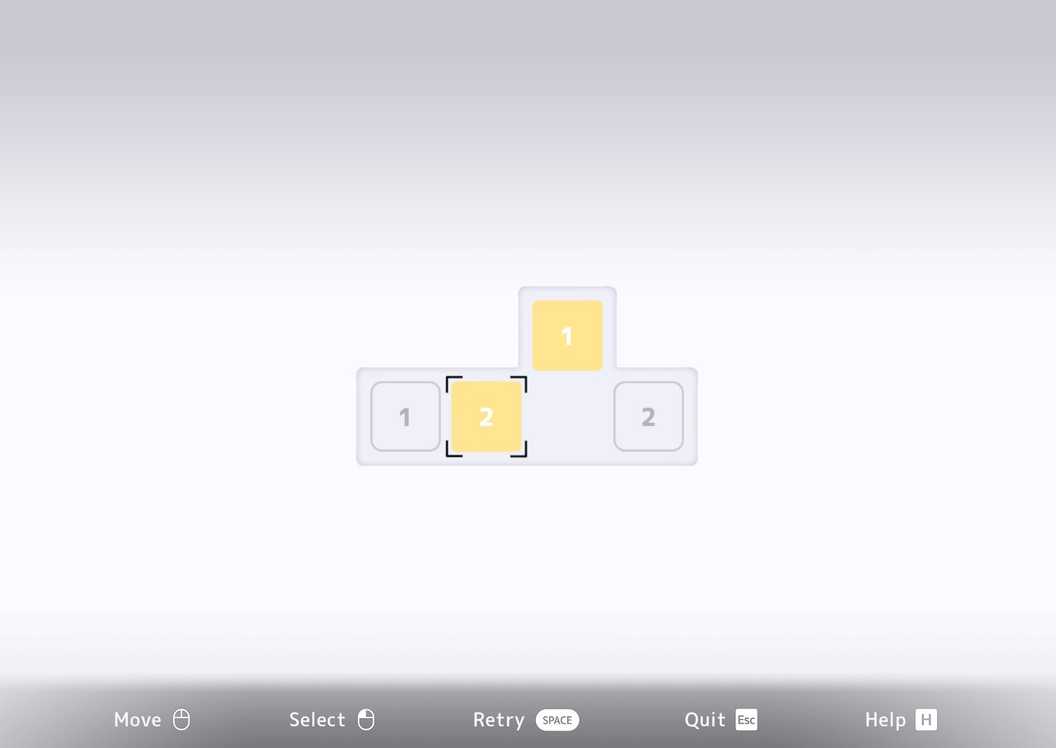
- 1-1: A simple tutorial. Drag the yellow block right until it snaps into the corresponding indentation.
- 1-2: Two blocks are present. Move the block labeled "2" out of the way first to clear a path for "1."
2-1 to 2-2
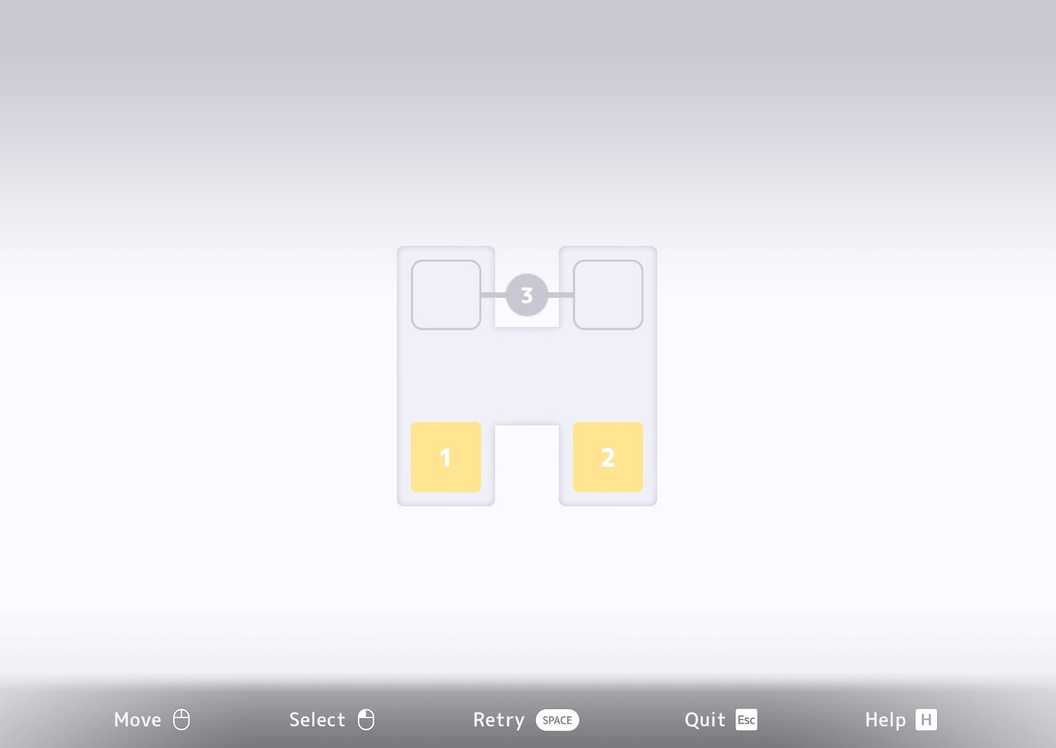
- 2-1: This introduces arithmetic. The goal is to reach a sum shown in the center. Move "1" and "2" upward to satisfy the requirement of "3."
- 2-2: Players must achieve a "5" on the right and a "3" on the left. Move the "3" to the right and the upper "2" to the right and up. Place the remaining "1" and "2" in the left slots.
3-1 to 3-2
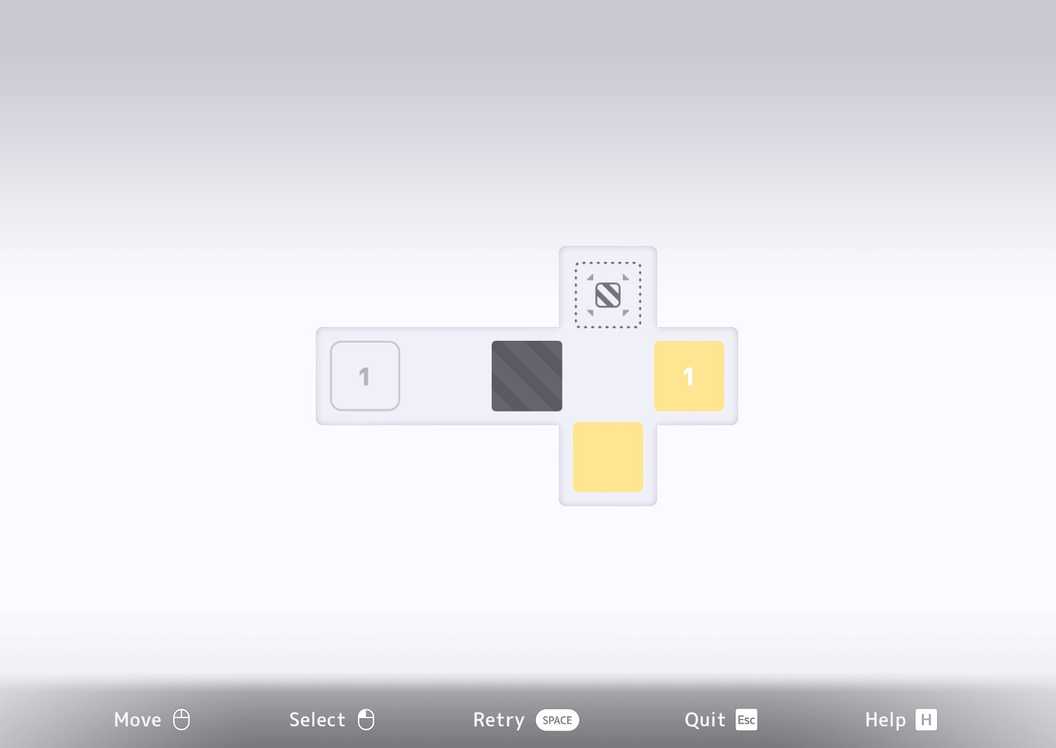
- 3-1: Obstacles are introduced. Move the non-numbered yellow block to the top indentation to clear the path. Move "1" to the left once the obstacle is gone.
- 3-2: A more complex cycle. Use "1" to clear the obstacle, then move "2" to the lower-right. Repeat the process to cycle the obstacle until both are in place.
4-1 to 5-4
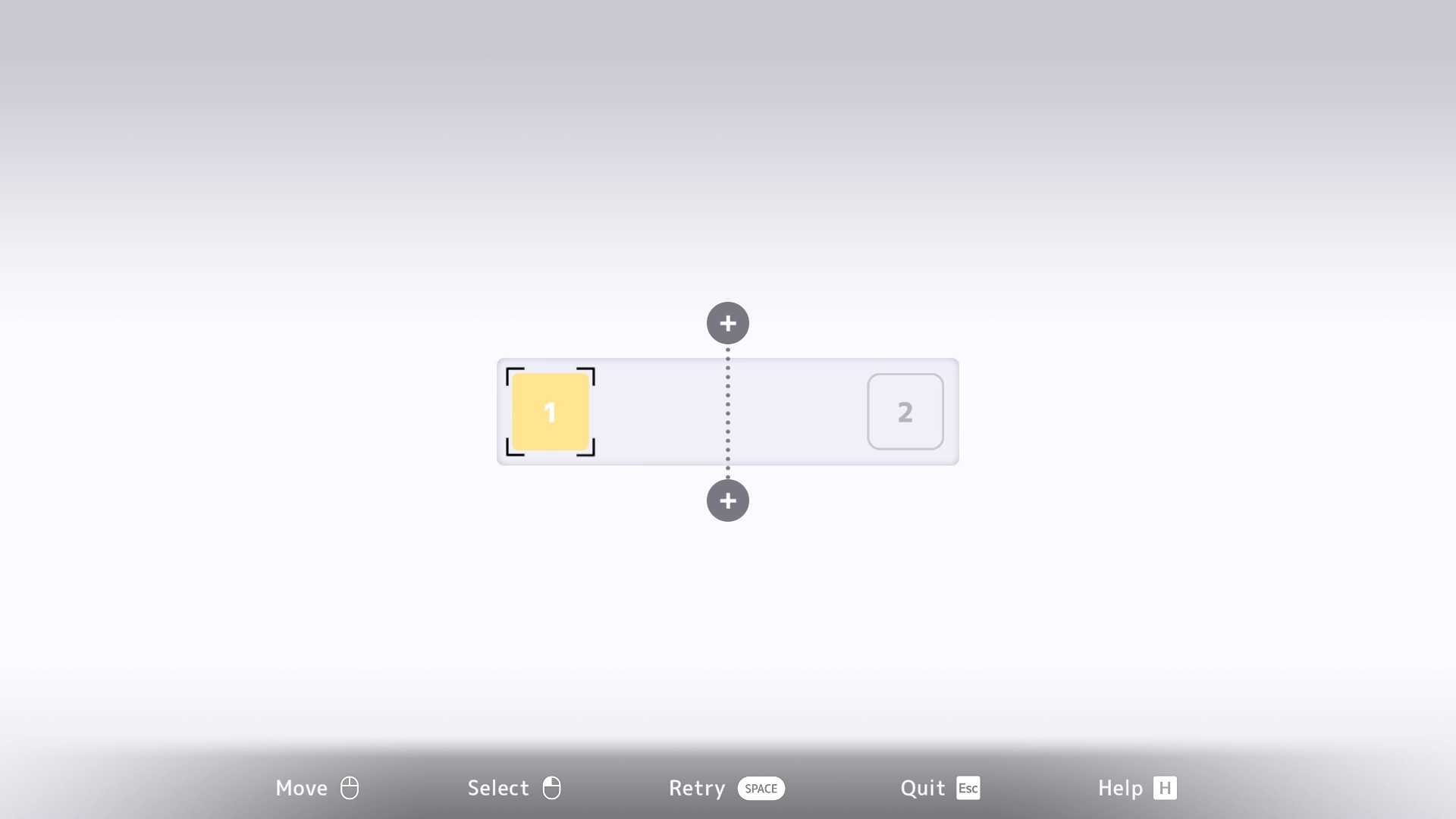
These levels introduce "Dotted Addition Lines." Moving a block through these lines increases its value. For 4-1, drag "1" through the line to turn it into a "2." For later levels like 5-4, prioritize moving the "3" to the obstacle-removal tile immediately to prevent getting trapped.
Day 2: Navigating the Labyrinth
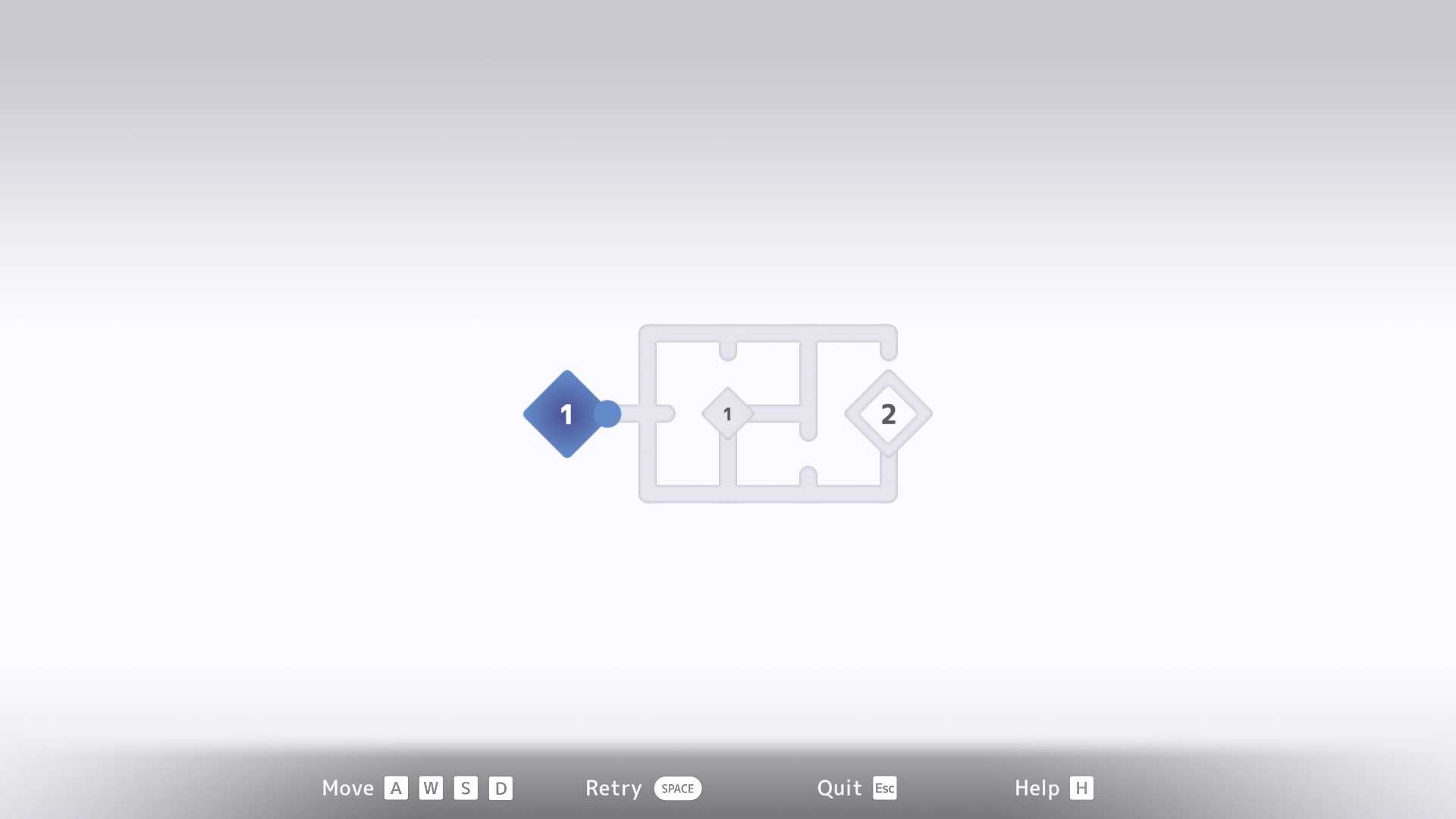
Day 2 shifts focus toward line-drawing and maze navigation. The key here is predicting the path before the line is drawn.
1-1 to 2-2
- 1-1: A straight line to the right.
- 2-1: Players must hit a sub-objective "1" before reaching the goal. Move up first to hit the objective, then proceed to the exit.
- 2-2: The order matters. Clear the rightmost "1" first, then traverse left, keeping the bottom-most path open for the final goal.
3-1 to 4-2 (Multiplication and Mirrors)
- 3-1: The "X2" node requires specific timing. Turn down early to activate the multiplier before hitting the end goal.
- 4-1: Mirrors create a second line. Move right, down, then right/up once you exit the mirror zone.
Day 3: The Arithmetic of Movement
Day 3 combines pathfinding with summation, where every step taken adds to your total.

1-1 to 3-2
- 1-1: A straight shot to the right.
- 2-1: Introduce the multiplication tile. Zigzag your movement to maximize the tiles touched before hitting the goal.
- 3-1: Warp tiles are introduced. Move right into the warp; the character will emerge in a new area. Move left to hit the "6" goal.
4-1 to 5-4
These levels feature movable obstacles. In 4-2, you must push the obstacle right, then down, then right again from a new angle to fully clear the board for your pathing.

Day 4: Logic Grids (The Minesweeper Protocol)
Day 4 requires analytical thinking similar to Minesweeper. You must interpret the numbers in the orange tiles to deduce which blank spaces contain the necessary triggers.

- 1-1: Click all four tiles adjacent to the orange "4."
- 2-2: Click the topmost tile, the two tiles down-right of the "2"s, and the far-left tile.
- 3-1: Note that numbered tiles can be moved. Keep them in their original positions for these specific solutions; click the blank tile to the top right.
Day 6: The Final Assessment
The final day synthesizes all previous mechanics. These are high-difficulty puzzles designed to test your retention of the rules introduced throughout the week.

4-1 to 5-4: Advanced Logic
- 4-1: This requires a precise selection of blank tiles: top-left, bottom-left, top-right, and the tile directly above the orange cluster.
- 5-2: The mirror maze is back. The solution involves moving right, then up once the mirror image hits the first "1." Then, zig-zag left/up/right, ensuring the mirror image catches the final "1" on its own path.
Official Responses and Developer Context
Marumittu Games has noted that the difficulty spike on Day 6 was intentional. In a recent press release, the lead designer stated, "We wanted the player to feel the growth of their own problem-solving skills. The transition from simple block pushing to complex multi-step logic on Day 6 is meant to simulate the ‘real-world’ pressure of a professional environment in D-topia."

Annapurna Interactive has also provided support resources for players struggling with the final day, noting that while the game encourages quick play, there is no "game over" for failing a work puzzle—only a reduction in potential earnings.
Implications of Performance
Why bother with the "extra" puzzles? The financial implications are significant. Players who complete all extra challenges with maximum efficiency can purchase the "High-End Home Bundle" within the first week of gameplay. This unlocks secret dialogue paths and additional lore regarding the history of the D-topia workplace.

Pro-Tips for Maximizing Income:
- Save Scumming: As the game allows, save your progress before starting the work day. If you make a mistake, reloading is faster than waiting for the next day.
- Pattern Recognition: Many Day 6 puzzles are remixes of Day 1–3 logic. If you are stuck, look for the "base" puzzle mechanic (warp, mirror, or sum).
- Speed over Perfection: If you are early in the game, focus on completing the required puzzles first. The "extra" challenges are only worth the stress if you have already mastered the basic requirements.
By following this guide, players can ensure that their tenure in D-topia is as lucrative as it is enjoyable, turning a tedious daily chore into a rewarding display of mastery. Happy puzzle-solving!