

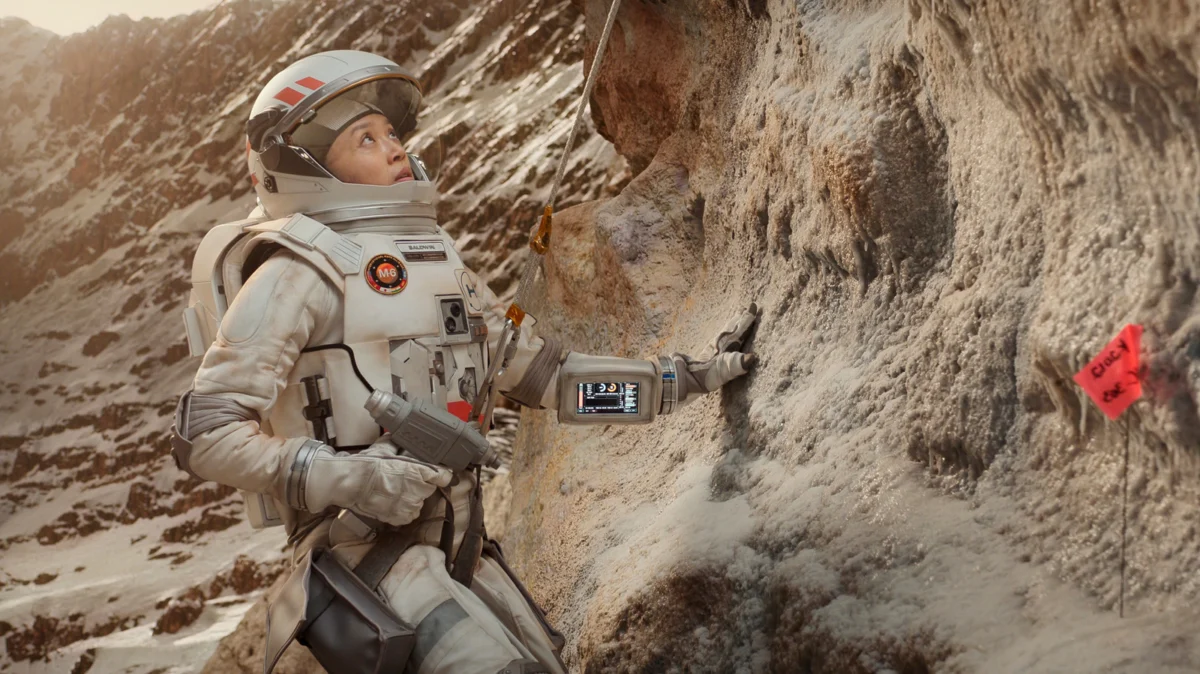
Warning: This article contains major spoilers for "For All Mankind" Season 5, Episode 6, "The Sirens of Titan."
The Apple TV+ alternate-history epic For All Mankind has spent five seasons painting a portrait of humanity that is simultaneously aspirational and deeply flawed. In this timeline, the Space Race never truly ended, leading to a world where technological innovation moved at a breakneck pace, climate change was mitigated by fusion energy, and the human reach extended from the Moon to Mars, and now, to the moons of Jupiter.
However, as the series approaches its announced conclusion with its sixth and final season, the narrative has shifted gears. The latest episode, "The Sirens of Titan," serves as a stark reminder that while humanity’s ambition may be boundless, the vacuum of space remains an unforgiving, lethal adversary. By thrusting its characters into the gravity well of the solar system’s largest planet, the show has reclaimed the visceral, terrifying spirit that defined its early, breakout seasons.
The Chronology of Chaos: Reaching for the Giants
For seasons, the narrative tension in For All Mankind has been fueled by the "firsts"—the first moon landing, the first permanent base, and the first boots on Martian soil. Each milestone brought with it a sense of triumph, but also a mounting sense of dread. The journey to Jupiter, depicted in the most recent episode, represents the pinnacle of this escalation.
The episode centers on the high-stakes "race to the rock," a dual-mission effort involving the American Sojourner-T and the Soviet-backed Kosmos-1. The goal: to establish a foothold on Titan, the largest moon of Saturn, which in this narrative has become a critical objective for resource extraction and scientific dominance.
The disaster begins not with a villainous act, but with a cold, mathematical failure. As the Kosmos-1 approaches the Jovian system, a miscalculation in its navigation trajectory proves fatal. Instead of threading the needle to reach Titan, the vessel is caught in the crushing, inexorable pull of Jupiter’s gravity. The resulting sequence is a masterclass in cosmic horror; the crew of the Kosmos-1 is subjected to lethal radiation levels long before they even pierce the planet’s atmospheric layers. It is a quick, clinical, and devastating end that serves as a harrowing wake-up call for the Sojourner-T crew as they witness the tragedy unfold from a distance.
Space as an Antagonist: The Return to "Hard" Sci-Fi
The brilliance of For All Mankind has always been its insistence that space is not a playground, but a hostile environment. Early seasons were defined by these "disaster-movie" sequences—a loose wire, a severed tether, or a depressurization event that could turn a triumph into a graveyard in seconds.
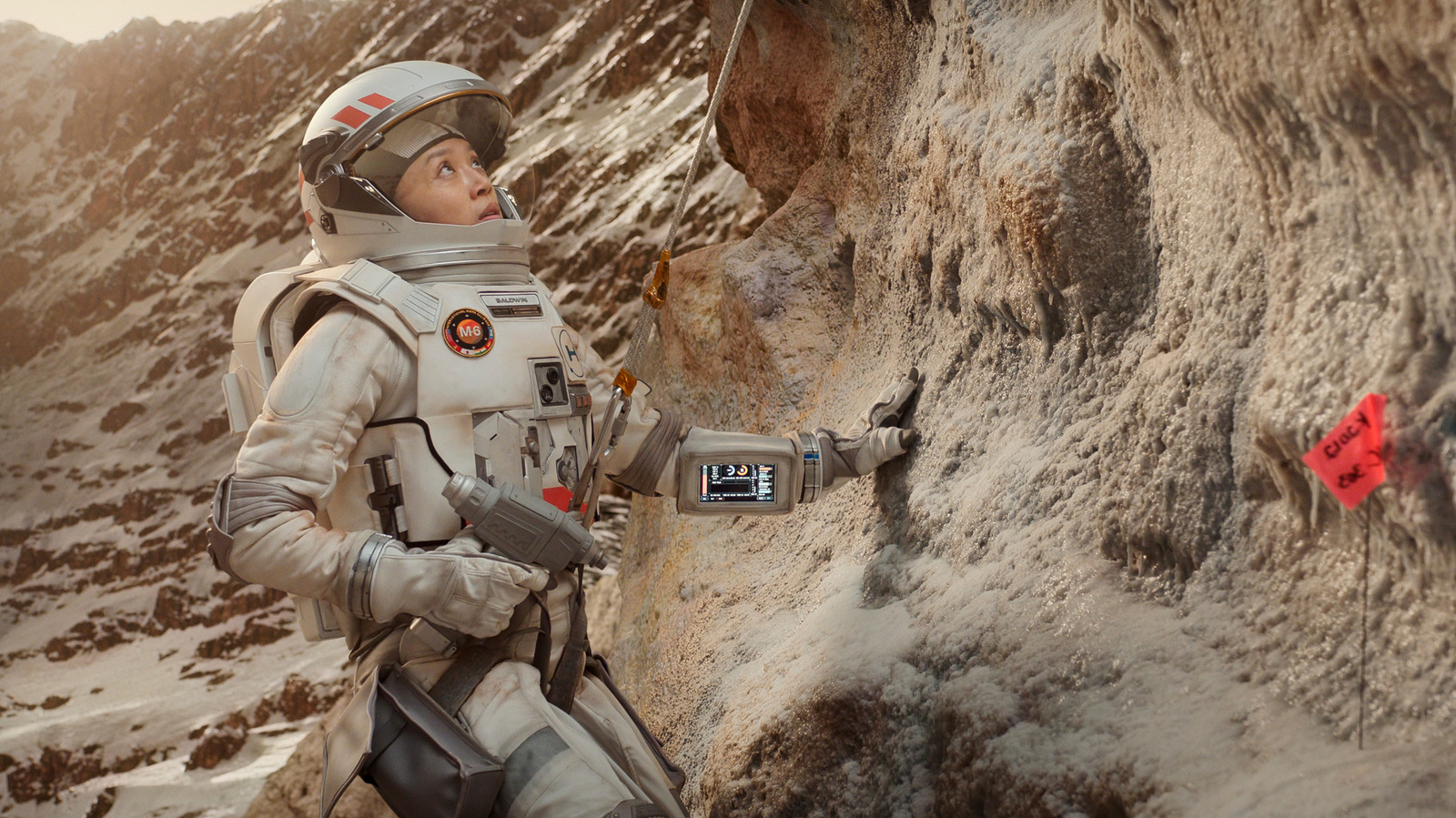
As the series progressed into the settlement era of Happy Valley on Mars, the scope shifted toward geopolitical maneuvering, labor strikes, and the complexities of governing a frontier society. While these themes provided necessary character growth, the show occasionally traded the existential terror of the void for the political friction of the living room.
"The Sirens of Titan" rectifies this balance. By placing the characters in the deepest reaches of space yet—where rescue is physically impossible and the environment is actively trying to kill them—the showrunners have successfully returned to the foundational premise: space is scary as hell. The tragedy of the Kosmos-1 serves as a narrative anchor, reminding both the characters and the audience that despite decades of technological advancement, humanity remains a fragile, temporary visitor in the cosmos.
The Stakes: A World on the Brink
The existential threat of space exploration is currently compounded by the sociopolitical instability back at Happy Valley. The Mars colony is in the midst of a full-scale revolution. Labor disputes regarding the automation of mining operations—which threaten to render human settlers obsolete—have already resulted in casualties.
The juxtaposition is clear: while the characters in the Jovian system are battling the physics of Jupiter, the characters on the ground are battling the physics of human greed and labor rights. The automation crisis is the primary driver of the Martian unrest, creating a pressure cooker environment where every resource, from oxygen to voting rights, is contested.
When the Sojourner-T crew witnesses the Kosmos-1 disaster, it serves as a grim metaphor for the state of their world. They are drifting further into the darkness of the solar system while their civilization threatens to fracture under the weight of its own success. The danger is no longer just "out there"; it is internal and systemic.
Supporting Data: The Cost of Exploration
To understand why this shift feels so significant, one must look at the historical trajectory of the show’s casualties. In Seasons 1 and 2, deaths were often the result of "unknowns"—the terrifying unpredictability of a new environment.
| Era | Primary Threat | Nature of Danger |
|---|---|---|
| Season 1-2 (The Moon) | Equipment failure | Mechanical/Environmental |
| Season 3 (The Race to Mars) | Human competition | Sabotage/Accident |
| Season 4 (Happy Valley) | Systemic inequality | Political/Societal |
| Season 5 (Jupiter/Titan) | Physics of the Void | Existential/Cosmic |
The shift toward the "Jovian" danger represents a return to the pure, unadulterated peril of the early days, but with higher stakes. The mortality rate in the For All Mankind universe has always been a barometer for the show’s tone. When the show focuses on technical, environmental threats, it leans into its "Hard Sci-Fi" roots, which fans have consistently cited as the series’ most engaging element.
Official Perspectives and Behind-the-Scenes Insights
Showrunners and writers have long teased that the conclusion of the series (set for Season 6) would be a culmination of all previous themes. By bringing the characters to the edge of the solar system, the creative team is forcing a confrontation between human ambition and cosmic reality.
In recent press briefings, the production team noted that the move to Jupiter was designed to be the ultimate test for the core characters. They argued that "if humanity is to survive and thrive beyond Earth, it must first survive the indifference of the universe." The destruction of the Kosmos-1 is not merely a plot device to kill off secondary characters; it is a narrative pivot designed to strip away the illusion of safety that the characters have cultivated over the last decade of successful colonization.
Implications for the Final Act
As we move toward the series finale, the implications of the "Jovian Shift" are profound. If the show continues to emphasize the lethality of deep space, we can expect the final episodes to be defined by high-stakes rescue operations and the difficult realization that the "frontier" has limits.
Furthermore, the revolution on Mars is likely to collide with the mission to Titan. If the automated systems meant to replace the workers are the same systems required to navigate the perilous journey to Jupiter, the settlers of Happy Valley hold the keys to the future of the human race. This creates a fascinating moral dilemma: does one sabotage the very machines that might ensure humanity’s survival in deep space to protect the rights of the workers on the ground?
Conclusion: A Terrifying Farewell
For All Mankind has always been a show about the cost of progress. As it enters its final stretch, the return to the terrifying, unpredictable nature of space serves as a poignant reminder of why we started watching in the first place. The disaster at Jupiter is more than just a tragedy; it is the show’s way of saying that while humanity has conquered the stars, it has not—and perhaps never will—truly tame them.
As we look toward the final season, the question remains: will the characters of For All Mankind learn to work together in the face of an uncaring universe, or will the darkness of space and the conflicts on Mars finally prove to be too much? One thing is certain: the final frontier is not for the faint of heart, and the show is not holding back on the consequences of the journey.











No comments yet. Be the first to join the conversation!