In a significant move ahead of the upcoming Venice Film Festival, the French sales powerhouse MMM Film Sales has announced the acquisition of international rights to the highly anticipated drama Agata the Writer. The film, which marks the feature directorial debut of acclaimed Polish-Australian artist Kuba Dorabialski, is set to make its world premiere in competition within the prestigious Venice Days (Giornate degli Autori) section.
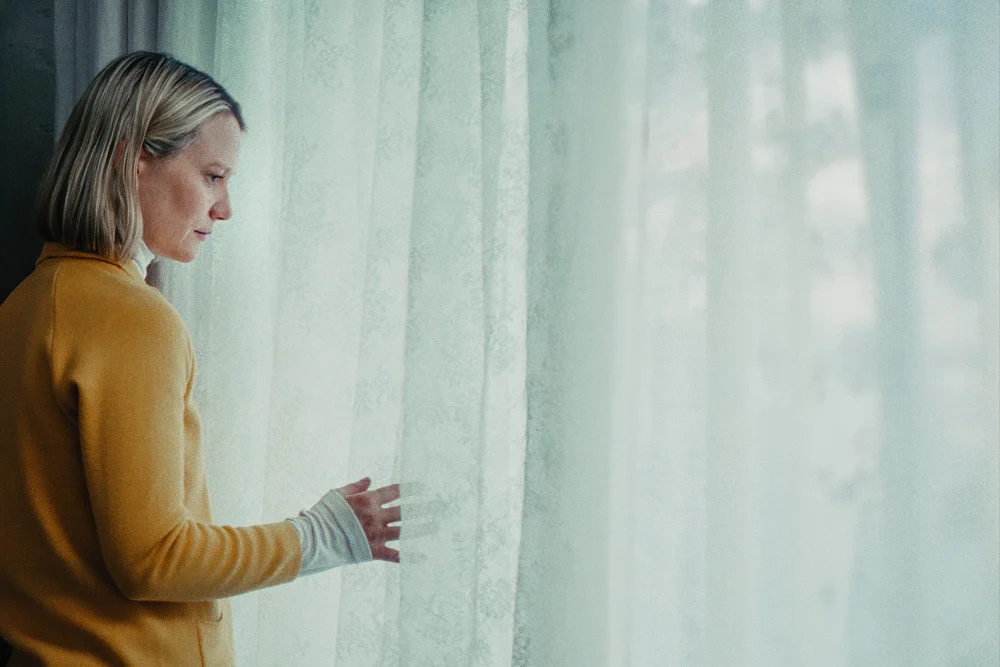
Starring Mia Wasikowska—a fixture of global independent cinema and a Venice veteran—the film promises to be a meditative, complex exploration of historical memory and the ethical burdens of the creative process.
Main Facts: A Narrative of Displacement and Inquiry
Agata the Writer follows the titular character, a Polish-Australian novelist who embarks on a journey from her home in Sydney to the historically scarred city of Sarajevo. Her objective is professional: to research and write a definitive novel about the war. However, upon her arrival, Agata finds herself in a position of friction rather than observation.
As she navigates the city, she is confronted by locals who challenge her presence, questioning her moral authority to document a trauma she did not personally endure. This external skepticism mirrors an internal crisis; as her creative confidence wavers, the film descends into a surreal mystery involving the inexplicable disappearance of a series of provocative, obscene artworks.
According to early descriptions, the film shifts its focus from the macro-narrative of war to the micro-narrative of the human condition. It posits that the true story of conflict lies not in the battlefield, but in the quiet, lingering resilience of those who remain in its shadow. Ultimately, the film serves as a meta-textual critique, forcing both the protagonist and the audience to grapple with the responsibilities inherent in the act of storytelling.
Chronology of Production and Development
The project represents a significant collaboration between international artistic sensibilities. Developed by Whitefalk Films and Produktion Productions, Agata the Writer received principal production funding from Screen Australia, with additional financial backing from Creative Australia and the Adelaide Film Festival Investment Fund.
For producer Alex White, this premiere serves as a return to familiar, successful territory. White, whose previous work Babyteeth—also starring Wasikowska—achieved global acclaim, has carefully curated a path for this project that mirrors his previous triumphs.
- Development Phase: Kuba Dorabialski, known for his long-form video installations and visual arts, spent several years transitioning his conceptual focus toward the feature-length narrative format.
- Production: Filming took place across both Australian and European locations, requiring a nuanced production schedule to capture the distinct atmospheres of Sydney and Sarajevo.
- Acquisition: MMM Film Sales finalized the deal in the weeks leading up to the Venice Film Festival, signaling strong market confidence in the film’s potential for critical and festival success.
- Festival Premiere: The film is scheduled to screen in the Venice Days section, a platform specifically designed to highlight original, innovative, and daring independent filmmaking.
Supporting Data: The Provenance of the Team
The pedigree of the team behind Agata the Writer provides a compelling argument for its potential impact. Alex White’s involvement is particularly noteworthy given the trajectory of his previous film, Babyteeth.
Babyteeth made its international premiere in competition at the Venice Film Festival, where it earned the Marcello Mastroianni Award. Its subsequent run was nothing short of historic for an Australian independent film:
- AACTA Dominance: It secured 13 nominations at the Australian Academy Awards, winning nine, including Best Film, Best Director, and Best Screenplay.
- International Recognition: The film earned a BAFTA nomination for Best Director and was recognized by the Australian Directors Guild.
- Global Reach: It received a British Independent Film Award (BIFA) nomination for Best International Film, solidifying White’s reputation as a producer capable of bridging local stories with global audiences.
Kuba Dorabialski brings an equally rigorous artistic background to the director’s chair. Born in Wrocław, Poland, and based in Sydney, Dorabialski has spent the last decade establishing himself as a formidable figure in the visual arts. His accolades include the 2017 John Fries Award and the 2019 Fisher Ghost Art Prize. His move into feature filmmaking follows a major institutional solo exhibition at Carriageworks in 2021, featuring the long-form video work Connection of the Sticks, which later appeared at the 2023 Sydney Film Festival.
Official Responses: Why MMM Film Sales Invested
The acquisition team at MMM Film Sales expressed clear enthusiasm regarding the film’s unique position in the current market. In a formal statement, the team highlighted the intersection of personal identity and historical inquiry that defines the film.
"We were immediately drawn to Agata the Writer for its unique voice and its fascinating reflection on how we engage with history and memory," the team stated. "Mia Wasikowska perfectly embodies the role of Agata, a writer returning to her home continent, seeking to understand and reconnect with the wounds of the recent past, and with the ways in which unresolved conflicts continue to echo in the present."
The team further emphasized the tonal balance of the work, noting that Dorabialski has successfully crafted a film that is "both playful and thought-provoking." By questioning the relationship between identity and the ethical weight of the artist, the film aims to engage viewers in a conversation about what it means to be a witness in the digital age.
Implications: The Future of the "Artist-Filmmaker"
The release of Agata the Writer arrives at a time when the boundaries between "fine art" and "cinema" are becoming increasingly porous. Dorabialski’s background in institutional video art suggests that the film will likely lean into visual abstraction and non-traditional narrative structures, a hallmark of directors who emerge from the gallery world.
The Role of the "Cultural Tourist"
One of the most provocative themes the film explores is the notion of the "cultural tourist"—the outsider who descends upon a location to "mine" tragedy for artistic capital. By centering the film on a novelist, Dorabialski is essentially critiquing his own process. The inclusion of "obscene artworks" that disappear adds a layer of mystery that may appeal to art-house audiences who prefer films that challenge their deductive reasoning.
The "Wasikowska Effect"
Mia Wasikowska’s involvement cannot be understated. Having transitioned from high-profile Hollywood roles in Alice in Wonderland to a highly intentional career in prestige independent cinema, her name carries significant weight. Her ability to anchor complex, internal roles makes her the ideal vessel for Agata’s journey. Her presence in the film ensures that Agata the Writer will be a focal point for buyers and critics at the Lido.
Market Outlook
With MMM Film Sales backing the project, the film is positioned for a strong festival circuit run following its Venice debut. As international distribution markets continue to recover and evolve, there is a renewed hunger for films that tackle "big questions"—history, war, and the ethics of memory—without sacrificing character-driven intimacy.
Agata the Writer is poised to be one of the most discussed debuts of the season. By moving away from the conventional "war movie" tropes and focusing on the tension between the storyteller and the story itself, the film signals a sophisticated new voice in world cinema. As it prepares for its world premiere, the focus will be on how audiences respond to its challenging, introspective core—and whether the film succeeds in its ambitious goal of redefining the responsibilities of the artist in a post-conflict world.