

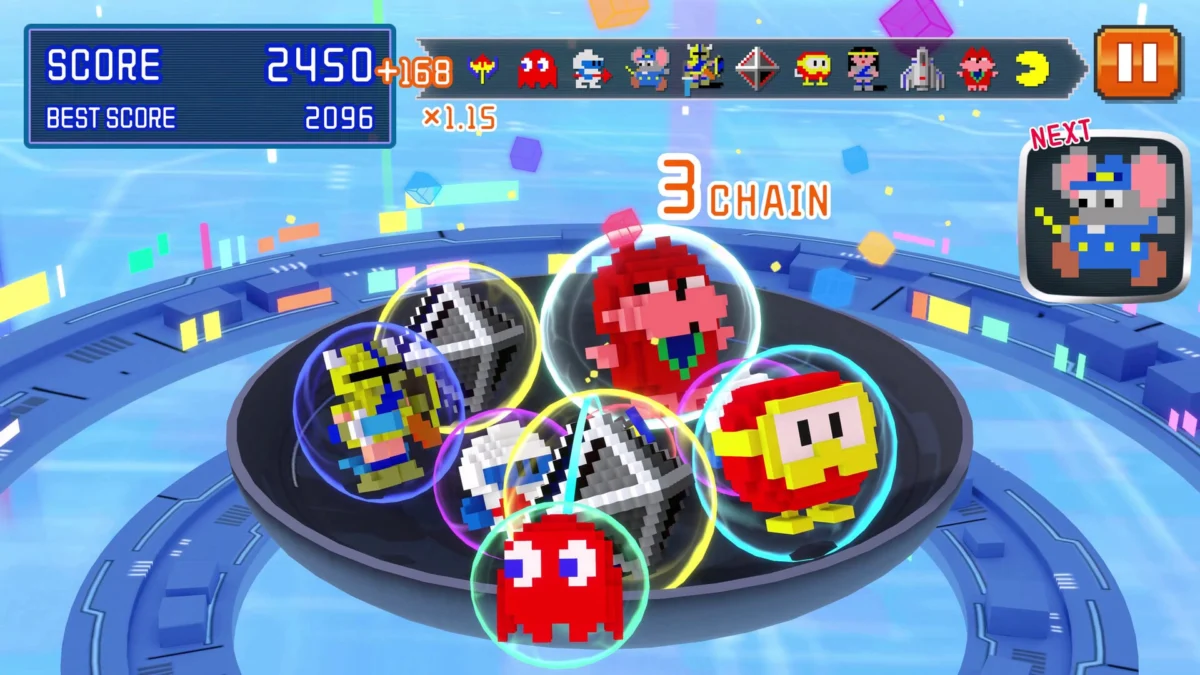
The physics-based puzzle genre, which exploded into the mainstream via the "Suika" phenomenon, is about to receive a nostalgic injection of retro gaming history. Developer Bexide, the studio behind the popular Fruit Mountain series, has officially pulled back the curtain on its next ambitious project: Namco Legendary Mountains. Featuring a roster of iconic characters from Bandai Namco’s storied history, the game is set to bring a 3D, high-stakes matching experience to the Nintendo Switch, the upcoming "Switch 2," and PC platforms worldwide in the summer of 2026.
The Core Concept: Merging History into Physics
At its heart, Namco Legendary Mountains adopts the foundational DNA of the Suika Game—a genre defined by the satisfying, gravity-defying combination of items—but elevates it with the three-dimensional depth introduced in Bexide’s previous title, Fruit Mountain.
Players are tasked with tossing iconic Namco characters, encased in translucent, physics-enabled bubbles, onto a central black plate. The gameplay is deceptively simple: combine two identical icons to merge them into a larger, more complex entity. However, the 3D environment adds a layer of spatial strategy. Players are not limited to a single drop point; they can move around the perimeter of the circular play area, selecting the precise angle and momentum required to nudge, stack, or bounce icons into their optimal merger positions.
The progression system is a love letter to arcade history. According to the game’s official trailer, players might start by tossing Pac-Man icons at one another. A successful merge transforms the yellow icons into Taizo Hori, the protagonist of Dig Dug. Should the player successfully maneuver two Taizo Hori icons into each other, they evolve into the titular star of Mappy. The gameplay loop promises to challenge players’ depth perception and long-term planning, as stacking too many items in an unstable configuration can lead to a "game over" if the icons spill over the edge of the plate.
A Chronology of the "Mountain" Genre
To understand the significance of Namco Legendary Mountains, one must look at the rapid evolution of Bexide’s puzzle design. The studio has effectively turned the "falling physics puzzle" into a specialized sub-genre that emphasizes both branding and tactile satisfaction.
- March 2024: Bexide releases Fruit Mountain, which shifted the 2D Suika formula into a 3D space, allowing players to build, stack, and eventually topple mounds of fruit. This title served as the proof-of-concept for the physics engine used in the upcoming Namco title.
- Post-2024: Riding the momentum of the Fruit Mountain engine, the studio experimented with niche appeal by releasing Hololive Treasure Mountain, a collaboration with the popular Vtuber agency that resonated deeply with the streamer-led puzzle gaming community.
- April 2026: Bexide launched Fruit Mountain Party, a multiplayer-focused iteration that introduced competitive and cooperative modes to the series, proving that the physics engine could support more than just solo score-chasing.
- May 2026 (Upcoming): Namco Legendary Mountains is scheduled for its public debut at the Kyoto BitSummit PUNCH (May 22–24, 2026). This event will be the first opportunity for the public to test the title’s physics against the weight and momentum of iconic Bandai Namco assets.
- Summer 2026: Official worldwide launch across Nintendo Switch, the successor console (Switch 2), and PC.
Supporting Data: The Convergence of Brand and Gameplay
The inclusion of intellectual property (IP) from Bandai Namco is a strategic pivot that distinguishes this title from generic puzzle clones. While the mechanics are familiar, the "skin" of the game serves as a bridge to a multi-generational audience.
Official promotional materials and trailer footage confirm that the game will feature icons from several seminal Namco franchises:
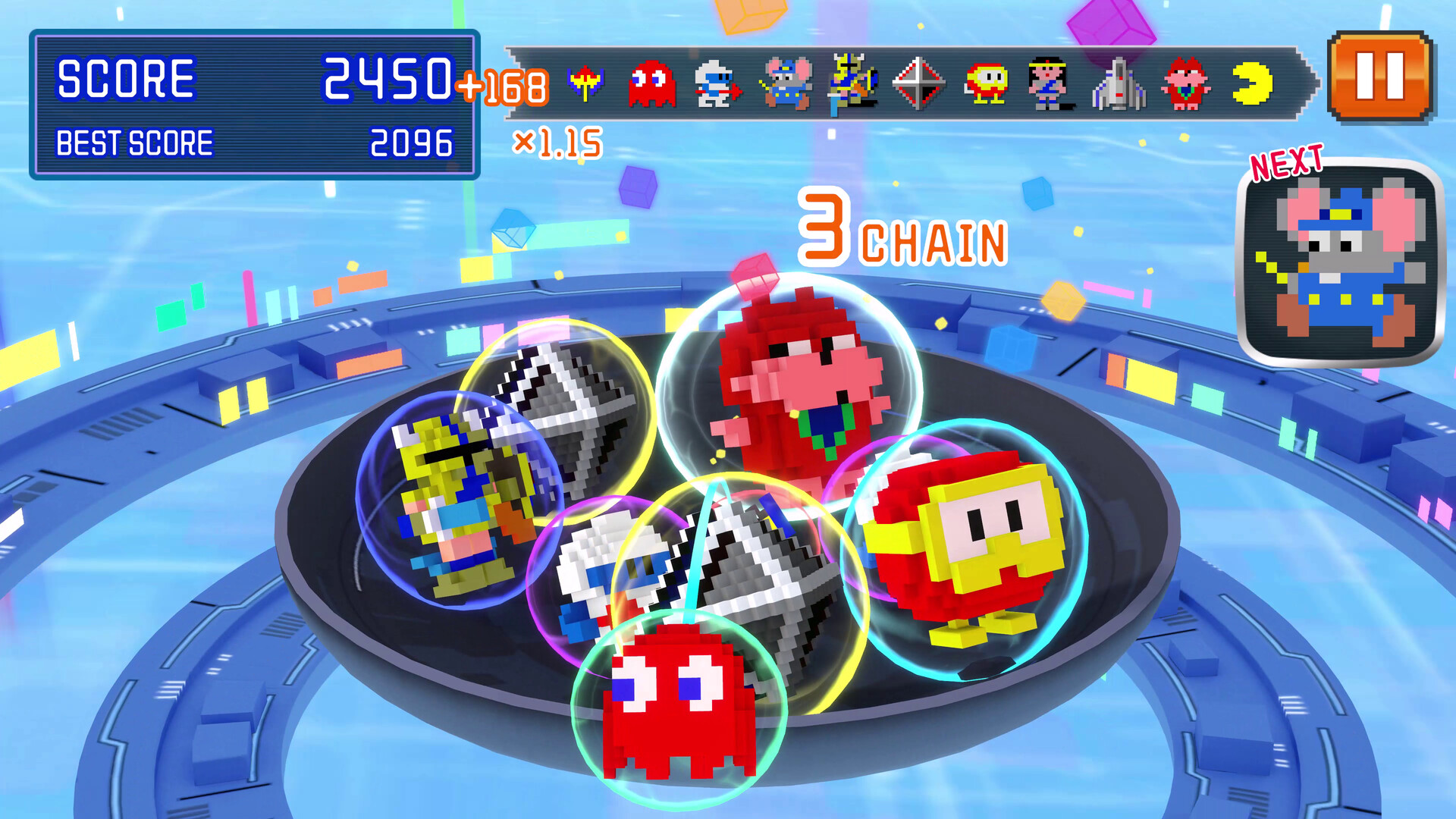
- Pac-Man: The definitive mascot of the company.
- Dig Dug: Represented by Taizo Hori.
- Mappy: The iconic jumping mouse.
- The Tower of Druaga: A nod to the classic dungeon-crawler.
- Xevious: Representing the legacy of arcade shooters.
This list suggests that the "merger tree" will be extensive, likely requiring players to memorize specific evolution paths to maximize their scores. For Bandai Namco, this represents a low-risk, high-engagement method of keeping their legacy characters relevant in the era of casual "cozy" gaming. By leveraging Bexide’s proven engine, the publisher can tap into the "snackable" gaming market, which favors titles that can be played in short bursts but offer infinite replayability.
Official Stances and Industry Implications
While Bexide has remained relatively tight-lipped regarding specific scoring systems or online leaderboards, the inclusion of the "Switch 2" in their release platforms provides an interesting insight into the industry’s transition period. By targeting the next-generation Nintendo hardware alongside the current Switch and PC, Bexide is positioning its title as a "cross-gen" staple, likely taking advantage of improved processing power for more robust physics simulations and smoother, higher-fidelity character models.
The decision to showcase the game at Kyoto BitSummit PUNCH is equally telling. BitSummit has become a primary venue for indie developers in Japan to bridge the gap between creative experimentation and commercial viability. By choosing this venue, Bexide is signaling that while they are working with massive corporate IP, the heart of the project remains rooted in the "indie" sensibility of tight, responsive gameplay loops.
The Broader Implications for the Puzzle Genre
The success of Namco Legendary Mountains could signal a new trend in the puzzle market: the "IP-fication" of physics-based puzzles. As the market becomes saturated with clones of Suika Game, developers are finding that simple mechanics are no longer enough to maintain user retention. By layering recognizable characters and nostalgic sound effects over these mechanics, developers can create a stronger emotional hook.
Furthermore, the focus on 3D physics—as opposed to the standard 2D plane—addresses a common criticism of the genre: that it can feel limited after a few dozen hours of play. In Namco Legendary Mountains, the ability to rotate the board and approach the "mountain" from different angles adds a degree of mastery that appeals to competitive players. If successful, this could encourage other major publishers to license their mascots to boutique developers, turning classic characters into the "pieces" of future puzzle games.
Conclusion: A Summer of Strategy
As we approach the summer of 2026, all eyes will be on how Bexide balances the chaotic, unpredictable nature of physics puzzles with the rigid, beloved designs of Bandai Namco’s classic characters. Will the physics of a Xevious ship collide satisfyingly with the weight of a Mappy sprite? Will the 3D board design allow for truly innovative strategies, or will it simply make the game more difficult to control?
Namco Legendary Mountains stands at a unique intersection of gaming history and modern casual design. By honoring the past with the mechanics of the future, Bexide is aiming to secure its place as the premier architect of the "Mountain" genre. Whether you are a fan of 80s arcade classics or a newcomer to the physics-puzzle craze, the game promises to be one of the most interesting titles of the 2026 summer season. Fans and industry analysts alike should keep a close watch on the Kyoto BitSummit PUNCH in late May, as it will likely provide the final clues needed to predict whether this title will become a cult classic or a global phenomenon.












No comments yet. Be the first to join the conversation!