


In the modern digital economy, social media is no longer just a marketing channel; it is a critical business infrastructure. However, with this power comes a complex web of legal and regulatory obligations. "Social media compliance" refers to the practice of ensuring that every post, interaction, and advertisement adheres to the myriad of laws, government regulations, and platform-specific policies that govern digital communication.
For many organizations, especially those in highly regulated sectors like finance, healthcare, and government, social media compliance is not merely a "best practice"—it is a legal necessity. Failing to navigate these rules can lead to devastating consequences, including multimillion-dollar fines, permanent loss of platform access, and irreparable damage to brand reputation.

The Evolution of Regulatory Oversight: A Chronology of Compliance
The landscape of social media regulation has shifted dramatically over the past two decades. In the early 2000s, social media was largely considered a "Wild West" where brands could experiment with little fear of regulatory reprisal.
- 2003 (CAN-SPAM Act): The United States established the first major framework for commercial electronic messaging, setting the stage for how businesses communicate digitally.
- 2009 (The Rise of Endorsement Guidelines): The Federal Trade Commission (FTC) released its initial Guides Concerning the Use of Endorsements and Testimonials in Advertising, signaling that online influencer marketing would be held to the same truth-in-advertising standards as traditional television.
- 2018 (The GDPR Watershed): The European Union’s General Data Protection Regulation (GDPR) fundamentally changed how organizations collect and process consumer data, making data privacy a primary concern for social media teams.
- 2023 (FTC Modernization): The FTC updated its Endorsement Guides to account for the nuances of modern influencer marketing, social media tags, and the potential for deceptive practices in online reviews.
- 2024 and Beyond (The AI Frontier): Regulators worldwide, including the EU through the AI Act, have begun implementing frameworks to govern the use of generative AI in content creation, requiring transparency regarding synthetic media.
Supporting Data: The High Cost of Non-Compliance
The financial stakes of compliance failures are staggering. Organizations that treat social media as an unregulated space often find themselves on the wrong side of the law.

- Financial Penalties: HIPAA violations—often occurring when healthcare providers accidentally share protected patient information on social platforms—can result in penalties reaching up to $1.5 million per year.
- Deceptive Practices: The FTC’s Consumer Review Rule has introduced penalties of up to $53,088 per individual violation for businesses that engage in deceptive review practices or fail to disclose sponsored content.
- Data Privacy Fines: Since the inception of GDPR in 2018, cumulative fines for data privacy violations have exceeded €7.1 billion, highlighting that regulators are actively enforcing these standards.
- Operational Growth: Despite the risks, companies that master compliance find that it actually fuels growth. A robust compliance program allows teams to operate with confidence, reducing the time spent in legal reviews and preventing the "rework" required when a campaign is pulled due to a violation.
Core Pillars of Social Media Compliance
Compliance is not a one-size-fits-all endeavor. It is a multi-layered approach that must be tailored to an organization’s specific industry and geographic footprint.
Data Privacy and Protection
Social media platforms are data-mining machines. Brands that leverage these platforms must ensure they are obtaining proper consent for data collection. Whether adhering to the CCPA in California or the GDPR in Europe, the principle remains the same: transparency is non-negotiable. Users must know how their data is being used and must have the right to opt out.
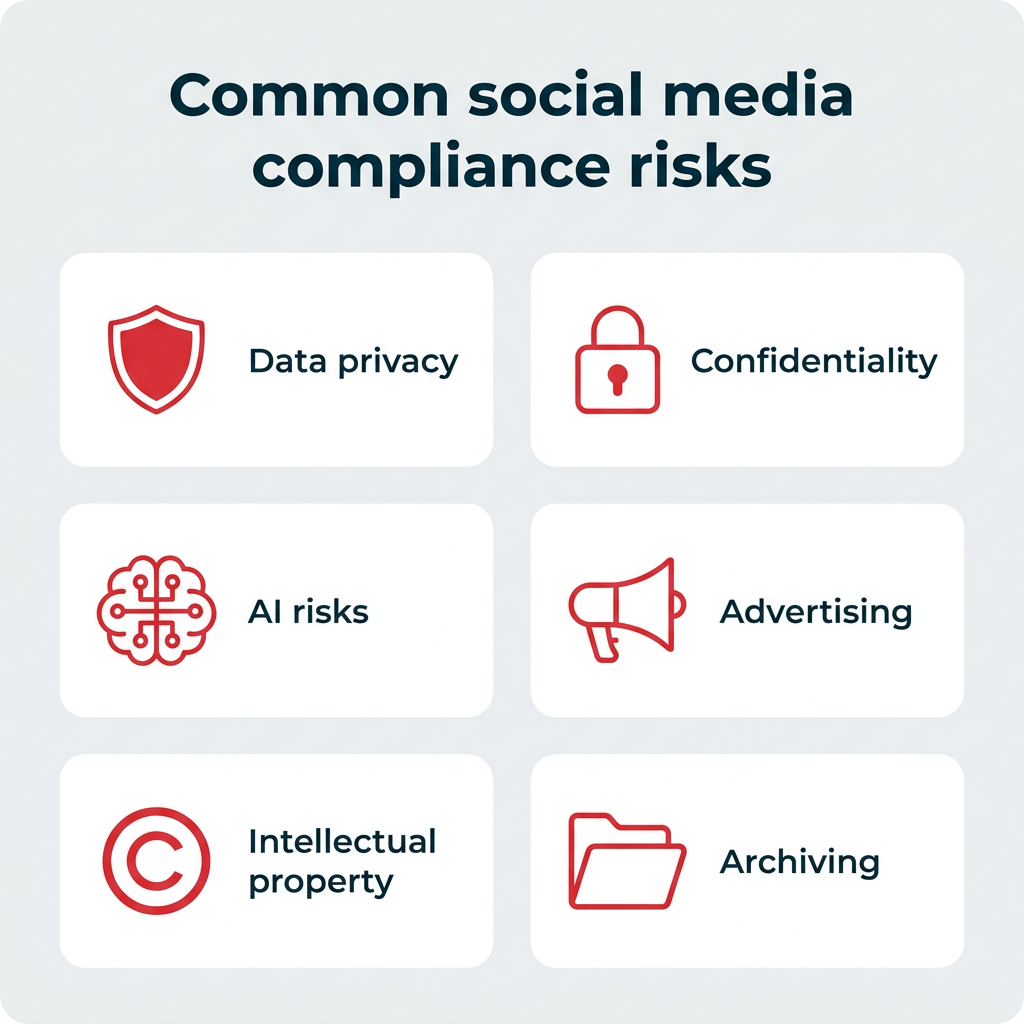
Confidentiality and Industry-Specific Risks
For sectors like education (FERPA) and healthcare (HIPAA), the stakes involve protecting the most sensitive information imaginable. A single, seemingly innocuous social post—such as a photo of a patient’s record or a student’s private work—can lead to immediate legal action. Even if a post is created by an intern or a student affiliate, the organization remains legally liable for the breach.
The New Frontier: AI-Related Risks
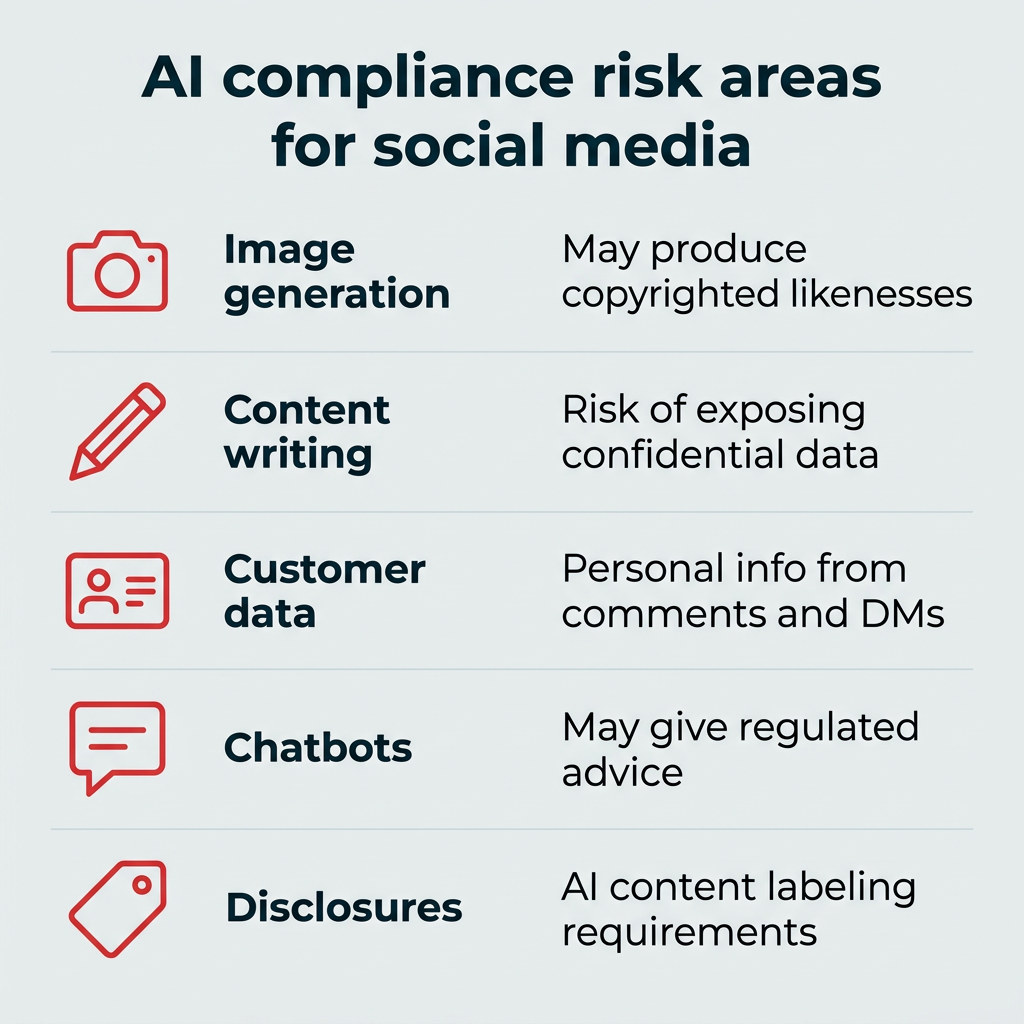
Generative AI offers unprecedented efficiency, but it brings new risks. From copyright infringement—where AI models are trained on protected intellectual property—to the danger of "hallucinations" or biased content, companies must implement strict AI governance. The EU’s AI Act now mandates that organizations disclose when content is AI-generated, a standard likely to be adopted globally.

Advertising and Endorsements
The FTC requires that any "material connection" between a brand and an influencer be clearly disclosed. This means #ad, #sponsored, or the platform’s "Paid Partnership" label must be prominent. Hiding a disclosure behind a "see more" button is considered a violation of federal law.
Strategies for Organizational Compliance
To move from a state of "risk" to a state of "readiness," organizations should adopt the following framework:
- Centralized Control: Move away from shared passwords and informal account access. Use enterprise-grade social media management software that allows for role-based permissions, ensuring that only approved users can publish content.
- The Content Library: Create a repository of pre-approved assets. By providing employees and brand ambassadors with verified content, you ensure that your messaging remains consistent and compliant without slowing down your marketing team.
- Archiving Requirements: Many industries, particularly finance (FINRA/SEC), require that every interaction—including DMs, comments, and edits—be archived for years. Implementing automated, immutable archiving solutions is a critical step for audit readiness.
- Regular Training: Compliance is a moving target. Mandatory, recurring training sessions ensure that every employee understands the latest platform updates, regional laws, and internal brand policies.
- Audit and Monitor: Regularly audit all accounts associated with your brand, including those run by third-party affiliates. Use social listening tools to identify potential compliance issues, such as unauthorized claims or imposter accounts, before they escalate.
Implications for Future Operations
The future of social media marketing will be defined by the balance between creative freedom and regulatory adherence. As platforms introduce new features—such as integrated shopping and AI-driven chatbots—the scope of compliance will only continue to broaden.
Organizations that view compliance as a "brake" on their marketing efforts will likely struggle to keep pace. Conversely, those that treat compliance as a "seatbelt"—a safety feature that allows them to drive faster and more confidently—will gain a significant competitive advantage. By building guardrails into the foundation of your social media strategy, you protect your brand’s most valuable asset: the trust of your customers.

Ultimately, social media compliance is about more than just avoiding a fine. It is about maintaining the integrity of your brand in a world where every post is a permanent record of your company’s values and professional standards.












No comments yet. Be the first to join the conversation!