Basiran
For the uninitiated, the transition from internal combustion engines to electric vehicles (EVs) brings with it a steep learning curve. While the mechanics of the car itself are relatively straightforward, the "refueling" infrastructure can feel like a complex web of technical specifications and industry jargon. As new EV owners discover, not all electricity is delivered equally.
Understanding the differences between Level 1, Level 2, and Level 3 charging is not just a matter of convenience; it is a financial and operational decision that impacts your daily routine, your home’s electrical infrastructure, and even the long-term health of your vehicle’s battery.
The Fundamental Facts: Breaking Down the Charging Tiers
The EV charging industry has adopted a standardized, three-tier classification system to help consumers understand the power output and expected performance of various charging solutions.
Level 1: The Standard Household Approach
Level 1 charging is the most accessible form of "fueling" an electric vehicle. It utilizes a standard 120-volt grounded household outlet—the same kind used for a laptop or a toaster. Because these circuits are limited to approximately 1.4 kilowatts (kW) of power, the replenishment rate is slow. For many, this is the "trickle charge" method, often requiring upwards of 40 hours to charge a depleted long-range battery from near empty to full.
Level 2: The Residential and Commercial Standard
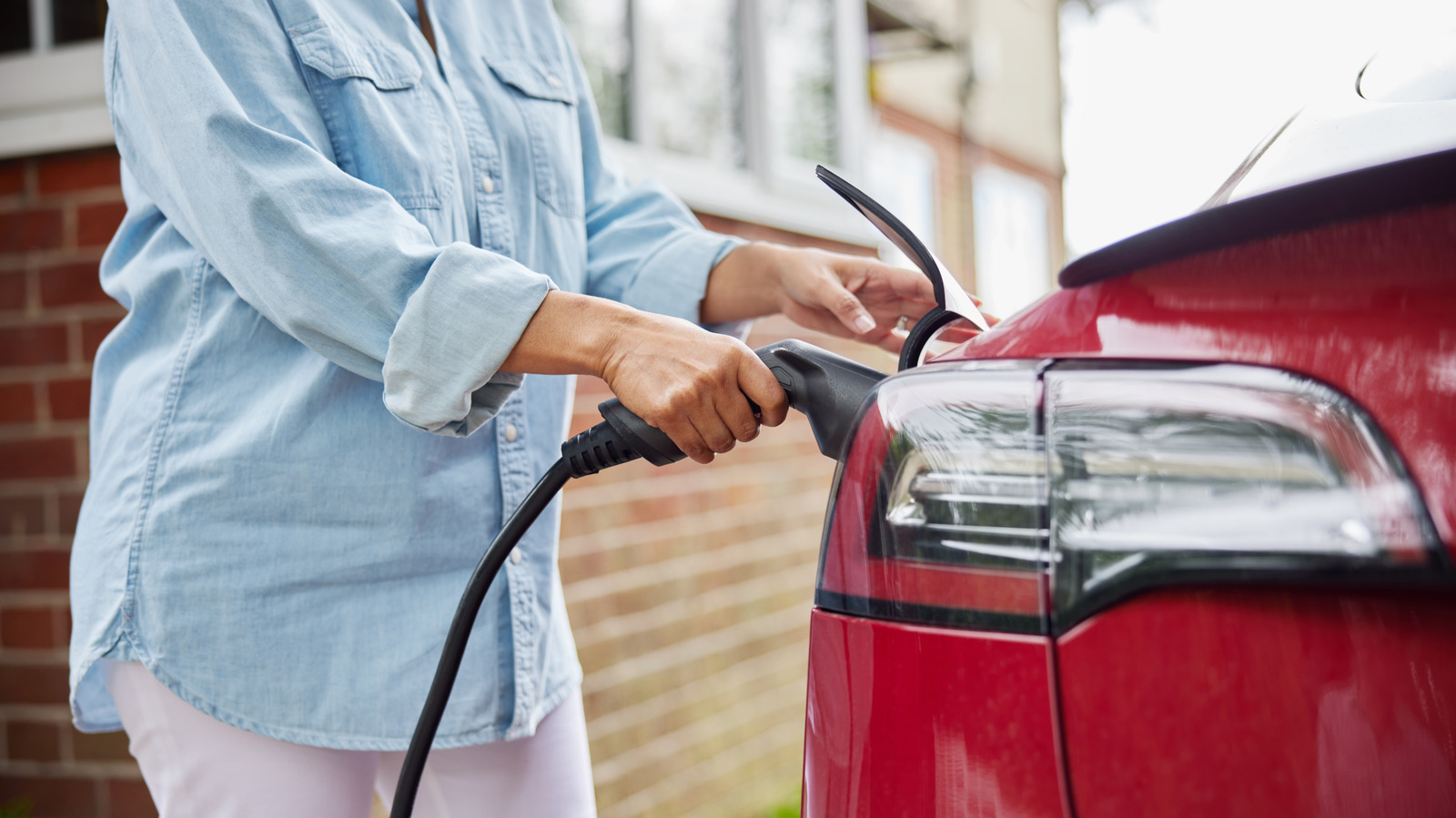
Level 2 charging utilizes 240-volt circuits, similar to those required for high-powered home appliances like electric clothes dryers or stoves. These chargers operate at significantly higher currents, typically delivering between 7kW and 19.2kW of power. This is the gold standard for home installation, as it is capable of fully recharging most modern EVs overnight.
Level 3: The DC Fast Charging Powerhouse
Level 3, often referred to as DC Fast Charging (DCFC), represents the cutting edge of EV infrastructure. Unlike the first two levels, which deliver alternating current (AC) to the vehicle to be converted by the car’s onboard charger, Level 3 stations perform the AC-to-DC conversion externally. This allows for high-voltage power to be delivered directly to the battery, bypassing the car’s internal limitations. These stations typically range from 50kW to 500kW, capable of adding hundreds of miles of range in under an hour.
A Chronology of Charging Evolution
The evolution of EV charging has moved in tandem with the advancement of battery chemistry and the growing public demand for convenience.
- Early Adoption (2010–2015): In the early years of the modern EV movement, the focus was primarily on "range anxiety." Most vehicles were sold with Level 1 chargers as standard equipment, and public charging infrastructure was sparse. Level 2 charging was viewed as a luxury for the early adopter.
- The Rise of DC Fast Charging (2016–2020): As battery capacities grew, the limitations of Level 2 charging for long-distance travel became apparent. The industry saw a massive push toward the deployment of Level 3 corridors along major highways. This era also marked the maturation of the CCS (Combined Charging System) connector as the primary global standard for non-Tesla vehicles.
- The NACS Standard Shift (2021–Present): Perhaps the most significant milestone in recent years is the industry-wide pivot toward the North American Charging Standard (NACS). Originally developed by Tesla, NACS has been adopted by major manufacturers including Ford, GM, Rivian, and Hyundai. This shift promises to consolidate the fragmented hardware market, simplifying the user experience for millions of drivers.
Supporting Data: Efficiency and Performance Metrics
To determine which charging level is right for you, one must look at the math of power delivery.
| Charger Level | Voltage | Power Output | Typical Use Case |
|---|---|---|---|
| Level 1 | 120V | ~1.4 kW | Daily low-mileage commutes, overnight top-ups |
| Level 2 | 240V | 7 kW – 19.2 kW | Primary home charging, office parking, retail |
| Level 3 | 400V – 800V | 50 kW – 500 kW | Highway travel, commercial fast-charging hubs |
The Conversion Factor
A critical technical distinction is the role of the onboard charger. Because Level 1 and Level 2 chargers provide AC power, the vehicle must use its onboard converter to change that energy into the DC format the battery requires. This process is inherently inefficient, resulting in a small percentage of energy lost as heat.
Level 3 charging bypasses this onboard system entirely. By providing DC directly to the battery, the vehicle can accept significantly higher power loads. However, there is a physical ceiling: most EVs utilize "thermal management systems" to prevent the battery from overheating during rapid charging. Consequently, charging speeds often taper off as the battery nears 80% capacity—a phenomenon known as the "charging curve."
Official Industry Perspectives and Battery Longevity
The question of whether "faster is better" remains a topic of intense debate among automotive engineers.
The Case for Battery Health
While DC Fast Charging is undeniably convenient, it is not without its critics regarding long-term battery health. Industry experts, including those from the U.S. Department of Energy, note that the heat generated by the high-current flow of Level 3 charging can accelerate the degradation of lithium-ion cells over time.
Manufacturers, including Tesla and Lucid, have implemented sophisticated software protocols to mitigate this. By throttling charge speeds during extreme temperatures or as the battery approaches a full state of charge, the vehicle’s Battery Management System (BMS) acts as a guardian for the battery’s longevity. Nonetheless, the consensus remains: for day-to-day use, a Level 2 charger is the most "gentle" way to maintain battery health.
The Financial Implication
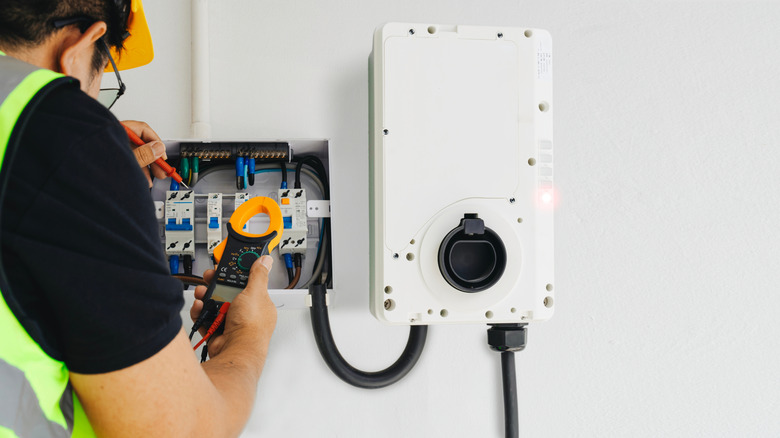
The cost of upgrading to a Level 2 home charger is not merely the price of the unit—which can range from $300 to $1,000—but the cost of professional electrical work. A licensed electrician may need to upgrade your home’s electrical panel or run a high-amperage line from the panel to the garage. However, the ROI is often realized through access to off-peak energy pricing. Many utility companies offer "Time-of-Use" (TOU) plans that allow EV owners to charge during the middle of the night when electricity rates are at their lowest.
Implications: Making the Right Choice for Your Lifestyle
Deciding on a charging strategy requires an honest assessment of your driving habits and your home’s capabilities.
When to Stick with Level 1
If your daily commute is under 30 miles and your vehicle sits idle in the garage for 10–12 hours a day, a Level 1 charger is likely sufficient. It requires no installation, minimal investment, and effectively keeps your battery topped off for local errands.
When to Upgrade to Level 2
For the average household that puts over 40 miles on the odometer daily, Level 2 is the most practical solution. It eliminates "range anxiety" by ensuring that you start every single morning with a full battery. Furthermore, in colder climates, a Level 2 charger is essential. It provides enough power to both warm the battery to its optimal operating temperature and charge it simultaneously—a task a Level 1 charger often struggles to perform.
When to Rely on Level 3
Level 3 is intended for the "road warrior." It is the bridge between the utility of an EV and the convenience of a gasoline-powered vehicle. If you frequently travel long distances, your strategy should focus on mapping out DC Fast Charging hubs along your route using apps like PlugShare or ChargePoint.
The Connector Conundrum
As the industry transitions to NACS, owners of older CCS-equipped vehicles should invest in a high-quality adapter. The lack of compatibility can be a source of frustration at public stations. Always verify the connector type at your destination before departure, as relying on a station that does not match your vehicle’s port can leave you stranded.
Final Thoughts
The "best" charger is not the fastest one, but the one that aligns with your specific use case. By leveraging Level 2 charging for your daily home needs and reserving Level 3 for long-distance travel, you can optimize your EV ownership experience, protect your battery investment, and enjoy the seamless performance of modern electric mobility. As infrastructure continues to expand and standardize, the barriers to entry are lowering, making the electric transition more accessible than ever before.


 Asep Darmawan
 Nana
Nana