Ali Ikhwan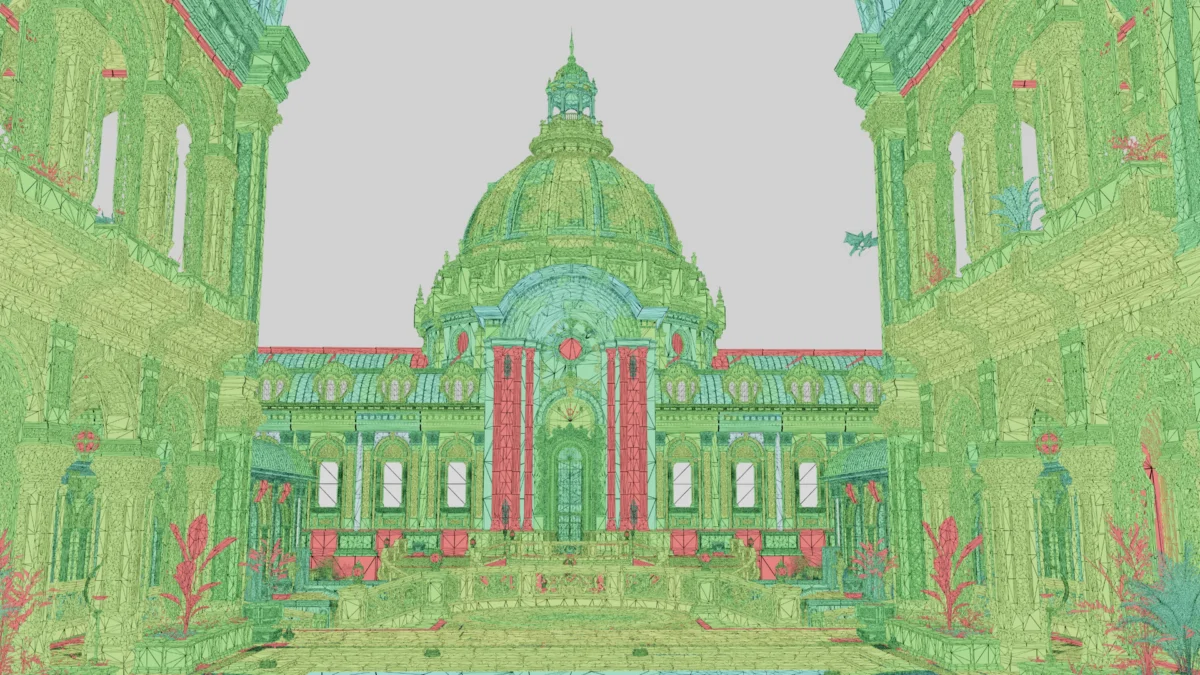
In an era where the boundary between cinematic pre-rendered assets and real-time gameplay continues to blur, Nvidia has once again pushed the envelope of graphics engineering. The GPU giant recently announced the release of RTX Mega Geometry SDK 2.0, a significant evolution of its high-density mesh handling suite. As part of the broader RTX Kit 2026.3 ecosystem, this update introduces sophisticated streaming capabilities for "continuous level-of-detail (CLOD) clusters," effectively promising to solve one of the most persistent bottlenecks in modern game development: the VRAM-limited rendering of ultra-high-density geometry.
As the industry prepares for the highly anticipated launch of Gears of War: E-Day—a title confirmed to leverage Nvidia’s Mega Geometry technology—this update arrives at a critical juncture for both developers and hardware enthusiasts.
Main Facts: What is RTX Mega Geometry 2.0?
At its core, RTX Mega Geometry is designed to tackle the "geometry explosion" problem. Modern game worlds are increasingly populated by billions of polygons, far exceeding what traditional rendering pipelines can handle without significant performance degradation. Mega Geometry acts as an intelligent intermediary, optimizing how these meshes are processed and displayed.
The 2.0 iteration shifts from static optimization to dynamic, streaming-based management. By introducing support for continuous level-of-detail clusters, the SDK allows the graphics engine to stream in geometric data with granular precision. Instead of loading an entire asset at a fixed LOD, the system intelligently fetches only the detail required for the player’s immediate field of view, dynamically transitioning between resolutions as the player navigates the scene.
The most profound claim made by Nvidia in its latest developer blog is the ability to render scenes that far exceed the physical VRAM capacity of the graphics card. Through a combination of efficient asset culling and aggressive memory paging, Mega Geometry 2.0 effectively creates a virtualized geometry buffer. This allows developers to construct scenes with unprecedented object density—think hyper-realistic ruins, complex foliage, or intricate urban environments—without forcing the player to suffer through "out-of-memory" crashes or massive frame-rate stutters.
Chronology: The Evolution of Nvidia’s Geometry Pipeline
To understand the significance of this update, one must look at the trajectory of Nvidia’s software suite over the past several years.
The Foundation (Pre-2024)
Before the integration of specialized SDKs like Mega Geometry, developers were largely reliant on traditional occlusion culling and standard LOD systems implemented within engines like Unreal Engine or Unity. These methods, while effective for a time, often resulted in "popping" artifacts—where objects would visibly change resolution as the player approached—and placed the burden of optimization almost entirely on the artist’s manual workload.
The Emergence of RTX Kit (2025)
The introduction of the RTX Kit ecosystem marked a shift toward a modular, "toolbox" approach for developers. By providing standardized APIs for ray tracing, path tracing, and now geometry management, Nvidia aimed to unify the developer experience across various engines.
The Current Milestone: RTX Kit 2026.3
The release of RTX Kit 2026.3 serves as the launchpad for Mega Geometry 2.0. This release cycle is characterized by a tighter integration between neural rendering (such as DLSS 5) and traditional rasterization or geometry processing. The inclusion of Mega Geometry 2.0 within this release suggests that Nvidia is moving toward a future where the GPU manages the scene’s complexity autonomously, rather than requiring developer-scripted LOD triggers.
Supporting Data: Why VRAM Management Matters
In contemporary gaming, the VRAM (Video Random Access Memory) budget is the primary constraint on visual fidelity. With textures, shadows, and geometry competing for space, many modern games have struggled with "stuttering" when traversing large, open-world environments.
The Geometry Bottleneck
Traditional rendering requires that all visible geometry be present in memory to be processed by the draw calls. If a developer wants to include a million-polygon statue, that data must live in the VRAM. If the scene contains ten thousand such objects, the VRAM limit is hit almost immediately.
Mega Geometry 2.0 addresses this through:
- Virtual Geometry Paging: Similar to how a computer uses disk space as virtual RAM, Mega Geometry uses the system’s storage and RAM to swap geometric clusters in and out of VRAM in real-time.
- CLOD Clusters: By grouping geometry into clusters that can be independently scaled, the SDK ensures that only the polygons that contribute to the final pixel color are prioritized.
- Reduced Overhead: By offloading the LOD management to the SDK, the CPU overhead (draw call submission) is significantly reduced, allowing for higher frame rates even on systems with mid-tier processors.
Official Responses and Industry Context
Nvidia’s communication strategy for this release has been heavily developer-focused. The developer blog serves as the primary source of truth, emphasizing that this is a "turnkey" solution for studios looking to push the limits of their engine’s capabilities.
"The goal," notes a developer representative in the official documentation, "is to remove the limitation of memory from the artist’s creative vision."
The Gears of War: E-Day Connection
The announcement of Mega Geometry 2.0 is inseparable from the buzz surrounding Gears of War: E-Day. The Gears franchise has historically been a benchmark for visual fidelity, and the upcoming title is expected to push the Unreal Engine to its absolute limits. While Nvidia has not explicitly confirmed which version of the SDK the game utilizes, industry analysts widely speculate that E-Day is the primary "hero title" showcasing the new streaming architecture. If the game manages to deliver dense, high-poly environments without the expected performance overhead, it will serve as the strongest possible case study for the efficacy of the 2.0 update.
Implications: A New Era for Real-Time Rendering
The release of Mega Geometry 2.0 has far-reaching implications for the gaming industry, shifting the power dynamic between the hardware and the software.
1. The Death of the "LOD Pop"
For years, the "pop-in" of textures and objects has been the hallmark of a video game. By utilizing continuous level-of-detail, Mega Geometry 2.0 creates a smoother visual transition. If successful, this technology could render the transition between detail levels completely imperceptible to the player, bringing real-time rendering closer to the quality of film-based VFX.
2. Streamlining Development Workflows
Currently, developers spend thousands of hours manually creating LOD models for every single object in a game. If the SDK can automate the creation of these clusters and manage their streaming, it will save studios massive amounts of time and budget. This could, in theory, lead to more complex worlds being developed by smaller teams.
3. Lowering the Hardware Entry Barrier
Ironically, while the technology is advanced, it serves to make games more accessible. By allowing high-density assets to run on hardware with less VRAM, Nvidia is essentially optimizing its ecosystem to ensure that mid-range cards can still deliver a premium visual experience. This protects the marketability of titles that would otherwise require high-end enthusiast-grade GPUs to function properly.
4. The Integration with AI
The mention of "3D-guided neural rendering" in the same context as Mega Geometry suggests that Nvidia is planning to marry geometry management with its DLSS/AI-upscaling tech. In the future, we may see a system where AI predicts which geometry clusters are needed next, pre-loading them before the player even turns their camera. This would be the ultimate evolution of the "virtual geometry" concept.
Conclusion: The Horizon of Graphics
Nvidia’s RTX Mega Geometry 2.0 is more than just a software update; it is a fundamental re-imagining of how games handle complexity. By treating geometry as a fluid, streamable asset rather than a static block of memory, Nvidia is enabling a new generation of immersive, hyper-detailed environments.
As Gears of War: E-Day looms on the horizon, the gaming community watches with bated breath. If the implementation lives up to the promises of the 2.0 SDK, we may be looking at the final transition point where the distinction between "real-time" and "rendered" becomes entirely academic. For the developer, the constraint of memory is fading; for the player, the dream of a truly seamless, high-fidelity world is finally becoming a reality. The path forward is clear: the future of gaming lies in the intelligent, automated management of the digital world, and Nvidia is firmly in the driver’s seat.

 Raul Delapena Setiawan