Lina Irawan
When Square Enix first pulled back the curtain on Octopath Traveler 0, the immediate reaction from the gaming community was one of cautious optimism. The initial assumption—that this title served as a "de-gachafied," premium, single-player reimagining of the mobile-centric Champions of the Continent—was as compelling as it was ambitious. For many, including those who logged over 100 hours in the mobile predecessor, the promise of a cohesive, offline campaign was a dream scenario. However, the shadow of potential redundancy loomed large. Would this be a mere recycled experience, or a meaningful evolution? As we now look back at the release and the subsequent arrival of the Octopath Traveler 0 Original Soundtrack, it is clear that the answer lies somewhere in the harmonious middle.
The Foundation: A New Musical Identity
At the tail end of 2025, Square Enix released the Octopath Traveler 0 Original Soundtrack, a two-disc collection that serves as the definitive audio companion to the game. Upon initial inspection, the fears of over-reliance on Champions of the Continent (CotC) were partially validated: approximately 40 percent of the album is comprised of tracks carried over from the mobile title. Yet, to dismiss these inclusions as "lazy" would be a disservice. The curation is intentional, showcasing the absolute pinnacle of the series’ previous work while creating a frame for a bold new soundscape.
At the heart of this identity is Yasunori Nishiki, whose return as the primary composer and orchestral arranger anchors the project. The "Octopath Traveler 0 -Main Theme-" is a masterclass in thematic development. Assisted by the virtuosic violinist Atsuki Yoshida and his ensemble, Nishiki has moved away from the motifs of the original Octopath Traveler and its sequel. This new theme is haunting, rhythmic, and lively, utilizing castanets to punctuate a 6/8 dance that feels both grounded and ethereal.
Nishiki’s mastery of thematic expansion is evidenced in the four variations that follow: "Fury," "Sorrow," "Compassion," and "Requiem." By stripping back the full orchestral force, Nishiki explores the emotional core of the main melody. "Fury" and "Sorrow" lean heavily into the tension of piano and strings, while "Compassion" shifts the texture toward acoustic guitar. "Requiem" slows the tempo to a crawl, introducing a pipe organ that lends the piece a cathedral-like weight, proving that even in its quietest moments, Octopath Traveler 0 carries the gravity of an epic.
The Architecture of Wishvale: Building a Town Through Sound
One of the most distinct features of Octopath Traveler 0 is the town-building mechanic in Wishvale—a feature reminiscent of the iconic base-management found in the Suikoden series. The soundtrack reflects this evolution through the "Wishvale" suite. While the base theme retains the 6/8 time signature of the main melody, it is brighter, uplifted by major keys that signify growth and community.
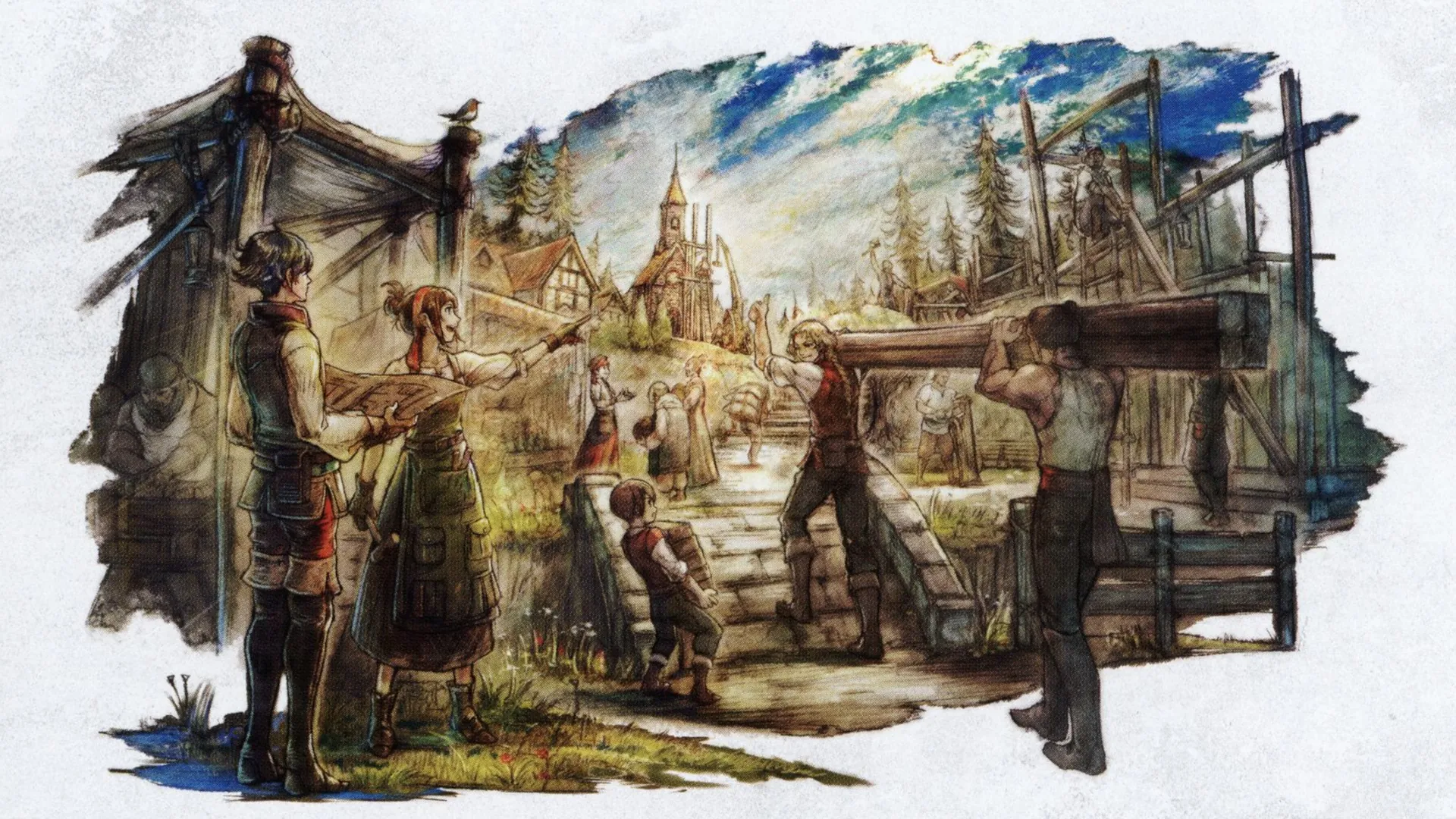
However, the real treasures are the thematic variations. "For the Future" stands out as a high-water mark, balancing piano, strings, and a carefully calculated amount of reverb that mimics the vastness of a budding civilization. Fans of Nishiki’s work on Octopath Traveler II will recognize the DNA here, yet it feels more refined. The juxtaposition between "Prosperous Days Ahead"—a joyous, celebratory piece—and the ominous, diminished harmonies of the "Utopian Town" variant highlights the game’s underlying narrative tension. Even when the music promises peace, it hints at the cost of building a future upon the ruins of the past.
"Wishvale Trail" remains an absolute gem of the collection. Featuring light percussion, swelling strings, and Nishiki’s signature use of reverse-note sounds, it provides a warm, immersive soundscape. Yet, the tranquility is fleeting; "Choices to Make" signifies the narrative shift into darker territory. The harmony builds in a four-chord structure that starts in a minor key, teases hope, and then collapses into anxiety, effectively bridging the gap between the town-building mechanics and the game’s central conflict.
Battle Themes: Where Rock Meets the Philharmonic
If the environment tracks provide the foundation, the battle themes provide the fire. "Battle 0" is far from standard; it is a high-octane collision of a rock band and a string ensemble. The result is a visceral, high-energy mix that elevates standard encounters to momentous occasions.
"Battle 0-2" offers a mid-tempo, 6/8 swing that highlights melodic interplay between guitar and violin, evoking the frontier-style aesthetic introduced in Partitio’s chapter in Octopath Traveler II. The intensity peaks with "Decisive Battle 0," which utilizes rapid-fire string arpeggios and a standout acoustic guitar interlude. The production quality of the percussion on this track, in particular, demonstrates a level of polish that sets a new standard for the series. As Disc One concludes with the sweeping, wind-and-brass-heavy "The Middlesea," the listener is left with the impression of a cohesive, well-paced experience that respects the player’s journey.
The Legacy of the Masters and Bestowers
The inclusion of Champions of the Continent music on the second disc is the ultimate tribute to the mobile game’s legacy. These tracks are not merely "re-used"; they are elevated. The "Master" themes—Wealth, Power, Fame, and All—are musical portraits of the villains who defined the first story arc. From the operatic, glitzy vocals of Herminia’s "Master of Wealth" to the imposing, choir-heavy weight of King Pardis’s "Master of All," these tracks hold up as some of the most dramatic music in the franchise.
The "Bestower" themes represent an even more complex musical endeavor. The "Bestower of Wealth" (Oskha) uses a jarring 5/8 time signature and saxophone to convey the character’s elusive, unsettling nature. The "Bestower of Power" (Tatloch) is a triumph of rhythmic syncopation, utilizing chant-like vocals that feel ritualistic and dangerous. While the "Bestower of Fame" is perhaps the most divisive of the set, its integration of organ and rock instrumentation ensures it remains a formidable presence.
The collection concludes its CotC segment with "Who Awaits on Greed’s Path." Featuring powerhouse vocals from Kaon Kokudo, this track is arguably the strongest "import" in the entire game. Its raw emotional intensity serves as a perfect precursor to the final, original chapters of Octopath Traveler 0.
The Grand Finale: A New Standard
The final movement of the soundtrack is where Octopath Traveler 0 truly justifies its existence as a standalone masterpiece. The transition from the haunting piano of "The Dark God Awakens" into the eight-minute opus "Returning All to Nil" is nothing short of breathtaking.
"Returning All to Nil" is a sprawling, symphonic metal-adjacent battle theme that utilizes every tool in the composer’s kit. The inclusion of a Soprano and Tenor duo (Keiko Tatsumi and Yuta Tanaka) provides an operatic scale that rivals Octopath Traveler II’s "Vide, the Wicked." The guitar solo alone marks this as one of the most memorable tracks in the series’ history.
This momentum carries into "Those Summoned from Nil," which, while lacking the vocal presence of its predecessor, succeeds through the clever weaving of the Octopath Traveler 0 main theme. The final track, "Yet I Carry On," serves as a poignant, English-language closer sung by Kaon Kokudo. With lyrics by Tim Law, it offers a lyrical resolution that ties the entire narrative arc together, leaving the listener with a sense of both completion and longing.
Implications and Closing Thoughts
The Octopath Traveler 0 Original Soundtrack serves as a bridge between the series’ experimental mobile past and its grand, premium future. By blending the best of Champions of the Continent with a fresh, ambitious score, Square Enix has created a package that is both nostalgic and forward-looking.
Critics might argue that the reliance on legacy content could have been reduced, yet the curation is so sharp that it feels more like an anthology of the franchise’s best moments rather than a shortcut. Yasunori Nishiki has proven, once again, that he is one of the most capable composers working in the industry today. Whether you are a newcomer to the Octopath universe or a veteran who followed the saga from its mobile inception, this soundtrack is a monumental achievement. It is a testament to the idea that, in the world of game music, growth is not just about writing new notes—it is about finding new ways to make the old ones resonate.


 Asro
Asro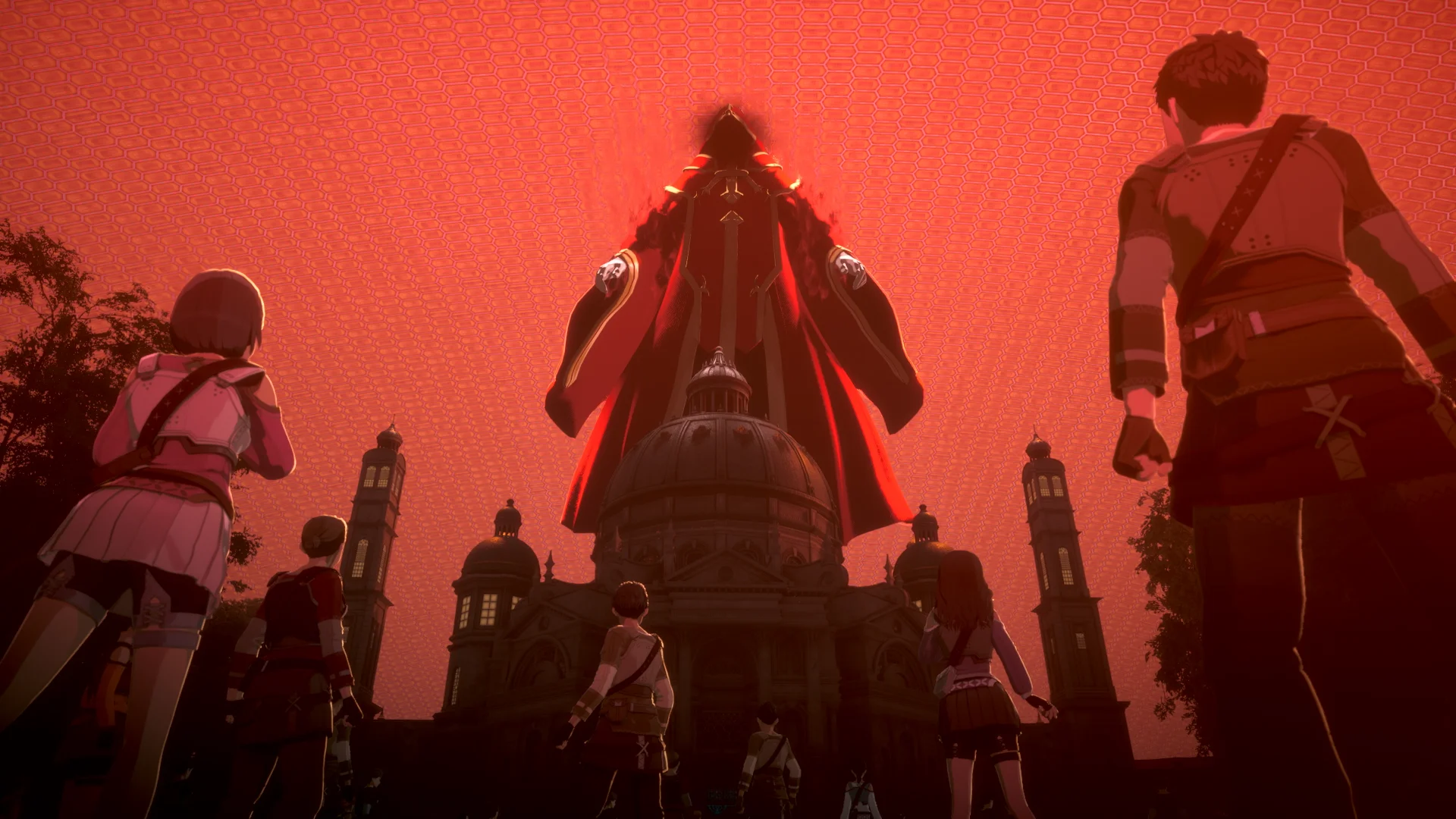
 Muslim