

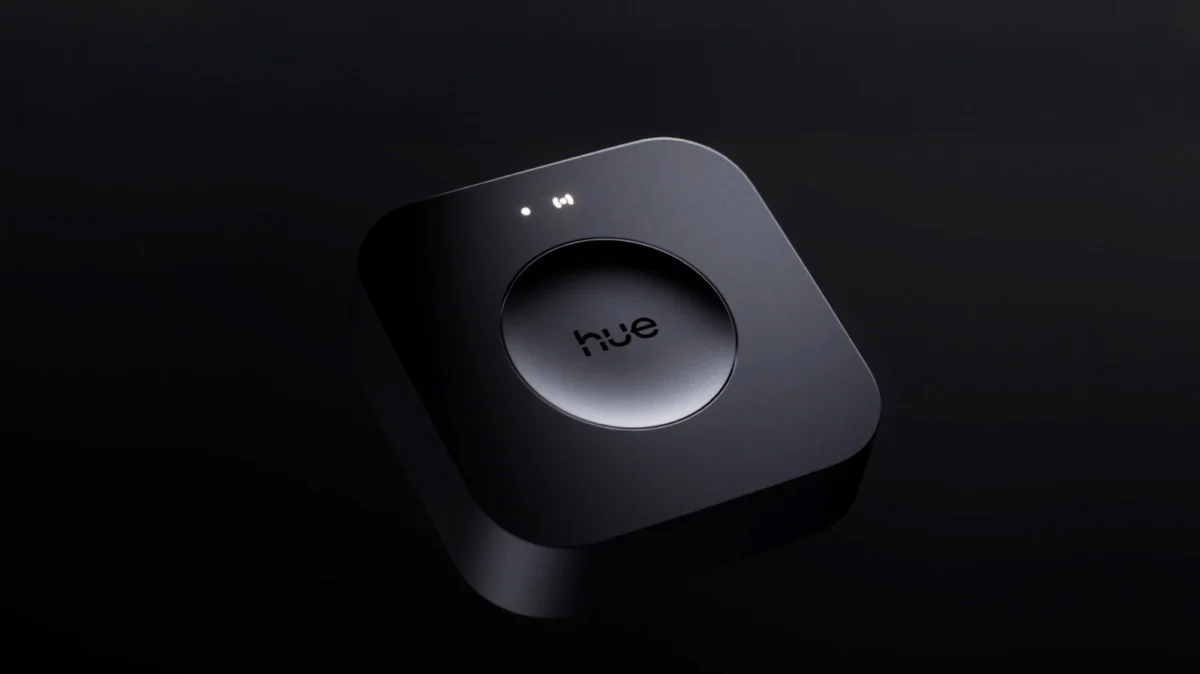
For the owners of the Philips Hue Bridge Pro—the flagship hub for one of the world’s most popular smart lighting ecosystems—the transition into the summer of 2026 turned into a technical nightmare. A routine firmware update, intended to improve system stability, instead rendered a subset of devices completely inoperable, leaving users in the dark and forcing the company to initiate an urgent, global replacement program.
While the number of impacted users is relatively small, the incident has sparked a broader conversation regarding the fragility of modern smart home infrastructure, the risks of "over-the-air" (OTA) updates, and the responsibility of manufacturers when their software destroys consumer hardware.
The Core Incident: A Firmware Update Gone Wrong
The trouble began in late June 2026, when users of the Philips Hue Bridge Pro—the professional-grade iteration of the company’s iconic hub—began reporting that their devices had ceased functioning entirely following the installation of firmware version 2071353020.
In the world of smart home technology, "bricking" a device—turning it into an expensive, non-functional paperweight—is the ultimate failure. For users, the symptoms were immediate: the Bridge Pro would lose connectivity to the Hue app, become unreachable via local networks, and fail to control the lighting scenes, schedules, and automations that form the backbone of their smart home setups.
Reports began surfacing on platforms like Reddit and dedicated smart home forums, with users expressing frustration as their automated lighting environments went offline. The timing was particularly sensitive, as the Bridge Pro had recently seen a significant price hike in the U.S. market, leading many owners to feel that their high-end investment had been compromised by shoddy quality control.
Chronology of the Failure: The "Perfect Storm" Scenario
According to detailed investigations and statements provided to Ars Technica, the failure was not a universal bug affecting every user, but rather a specific, hazardous "software update scenario."
The Pre-Conditions
The failure required a very specific set of circumstances to occur:
- Disabled Automatic Updates: The user had manually disabled the "Automatic Update" feature within the Philips Hue app.
- Legacy Firmware: The device had remained on an older version of the firmware for an extended, multi-month period.
- Delayed Installation: The user manually triggered the 2071353020 update after the firmware file had been cached on the Bridge device for more than 10 days.
This sequence of events created a conflict during the installation process, corrupting the device’s bootloader or system partition. Because the firmware is responsible for managing the low-level communication protocols that keep the Bridge synced with the cloud and local devices, its corruption rendered the hub incapable of recovering itself.
The Timeline
- Early June 2026: Philips releases firmware version 2071353020 to the public.
- Late June 2026: Reports of "bricked" devices begin to populate social media platforms. Users describe lights becoming unresponsive and the Bridge Pro showing no status lights.
- Early July 2026: Technical forums identify the firmware version as the common denominator. Philips Hue support begins to acknowledge individual reports.
- Mid-July 2026: Philips officially confirms the issue, admits to a small-scale failure, and announces a no-questions-asked replacement policy.
Supporting Data and Scale of the Impact
In an era where millions of smart home devices are connected globally, Philips Hue has been praised for its relative stability. In this instance, the company was quick to provide transparency regarding the scale of the disaster.
Philips confirmed that "fewer than 100" Philips Hue Bridge Pro devices were impacted by this specific firmware bug. While this number is statistically insignificant compared to the total number of Hue Bridges in circulation, for those 100 users, the impact was severe. The Bridge Pro is designed to handle a massive load—up to 150 lights and 50 accessories—meaning that a single failure point can disrupt an entire home’s worth of lighting, motion sensors, and automated triggers.
The technical nature of the bug suggests a failure in the "delta update" mechanism—a process where only the changed parts of the code are downloaded to save bandwidth. When the device is significantly behind on updates, the leap required to reach the current version appears to have overwhelmed the memory buffer of the device, leading to a catastrophic failure during the write process.
Official Responses: Accountability and Remediation
Philips has moved to mitigate the PR damage and ensure customer retention. The company’s response has been characterized by a willingness to bypass traditional warranty hurdles.
The Replacement Program
Philips stated that anyone impacted by the firmware update is eligible for a free replacement unit, regardless of their warranty status. This is a critical distinction; typically, firmware-related issues fall into a gray area where manufacturers might blame user error or network instability. By removing the "warranty status" barrier, Philips has acknowledged that the error lies squarely with their software engineering team.
The Preventative Patch
In addition to the replacement program, Philips confirmed that they have already rolled out a newer version of the firmware designed to prevent the issue from recurring. This patch acts as a safeguard, ensuring that even if a user attempts to update from an extremely old firmware version, the installation process will handle the file integrity checks more robustly, preventing the device from entering the "bricked" state.
Implications: The High Cost of Convenience
While the incident is effectively being resolved for those affected, it raises broader questions about the reliance on cloud-managed, internet-dependent smart home infrastructure.
The Burden of Manual Restoration
One of the most significant, yet overlooked, consequences of this incident is the labor cost to the user. Replacing a bricked Bridge Pro is not merely a "plug-and-play" operation. Because the bridge stores the network topology, room assignments, and complex automation routines, a new unit requires a total re-setup.
For a power user with 150 lights, restoring the system could take hours, if not days, of work. The process involves:
- Resetting and re-pairing every individual bulb and accessory.
- Re-creating scenes (e.g., "Movie Night," "Morning Routine").
- Re-configuring third-party integrations (Apple HomeKit, Google Home, Amazon Alexa).
- Re-programming automation schedules and "Spatial Aware" features.
This highlights the fragility of the "hub" model. When the central brain fails, the entire ecosystem collapses, underscoring the need for better backup and restore features within the Hue app—a feature that remains high on the wishlist for many users.
The Risks of Firmware-as-a-Service
The Philips Hue incident serves as a case study in the risks of the "Software-Defined Home." As appliances become more reliant on continuous updates to add features and fix security vulnerabilities, they become susceptible to the same bugs that plague desktop operating systems. However, unlike a laptop that can be booted into Safe Mode or reinstalled via a USB drive, a smart home hub often lacks a user-accessible recovery interface.
If a hub cannot boot, the user is essentially locked out of their own home’s intelligence. This "black box" nature of proprietary smart home hardware is an ongoing concern for privacy advocates and tech enthusiasts alike, who argue for more open standards that allow for easier recovery when manufacturers falter.
Conclusion: A Lesson in Resilience
The Philips Hue Bridge Pro firmware crisis of 2026 is a reminder that even the most premium, market-leading products are susceptible to the complexities of software development. While Philips’ decision to replace the units "free of charge" is a commendable act of corporate responsibility, the incident has left a lasting impression on the smart home community.
For now, the advice for Hue users is clear: maintain your devices, keep your firmware updated, and—perhaps most importantly—back up your configurations whenever possible. As the smart home continues to evolve, the bridge between convenience and reliability will remain a tightrope walk for manufacturers. For Philips, this episode was a small-scale failure, but it serves as a stark warning: in the smart home, the "bridge" is only as strong as the code that runs it.











