

Can a story idea become so exhaustively familiar that it inadvertently loops back into the realm of the original? The history of horror cinema is littered with the corpses of "be careful what you wish for" narratives—a trope popularized by W.W. Jacobs’ 1902 masterpiece, The Monkey’s Paw. Over the last century, the conceit has been parodied, deconstructed, and satirized until it became a punchline, most notably in the iconic Treehouse of Horror II segment from The Simpsons.
Yet, with the release of the new horror feature Obsession, writer-director Curry Barker has managed a rare feat: he has exhumed this dusty archetype and revitalized it by stripping away the irony. By treating the consequences of a supernatural shortcut with unflinching, agonizing seriousness, Barker has crafted a film that feels both classic and dangerously new.
The Architect of Anxiety: From Comedy to Carnage
Obsession is not merely a debut; it is a declaration of intent. While the film is Barker’s first with a significant production budget and a wide theatrical release, his cinematic DNA was forged in the digital trenches of the internet. Alongside his creative partner Cooper Tomlinson, Barker rose to prominence via the YouTube channel "that’s a bad idea." The duo spent years honing their craft through tight, punchy sketches that frequently parodied the very genre Barker is now subverting.
This transition from sketch comedy to high-stakes horror is becoming a definitive career path for a new generation of filmmakers, joining the ranks of Jordan Peele and Zack Cregger. The commonality lies in the mechanics of the audience experience. Both comedy and horror are binary arts—they rely on the precise orchestration of tension and the subsequent, explosive release. A shift in camera angle, a lingering gaze, or a slight tweak in tonal delivery can instantaneously mutate a scene from a belly laugh into a paralyzing dread. Barker understands that the human response to an "awkward" social encounter is structurally identical to our response to a threat: both require an immediate, involuntary reaction.
A Narrative Chronology: The Anatomy of a Wish
The film opens with a deceptive veneer of the romantic comedy. Baron "Bear" Bailey (Michael Johnston) is a socially anxious, soft-spoken employee at a local music store. He is hopelessly enamored with his coworker and trivia teammate, Nikki (Inde Navarette). The film’s opening act is a painful exercise in relatable yearning. Bear, guided by the questionable advice of his friend Ian (Cooper Tomlinson), attempts to navigate the treacherous waters of modern romance. Ian’s suggestion—to "neg" Nikki by using her childhood nickname, "Freaky Nikki"—serves as a grim foreshadowing of the toxic entitlement that will eventually spiral out of control.
The turning point occurs at a kitschy, atmospheric New Age shop. While searching for a gift for Nikki, Bear discovers a collection of "One Wish Willows." The film’s world-building here is impeccable; the lore surrounding these trinkets—complete with a web of conflicting, meticulously designed fake websites—creates a sense of tangible, mundane mystery.

Bear, driven by an inability to communicate his feelings and a desperate need for validation, purchases a willow and makes a singular, definitive wish: that Nikki will love him more than anyone else in the world. The fulfillment of this wish is immediate, but it arrives with a catastrophic caveat. The entity that takes root in Nikki’s psyche is not a romantic partner; it is a manifestation of obsession itself. The "Nikki" that remains is a shell, dominated by a codependent, manipulative, and violent force.
Supporting Data: The Performance of Violation
The horror of Obsession is rooted in the degradation of the protagonist’s agency. The entity controlling Nikki does not just change her personality; it weaponizes her, making a shrine out of Bear’s deceased cat, stalking his every move, and gaslighting him with fabricated tragedies to secure his physical intimacy.
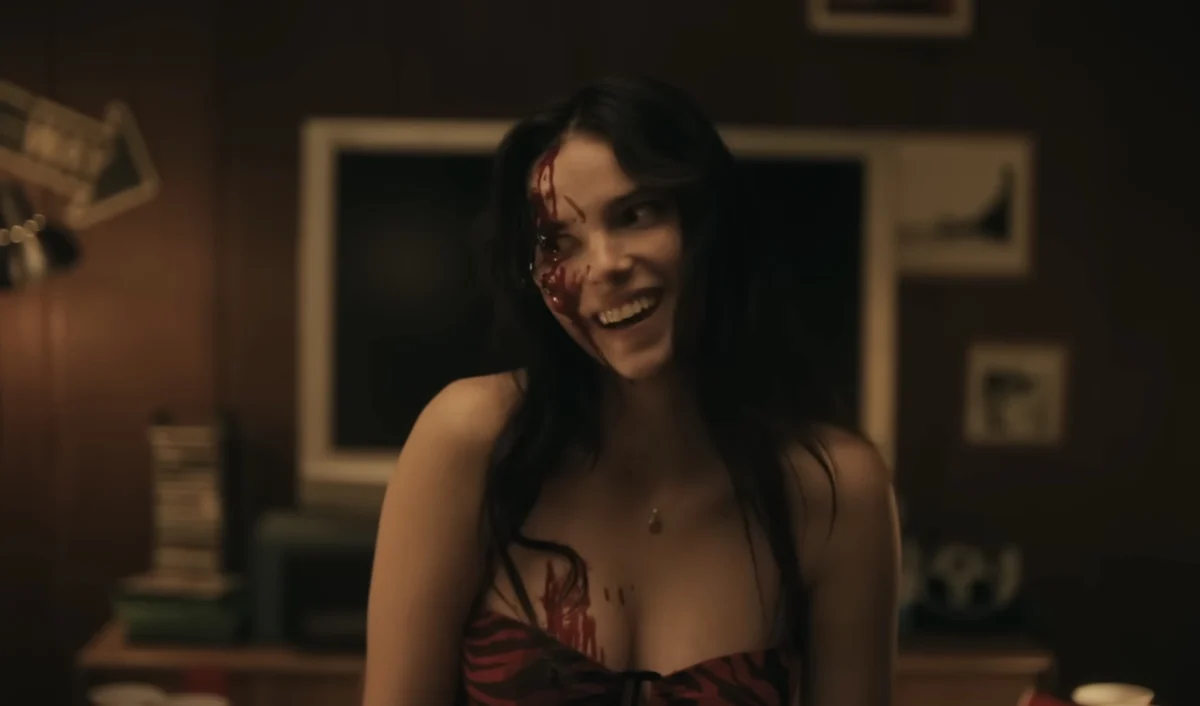
Inde Navarette’s performance is nothing short of a revelation. She portrays the "possessed" version of Nikki with a visceral intensity, her facial expressions contorting into shapes that feel almost unnatural. In one particularly chilling scene, Navarette repeats the word "no" in a series of rapidly shifting intonations—a masterclass in auditory and visual discomfort that echoes the iconic "sunken place" sequence from Get Out.
Crucially, Navarette has stated in press junkets that she avoids horror films, a fact that perhaps allowed her to approach the role without the baggage of genre tropes. Her performance is raw, unmediated, and profoundly unsettling, serving as the anchor for the film’s increasingly violent descent.
Critical Implications: Misogyny, Media Literacy, and the "Nice Guy"
As Obsession reaches wider audiences, it is inevitable that the discourse will fracture. The film places the audience in the perspective of Bear, a "Nice Guy" archetype whose slow realization that he has unleashed a monster is tempered by the fact that he is the architect of his own nightmare.
During preview screenings, reports of audience members labeling the antagonist a "crazy bitch" have highlighted a growing concern regarding contemporary media literacy. There is a palpable danger that viewers will strip away the film’s critical framing and reduce it to a misogynistic revenge fantasy. However, Barker provides enough textual evidence to dismantle this reading. Bear’s refusal to release Nikki from her torment, even when she regains momentary consciousness to beg for mercy, firmly establishes him as the villain of his own story. His response—a pathetic, self-centered interrogation of why his love isn’t "enough"—serves to strip away any remaining sympathy the audience might have held for him.

The Future of the Genre: From Obsession to Texas Chain Saw
The distinction between a "love story" and a "romance" is a theme Nikki explicitly addresses before her possession. A romance promises a happy ending; a love story is merely a chronicle of devotion, regardless of the carnage left in its wake. Obsession is a love story in the most harrowing sense of the term. It does not offer a path to salvation, but rather a descent into a fate that feels significantly worse than death.
The film’s success has propelled Curry Barker into the upper echelons of genre filmmaking. With his next project, Anything But Ghosts, already in development with Blumhouse and Focus Features, Barker is positioned to become a major voice in horror. Perhaps most intriguingly, he is attached to direct an upcoming reboot of The Texas Chain Saw Massacre for A24.
While the Texas Chain Saw franchise has suffered from diminishing returns and inconsistent reboots for decades, Barker’s work on Obsession provides a compelling argument for his involvement. Tobe Hooper’s 1974 original remains the gold standard not because of its gore, but because of its pervasive, sweaty, and unrelenting sense of nastiness. Barker has proven in Obsession that he understands this specific frequency of dread. He knows how to balance dark, situational humor with a cold-blooded commitment to character destruction.
In the final assessment, Obsession is more than a cautionary tale about cursed artifacts; it is a sophisticated dissection of the male ego and the violence inherent in possessive love. By choosing to play the "monkey’s paw" trope straight, Barker has managed to make the familiar feel dangerous again. As the credits roll, the audience is left with the haunting realization that the most terrifying thing in the room isn’t the supernatural entity—it’s the person who wished it into existence.









No comments yet. Be the first to join the conversation!