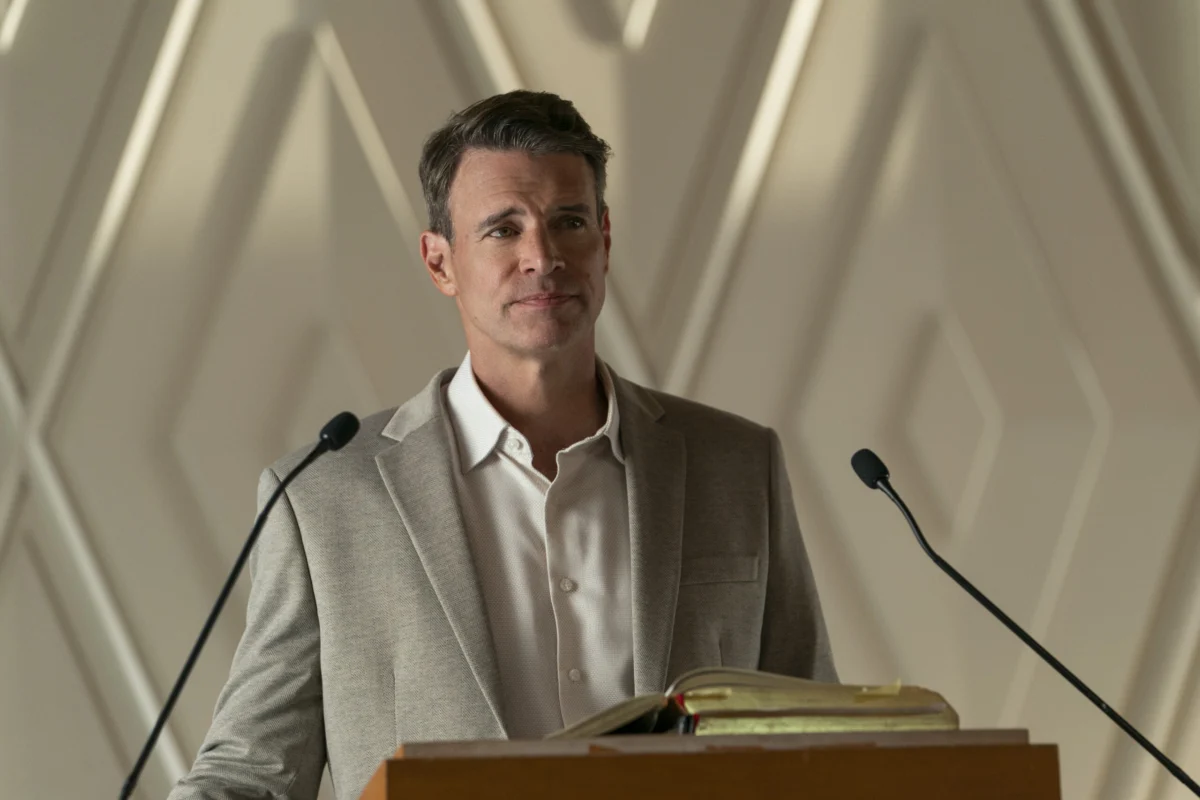
In a move that has stunned both industry analysts and a dedicated viewer base, Prime Video has officially canceled the faith-based family drama It’s Not Like That after a single season. The decision arrives despite the series enjoying a robust performance on the platform’s viewership charts and maintaining a flawless critical reception.
The announcement, first reported by Deadline, was met with a heartfelt, albeit disappointed, reaction from the show’s star and executive producer, Scott Foley. As the streaming landscape continues to shift toward aggressive cost-cutting measures and data-driven renewals, the fate of It’s Not Like That serves as a stark reminder that in the era of "peak TV," critical acclaim and consistent viewership are not always enough to secure a future.
The Facts: A Sudden End to a Promising Run
It’s Not Like That, created by Parenthood alumni Ian Deitchman and Kristin Robinson, was positioned as a cornerstone of Prime Video’s collaborative efforts with The Wonder Project. The series centers on the lives of Malcolm (Foley), a pastor and recently widowed father of three, and Lori (Erinn Hayes), a newly divorced mother of two teenagers. The show explored the complexities of modern single parenting, faith, and the messy intersection of life after loss.
The series had been a fixture in Prime Video’s Daily Top 10 for TV shows for six consecutive weeks following its wide release on May 15. At its peak, the show reached the number three or four spot on the platform’s internal metrics—a significant achievement for a mid-budget family drama in a competitive market. Furthermore, the show boasts a rare 100% approval rating on the review aggregator Rotten Tomatoes, signaling a deep resonance with audiences and critics alike. Despite these metrics, Amazon has opted not to move forward with a second season.
A Chronology of the Series’ Trajectory
The journey of It’s Not Like That was unconventional from its inception. Unlike standard original programming that drops globally on a platform’s main interface, the show took a staggered release path:
- January 2026: The series makes its quiet debut on The Wonder Project’s add-on subscription channel, serving as a flagship title for the partnership between the production house and Amazon.
- May 15, 2026: Following a successful testing period, Prime Video grants the series a wide release on the main platform.
- May – June 2026: The series finds its footing, quickly climbing the ranks of Prime Video’s Top 10 lists and maintaining a consistent presence for six weeks.
- July 2026: Deadline reports the cancellation of the series, citing internal platform decisions.
- July 2026 (Day After Report): Scott Foley takes to Instagram to confirm the news and express his gratitude to the fans and crew.
The Star’s Response: Scott Foley’s Candid Reflection
Following the breaking news, Scott Foley utilized his social media platform to address the fanbase directly. In a video posted to his Instagram account, a somber Foley broke down the bittersweet nature of the cancellation, noting the contradiction between the show’s performance and its abrupt conclusion.
"After six or so weeks in Prime Video’s Top 10—I think getting as high as like three or four—really great reviews (I think we have like 100% on Rotten Tomatoes), our little show called It’s Not Like That has been canceled," Foley stated.
The actor’s tone was one of profound disappointment, tempered by a sense of professional pride. "I think I’m just disappointed, obviously, but I’m so grateful for the chance," he added. "I got to make a show I’m so proud of with people I grew to like a lot, and now we don’t get to make it anymore, and you don’t get to make it anymore."
Foley took pains to encourage his followers to continue watching the existing episodes, emphasizing that while the cancellation is permanent, the work remains available for discovery. "If you watched it, thank you, I appreciate it. If you didn’t, it’s still on Amazon Prime, you can check it out. It’s not going to change the cancellation, but I wanted to thank everybody who took the time to check it out."
He concluded his public address with a heartfelt nod to the cast and crew, including J.R. Ramirez, Caleb Baumann, Cary Christopher, Leven Miranda, Liv Lindell, and Cassidy Paul. "I loved making this show with you, and I would work with you again and again and again."
Behind the Scenes: The "Wonder Project" Partnership
The cancellation of It’s Not Like That raises significant questions regarding the long-term viability of niche-interest content within major streaming ecosystems. The show was a flagship production of The Wonder Project, an entity focused on faith-based and family-oriented storytelling.
The partnership was designed to capitalize on an underserved demographic—families looking for wholesome, narrative-driven content that lacks the cynicism often found in prestige streaming dramas. By utilizing a "hub" approach (the add-on channel followed by a wide release), Prime Video appeared to be testing a model of tiered engagement.
However, industry analysts suggest that while the show performed well, it may have failed to meet the high "cost-per-acquisition" or "subscriber-retention" metrics that platforms like Amazon utilize when deciding on multi-season renewals. In an era where streaming platforms are under pressure to prove that their content drives new subscriptions—rather than just satisfying existing ones—even well-liked shows can fall victim to the "renewal threshold."
Implications: The High Bar of Modern Streaming
The cancellation of It’s Not Like That highlights a growing trend in the industry: the "Efficiency Era." Streaming giants, including Amazon, Netflix, and Disney+, have shifted focus away from the "growth at all costs" mentality that defined the late 2010s. Today, financial performance is prioritized over critical acclaim.
The Metrics Dilemma
The fact that It’s Not Like That held a 100% Rotten Tomatoes score and remained in the Top 10 for six weeks underscores the widening gap between "fan satisfaction" and "corporate metrics." For a show to survive today, it must often prove it can serve as a "tentpole" series—a show that brings in a massive influx of new subscribers rather than just keeping current ones happy.
The Future of Faith-Based Content
This cancellation may signal a cooling period for faith-based content on major streamers. While audiences clearly exist for these shows, their ability to migrate from niche subscription channels to broader streaming platforms remains unproven. If a show with the backing of a major star like Scott Foley and the support of a specialized production house cannot secure a second season, it raises the bar for all future projects of this genre.
The "One-and-Done" Phenomenon
We are seeing an increase in "one-and-done" series—shows that are canceled shortly after their first season concludes. This creates a difficult viewing environment for audiences, who are increasingly hesitant to invest time in a new series, fearing it will be abandoned. For creators like Deitchman and Robinson, the challenge moving forward will be pitching projects that offer satisfying conclusions within a single season, effectively "self-contained" stories that protect the audience from the frustration of an abrupt ending.
Looking Forward
While It’s Not Like That has come to an end, the legacy of the show persists in the positive reviews and the loyal, albeit smaller, audience it managed to cultivate. For fans, the silver lining is that the first season remains accessible on Prime Video.
As for Scott Foley and his collaborators, the industry’s reaction to the cancellation has been largely sympathetic. Foley’s transparency in his video message serves as a reminder that behind the algorithms and the quarterly earnings reports are creative teams who invest months, and sometimes years, into projects they hope will connect with viewers.
The industry will continue to monitor how Amazon handles its content library following this decision. Will the platform lean more into blockbuster franchises, or will it find a way to nurture the mid-budget, high-quality dramas that define the identity of a service? For now, the story of It’s Not Like That stands as a cautionary tale of how the economics of the digital age continue to reshape the television landscape, often leaving the most beloved, human-centric stories on the cutting room floor.