Lina Hope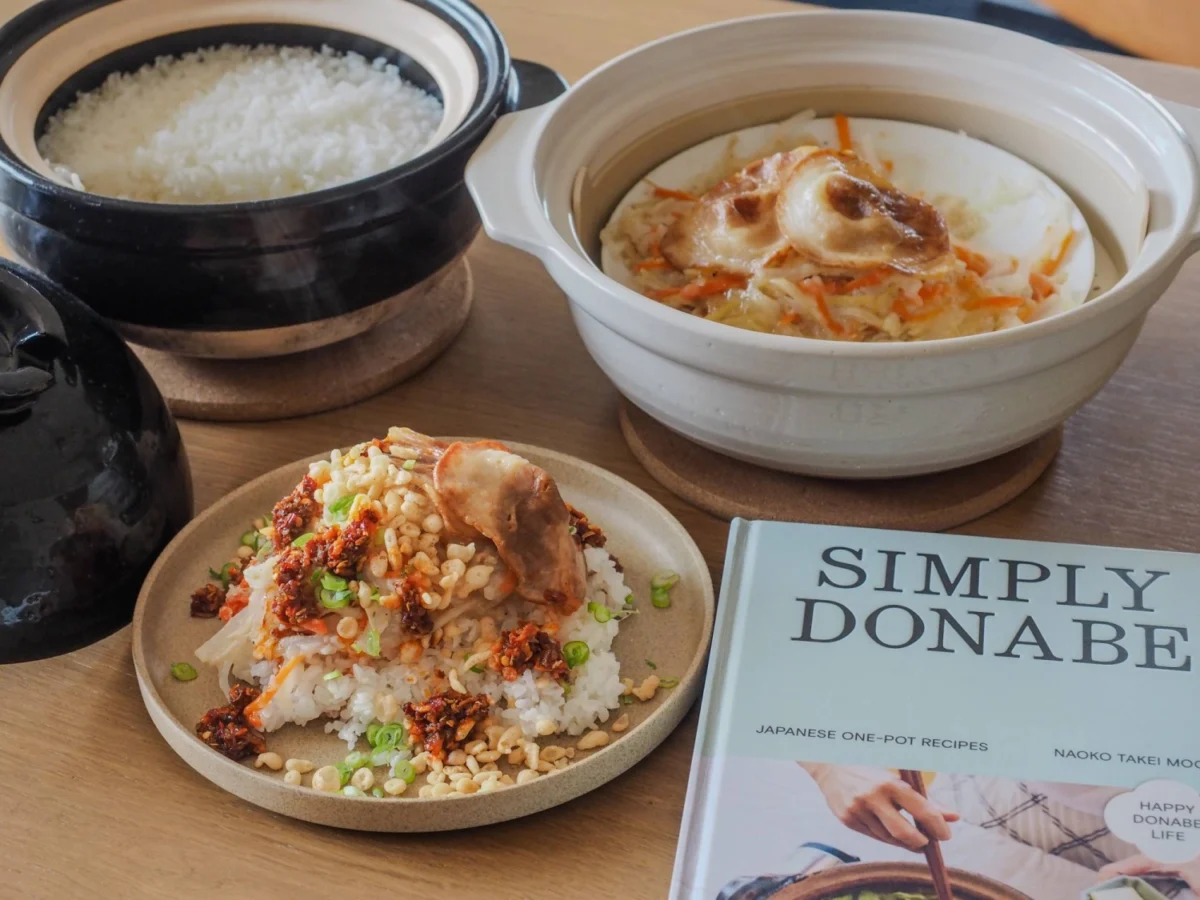
HIDAKA, HOKKAIDO — In an era defined by the frantic pace of air fryers and the sterile convenience of high-pressure multi-cookers, a quiet revolution is simmering on stovetops across the globe. For many Japanese gourmands, the donabe—a traditional earthenware clay pot—represents far more than mere cookware. It is a vessel of intention, a centerpiece for communal gathering, and a masterclass in thermal dynamics.
Beyond their rustic aesthetic, these pots are prized by home cooks and Michelin-starred professionals alike for their unparalleled efficiency. By retaining heat and radiating it into ingredients with a gentle, consistent precision that metal equivalents struggle to replicate, the donabe transforms the act of cooking from a chore into a ritual.
At the center of this global resurgence is Naoko Takei Moore, a California-based food writer and entrepreneur whose latest work, Simply Donabe: Japanese One-Pot Recipes, seeks to demystify this ancient technology for the modern kitchen.
The Evangelist of Earthenware: A Chronological Journey
To understand the current fascination with donabe in the West, one must look at the trajectory of Takei Moore’s career, which has spanned over two decades of cultural translation and culinary advocacy.
- 2001: Born in Yokohama, Takei Moore makes the pivotal move to Los Angeles. It is here that she discovers a profound void in the American culinary landscape: while sushi and ramen were gaining traction, the fundamental tool of Japanese home cooking—the clay pot—was virtually unknown.
- 2008: Driven by a desire to share her heritage, she launches Toiro, a specialized kitchen-supply business. The name is a nod to the Japanese aphorism jūnin toiro (“ten people, ten colors”), celebrating the individuality of taste and the versatility of the donabe.
- 2015: Takei Moore collaborates with renowned chef Kyle Connaughton to publish Donabe: Classic and Modern Japanese Clay Pot Cooking. The book becomes a definitive guide, bridging the gap between high-end professional technique and home-accessible recipes.
- 2017: Recognizing the need for a tactile experience, she opens a brick-and-mortar storefront in West Hollywood, allowing curious cooks to handle the weight and texture of authentic Iga-yaki pottery.
- 2024–2025: Takei Moore continues to expand her literary footprint with The Very Asian Guide to Japanese Food, further contextualizing Japanese culinary philosophy for a global audience.
- 2026: The release of Simply Donabe marks a shift toward accessibility, focusing on the ease and speed of one-pot cooking, just as the culinary world turns its attention back to the slow-food movement.
The Geology of Taste: Why Iga-yaki Matters
The secret to the donabe’s performance is not found in a laboratory, but in the deep history of Mie Prefecture. The pots sold through Toiro are manufactured by Nagatani-en, a company that has been crafting these vessels since 1832.
The story of the clay, however, goes back 1.3 million years. Much of the Iga region was once submerged beneath Lake Biwa, Japan’s largest freshwater lake. As the water receded, it left behind a coarse, microorganism-rich sediment. When fired at high temperatures, the organic matter within the clay burns away, leaving behind microscopic voids—pores that provide the vessel with unique permeability and extraordinary thermal insulation.
This is the "magic" that chefs prize. When a pot is heated, it doesn’t just get hot; it becomes a thermal reservoir. This allows for a gentle, steady heat transfer that prevents the scorching common in thin-walled stainless steel or aluminum, ensuring that delicate vegetables and proteins retain their texture and vibrant flavor profiles.
Simply Donabe: Democratizing the Ritual
In Simply Donabe, Takei Moore invites readers to slow down. She argues that the "labor" often associated with traditional cooking is a misconception. In fact, the donabe is arguably one of the most efficient tools in the kitchen.
The One-Pot Advantage
The book emphasizes the "one-pot" philosophy:
- Reduced Cleanup: By preparing the entire meal in a single vessel, the post-dinner sink ritual is drastically shortened.
- Flavor Fusion: The clay pot’s ability to maintain a steady simmer encourages the mingling of flavors, allowing sauces and broths to reduce and concentrate without the need for constant supervision.
- Low-Friction Cooking: Contrary to the popular belief that traditional methods are slow, Takei Moore demonstrates that many donabe dishes come together with surprising speed. The clay does the heavy lifting, essentially cooking the food from the inside out.
Bridging the Gap
Crucially, Takei Moore is not a purist who demands expensive equipment from page one. She encourages beginners to use what they have at home—a standard Dutch oven or a heavy-bottomed pot—to experience the rhythm of the recipes. Only when the reader is ready to commit to the specific thermal benefits of authentic clay does she suggest upgrading to a true donabe.
Expert Guidance: Choosing Your Vessel
For those ready to invest in a piece of Iga-yaki, Takei Moore provides a masterclass in functional design. Not all donabe are created equal, and understanding their anatomy is key to success:
- The Rice-Cooker Donabe: Featuring a specialized pressure insert, this vessel is designed to mimic the thermal environment of a traditional kamado (wood-fired stove). Takei Moore notes that while it is optimized for grains, it is a "workhorse" that performs beautifully for stews and braises.
- The Shallow Pot: Ideal for communal table-side cooking (such as shabu-shabu or sukiyaki), these vessels are designed to keep ingredients within easy reach.
- The Deep Pot: The classic shape for soups and curries, where heat retention over a long simmer is the priority.
Her advice, which many readers have taken to heart, is to avoid the temptation of buying the most ornate pot first. Focus on the thickness of the base and the fit of the lid. A heavy lid is essential; it creates the slight pressure needed to steam the contents perfectly, locking in moisture and aromatics.
Implications for the Modern Kitchen
The success of Takei Moore’s approach suggests a broader cultural shift. As consumers become more conscious of the environmental impact of disposable kitchen gadgets and the nutritional benefits of home-cooked, whole-food meals, the humble donabe offers a sustainable alternative.
A Response to Modernity
When asked about the role of the donabe in the 21st century, Takei Moore has often spoken about the "intentionality of the hearth." In a world of delivery apps and meal-kit services, the clay pot demands a physical presence in the kitchen. It forces a pause. You cannot effectively cook with a donabe while multitasking on a smartphone; it requires an awareness of the flame, the steam, and the aroma.
Culinary Sustainability
Furthermore, the durability of these pots challenges the "planned obsolescence" of modern non-stick cookware, which often loses its coating after a few years of heavy use. A well-maintained donabe, by contrast, can last for generations, becoming a family heirloom that gains character and "seasoning" with every meal prepared.
Conclusion: The Joy of the Clay
Simply Donabe is more than a collection of recipes; it is an invitation to participate in a 1,300-year-old dialogue between geology, craft, and human appetite. Whether you are a professional chef looking to refine your technique or a home cook seeking to simplify your evening routine, the donabe offers a path back to the fundamental joys of cooking.
As Takei Moore writes, the ultimate goal of the donabe is not just to feed the body, but to nourish the connections we form around the table. In an increasingly fragmented world, the simple act of lifting a heavy clay lid to reveal a steaming, aromatic meal is, perhaps, the most radical and rewarding act of care we can perform.


 Neng Nana
 Asro
Asro