Ammar Sabilarrohman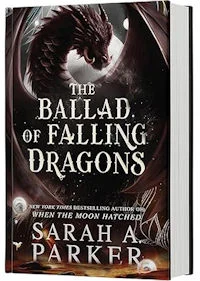
The global book market is currently witnessing a fascinating tug-of-war between established literary titans and the surging popularity of genre-bending fiction. As of the first week of June 2026, data aggregated from major industry trackers—including the New York Times, Publishers Weekly, USA Today, and various Amazon regional metrics—reveals a market defined by high-octane fan engagement and the continued dominance of serialized storytelling.
Main Facts: The Leaders of the Pack
The current bestseller landscape is anchored by a diverse array of titles, but one name stands out in terms of sheer market penetration: Matt Dinniman. With multiple entries in the Dungeon Crawler Carl series maintaining consistent presence across both hardcover and paperback charts, Dinniman has cemented his status as a powerhouse in modern speculative fiction.
However, the week’s most significant movement belongs to Parker’s The Ballad of Falling Dragons, which has surged to the number one spot on both the New York Times and Publishers Weekly charts. This rapid ascent indicates a major cultural moment for the title, bolstered by strong critical reception and aggressive reader adoption.
Simultaneously, James Lee Burke’s Yesteryear continues to demonstrate remarkable staying power. Maintaining a top-three position across nearly every major domestic chart, the novel is proving that traditional, high-quality narrative fiction remains a cornerstone of the bookstore experience, even in an era dominated by digital-first fantasy and LitRPG.
A Chronology of Market Movement (May – June 2026)
The trajectory of the current list reveals a clear timeline of reader behavior:
- Mid-May: Initial hype cycles for late-spring releases began to settle. Titles like The Midnight Train (Haig) and The Faraway Inn (Durst) established early footholds.
- Late May: The market saw a significant shift as readers turned their attention toward summer reading lists. Dungeon Crawler Carl maintained its long-tail momentum, having been on various lists for over 40 weeks.
- June 1: The official release of several key titles, including The Kings’ List (Presley) and the graphic novel adaptation of Dungeon Crawler Carl, triggered an immediate ripple effect, with both titles debuting high on USA Today and Publishers Weekly lists.
- June 7: The New York Times update signaled a cooling off for some titles (such as Broken Dove by Francis, which saw a sharp decline in rank) while rewarding consistent performers like The Thorn Queen (Smith).
Supporting Data: The Breakdown of Genre Dominance
The current data presents a clear picture of how different formats are performing in the modern ecosystem.
Hardcover Resilience
Hardcover sales continue to favor "event" books and established series. The Dungeon Crawler Carl series, specifically Carl’s Doomsday Scenario and The Dungeon Anarchist’s Cookbook, are effectively utilizing a "multibook strategy," where the presence of one volume on a list serves to boost the visibility of the entire backlist. This is a common tactic in the fantasy/sci-fi space but is rarely executed with such success.
The Paperback Powerhouse
The paperback market is currently bifurcated. On one hand, we see massive, long-running sellers like the A Court of Thorns and Roses series by Sarah J. Maas, which, despite being years old, continue to dominate the charts due to a perpetual cycle of new readers discovering the series. On the other hand, newer trade paperbacks like The Knight and the Moth by Gillig are seeing massive "debut" spikes, proving that the paperback market is still the primary gateway for readers looking to experiment with new authors.
Regional Variations
It is worth noting that international markets—specifically Amazon UK and Amazon Canada—are currently reflecting different consumption patterns than the United States. While US readers are heavily invested in domestic fantasy series, UK and Canadian readers are showing a stronger, more sustained interest in legacy titles like the Harry Potter box sets and Project Hail Mary by Andy Weir, suggesting that international markets may be slightly more conservative in their reading habits at this specific moment in time.
Official Industry Responses and Market Shifts
Publishers and industry analysts have noted a trend that is becoming impossible to ignore: the "Algorithm-Influenced Bestseller." Titles that perform well on Amazon often correlate with high search volume, which then feeds into the broader, more traditional metrics of the New York Times and Publishers Weekly.

In an official statement regarding the current surge in speculative fiction, a spokesperson for a leading literary agency remarked: "We are moving away from the era where a bestseller is purely the result of traditional bookstore placement. We are now in an era where the reader’s digital footprint—their searches, their pre-orders, and their engagement in online communities—is the primary engine of success."
Furthermore, the notable decline of several titles after their initial debut week suggests that the "window of relevance" for new fiction is narrowing. Authors who cannot maintain a high level of digital engagement within the first 14 days of release are finding it increasingly difficult to sustain a spot on the top 150 lists.
Implications for the Future of Publishing
The implications of these trends are significant for both authors and publishers.
1. The Death of the Slow Burn
The data shows that titles that do not hit the ground running with significant momentum (like The Ballad of Falling Dragons) are struggling to find purchase later. The "slow burn" success story is becoming a relic of the past; publishers are now incentivized to put their entire marketing budget behind the first two weeks of a launch.
2. The Backlist as a Frontend Asset
Authors like Dinniman and Maas have proven that the backlist is not just for steady income—it is a marketing tool. By having multiple books on the list, these authors effectively dominate the "shelf space" of the digital storefront. Future publishing contracts will likely focus more on rapid-release schedules to replicate this effect.
3. The Fragmentation of "The Bestseller"
The divergence between the USA Today list (which combines all genres) and the New York Times list (which separates fiction) highlights a growing challenge for readers: defining what a "bestseller" actually means. As genre fiction continues to outpace general fiction in volume, the traditional prestige of the New York Times list is being challenged by the sheer velocity of genre-based sales metrics found on Amazon.
4. The Role of the Graphic Novel
The debut of Dungeon Crawler Carl, Vol. 1 (Graphic Novel) at high positions on multiple lists confirms that the graphic novel format is no longer a niche sub-category. It is now a legitimate avenue for scaling established IP. Expect to see more fiction franchises pivot toward illustrated adaptations as a secondary revenue stream.
Conclusion: Looking Ahead to Mid-Summer
As we move deeper into June, the industry will be watching to see if The Ballad of Falling Dragons can maintain its momentum against the persistent force of the Dungeon Crawler Carl series. The market is currently rewarding consistency, digital engagement, and multi-format availability. For the average reader, this means that the books reaching the top of the charts are those that have been carefully cultivated to satisfy a global, highly-connected, and deeply passionate audience.
While legacy titles continue to provide a floor for the market, the ceiling is being redefined by authors who understand that in 2026, a book is not just a product—it is an ecosystem. Whether this trend continues or if we see a "return to the classics" in the latter half of the year remains to be seen, but for now, the data is clear: the age of the serialized, digital-first blockbuster is here to stay.


 Raul Delapena Setiawan
 Nana Muazin