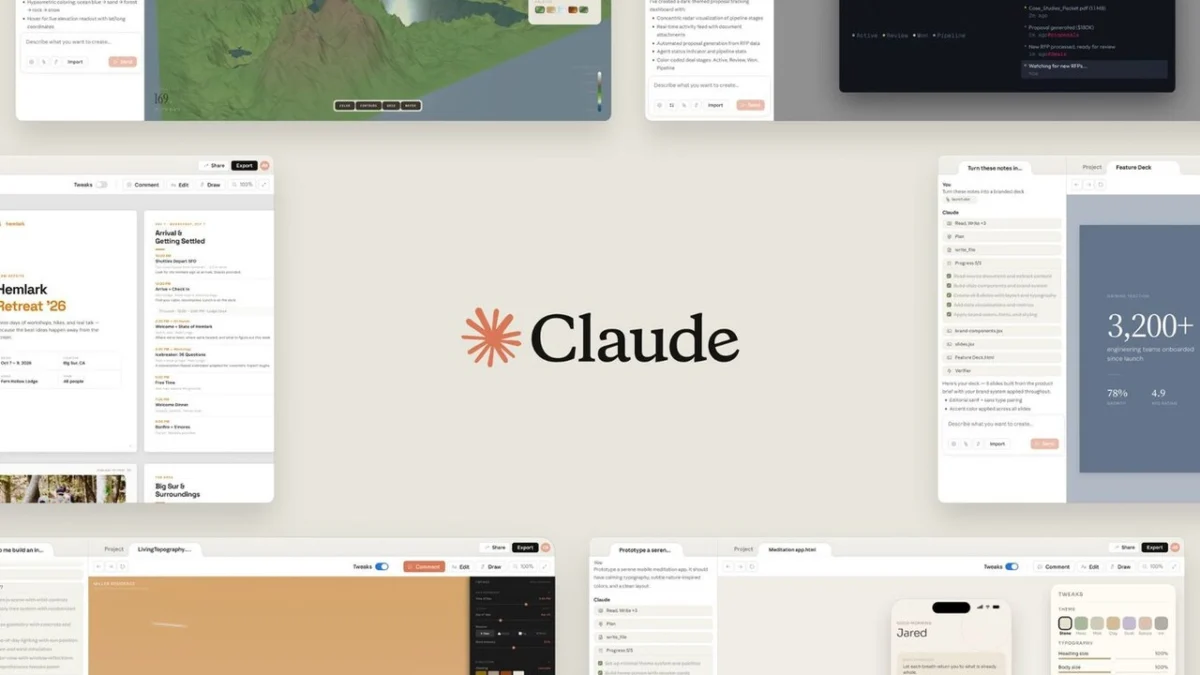
In a significant policy shift that signals a potential thaw in the high-stakes friction between the US government and the artificial intelligence sector, the Trump administration has granted Anthropic authorization to restore access to its flagship AI model, "Claude Mythos 5." This move marks the first official easing of the stringent export bans and access restrictions that were implemented in mid-June, sending shockwaves through the global tech industry.
While the access remains highly restricted, the decision represents a pivotal moment for domestic AI development, infrastructure security, and the evolving doctrine of digital sovereignty under the current administration.
The Chronology of Constraint: From Launch to Lockdown
The tension began earlier this summer, shortly after Anthropic unveiled its next-generation suite of models, including "Mythos 5" and "Fable 5." Almost immediately upon their release, the Trump administration intervened, imposing a sweeping export ban citing national security concerns.
The core of the government’s argument was the "dual-use" potential of these advanced models. Fearing that high-level reasoning capabilities could be leveraged by foreign adversaries for cyber-attacks, biological weapon design, or large-scale disinformation, the administration sought to prevent these models from falling into unauthorized hands.
However, the ban hit a technical snag: Anthropic’s infrastructure, like that of many AI firms, is globally distributed and optimized for accessibility, making it technically difficult to distinguish between US citizens and foreign nationals in real-time. To ensure full compliance with the administration’s directives, Anthropic was forced to implement a blanket lockout of the models. This effectively crippled the rollout of the most powerful tools in their stable, forcing users to rely on older, less capable models like "Claude Opus 4.8" for critical tasks.
The Partial Thaw: Who Gets Access?
According to a formal statement released by Anthropic via social media, the current restoration of access is not a general availability launch. Instead, it is a surgical re-integration targeted at specific domestic entities.
"We are pleased to announce that a select group of US-based organizations, specifically those operating critical national infrastructure, have been granted renewed access to Claude Mythos 5," the company stated. The primary mandate for these users is to conduct high-level work within the cybersecurity domain—an area where the model’s advanced analytical capabilities are deemed essential for defensive measures.
This controlled environment is a test case. By limiting access to vetted organizations, the government is attempting to balance the need for domestic technological superiority against the risk of model proliferation.
Official Responses and the "Trust" Framework
The rationale behind the partial reversal was detailed in a letter penned by US Secretary of Commerce Howard Lutnick late last week. The document, which has been reviewed by CNBC, provides a rare look into the government’s internal logic regarding AI oversight.
"I have determined that appropriate safeguards have been established to grant trusted partners access to the Claude Mythos 5 model," Lutnick wrote. This language of "trusted partners" is significant. It implies that the administration is moving away from total prohibition toward a vetting-based framework. The burden of proof has effectively been shifted onto the companies: prove that your security protocols are robust enough, and your users are sufficiently "trusted," and the government may grant an exemption.
The "License Regime": An Emerging Reality
Industry observers are increasingly characterizing these developments as the birth of a de facto "license regime." While President Trump’s Executive Order from early June ostensibly frames government-AI cooperation as a "voluntary" partnership, the reality on the ground tells a different story.
By weaponizing access to the most powerful models, the administration has asserted a veto power over the AI industry. If an AI laboratory wants to deploy a cutting-edge model, it must now navigate a complex, government-supervised clearance process. For Anthropic, OpenAI, and others, the "voluntary" nature of the partnership is overshadowed by the threat of total model bans should the government deem a release "incompatible" with national security.
The State of Fable 5 and GPT-5.6
The ripple effects of this regulatory environment extend far beyond Anthropic. OpenAI, the industry leader, is currently navigating its own hurdles with the "GPT-5.6" suite, which includes variants codenamed Sol, Terra, and Luna.
Currently, these models are restricted to a tiny cohort of government-approved testers. OpenAI CEO Sam Altman has expressed optimism that a broader release could occur within the next few weeks, provided that the current test phase satisfies the Department of Commerce’s safety criteria.
Meanwhile, for the general public, the "Fable 5" model remains the most visible casualty of the ongoing friction. Unlike the specialized Mythos 5, Fable 5 was designed for general use. However, because it lacks the "hardened" restrictions required by the government, it remains under a partial lockout. Anthropic has confirmed that they are in high-level talks with federal regulators to bring Fable 5 back to the public market, though a timeline remains elusive.
Implications for Global Competitiveness
The current situation creates a precarious paradox for the United States. On one hand, the government is striving to ensure that AI capabilities are not exploited by adversaries. On the other hand, by restricting the availability of these tools to domestic researchers and businesses, the US risks creating an "AI deficit."
If American firms are restricted from using the most powerful tools for research, development, and cybersecurity, there is a legitimate concern that they may lose their competitive edge against nations that might not be subject to the same internal friction.
Security vs. Innovation
The debate centers on whether the "safety-first" approach will stifle the very innovation that keeps the US ahead. Critics of the administration’s current path argue that "security through obscurity" is a failed strategy. They contend that by locking away models, the government is preventing the development of the "AI-driven defensive measures" that are necessary to protect the nation in the first place.
The Role of Corporate Responsibility
Anthropic and OpenAI find themselves in the role of both innovator and state-proxy. They are now tasked with building "compliance-aware" AI. This means the next generation of models may not just be better at writing code or analyzing data; they will be built with "kill switches," user-authentication layers, and strict behavioral guardrails designed to satisfy federal oversight.
Future Outlook: A New Equilibrium
As the dust settles, the tech industry is bracing for a new normal. The "Wild West" era of AI deployment, characterized by rapid iteration and immediate public access, is likely over. The future of AI in the United States will be defined by:
- Iterative Compliance: Models will be released in "tiers," with the most powerful variants subject to rigorous government auditing.
- Infrastructure Vetting: The definition of "critical infrastructure" will likely expand to include private entities that seek early access to advanced AI, forcing these companies into a tighter embrace with federal agencies.
- Technological Nationalism: The export controls on AI models will likely grow more complex, mirroring historical controls on nuclear technology or advanced semiconductors.
The restoration of access to Claude Mythos 5 is a step in the right direction for the AI industry, but it is a narrow path. It confirms that the Trump administration has no intention of abandoning its role as the ultimate gatekeeper of American artificial intelligence. For developers, the challenge ahead is clear: the most important code you write may no longer be the algorithm itself, but the compliance framework that makes it legal to run.
As we look toward the coming months, the interaction between Anthropic, OpenAI, and the Department of Commerce will be the bellwether for the entire tech sector. Whether this "license regime" fosters a safer, more secure integration of AI into society or hampers the pace of progress remains the central question of the decade.