

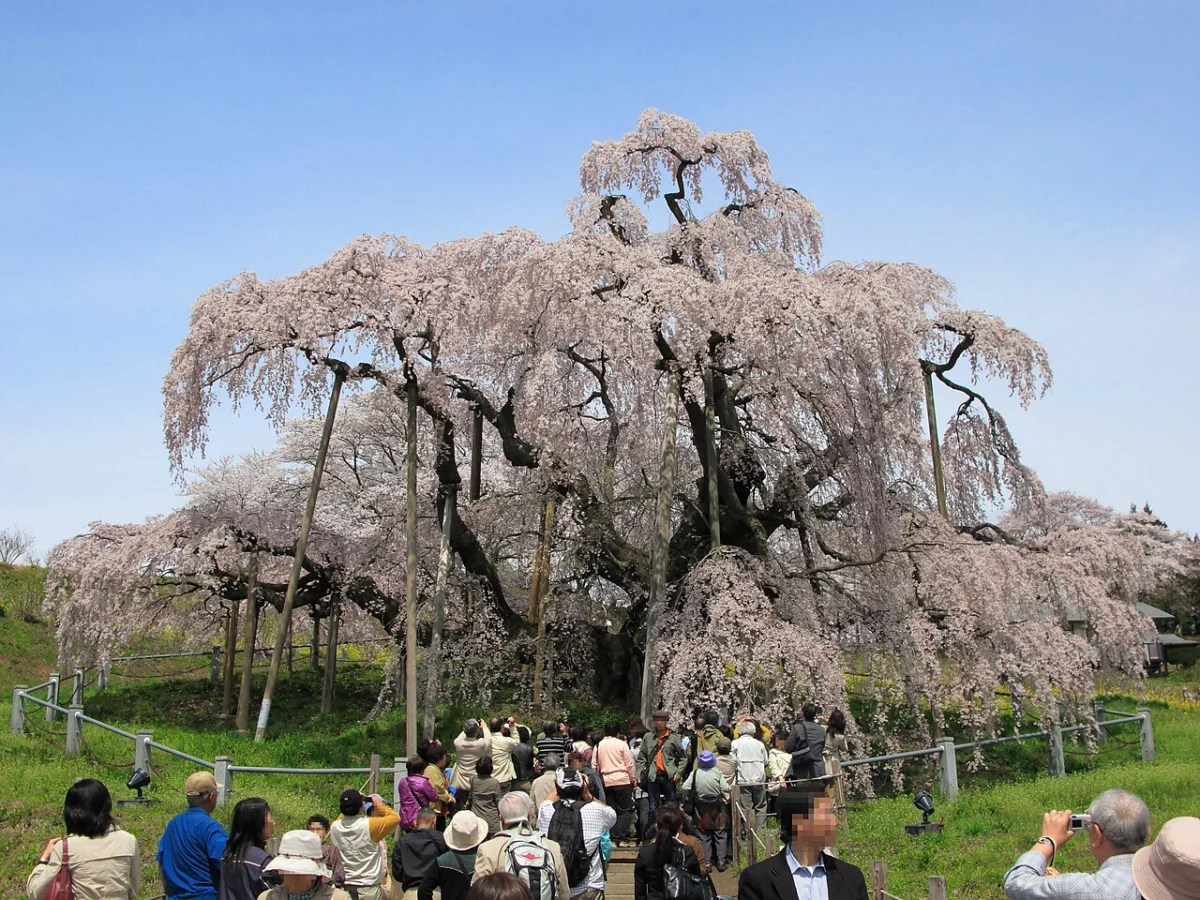
Every mid-April, in the quiet hills of Fukushima Prefecture, a silent, monumental event occurs. Thousands of people descend upon a singular point in the rural landscape, walking in a respectful, hushed procession toward a creature that has outlived empires, feudal lords, and the shifting tides of Japanese history. This is the Miharu Takizakura, the "Waterfall Cherry Tree," a living monolith that stands as one of the three most significant cherry trees in Japan.
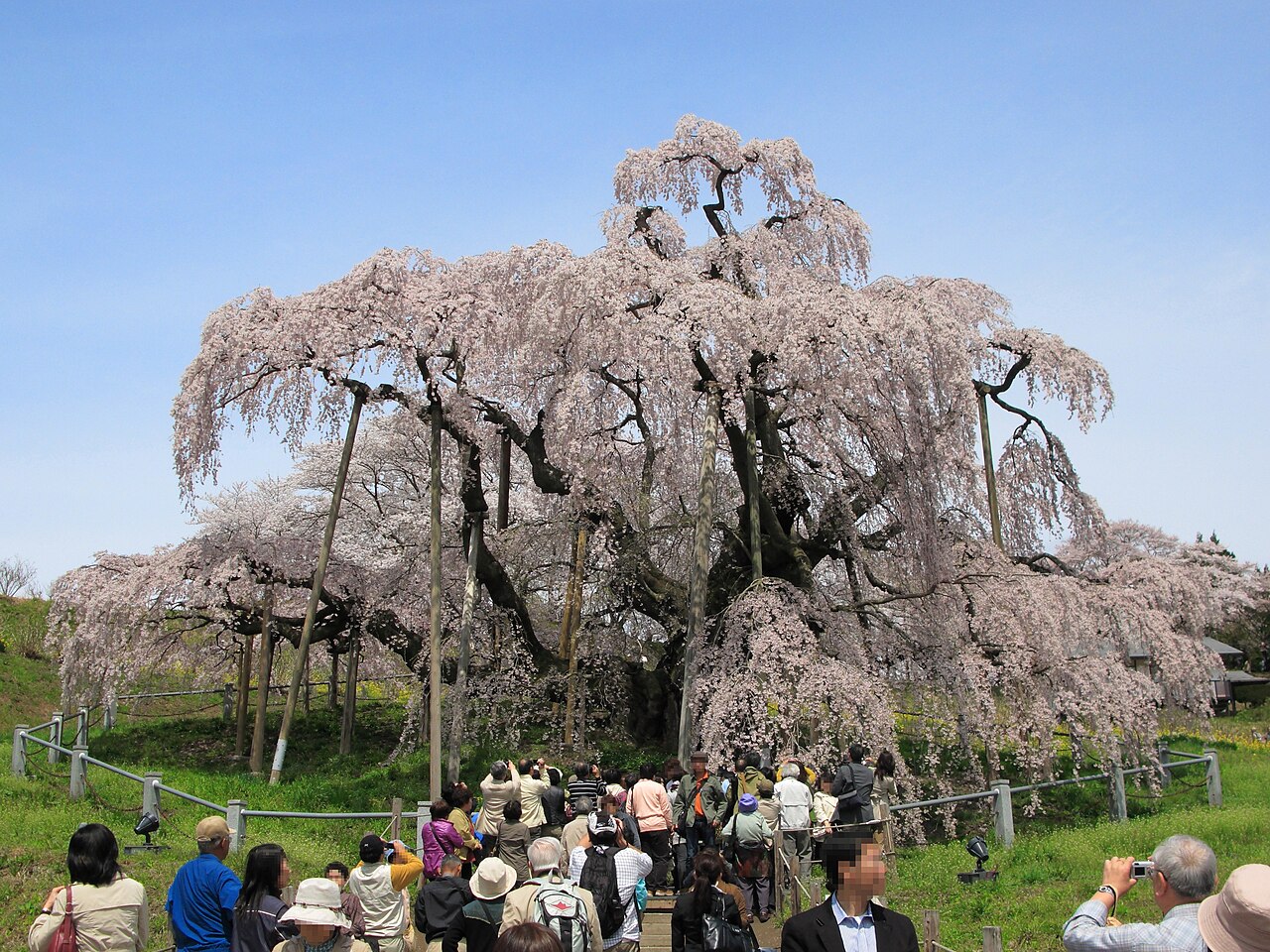
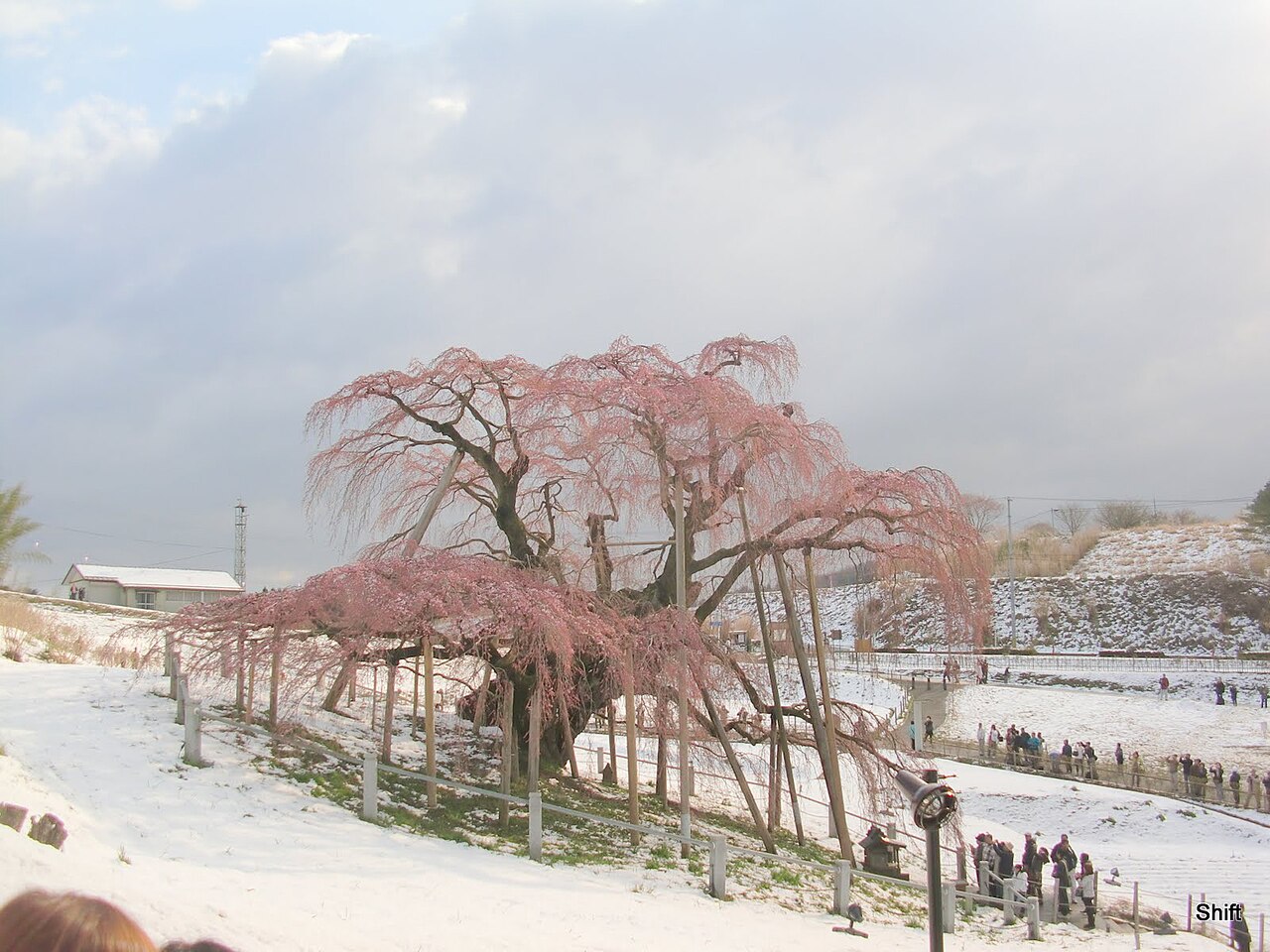
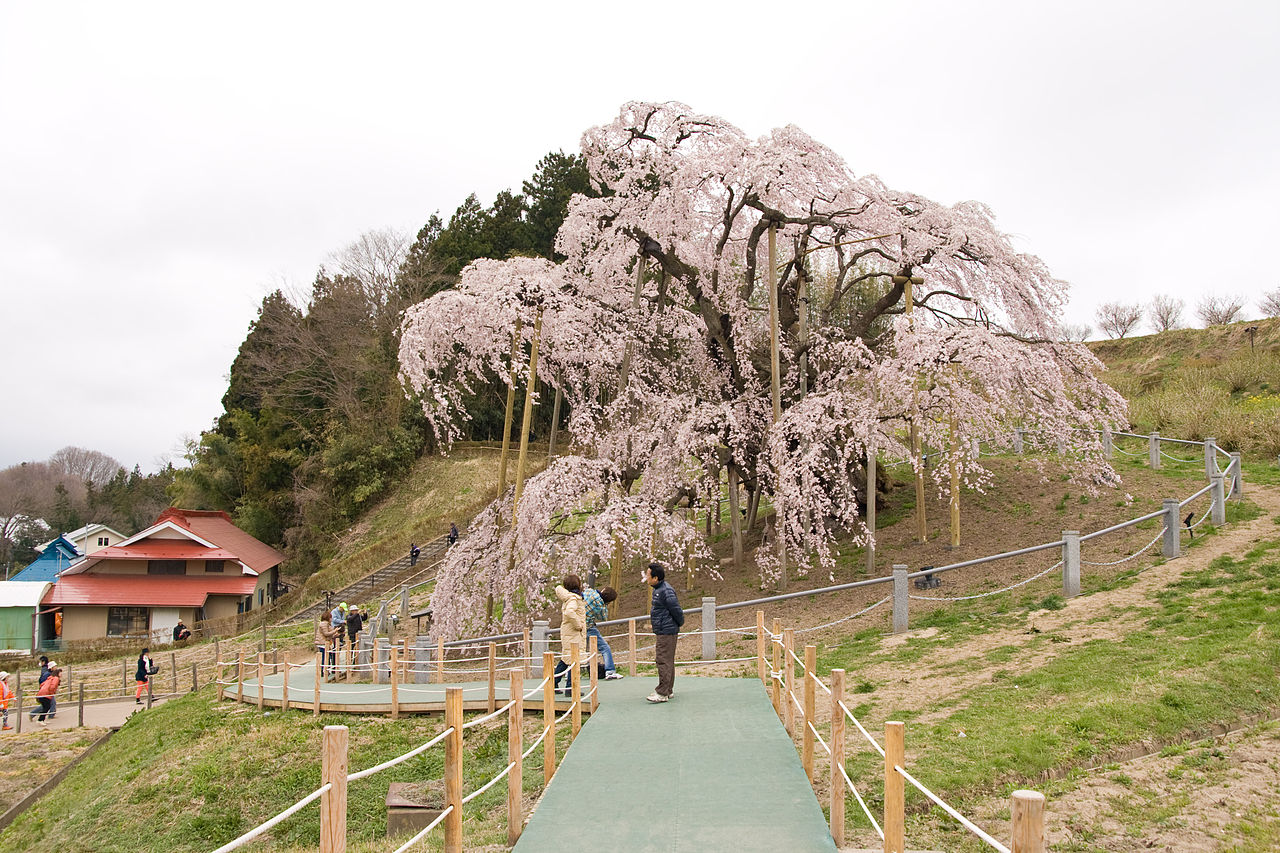
To witness the Takizakura in full bloom is not merely a sightseeing excursion; it is an encounter with deep time. Rising over thirteen meters into the air, its boughs cascade in a gravity-defying curtain of delicate pink, spreading across a circumference wider than a professional tennis court. For a fleeting ten-day window each spring, this singular organism transforms the hillside into a place of pilgrimage.
Quick Facts: The Anatomy of a Legend
- Species: Prunus pendula f. ascendens (Beni-shidare/Red Weeping Cherry).
- Estimated Age: Over 1,000 years.
- Height: 13.5 meters.
- Trunk Circumference: 8.1 meters at chest height.
- Branch Spread: 14.5 meters (South), 14.0 meters (West), 11.0 meters (East), 5.5 meters (North).
- Designation: National Natural Monument (since 1922).
- Location: Miharu Town, Fukushima Prefecture.
Chronology: A Millennium of Growth
The history of the Takizakura is a testament to resilience. Unlike the Somei-yoshino cherry trees that populate Tokyo’s parks—genetically identical clones with a relatively short lifespan of roughly 80 years—the Takizakura is a wild-grown beni-shidare. Because it was grown from seed and allowed to develop naturally, it has spent forty generations leaning into the light and bracing against the harsh Tohoku winds.
- The Early Centuries: While exact records from its sapling stage are lost to the mists of antiquity, botanical estimates place the tree’s origin in the late Heian or early Kamakura period.
- 1830s: The poet Kamo no Suetaka immortalized the tree in verse, describing blossoms "reaching to every corner of Oshu," effectively cementing its status in the national cultural consciousness.
- 1922: The tree received official recognition as a National Natural Monument, the first cherry tree in Japan to earn this prestigious designation.
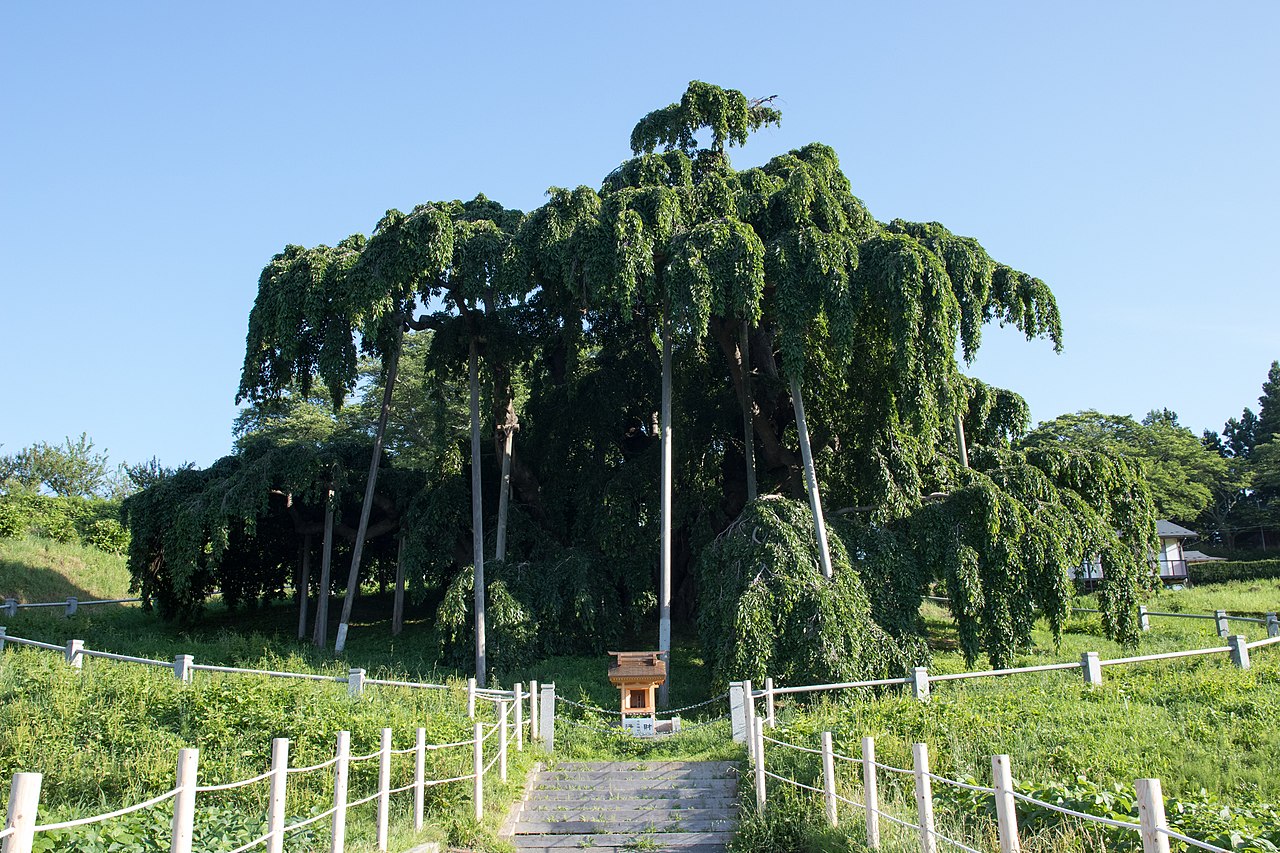
- 1970s–Present: To support its massive, ancient limbs, conservationists installed a permanent system of supporting poles. This intervention allows the tree to maintain its dramatic, sweeping canopy without risking structural collapse under the weight of its own historical gravity.
- 2011–Present: Following the Great East Japan Earthquake and the subsequent Fukushima Daiichi incident, the tree became a potent symbol of regional endurance. Despite being located in a region that faced significant public perception challenges, the Takizakura has remained a thriving beacon of local heritage, with environmental testing confirming the area is safe for visitors.
Supporting Data: Understanding the Scale
The photographs that circulate on social media often fail to capture the sheer, staggering scale of the Takizakura. To stand before it is to confront a trunk with a circumference of 8.1 meters—roughly equivalent to the floor plan of a small studio apartment.
The asymmetry of the tree is its most defining biological characteristic. The branches reach 14.5 meters to the south, where the sun is most abundant, and only 5.5 meters to the north, where it has been forced to contend with the shadows and the geography of the slope. This "lean" is not a sign of weakness, but a record of a millennium of environmental adaptation. It is a living, breathing map of the climate of central Fukushima.
Official Responses and Conservation
The Miharu Tourism Association maintains a rigorous, data-driven approach to the tree’s management. Because the bloom is highly dependent on meteorological conditions—ranging from a premature April 10th peak in warm years to a late April 25th peak in cold years—the Association provides daily updates on the bloom status.
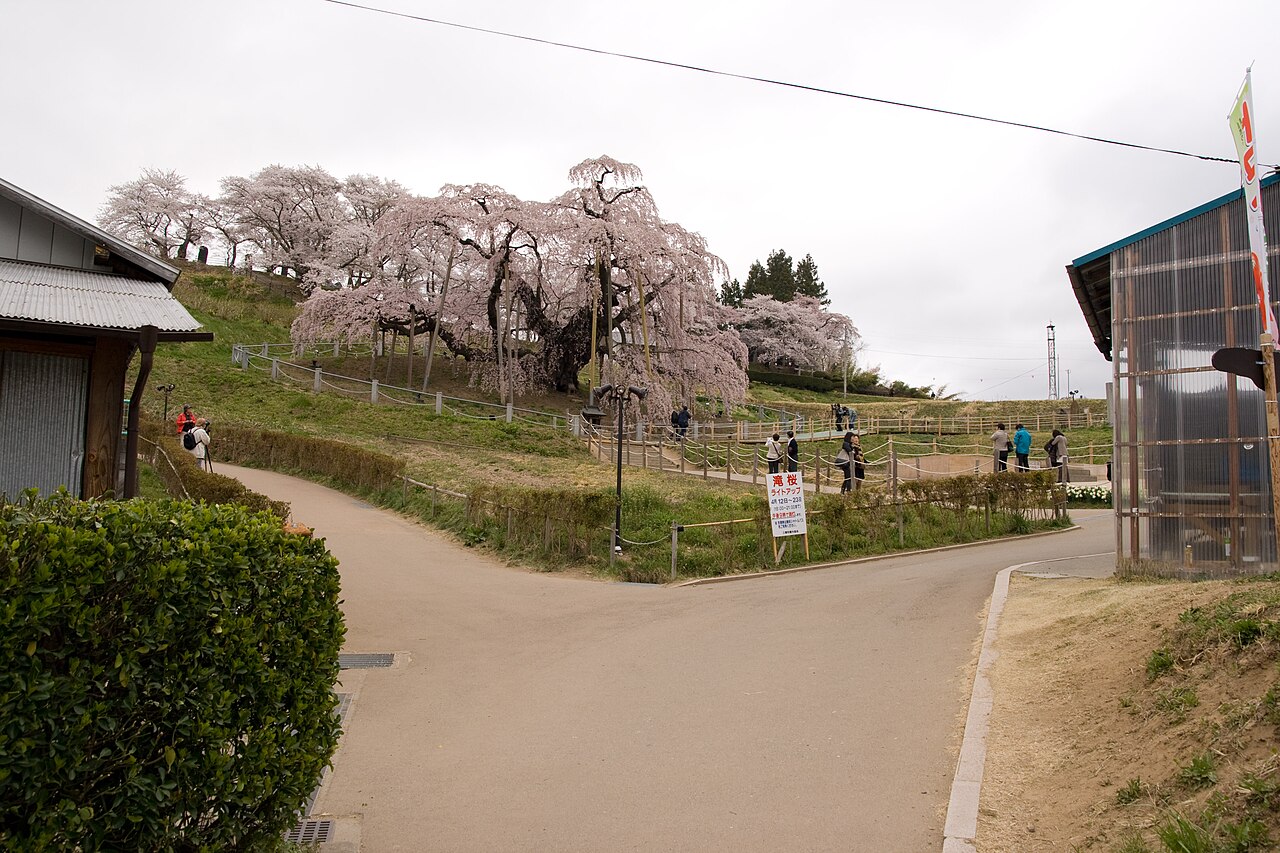
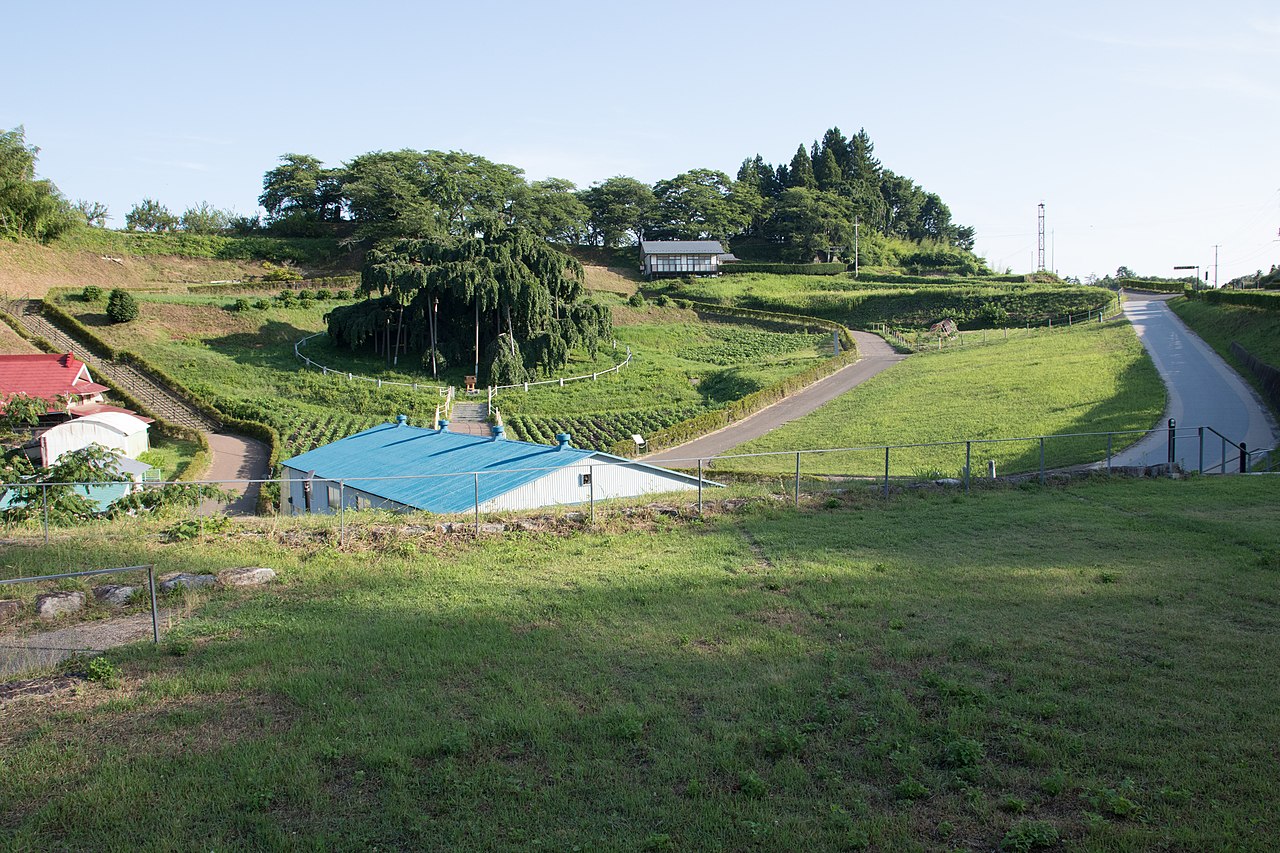
Visitors are categorized by the status of the tree: tsubomi (bud), saki-hajime (starting to bloom), mankai (full bloom), and chiri-hajime (starting to fall). This transparency is vital, as the association manages between 150,000 and 200,000 visitors within a ten-day period. The site is carefully regulated with a one-way pedestrian flow, ensuring that the roots—which spread over 11 meters—are protected from excessive compaction while allowing the maximum number of people to witness the spectacle.
Implications: The Pilgrimage Experience
For the modern traveler, the Takizakura represents a unique intersection of nature, history, and infrastructure.
The Night Light-up: An Altered Reality
Perhaps the most crucial advice for the discerning visitor is to stay past sunset. Between 18:00 and 21:00, the tree is illuminated by ground-level lighting. This creates a transformation: the blossoms shift from a soft pink to a shimmering, ethereal gold. Because tour buses generally depart by 17:00, the evening atmosphere is significantly more intimate, allowing for a contemplative experience that the daytime crowds often obscure.
Beyond the Headline Tree
While the Takizakura is the primary draw, the town of Miharu (meaning "three springs") offers a broader cultural context. Visitors are encouraged to explore the Takashiba Dekoyashiki, where the Miharu-goma (the legendary wooden horse folk toy) is crafted. Additionally, the Commutan Fukushima educational center offers an essential, sobering look at the region’s post-2011 recovery efforts. For those seeking a quieter experience, the Miharu Dam and Lake Sakura provide a stunning, sparsely populated landscape that remains one of the best-kept secrets in Tohoku.
Strategic Planning for the Visitor
If you are planning to visit from Tokyo, the logistics are significant. The trip involves an 80-minute Shinkansen ride to Koriyama, followed by a local train and a shuttle bus.
- Avoid the "Day-Trip Trap": If possible, spend 48 hours in the Koriyama area. This provides a buffer for the shifting bloom window and allows you to visit during the quieter morning or evening hours.
- Respect the Season: If you arrive and the bloom has passed, the Takizakura is a large, bare tree on a hillside. The pilgrimage is entirely dependent on the timing of mankai.
- The "Three Great Cherries" Context: Travelers often ask how the Takizakura compares to the Usuzumi-zakura in Gifu or the Yamataka Jindai-zakura in Yamanashi. While the Jindai is older, the Takizakura offers the most cohesive and dramatic visual experience. It is the most "complete" of the three, blending age, color, and setting into a single, overwhelming aesthetic moment.
Final Thoughts
The Miharu Takizakura is more than a botanical specimen; it is an anchor for the community and a reminder of the fragility and persistence of life. As you walk the final path up the gentle slope, joining two thousand other people in a shared, silent observation, you are not just looking at a tree. You are participating in a ritual that has been repeated by countless generations, a moment of fleeting beauty that connects the past to the present in the most vivid, pink-hued color imaginable.
If you are prepared to plan, to endure the unpredictability of the spring weather, and to treat the visit as a pilgrimage rather than a mere stop on a map, the Takizakura will reward you with a sight that will stay with you for the rest of your life.












No comments yet. Be the first to join the conversation!