

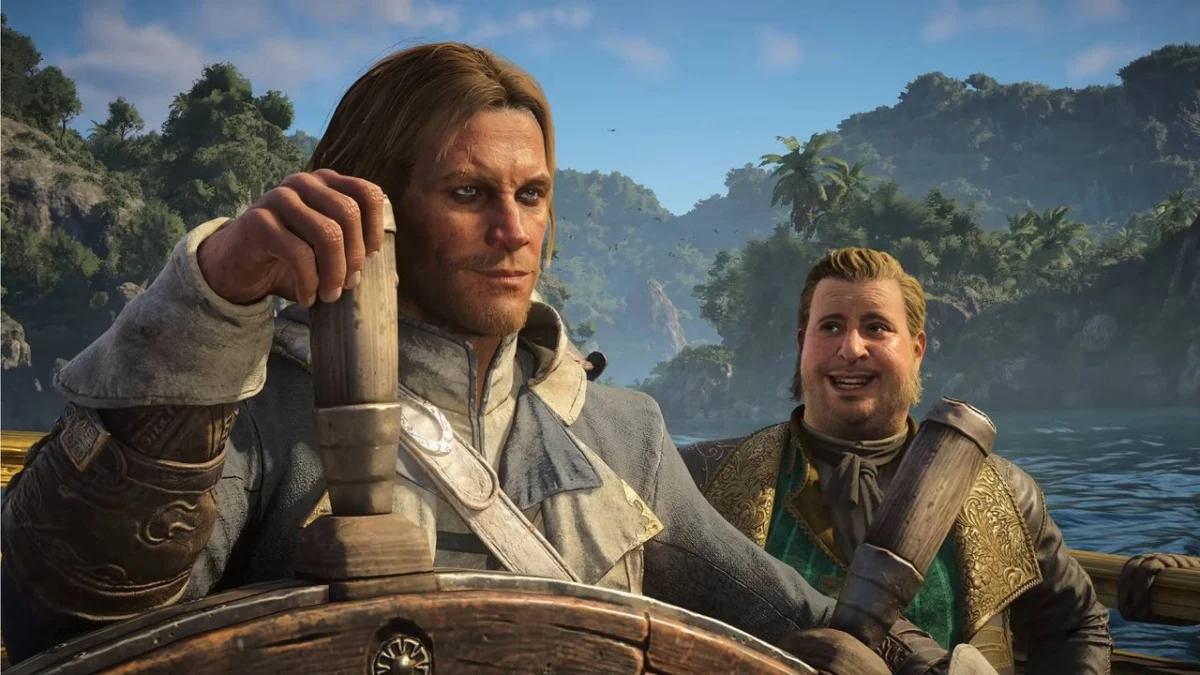
When Ubisoft announced Assassin’s Creed Black Flag Resynced, the gaming community was immediately divided between excitement for a return to the Caribbean and skepticism regarding the "remake" label. In an industry where remakes often involve radical overhauls—like the dramatic combat shifts seen in Final Fantasy VII Rebirth or the survival-horror reimagining of Resident Evil 4—Ubisoft Singapore is charting a different course. Black Flag Resynced aims to be a faithful, technical reconstruction of a beloved classic, preserving the soul of 2013 while modernizing its bones.
The Mandate: A Technical Reconstruction, Not a Reinvention
At the heart of the project is a fundamental question: How do you remake a game that many still consider the gold standard of the franchise? According to design director Julian Koch, the answer lies in a "love letter" approach. Unlike the trend of "remaking for reinvention," Ubisoft is prioritizing architectural and systemic fidelity.
However, the term "remake" is not used lightly. Koch emphasizes that despite the goal of keeping the experience identical to the original, the team has been forced to rebuild almost every facet of the game from the ground up. This is not a remaster or a simple texture update. From the rendering of individual barrels to the complex collision detection required for modern parkour, the developers have had to manually reconstruct the game’s geometry to accommodate contemporary visual fidelity and control precision.
"For the barrel, the metrics need to change because of the crouch, the new level of detail we’re adding," Koch explained. "The parkour needs to follow, we’re re-doing the collision as well. The base of the gameplay is the same, all of the design, but we have more tools to play with. But it needed to be rebuilt from the ground."
Chronology and Development: A Decade of Evolution
To understand the necessity of this remake, one must look at the timeline of the Assassin’s Creed franchise. Released in 2013, Black Flag was a transitional title that moved the series away from the urban-centric, restricted movement of the Ezio Auditore era and toward the expansive, systemic open worlds of the later RPG-leaning entries like Origins, Odyssey, and Valhalla.
The development of Resynced began with a rigorous audit of the original code and creative vision. The team recognized that the "feel" of Edward Kenway’s adventure was dictated by a specific cadence of movement and combat that has since been lost in the series’ pivot to heavier, gear-focused RPG mechanics.
The development cycle has been defined by a constant tension: how to integrate modern engine capabilities—such as advanced lighting, global illumination, and higher-density asset streaming—without breaking the original "metrics" of the game. In game design, "metrics" refers to the physical dimensions of the world—the height of a wall, the distance between platforms, and the reach of a jump. Because Black Flag Resynced uses a modern engine, simply importing old assets would result in a broken game. Every jump, climb, and sword fight had to be calibrated to match the "feel" of the 2013 original while functioning on a modern technical foundation.
Fidelity to the Core: The Creative Guidelines
Creative director Paul Fu has been adamant that Resynced will not bow to modern industry pressures to turn every open-world title into a sprawling RPG. During the planning phases, the team posed critical questions regarding the game’s identity:
- "Should there be dialogue choices?"
- "Should it shift to an RPG skill-tree-heavy model?"
The answer to both was a resounding "no." By sticking to the action-adventure roots, the team is positioning Resynced as a bridge between the classic, narrative-driven experiences and the high-fidelity expectations of the current hardware generation.
To maintain this authenticity, Ubisoft brought in a "guiding light": Jean Guesdon, the original creative director of Black Flag and a long-time franchise brand manager. Guesdon’s involvement served as a quality assurance check on the project’s spirit. His mandate was to ensure that the "new" did not overshadow the "classic." In a high-praise moment for the team, Guesdon reportedly noted that he could "almost not feel where the original content ends and the new content begins."
Expanding the Caribbean Narrative
While the core systems remain strictly faithful to the original, the remake is not devoid of new content. Resynced integrates additional scenes and quests designed to flesh out the swashbuckling narrative. These additions are carefully curated to provide depth to Edward Kenway’s arc rather than changing the story’s trajectory.
This creates an interesting dichotomy: the gameplay is a modern, high-definition reconstruction, but the narrative is an expanded version of a decade-old script. By adding content that sits seamlessly within the original timeline, Ubisoft is attempting to fix the "pacing gaps" that critics pointed out in 2013, effectively polishing the diamond without changing its shape.
Implications for the Assassin’s Creed Franchise
The implications of this release for Ubisoft’s broader strategy are significant. With Assassin’s Creed Shadows and other upcoming titles pushing the series into new territories, Black Flag Resynced serves as a "statement of intent." It suggests that Ubisoft is aware of the division in its fanbase—those who pine for the classic, parkour-focused gameplay and those who enjoy the modern RPG iterations.
By successfully recreating Black Flag, Ubisoft is essentially proving that they can modernize their legacy catalog without stripping away the features that made them hits in the first place. This strategy could open the door for a series of "Resynced" titles, potentially revitalizing other fan-favorite entries like Assassin’s Creed II or Brotherhood using the same technical, high-fidelity reconstruction method.
Furthermore, the decision to maintain the "action-adventure" label is a direct rebuttal to the industry-wide push for "games as a service" or "infinite-hour RPGs." It signals a willingness to listen to the vocal minority of fans who prefer tighter, more curated experiences.
Technical Hurdles: The "Metric" Challenge
The most significant challenge for the development team, and perhaps the most impressive aspect of the project, is the "metric" challenge mentioned by Koch. In 2013, the game’s movement was limited by the hardware of the PlayStation 3 and Xbox 360 era. Parkour was "canned"—meaning animations were specific and rigid to ensure the player didn’t fall through the floor.
Today, with more robust physics engines, the challenge is to make the game look like it has modern physics while playing like the original. If the parkour feels too "floaty" or too "heavy," the entire experience collapses. By manually rebuilding the collision data, the team is ensuring that the precise inputs of the original game are respected. This level of granular attention suggests that Resynced is being built by people who deeply understand the "rhythm" of the game’s traversal.
Conclusion: A New Standard for Remakes?
Assassin’s Creed Black Flag Resynced stands in a unique position. It is too technically advanced to be called a remaster, yet too philosophically tethered to its source material to be considered a reimagining.
For veterans of the series, the promise is simple: the game they remember, just as they remember it, but rendered with the clarity and performance of modern hardware. For new players, it offers a chance to experience one of the most celebrated titles in the franchise without the friction of dated visuals or clunky, legacy-hardware constraints.
As the industry continues to debate the merits of remakes, Black Flag Resynced may well define a new category: the "Authentic Reconstruction." By prioritizing the original’s DNA while utilizing the power of current technology, Ubisoft Singapore is not just bringing back a pirate adventure; they are proving that sometimes, the best way to move forward is to perfectly honor where you have already been.











No comments yet. Be the first to join the conversation!