Azzam Bilal Chamdy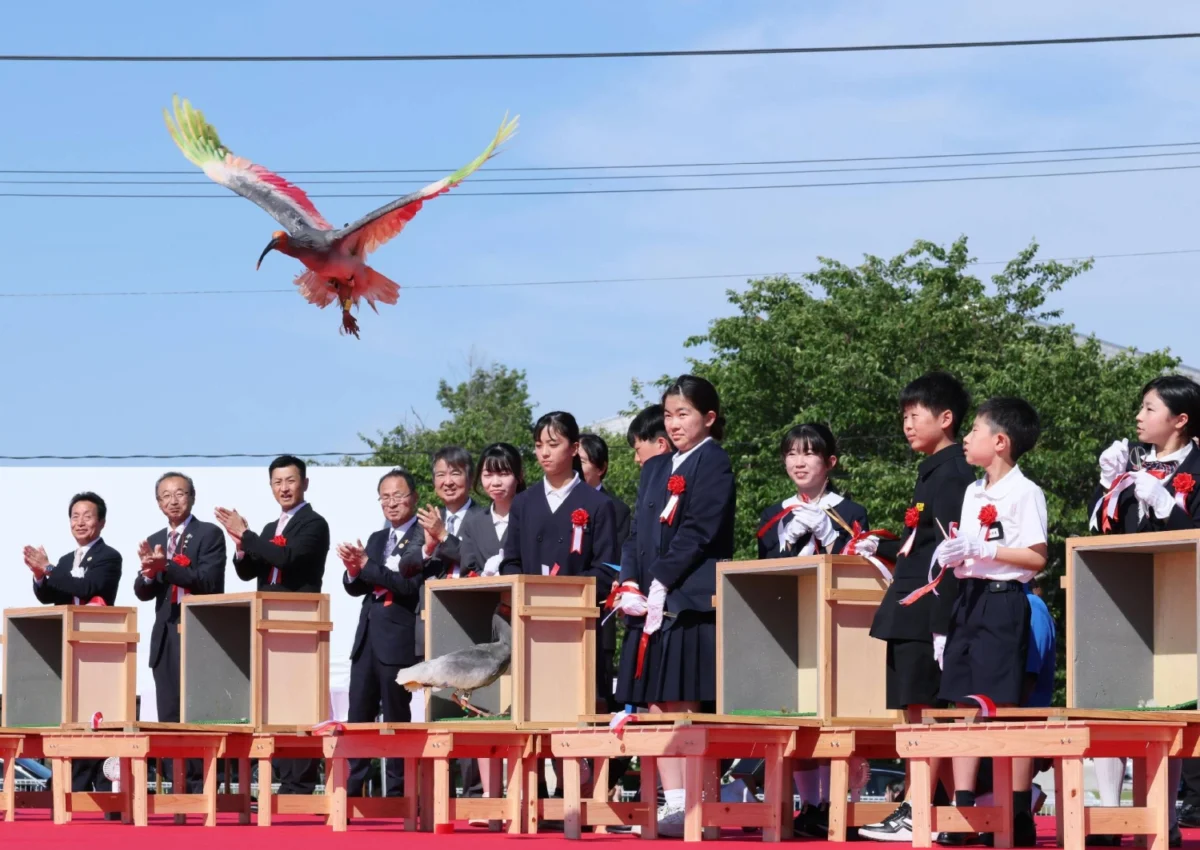
KANAZAWA, Ishikawa Prefecture — In a milestone for Japan’s biodiversity conservation efforts, the Ishikawa prefectural government announced Monday that an additional 10 crested ibises (Nipponia nippon), a species designated as a Special Natural Treasure, have been successfully released into the wild in the city of Hakui. This latest operation, conducted over the weekend, marks a significant expansion of the ongoing project to re-establish a viable, free-flying population of these iconic birds on Honshu, Japan’s main island.
With this release, the total number of crested ibises introduced into the Noto region’s wild environment has reached 18. This figure includes the initial group of eight birds that were released on May 31. The initiative represents a meticulous, multi-year strategy aimed at preventing the extinction of the species and restoring a symbol of Japan’s natural heritage to the skies of the Noto Peninsula.
The Mechanics of Reintroduction: Soft vs. Hard Release
The release of the 10 birds on Sunday employed the "soft release" method, a technique favored by conservationists for its focus on animal welfare and environmental acclimatization. Unlike the "hard release" method, which involves opening transport boxes to allow the birds to fly out immediately, the soft release method allows the animals to remain in a temporary, large-scale outdoor enclosure for a period.
During this time, the birds are monitored as they become accustomed to the sights, sounds, and climate of their new surroundings. By providing the ibises with the agency to leave their enclosure on their own terms, researchers believe the birds are better equipped to navigate the local ecosystem and avoid predators or environmental stressors once they finally take flight.
On Sunday, the doors of the temporary cages were opened at approximately 9:30 a.m. The transition was gradual and cautious. According to officials from the Ishikawa prefectural government, all 10 birds had departed the enclosure by shortly after 3:00 p.m. that afternoon. This methodical departure contrasts with the May 31 event, where the birds were released directly from transport boxes—a method that, while efficient, carries a higher risk of immediate stress for the animals.
A Chronology of Conservation
The effort to reintroduce the crested ibis to the Noto Peninsula is not an isolated event but the culmination of decades of rigorous breeding and habitat preparation.
- 1981: The last remaining wild crested ibises in Japan were captured on Sado Island in a desperate bid to save the species from total extinction through captive breeding.
- 2003: The Japanese crested ibis was declared extinct in the wild, placing the entire future of the species on the success of the captive breeding programs.
- Late 2000s–2010s: Success at the Sado Japanese Crested Ibis Conservation Center allowed for the gradual release of birds on Sado Island.
- May 31, 2024: The first group of eight crested ibises was released in Hakui, Ishikawa, using the "hard release" method, marking the first time the species had been released on the Honshu mainland in a modern conservation context.
- June 2024: The "soft release" of 10 additional birds in Hakui, bringing the total to 18.
- September 2024 (Projected): A follow-up release is scheduled for the town of Nakanoto, further expanding the birds’ range within the prefecture.
Supporting Data and Biodiversity Metrics
The crested ibis, characterized by its elegant, long, slightly curved beak and subtle pink-tinged plumage, requires specific environmental conditions to thrive. The Noto region was selected for this reintroduction due to its historical suitability and the ongoing efforts of local farmers to maintain "satoyama" landscapes—the traditional Japanese mosaic of forests, paddies, and wetlands.
Scientific monitoring teams are tracking the birds using GPS transmitters and leg bands. The survival rate of the 18 birds currently in the wild will be the primary metric for determining the success of the program. Researchers are looking for evidence of foraging behavior in local rice paddies—where the birds consume loaches, frogs, and insects—and their ability to locate suitable roosting trees at night.
The project is supported by extensive data on water quality in the region’s irrigation canals. Because the ibises feed primarily in wetlands, the use of pesticides and chemical fertilizers in agriculture must be strictly managed. Local farmers in Hakui and Nakanoto have transitioned to environmentally friendly agricultural practices, reducing chemical inputs to ensure the food supply for the ibises remains non-toxic and abundant.
Official Responses and Stakeholder Engagement
The prefectural government has framed the reintroduction as a community-wide endeavor. "The survival of these birds is inseparable from the health of our local environment," stated a spokesperson for the Ishikawa Department of Environment. "By welcoming the ibis back to Noto, we are not just saving a species; we are validating the efforts of the farmers and residents who have worked to preserve the traditional landscape."
The Ministry of the Environment, which oversees the national strategy for the crested ibis, has commended the prefecture’s approach. In a recent press release, ministry officials emphasized that the collaboration between local municipalities, environmental NGOs, and academic researchers has been critical.
"There is a palpable sense of responsibility among the residents," said a local official in Hakui. "When the cages were opened on Sunday, the town held its breath. Seeing them fly out on their own was a profound moment of success for everyone involved in the monitoring teams."
However, officials remain cautious. They have urged the public to observe the birds from a distance and avoid using drones or flash photography, which could disrupt the birds’ foraging patterns or cause them to abandon their new territory.
Environmental and Social Implications
The reintroduction of the crested ibis has profound implications for both ecology and regional identity.
1. Ecological Restoration
The crested ibis acts as an "umbrella species." By focusing conservation efforts on protecting its habitat, other species—such as rare amphibians, dragonflies, and aquatic plants—also benefit from the reduction of agricultural chemicals and the restoration of wetlands. The presence of the ibis serves as a biological indicator of a healthy, functioning ecosystem.
2. Cultural Heritage
The ibis holds a special place in the Japanese psyche. Historically, it was a common sight across the archipelago. Its disappearance in the 20th century was viewed as a symbol of the environmental degradation that accompanied rapid industrialization. Its return is, therefore, a powerful cultural narrative of reconciliation with nature.
3. Economic and Educational Potential
The Noto region hopes that the presence of the crested ibis will bolster local ecotourism. Educational programs for school children are being developed, focusing on the biology of the ibis and the importance of sustainable agriculture. This creates a link between conservation and the local economy, providing a long-term incentive for the community to remain stewards of the land.
Future Challenges: The Road Ahead
Despite the successful release, the path forward is fraught with challenges. The primary threat to the newly released birds is predation by raptors and invasive species such as raccoons and feral cats. Furthermore, the birds must learn to navigate the harsh winter conditions of the Noto Peninsula, which can be significantly different from the controlled environments of their captive breeding facilities.
The scheduled release in Nakanoto this September will be a critical test. By spreading the population across multiple sites, the project aims to minimize the risk of a single catastrophic event—such as a localized disease outbreak or a severe weather event—wiping out the entire reintroduced group.
"We have reached 18 birds, but the goal is a self-sustaining population that no longer requires our intervention," concluded the prefectural representative. "We are in the early chapters of a long book. We must remain vigilant, patient, and, above all, committed to the coexistence of humans and wildlife."
As the 10 birds from the latest release continue to explore the wetlands of Hakui, they carry the weight of a national hope. For the residents of Ishikawa, every sighting of a crested ibis in flight is a testament to the fact that when human activity is aligned with the needs of the natural world, lost treasures can indeed return.


 Neng Nana
 Asro
Asro