

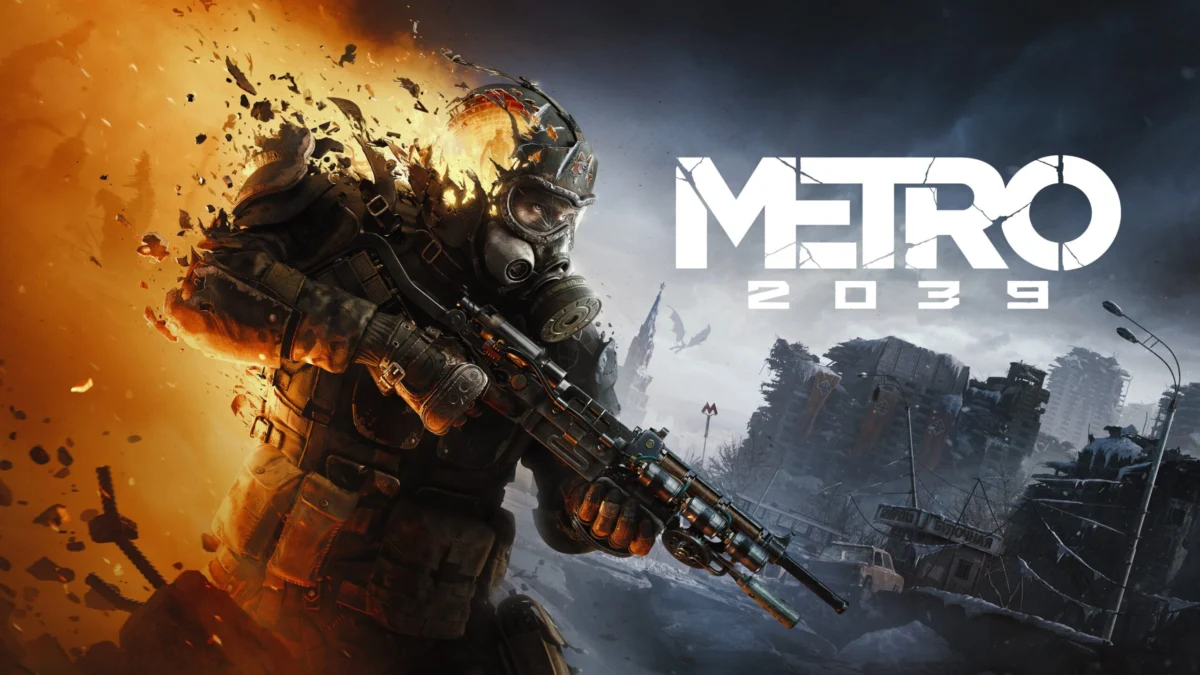
The long-awaited silence from 4A Games has finally been broken. After the 2019 critical and commercial success of Metro Exodus—a title that pushed the series out of the subterranean tunnels and into the sprawling, semi-open-world landscapes of a post-apocalyptic Russia—the studio has officially pulled the curtain back on the next chapter: Metro 2039.
Returning to its roots, Metro 2039 signals a thematic and structural homecoming. The game trades the expansive vistas of Exodus for the claustrophobic, oppressive, and deeply atmospheric corridors of the Moscow Metro. This isn’t merely a nostalgic trip; it is a fundamental shift in design philosophy aimed at recapturing the visceral, psychological horror that defined the original Metro 2033.
Main Facts: A Return to Claustrophobic Roots
Metro 2039 is being positioned as a quintessential, story-driven, single-player experience. Unlike the industry trend toward live-service models or expansive, diluted open-world structures, 4A Games is doubling down on tight, narrative-focused level design.
Perhaps the most significant departure from series tradition is the protagonist. For the first time in the franchise’s history, the lead character will be fully voiced throughout the campaign. This choice is intended to deepen the player’s emotional tether to the protagonist, allowing for a more intimate exploration of their psyche as they navigate the moral rot of a fractured society.
The narrative arc centers on the rise of the "Novoreich," a new, authoritarian faction that has unified the disparate underground stations under a singular, terrifying banner. Led by a rogue former Spartan, the Novoreich promotes a brutal, exclusionary ideology, forcing the player to confront the reality that, even after the world has ended, humanity’s darkest impulses—specifically the resurgence of Nazi ideology—remain the greatest threat to survival.
Chronological Development and Context
The journey to Metro 2039 has been anything but straightforward. Development on the project began years ago, but the studio’s trajectory was irrevocably altered by two seismic, global events: the COVID-19 pandemic and the 2022 Russian invasion of Ukraine.
4A Games, a studio with deep roots in Ukraine and significant operations in Kyiv, found itself in the center of a geopolitical firestorm. The development process, which was already grappling with the logistical nightmares of a global pandemic, was suddenly forced to navigate the realities of war. The impact of these events on the team—their families, their homes, and their sense of security—has been directly injected into the game’s narrative DNA.
- Pre-2020: Early conceptualization and engine R&D.
- 2020–2021: Pandemic-related transitions to remote work and initial narrative shifts.
- 2022–2023: A pivot in creative direction following the invasion of Ukraine; the team incorporates the emotional toll of conflict into the game’s script.
- 2024: Official announcement and final development sprint.
This period of turmoil has resulted in a darker, more cynical tone. The developers have stated that the narrative explores the "compromised morality" of a post-war society, a theme that resonates heavily with the current lived experience of the developers themselves.
Supporting Data: Technological Prowess
Despite the challenges faced by the studio, 4A Games remains committed to its proprietary 4A Engine. While most contemporary studios have pivoted to third-party tools like Unreal Engine 5, 4A Games continues to leverage and refine its own technology.
The 4A Engine has undergone a significant overhaul for Metro 2039. The primary focus of this upgrade is the integration of ray tracing as a core component of the rendering pipeline. Unlike the "tacked-on" implementations often seen in current-gen titles, the 4A Engine has been rebuilt from the ground up to ensure that ray tracing is the foundation for light, shadow, and environmental immersion.
The studio has emphasized that this technical leap is designed to run efficiently on modern hardware (PC, PS5, and Xbox Series X/S), ensuring that the "cluttered, believable, and lived-in environments" for which the series is known remain as dense and visually impressive as possible. The goal is not just photorealism, but atmospheric coherence—ensuring that every flickering light and discarded piece of trash contributes to the narrative of a dying world.
Official Responses and Creative Vision
The return of acclaimed author Dmitry Glukhovsky to co-write the script provides a sense of narrative continuity that fans have been clamoring for. Glukhovsky’s involvement ensures that the dark, philosophical underpinnings of the Metro universe remain intact, even as the story moves into new, uncomfortable territory.
In statements provided during the reveal, the development team highlighted that choice and consequence will play a much larger role in Metro 2039 than in previous iterations. The player’s decisions will not merely dictate which "ending" they receive, but will impact the social and political structure of the stations they inhabit.
"We are building a world that is not just a backdrop, but a character," a spokesperson for 4A Games noted. "The Novoreich isn’t just an enemy force; it is a manifestation of the fear and exhaustion that takes hold when a society has nothing left to lose."
Implications for the Industry
The announcement of Metro 2039 serves as a critical case study for the modern gaming industry. It highlights several key industry trends and counter-trends:

- The Resilience of Single-Player Narrative: In an era dominated by multiplayer-focused games and battle passes, Metro 2039 reinforces the persistent demand for high-quality, story-driven, single-player experiences.
- The Ethics of Development: The transparency regarding the studio’s hardships in Ukraine raises questions about how personal trauma influences creative output. The game is likely to be viewed through a sociopolitical lens, with many analysts expecting it to be one of the most poignant artistic responses to the ongoing conflict in Eastern Europe.
- Technological Sovereignty: By maintaining its own engine, 4A Games proves that AAA excellence can be achieved without relying on industry-standard "middleware." This autonomy allows the studio to maintain a specific artistic vision that might otherwise be compromised by the limitations of off-the-shelf software.
Conclusion
Metro 2039 is poised to be more than just a sequel; it is a statement of intent. By retreating back into the claustrophobic confines of the Moscow Metro, 4A Games is stripping away the distractions of the open world to focus on what matters: the human condition under extreme duress.
With its focus on moral ambiguity, advanced rendering technology, and a narrative deeply informed by real-world hardship, the game is set to challenge the player’s perception of "heroism" in a world where survival is the only objective. As the winter release date approaches, the gaming community will be watching closely to see if 4A Games can successfully translate the weight of their own experiences into a medium that, perhaps more than ever, requires authentic and challenging storytelling.
The tunnels are waiting, and this time, the darkness is far more than just a lack of light.











No comments yet. Be the first to join the conversation!