Sagoh
Sagoh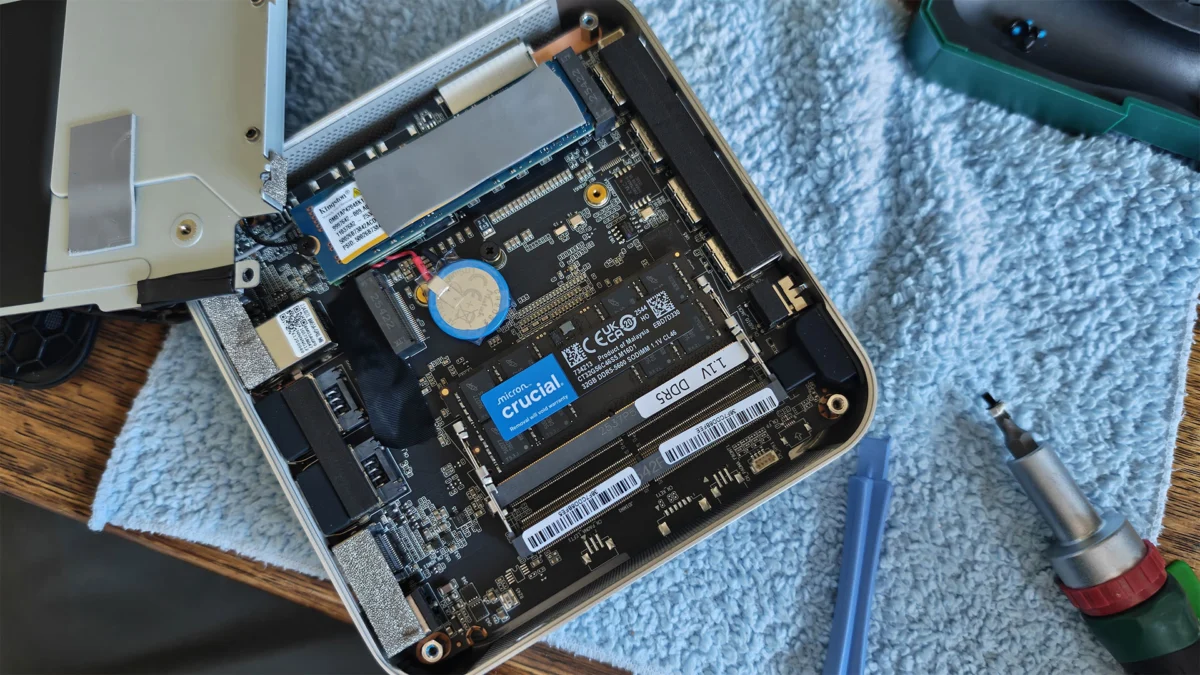
The mini PC market is currently experiencing a rapid transition, as manufacturers scramble to integrate AMD’s latest mid-cycle "Gorgon Point" processors into their compact chassis. Geekom, a staple in the small-form-factor space, has entered the fray with the A9 Max 2026. While the device boasts impressive build quality, a sophisticated thermal solution, and the raw computational might of the AMD Ryzen AI 9 HX 470, it arrives with a controversial configuration choice that significantly impacts its real-world performance.
Main Facts: The Evolution of the A9 Max
The Geekom A9 Max 2026 is an evolution of the company’s previous Ryzen AI 300 series designs. At its heart lies the AMD Ryzen AI 9 HX 470, a powerhouse chip featuring a 12-core/24-thread architecture (4x Zen 5 and 8x Zen 5c cores) capable of boost clocks up to 5.2 GHz. The system also leverages the Radeon 890M integrated graphics (RDNA 3.5), which is theoretically capable of tackling modern gaming workloads and productivity tasks.
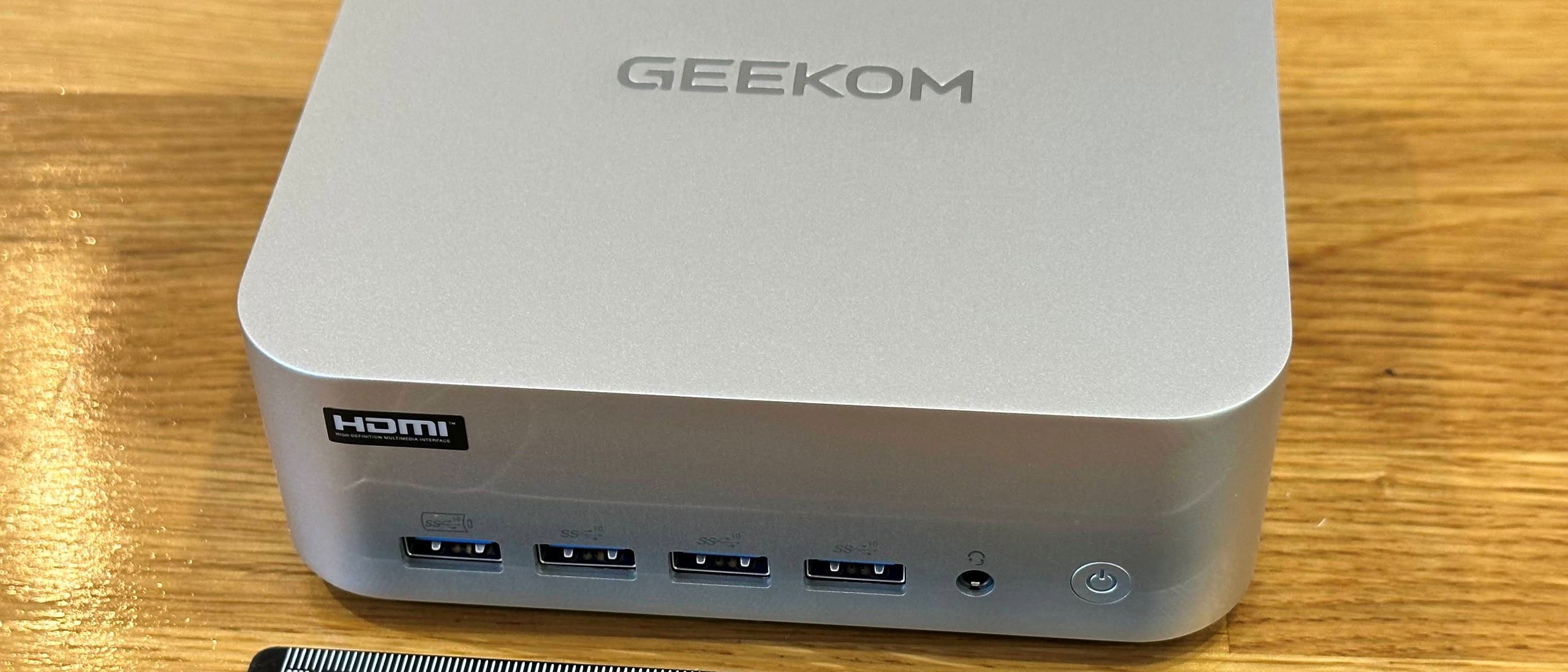
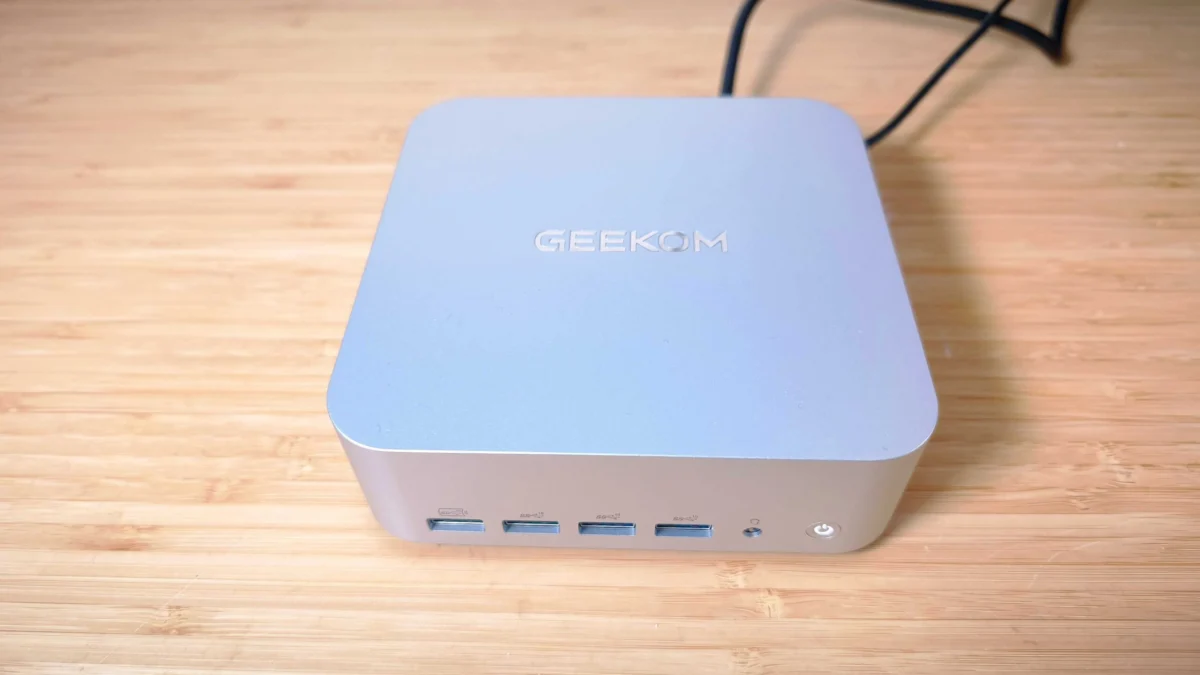
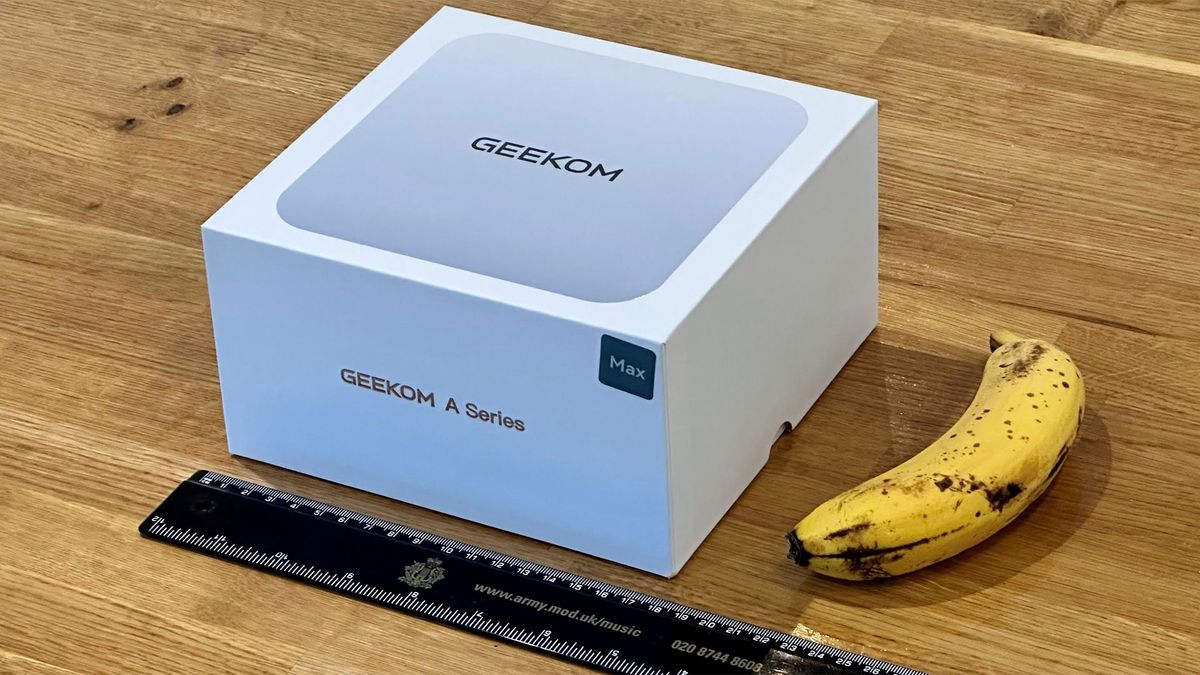
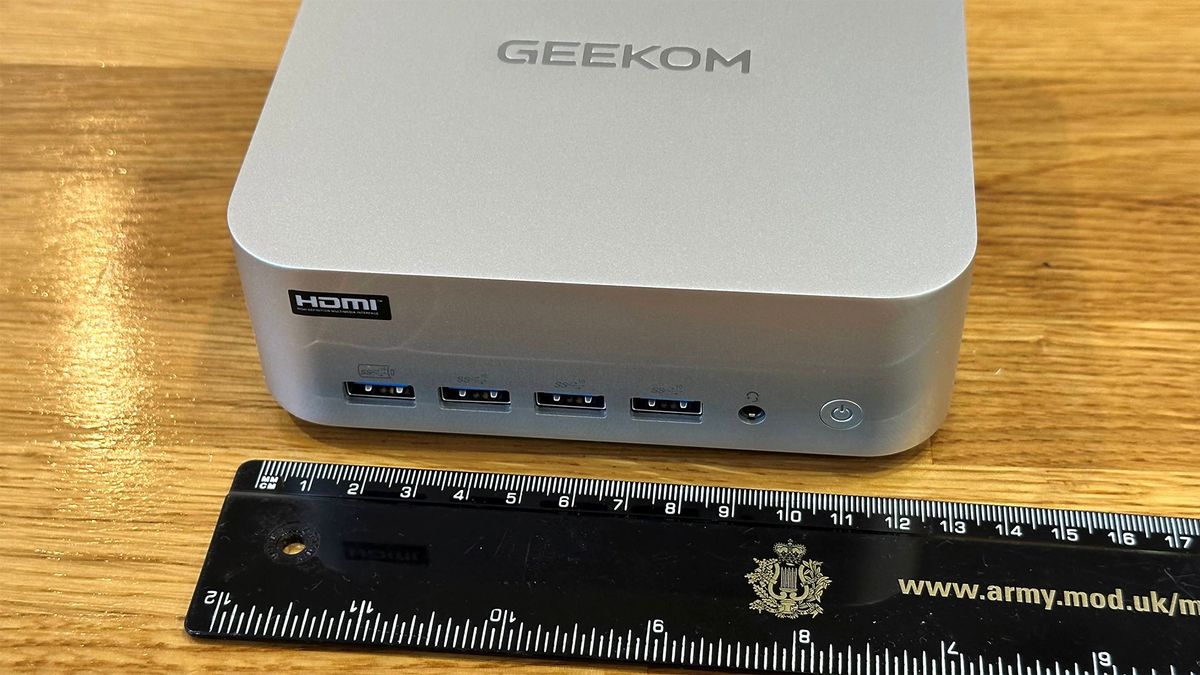
However, the most striking aspect of the unit is its physical design. Adhering to the "NUC-style" aesthetic, the A9 Max is housed in an anodized silvery metal chassis that feels premium and durable. Measuring 135 x 132 x 46.9mm and weighing approximately 705g, the unit is dense, sturdy, and features an internal metal frame that Geekom claims can withstand up to 200kg of pressure.
Despite these high-end specifications, the out-of-the-box configuration is peculiar. Geekom has opted for a single 32GB DDR5-5600 SODIMM module, leaving one memory slot empty. While the company frames this as a "user-friendly upgrade path," the lack of dual-channel memory bandwidth acts as a significant bottleneck for the Radeon 890M iGPU.
Chronology and Market Positioning
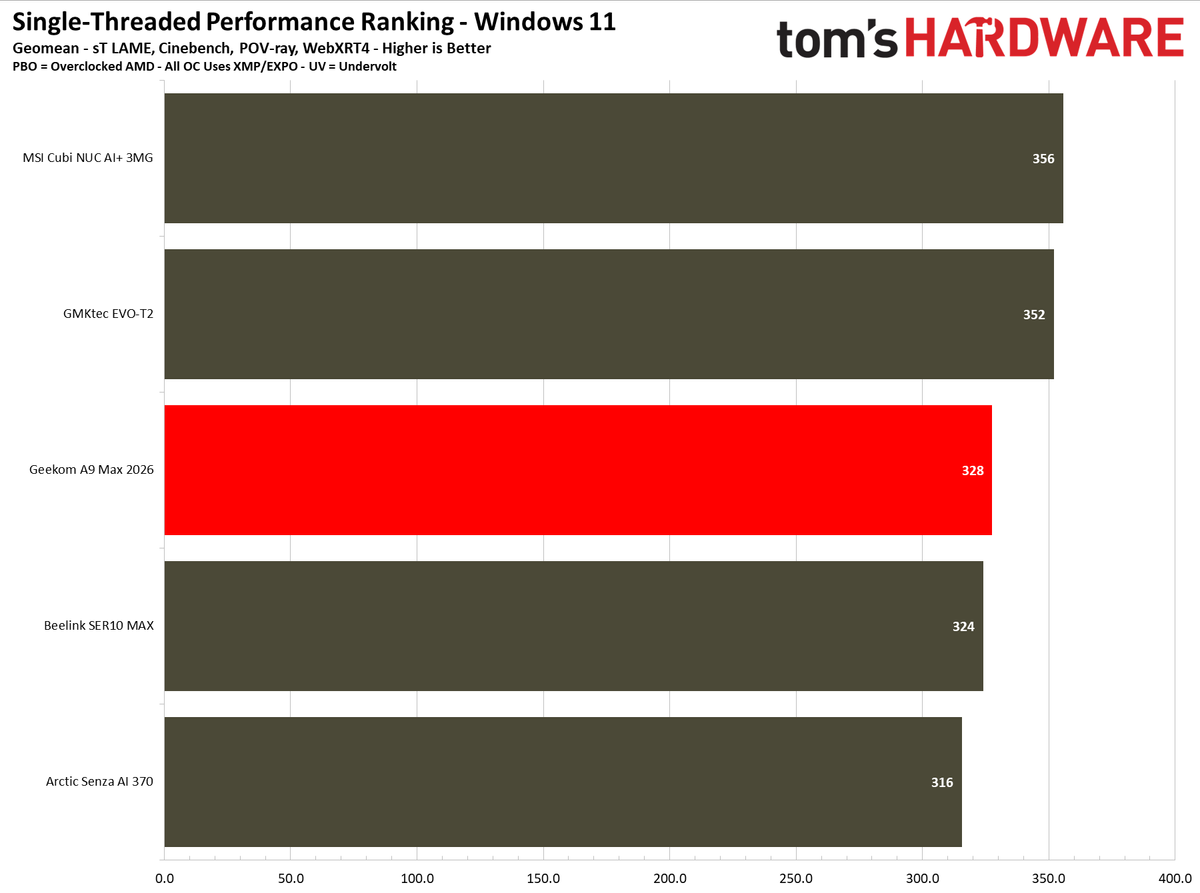
The release of the A9 Max 2026 follows the broader industry trend of "mid-cycle refreshes." Earlier this year, AMD introduced the Ryzen AI 400 series chips, prompting a wave of updates from OEMs like Beelink, Minisforum, and Geekom. While the jump in CPU performance over last year’s Ryzen AI 9 HX 370 is, in industry terms, "incremental," the shift to the 2026 branding reflects a push toward AI-heavy computing tasks, supported by the chip’s XDNA 2 NPU.
The chronology of this market is fast-paced. As of the time of writing, the A9 Max 2026 enters a competitive landscape where consumers are increasingly looking for machines that can handle not just office work, but also light gaming and AI inference. Geekom’s decision to launch with a single 32GB module suggests a strategy focused on long-term sustainability for business users, though it sacrifices the immediate performance requirements of enthusiasts and gamers.
Supporting Data: Benchmarking Performance
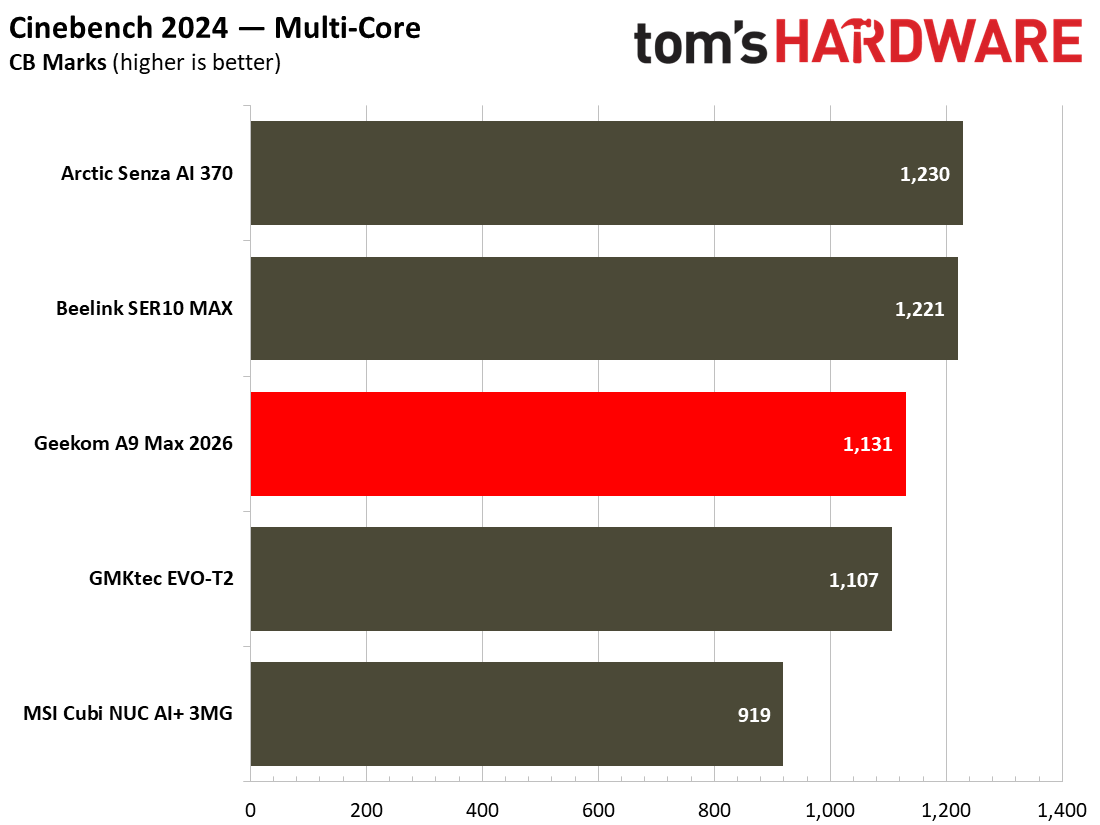
Our testing suite paints a nuanced picture of the A9 Max 2026. In CPU-heavy productivity tasks, such as Cinebench 2026 and video encoding in HandBrake, the system performs admirably. The Ryzen AI 9 HX 470, even when running on single-channel memory, is more than capable of handling multitasking, complex spreadsheets, and heavy web browsing. It comfortably outpaces older Intel-based mini PCs and remains competitive with its AMD-powered peers.
However, the disparity becomes glaring when we shift to graphics-intensive workloads.
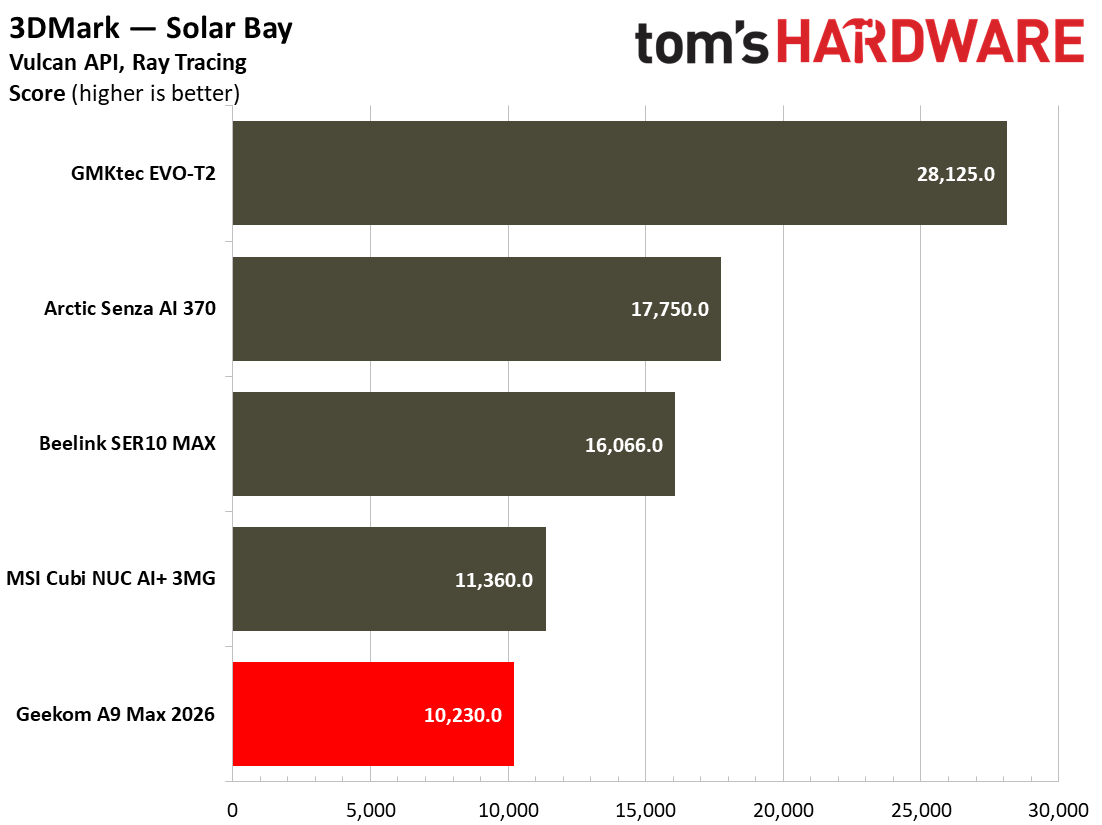
- 3DMark Solar Bay: The A9 Max 2026 lagged behind systems equipped with dual-channel RAM, including the MSI Cubi NUC AI+ 3MG.
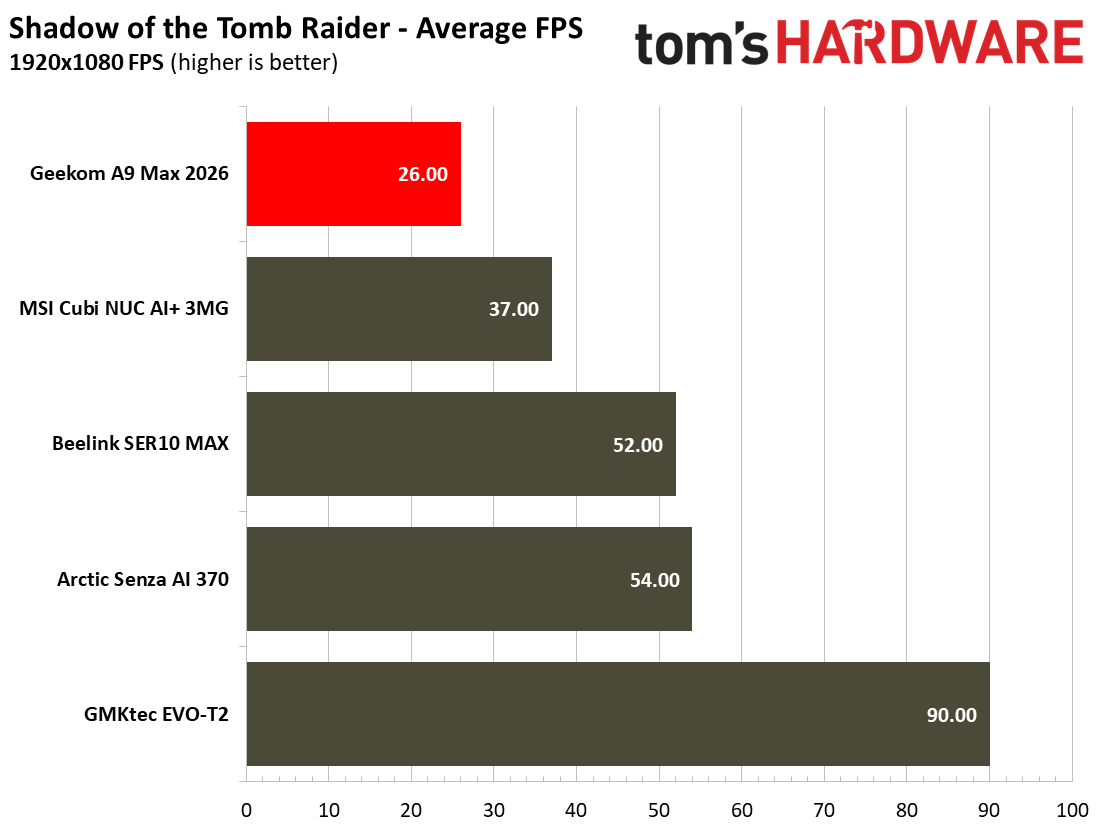
- Shadow of the Tomb Raider: At 1080p High settings, the A9 Max averaged just 26 FPS. In contrast, the Beelink SER10 MAX—equipped with the same processor but dual-channel memory—hit a much smoother 54 FPS.
- Cyberpunk 2077: High settings resulted in a stuttering 17 FPS, while the Steam Deck preset provided a marginally more playable 29 FPS.
The memory bandwidth constraint is an objective fact that cannot be ignored. While the storage performance is stellar—with the Kingston-branded 2TB PCIe Gen4 x4 NVMe SSD delivering read speeds of 6,139 MB/s—the memory bottleneck prevents the Radeon 890M from reaching its full potential.
Official Responses and Rationale
Geekom’s decision to ship a single 32GB module has been met with skepticism, but the company remains firm in its reasoning. In official correspondence, a representative stated: "The decision was mainly to provide better long-term upgrade flexibility. Since the A9 Max only has two memory slots, a factory-installed 2x 16GB setup would require users to replace both modules when upgrading to 64GB or 128GB in the future. With a single 32GB module, users can simply add another 32GB stick later to achieve 64GB dual-channel memory more easily and cost-effectively."
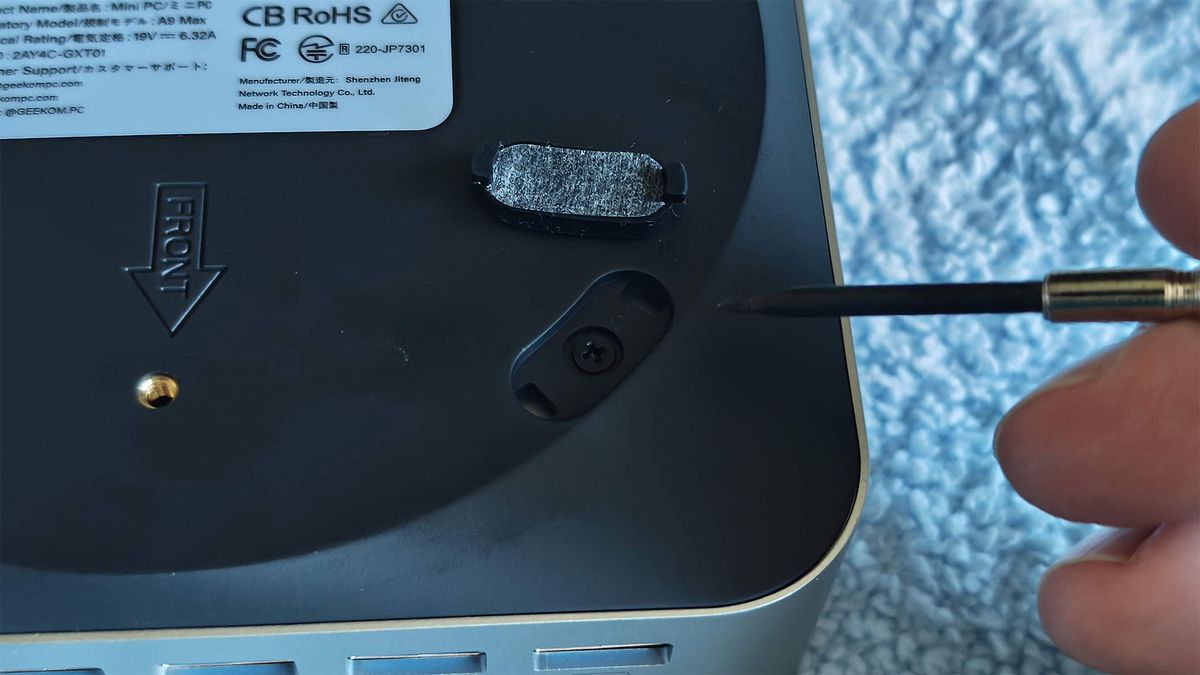
While this logic holds water for IT managers who anticipate needing 64GB+ of RAM for workstation tasks in three years, it is a frustrating compromise for the average consumer who expects peak performance from a $1,599 device today. Geekom has demonstrated an attention to detail elsewhere, such as the inclusion of a thermal pad for the secondary M.2 2230 SSD slot, but the memory choice remains the system’s "Achilles’ heel."
Thermal and Power Analysis
The "IceBlast 3.0" cooling system is a highlight of the A9 Max 2026. The combination of a copper base, dual heatpipes, and a dense fin stack is highly effective. During our stress tests, the system power draw peaked at 79W, with the CPU temperature climbing to a manageable 79°C.
The acoustic profile is acceptable but not silent. At idle, the system operates at a whisper-quiet 29–30 dB. Under full load, however, the fan ramps up to 41 dB. While this is not deafening, it is noticeable. Because Geekom does not provide proprietary fan control software, users are forced to dive into the BIOS to adjust the fan curves if they desire a quieter experience during heavy workloads.
Implications for the Consumer
The Geekom A9 Max 2026 sits in a difficult spot. It is a beautifully crafted, high-performance machine, but it requires a "hidden" additional investment to perform as advertised.
Who is this for?
- The Enterprise/Professional User: If you value the three-year warranty, the sturdy metal construction, and the ability to upgrade to 128GB of RAM down the road, this machine is an excellent choice. It is a reliable, fast, and professional-looking workstation.
- The Enthusiast Gamer: You should likely look elsewhere or prepare to buy an immediate memory upgrade. Without adding a second 32GB SODIMM module, you will be disappointed by the gaming performance compared to other similarly priced systems.
Comparison to the Competition
The Minisforum AI X1 Pro 470, which we reviewed earlier this year, remains a strong competitor. It offers more connectivity options (including OCuLink for external GPUs), a fingerprint reader, and a more user-friendly out-of-the-box configuration. When considering the $1,599 MSRP of the A9 Max 2026 (or its current discounted price of $1,439), consumers must weigh the aesthetic and build quality of the Geekom against the superior feature set of its rivals.
Conclusion: A Refined Design with a Misstep
The Geekom A9 Max 2026 is a testament to how far mini PCs have come in terms of build quality and thermal management. It is a "handsome and durable" piece of hardware that fits perfectly into any modern office or creative space. However, it is an example of how a singular, shortsighted configuration decision can mar an otherwise excellent product.
By prioritizing future-proofing over immediate performance, Geekom has created a device that feels incomplete at its price point. If you are willing to purchase a second memory module, you will have an incredibly capable machine. But if you are looking for a "plug-and-play" experience that excels in every category, you may find the memory bottleneck to be an unnecessary hurdle. For now, the A9 Max 2026 is a premium product with a significant asterisk, serving as a reminder that in the world of high-performance computing, the total package is only as strong as its weakest component.


 Iffa Jayyana
 Pevita Pearce