

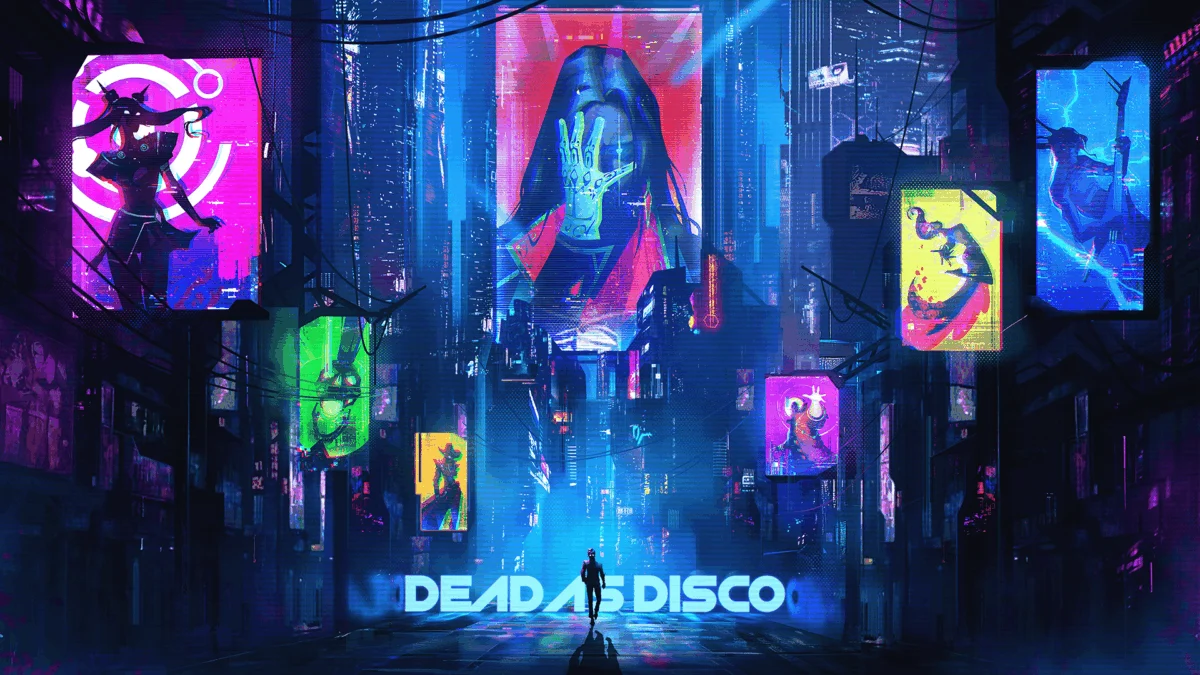
The rhythm-brawler subgenre has long occupied a unique niche in the gaming landscape, often struggling to strike the perfect balance between high-octane combat and the precision of a metronome. With the release of Dead as Disco—developed by Brain Jar Games—into Steam Early Access, players are being treated to an ambitious, albeit raw, attempt to bridge the gap between the frantic energy of a character-action game and the systematic satisfaction of a rhythm title.
Dead as Disco presents a narrative premise that feels like a classic rock-and-roll tragedy: Charlie Disco, a drummer meeting a premature end, finds himself resurrected a decade later. His goal? To reunite his fractured band by systematically dismantling his former bandmates in a series of high-stakes, rhythm-based boss encounters. While the game currently wears its Early Access status on its sleeve, the mechanical foundation suggests a potential cult classic in the making.
The Narrative Foundation: A Band Divided by Death
At its core, the story of Dead as Disco is a vehicle for gameplay, focusing on the mystery of Charlie’s death and the suspicious behavior of his former collaborators. Currently, the narrative is somewhat sparse, serving primarily as a framing device to guide players through individual stages.

The game’s cast is a colorful, if currently underdeveloped, ensemble:
- Hemlock: A gargantuan punk-rock skeleton with a penchant for juvenile humor and aggressive profanity.
- Arora: An AI-powered vocaloid robot.
- Dex: A cybernetic emo youth, blending machine-like precision with human angst.
- Prophet: A rhythmic powerhouse and the group’s resident rapper.
While these characters currently function more as archetypes than fully realized personalities, Brain Jar Games has hinted at an expanded roster of three additional members in future updates. As it stands, only Hemlock’s storyline offers a semblance of a complete arc, leaving players to hunt for hidden collectibles—items that unlock memories and dialogue fragments—to piece together the broader mystery. The developers have promised that these narrative gaps will be filled as the game moves toward its 1.0 release.
Combat Mechanics: The Dance of Destruction
The combat in Dead as Disco is where the title truly shines. Drawing clear inspiration from the Arkham-style counter-based combat, the game requires players to read enemy telegraphs, dodge, and parry. However, the true complexity arrives when you attempt to synchronize these actions with the soundtrack.

Attacking "on-beat" is not merely a stylistic choice; it is a tactical necessity that rewards the player with point multipliers and heightened combat efficiency. Fans of Crypt of the Necrodancer or the often-overlooked The Bouncer will find the loop familiar yet distinct. Some have described Charlie Disco as a "budget Travis Touchdown," a nod to the No More Heroes influence that permeates the game’s aesthetic.
However, the transition from the concept to the controller is not without its hitches. While the combat is largely "tight and flashy," some players may encounter input registration issues during complex maneuvers. Specifically, rapid reversals of direction during high-speed combat sequences occasionally fail to trigger correctly, leading to unnecessary damage. As the game remains in Early Access, these technical polish issues are expected to be refined.
Level Design and The Gimmick Factor
The genius of Dead as Disco lies in its stage design. Each band member serves as a boss, and their respective arenas are transformed into stages that reflect their musical identity.

- Hemlock’s Stage: A graffiti-smeared nightclub that transitions into a subway train sequence reminiscent of the golden age of side-scrolling beat-em-ups like Final Fight.
- Prophet’s Stage: A high-speed gauntlet where the player must dodge oncoming traffic while maintaining a rhythm-based assault.
- Arora’s Stage: A surreal battle against an astral projection that forces the player to manage projectiles while navigating complex rhythmic patterns.
- Dex’s Stage: A claustrophobic hallway brawl that culminates in a grand defense atop a cybernetic ziggurat.
This variety ensures that the game avoids the monotony common to shorter brawlers, providing high replayability as players return to these stages to hunt for secrets and optimize their combat scores.
The Sonic Identity Crisis
The soundtrack is arguably the most polarized aspect of Dead as Disco. While the concept of assigning a genre to each band member is sound, the execution is occasionally jarring. For instance, Hemlock, a character screaming for an aesthetic aligned with The Clash, is frequently forced to battle to a cover of Michael Sembello’s Maniac. While the track Authority fits his punk persona perfectly, the inclusion of Maniac feels like an odd tonal mismatch.
Similarly, the inclusion of a track titled Mensch Machine—which leans closer to Rammstein than the Kraftwerk classic one might expect—highlights a disconnect in the game’s musical curation. Furthermore, the inclusion of the track Big and Rich by Novul has been met with criticism; its lyrical content and country-rap fusion feel profoundly out of place within the otherwise electronic and rock-heavy atmosphere of the game.

However, the game’s greatest saving grace is its custom music import feature. By allowing players to drop their own MP3 files into the game, Brain Jar Games has transformed Dead as Disco from a rigid rhythm game into a sandbox for musical expression. Importing tracks like Justice’s Neverender or Static-X’s Otsego Undead reveals the true potential of the engine. The combat system feels remarkably robust when paired with Psytrance or high-tempo electronic tracks, proving that the underlying mechanics are far more flexible than the base soundtrack might suggest.
The Path Toward Version 1.0
For those looking to dive into the current build, the "Challenge Mode" is the standout feature. It provides a variety of trials that, when completed, reward the player with resources to upgrade "The Encore"—a dilapidated bar that serves as the player’s base of operations.
Moving forward, the community has identified several key areas for improvement:

- Cutscene Polish: Replacing static, wordless storyboards with fully voiced or animated cutscenes would significantly improve the emotional stakes of the narrative.
- Soundtrack Balancing: A more curated list of in-game tracks that align with the specific identities of the band members.
- Input Optimization: Addressing the rare but frustrating input drops during high-intensity combat scenarios.
Despite these hurdles, Dead as Disco is a compelling proof-of-concept. It manages to capture the adrenaline of a classic brawler while demanding the focus of a rhythm-based title. The ability to import custom music is a game-changer, ensuring that even if the developer-provided tracks don’t land for every player, the gameplay loop remains infinitely engaging.
Dead as Disco is currently available for Windows PC via Steam Early Access. While it is currently a rough diamond, the sheer creativity on display suggests that if Brain Jar Games can polish the edges and lean into the strengths of its custom-music ecosystem, they have a genuine hit on their hands. For now, it is a recommended experience for those who don’t mind a little jank in exchange for a truly unique rhythmic combat experience. Whether you’re here for the story or just to beat up a punk-rock skeleton to the beat of your favorite electronic playlist, there is enough here to justify the entry price.











No comments yet. Be the first to join the conversation!