

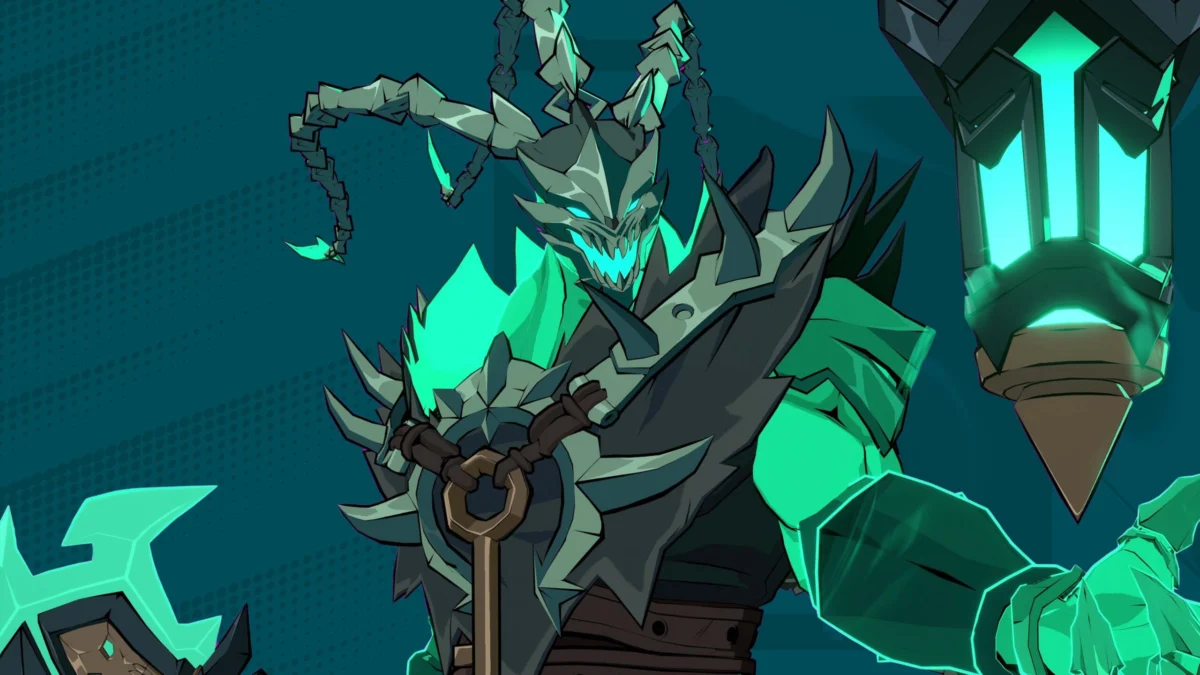
LOS ANGELES, CA – June 4, 2026 – Riot Games, the acclaimed developer behind the global phenomenon League of Legends, has officially announced the impending arrival of two iconic champions, Thresh and Senna, to its burgeoning free-to-play tag fighting game, 2XKO. Both characters are slated to join the roster on June 9, marking a significant expansion for the highly anticipated title. This announcement, accompanied by a chilling gameplay reveal trailer for Thresh, underscores Riot’s ambitious foray into the competitive fighting game genre, promising "delightful agony" for players who dare to face the Chain Warden.
Currently available for play on PlayStation 5, Xbox Series X|S, and PC, 2XKO (formerly known by its development codename, Project L) is rapidly building its foundation as a formidable contender in the fighting game community. The addition of Thresh, a spectral entity renowned for his soul-harvesting abilities and strategic prowess in League of Legends, brings a unique blend of ranged control and oppressive zoning to the 2D arena. Paired with the previously confirmed Senna, the Redeemed Sentinel, players can anticipate a dynamic and strategically deep experience that leverages the rich lore and diverse champion pool of Runeterra.
Main Facts
The Latest Roster Additions: Thresh and Senna
The imminent release of Thresh and Senna on June 9 represents a pivotal moment for 2XKO, signaling a steady cadence of content delivery from Riot Games. Thresh, the dreaded Chain Warden, is set to translate his signature abilities—including his devastating Death Sentence hook, the area-of-effect Flay, and the protective Dark Passage lantern—into a compelling fighting game toolkit. His presence is expected to introduce complex zoning and set-up opportunities, challenging players to master his unique blend of control and aggression. The ominous tagline "Delightful agony awaits," prominently featured in the announcement, perfectly encapsulates Thresh’s character and the intense, often punishing, playstyle he embodies.
Senna, the other confirmed addition, will bring her distinctive blend of long-range damage and supportive capabilities to the tag-team format. As the Redeemed Sentinel, her combat style in League of Legends is characterized by her relic cannon and spectral attacks, which will undoubtedly be reimagined to fit the fast-paced, combo-driven nature of 2XKO. The synergy between these two champions, both deeply intertwined in League of Legends lore, hints at the potential for narrative-driven team compositions and intriguing gameplay interactions within 2XKO‘s tag system.
2XKO: A New Contender in the Fighting Game Arena
2XKO is not merely another fighting game; it is Riot Games’ bold declaration of intent within a genre traditionally dominated by established franchises. As a free-to-play, League of Legends-based tag fighting game, it aims to lower the barrier to entry for newcomers while offering the depth and competitive integrity sought by veteran fighting game enthusiasts. The "tag" system is a cornerstone of its design, allowing players to select two champions and strategically swap between them mid-match, execute assist attacks, and unleash devastating team-up combos. This mechanic promises a high degree of strategic depth, encouraging players to explore myriad champion synergies and master intricate character interactions.
The game’s identity is inextricably linked to the vast and beloved universe of League of Legends. By drawing upon the extensive roster of champions, each with their distinct abilities, personalities, and backstories, 2XKO offers a familiar yet fresh experience for millions of League of Legends players, potentially bridging the gap between two distinct gaming communities. This cross-pollination of fanbases is a strategic advantage, providing a ready audience eager to see their favorite champions clash in a new format.
Platform Availability and Free-to-Play Model
2XKO is currently accessible on leading current-generation platforms: PlayStation 5, Xbox Series X|S, and PC. This broad multi-platform launch strategy ensures maximum accessibility, allowing a wide player base to dive into the game regardless of their preferred hardware. The decision to make 2XKO a free-to-play title is particularly significant. This model, a hallmark of Riot Games’ most successful ventures like League of Legends and Valorant, democratizes access to the core gameplay experience. While the specifics of its monetization strategy are yet to be fully detailed, it is expected to follow a similar model, focusing on cosmetic items, character skins, and potentially battle passes, ensuring that the core competitive experience remains unhindered by paywalls. This approach is designed to foster a massive player base, crucial for the long-term health and competitive viability of any modern fighting game.
Chronology
From Project L to 2XKO: A Journey of Anticipation
The genesis of 2XKO can be traced back several years, initially surfacing under the enigmatic codename "Project L." First officially revealed during the 10th-anniversary celebration of League of Legends in 2019, Project L immediately captured the attention of both League of Legends fans and the broader fighting game community. The prospect of Riot Games, a company renowned for its commitment to competitive integrity and esports, developing a fighting game based on its most popular IP generated immense excitement. Early glimpses suggested a visually striking 2D fighter that aimed to honor the diverse cast of Runeterra’s champions while delivering a mechanically deep experience.
For years, information about Project L was meticulously drip-fed to the public, building anticipation through developer diaries and occasional gameplay snippets. This prolonged development cycle allowed Riot Games to iterate extensively, gather feedback, and refine the core mechanics. The community watched eagerly as developers, including prominent figures like Tom Cannon, a co-founder of the Evolution Championship Series (EVO), shared insights into the game’s design philosophy, emphasizing accessibility without sacrificing competitive depth.
Key Milestones in Development
The journey from a conceptual project to a playable title involved several key milestones. Initial reveals focused on core gameplay concepts, demonstrating the tag-team mechanics and the adaptation of League of Legends abilities into a fighting game context. Early character reveals, such as Ekko and Darius, showcased the diverse archetypes being translated from the MOBA. A significant turning point occurred when Riot Games officially rebranded Project L to 2XKO in February 2024. This renaming signified a move towards a public-facing identity, solidifying the game’s branding and preparing for broader market engagement.
Throughout 2024 and early 2025, Riot continued to conduct various testing phases, including closed alphas and betas, allowing select players and professional fighting game players to provide crucial feedback. These tests were vital for stress-testing netcode, refining character balance, and optimizing the overall player experience. The iterative nature of this development, with constant communication from the development team, fostered a sense of community involvement and transparency, which is highly valued in the fighting game genre. The current "available now" status likely refers to a publicly accessible beta or early access period, a common practice for online competitive titles to ensure stability and gather data before a full launch.
The Gradual Unveiling of Champions
Riot Games has adopted a deliberate strategy for unveiling 2XKO‘s roster. Instead of a massive launch roster, champions have been introduced gradually, allowing players to digest and master each new addition while generating sustained excitement. Following initial reveals, the announcement of Senna as an upcoming character earlier this year set the stage for further expansions. The latest reveal of Thresh, alongside the confirmation of both characters’ release date on June 9, continues this pattern. This controlled rollout ensures that each champion receives ample spotlight, enabling the development team to fine-tune their integration into the game’s meta and providing players with focused content updates to anticipate. This method also allows the developers to react to player feedback and adjust future character designs accordingly.
Supporting Data
Deep Dive into Thresh: The Chain Warden’s Moveset and Lore Integration
Thresh, the spectral jailer from the Shadow Isles, is one of League of Legends‘ most iconic and feared champions. His translation into 2XKO is poised to be a masterclass in adapting a complex MOBA kit to a 2D fighting game. In League of Legends, Thresh is a support champion known for his ability to initiate fights, control space, and protect allies. His signature ability, Death Sentence (Q), is a long-range skill shot that hooks an enemy, pulling them towards him or allowing Thresh to dash to them. This ability is expected to become a core tool for mix-ups, extended combos, and oppressive zoning in 2XKO.
His Flay (E) ability, a sweep that pushes or pulls enemies, offers versatile utility for controlling spacing, interrupting attacks, and setting up combos. Dark Passage (W), his lantern, which can shield allies and allow them to dash to Thresh, presents fascinating possibilities for tag mechanics, potentially allowing for unique character swaps or defensive maneuvers. Finally, his ultimate, The Box (R), creates a prison of spectral walls that slow and damage enemies who break them, could manifest as a powerful area-denial Super or a devastating combo finisher.
The "delightful agony" promised in the announcement is deeply rooted in Thresh’s lore. He is a sadistic torturer of souls, deriving pleasure from the suffering of others. This thematic element will undoubtedly be reflected in his animations, voice lines, and possibly even unique character interactions, adding a layer of narrative richness to his gameplay. Players mastering Thresh will not only wield his formidable abilities but also embody his chilling persona, making every victory a testament to his insidious power.
Senna’s Role: The Redeemer’s Combat Style
Senna, the wife of Lucian and a former prisoner within Thresh’s lantern, is a champion defined by her struggle against the Black Mist and her unique fusion of light and shadow magic. In League of Legends, she functions as a marksman support, excelling at long-range harassment, healing, and utility. Her primary attack, a relic cannon, and abilities like Piercing Darkness (Q), a long-range piercing shot that heals allies, and Last Embrace (W), a root that spreads, suggest a playstyle focused on keeping opponents at bay, punishing mistakes from a distance, and potentially offering recovery options for her tag partner.
Her unique mechanic of collecting "mist" from fallen foes or minions, which empowers her attacks, could be ingeniously adapted into a fighting game context, perhaps as a meter that enhances her special moves or grants temporary buffs. Her ultimate, Dawning Shadow (R), a global beam that shields allies and damages enemies, could translate into a screen-spanning Super that offers both offensive and defensive utility, reinforcing the tag-team dynamic. Senna’s presence adds a much-needed long-range projectile and zoning specialist to the 2XKO roster, complementing the more aggressive or controlling styles of other champions.
The Tag Fighting System: Strategic Depth and Synergy
The core of 2XKO‘s gameplay revolves around its tag fighting system, a mechanic that fundamentally differentiates it from traditional 1v1 fighters. Players select two champions, and the strategic interplay between them is paramount. This system introduces several layers of complexity:
- Character Swapping: The ability to switch between active and inactive champions allows for dynamic pacing, health management, and adapting to different match-up scenarios.
- Assist Attacks: Inactive champions can be called upon to perform assist attacks, extending combos, covering weaknesses, or applying pressure. Mastering these assists is crucial for maximizing damage and controlling the flow of battle.
- Team-Up Combos: Unique to tag fighters are the possibilities for intricate, devastating combos that involve both characters working in tandem. These often require precise timing and deep knowledge of both champions’ movesets.
- Synergy: The choice of two champions becomes a critical strategic decision. Players will need to consider how their chosen champions complement each other, covering weaknesses, enhancing strengths, and creating powerful archetypes (e.g., a strong "point" character for offense backed by a defensive "anchor" character).
This system encourages experimentation and creativity, promising a meta-game rich with discovery as players uncover optimal team compositions and advanced tag strategies.

Harnessing the League of Legends Universe
The League of Legends universe is a treasure trove of characters, lore, and aesthetic styles, making it an ideal foundation for a fighting game. With over 160 champions, each possessing a unique kit and personality, 2XKO has an almost endless supply of potential roster additions. This allows Riot to:
- Leverage Existing IP: Tap into a massive, pre-existing fanbase, reducing the need for extensive world-building or character introduction.
- Diverse Playstyles: Translate a wide array of combat archetypes (tanks, mages, assassins, marksmen, supports) into fighting game mechanics, ensuring a varied and engaging roster.
- Rich Lore Integration: Infuse the game with deep narrative elements, character rivalries, and environmental storytelling that resonates with League of Legends fans.
- Consistent Artistic Direction: Maintain the distinct visual identity of Runeterra, offering a familiar yet fresh aesthetic.
This strategic choice not only attracts League of Legends players but also provides a distinct thematic identity that helps 2XKO stand out in a crowded genre.
Technical Foundations: Platforms and Performance
2XKO‘s availability on PlayStation 5, Xbox Series X|S, and PC highlights Riot’s commitment to reaching a broad audience with high-performance standards. Modern fighting games heavily rely on robust technical infrastructure, particularly for online play. It is almost a certainty that 2XKO incorporates rollback netcode, the industry standard for minimizing input lag and ensuring a smooth online experience, even with fluctuating internet connections. Without rollback netcode, a competitive online fighting game struggles to gain traction.
Visually, the game is expected to leverage the capabilities of current-generation hardware, offering crisp 2D visuals with detailed character models and vibrant environments that faithfully represent the League of Legends aesthetic. Performance targets will likely include a stable 60 frames per second across all platforms, critical for the precise timing and execution demanded by fighting games. The development team’s focus on these technical foundations is paramount for establishing 2XKO‘s credibility within the discerning fighting game community.
Official Responses
Riot Games’ Vision for 2XKO
Riot Games has consistently articulated a clear vision for 2XKO: to create a fighting game that is both accessible to newcomers and deeply rewarding for competitive players. While specific quotes regarding Thresh and Senna are awaiting official press releases, previous statements from the development team provide insight into their philosophy. Tom Cannon, Executive Producer of 2XKO, has frequently emphasized the importance of a low barrier to entry for the fighting game genre, acknowledging its reputation for being intimidating. "We want to build a game that truly resonates with the fighting game community, but also opens its arms to players who might be new to the genre," Cannon has stated in past interviews, underscoring the balance between simplicity and depth.
The free-to-play model is central to this vision, ensuring that anyone can download and experience the core gameplay without an upfront investment. This approach is designed to foster a massive, diverse player base, which is crucial for the health of any online competitive game, especially one with esports aspirations.
Developer Commentary on Character Design and Balance
The process of translating League of Legends champions into a fighting game requires meticulous attention to detail and a deep understanding of both IPs. Developers have often spoken about the challenge and excitement of this endeavor. "Bringing champions like Thresh and Senna to 2XKO isn’t just about porting their abilities; it’s about reimagining them for a new combat paradigm," a lead designer might explain. "We strive to capture their essence, their ‘feel,’ while ensuring they fit seamlessly into our tag-team system and contribute to a balanced roster."
The development team is known for its iterative approach to balance, heavily relying on player feedback from internal and external testing. Expect statements emphasizing their commitment to ongoing balance adjustments post-launch, ensuring that no single character dominates the meta and that all champions offer viable competitive options. The intricacies of balancing a tag fighter, where character synergies can create unforeseen power spikes, make this an especially challenging but rewarding aspect of development.
The Future of the Free-to-Play Model
Riot Games’ success with the free-to-play model in League of Legends and Valorant provides a robust framework for 2XKO. Official responses will likely reiterate their commitment to this model, emphasizing that monetization will focus on cosmetic items that do not affect gameplay. This includes champion skins, unique visual effects, stage elements, and perhaps seasonal battle passes offering exclusive rewards. The developers understand that maintaining competitive integrity is paramount for a fighting game with esports ambitions. "Our goal is to provide a complete, competitive experience for free, with optional cosmetic purchases allowing players to customize their journey," a Riot spokesperson might affirm, ensuring the community that the game will not be "pay-to-win." This strategy aligns with Riot’s broader business model, which prioritizes player engagement and long-term retention over immediate, high-revenue generation from initial sales.
Implications
Impact on the Fighting Game Community (FGC)
The entry of Riot Games and 2XKO into the FGC is a monumental event. Riot’s reputation for investing heavily in competitive ecosystems means 2XKO is poised to become a major player. This could have several profound implications:
- Increased Exposure and Growth: Riot’s marketing power and existing fanbase could bring a new wave of players into the FGC, potentially expanding the community as a whole.
- Competition and Innovation: 2XKO will undoubtedly compete with established titles like Street Fighter, Tekken, and Guilty Gear. This competition could spur innovation across the genre, pushing all developers to elevate their games.
- Accessibility: The free-to-play model significantly lowers the barrier to entry, making 2XKO accessible to players who might be hesitant to purchase a full-priced fighting game. This could democratize the FGC experience.
- New Dynamics: The tag-team system offers a distinct flavor of fighting game that could attract players looking for deeper strategic options beyond traditional 1v1 matchups.
However, 2XKO will also face scrutiny from a community that values deep mechanics, precise balance, and a strong competitive infrastructure. Living up to the high expectations set by Riot’s previous titles while satisfying the discerning tastes of the FGC will be a significant challenge.
Esports Potential and Riot’s Track Record
Riot Games is not just a game developer; it is an esports titan. The success of the League of Legends World Championship and the Valorant Champions Tour demonstrates Riot’s unparalleled expertise in building and sustaining massive competitive ecosystems. This track record suggests that 2XKO has inherent, immense esports potential.
- Dedicated Infrastructure: Riot is likely to establish a robust esports infrastructure for 2XKO, including professional leagues, prize pools, and broadcast productions, similar to its other titles.
- Global Reach: Leveraging its existing global network, Riot can quickly scale 2XKO esports to an international level.
- Professionalization: The introduction of another major title from Riot could further professionalize the fighting game esports scene, attracting more investment and talent.
The tag-team nature of 2XKO also lends itself well to exciting team-based competition, potentially offering a fresh take on fighting game tournaments. The combination of individual skill and team synergy could make for compelling viewership.
The Broader Riot Games Ecosystem
2XKO is more than a standalone game; it’s an integral part of Riot Games’ expanding multi-game universe. The "Riot Games Ecosystem" refers to the interconnected web of games, media, and lore that Riot is building around the League of Legends IP.
- Cross-Promotion: 2XKO benefits from cross-promotion within League of Legends, Valorant, and other Riot titles, introducing its champions and gameplay to a massive existing player base.
- Shared Lore: The game deepens the lore of Runeterra, allowing players to experience beloved champions in new contexts and explore their relationships through combat.
- Synergy with Other Media: The success of the Arcane animated series demonstrates the power of the League of Legends IP. 2XKO further diversifies the ways players can engage with this universe.
This ecosystem approach creates a powerful feedback loop, with each new game or media project reinforcing the appeal of the others, ultimately strengthening the overall Riot brand.
Player Expectations and Community Engagement
The community’s expectations for 2XKO are sky-high, driven by Riot’s reputation and the game’s long development cycle. Players anticipate:
- High-Quality Production: Polished graphics, responsive controls, and excellent sound design.
- Fair Monetization: A free-to-play model that respects players and doesn’t hinder competitive play.
- Robust Netcode: A smooth, lag-free online experience, especially crucial for a fighting game.
- Consistent Content: Regular updates, new champions, and game modes to keep the experience fresh.
- Developer Responsiveness: A development team that listens to community feedback and makes timely adjustments.
Riot Games has a strong track record of community engagement, and maintaining open lines of communication will be vital for 2XKO‘s long-term success. Addressing player concerns, transparently communicating development plans, and fostering a positive community environment will be key.
The Road Ahead for 2XKO
With Thresh and Senna joining the roster on June 9, 2XKO is clearly entering a new phase of its development and public presence. The road ahead will involve:
- Continuous Character Releases: Expect a steady stream of new champions, drawing from the vast League of Legends roster, each bringing unique mechanics and strategic depth.
- New Game Modes and Features: Beyond core competitive play, Riot will likely introduce various game modes, training tools, and social features to enhance the overall player experience.
- Balance Patches and Meta Shifts: As the player base grows and new strategies emerge, regular balance patches will be essential to maintain competitive fairness and keep the meta fresh.
- Esports Development: The gradual rollout of competitive circuits, starting with community tournaments and potentially escalating to major international events, will solidify 2XKO‘s place in the esports landscape.
The addition of Thresh and Senna is more than just a character update; it’s a statement of intent. Riot Games is not just building a fighting game; it’s cultivating a new competitive pillar within its expansive universe, promising a future filled with strategic depth, intense competition, and, for its players, "delightful agony." The fighting game community and League of Legends fans alike will be watching closely as 2XKO continues to evolve and carve out its legacy.











No comments yet. Be the first to join the conversation!