

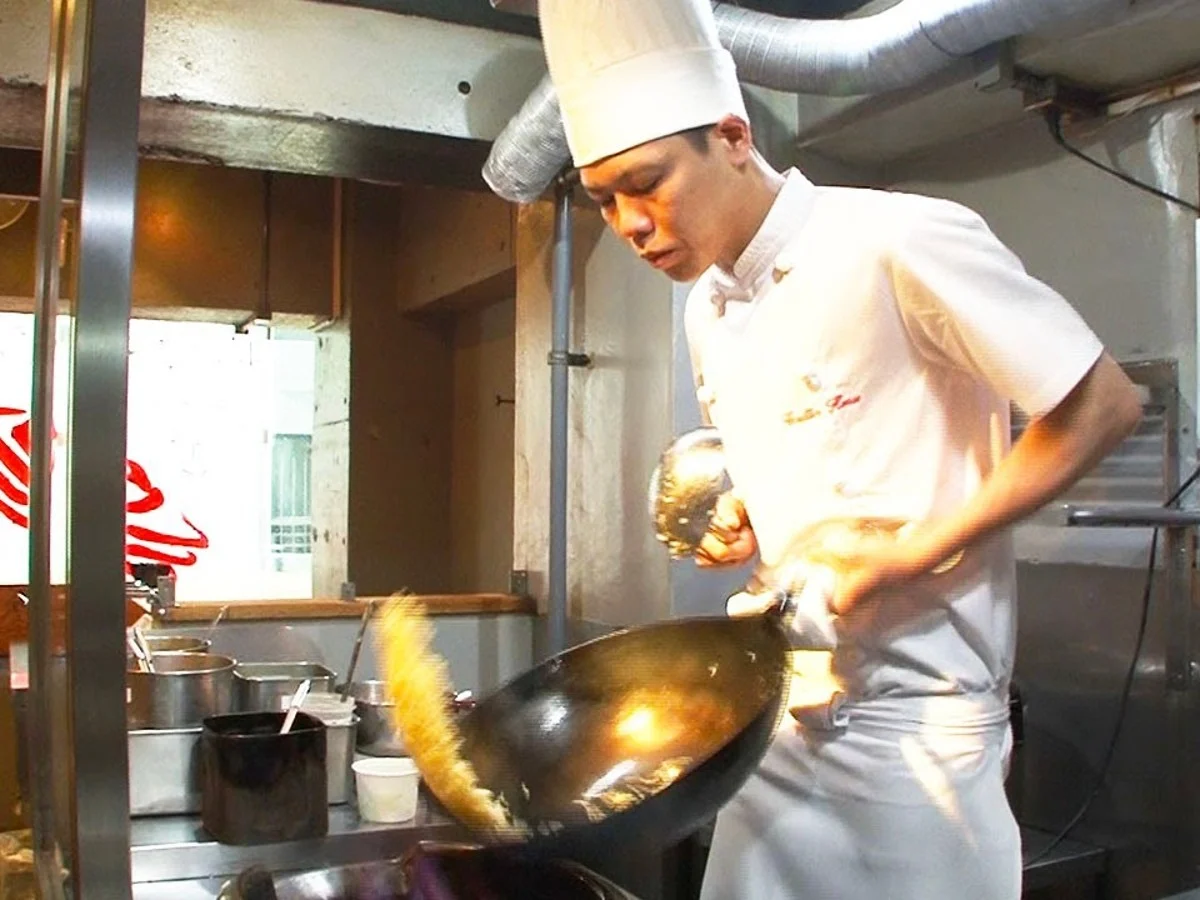
In the hyper-competitive culinary landscape of Tokyo, where restaurants often distinguish themselves through decades of tradition or avant-garde molecular experimentation, one establishment has captured the public imagination through the sheer, raw athleticism of its kitchen. At Kani Chahan no Mise (Crab Fried Rice Restaurant) in Shibuya, the focus is not on avant-garde ingredients, but on the hypnotic, high-octane performance of head chef Takumi Murakami.
Often dubbed the "God of Fried Rice" by awestruck patrons and online observers alike, Murakami has become a viral sensation. His ability to transform simple ingredients—rice, egg, and fresh crab meat—into a perfectly seasoned, aromatic masterpiece in under a minute has set a new benchmark for speed and precision in the hospitality industry.
The Core Phenomenon: Efficiency as Art
At its heart, the appeal of Murakami’s cooking lies in the intersection of efficiency and mastery. While home cooks often struggle to maintain the high heat required for restaurant-quality fried rice, Murakami operates within a thermal environment that would overwhelm a novice.
The dish in question—the restaurant’s signature crab fried rice—is a deceptively simple staple of Japanese-Chinese fusion cuisine. However, under Murakami’s command, the process is elevated to a rhythmic, almost dance-like sequence. The wok becomes an extension of his arm; the tossing motion is precise, repetitive, and calculated to ensure that every grain of rice is coated in a delicate layer of oil and seasoning, achieving the elusive wok hei—the "breath of the wok"—that defines elite-level stir-fry.
Chronology of a Viral Sensation
The ascent of Takumi Murakami from a local Shibuya culinary staple to an international internet phenomenon did not happen overnight, though it was solidified by a singular moment of documentation.
The Television Spotlight
The catalyst for his global recognition was a feature on the TV Tokyo program Uchimura no Tsuboru Douga. The production team, seeking to highlight unique talents across Japan, turned their cameras toward the Kani Chahan no Mise kitchen. The resulting footage, which captured Murakami preparing a batch of fried rice from start to finish in roughly 50 seconds, was later uploaded to the program’s official YouTube channel.
The Digital Reaction
Within days of the video’s release, it transcended local Japanese social media circles. Viewers from across the globe began sharing the clip, flooding the comment sections with testimonials of disbelief. Phrases such as "This is the work of a god" and "His technique is beyond compare" became the standard sentiment. The video served as a masterclass in visual storytelling, allowing viewers to appreciate the nuance of his craft—the way he cracks an egg with one hand, the controlled flame management, and the final, graceful flip onto the plate.
Supporting Data: The Mechanics of the Wok
To understand the magnitude of Murakami’s skill, one must look at the technical requirements of high-speed wok cooking.
- Thermal Management: A standard commercial wok burner in Japan can produce temperatures exceeding 300°C. Murakami must navigate these temperatures without scorching the delicate crab meat, which is folded in at the final moment to preserve its texture.
- The 50-Second Threshold: In the culinary industry, the "order-to-table" time is a critical performance metric. By reducing the preparation time to under a minute, Murakami is not just showing off; he is maximizing the kitchen’s output capacity during the frantic Shibuya lunch rush.
- Ergonomics and Repetition: Having performed this exact routine thousands of times, Murakami has optimized every movement. There is zero wasted motion. From reaching for the seasoning to the final plating, each action follows a pre-set neural pathway, allowing him to maintain this speed for hours on end without fatigue—a testament to his professional conditioning.
Comparative Culinary Perspectives
The fascination with high-speed chefs is a growing trend in Japanese culinary tourism. Murakami’s prestige is often compared to the legendary chefs at the Red Brick Warehouse in Yokohama, specifically those at the restaurant Tachibana.
Tachibana is famous for its omurice (omelet rice), where the challenge is not just speed, but the technical difficulty of creating a perfectly smooth, golden egg layer that encases seasoned rice. While Tachibana represents the refined, delicate side of Japanese comfort food, Murakami represents the high-energy, visceral power of the wok. Both establishments share a common philosophy: that the "everyday" meal is elevated when the chef treats the preparation as a performance art.
Official Responses and Kitchen Culture
While Murakami remains a humble figure, focused largely on the daily demands of the restaurant, the management at Kani Chahan no Mise has embraced the notoriety. The Shibuya location has seen a measurable increase in foot traffic, with a new demographic of diners—often tourists—visiting specifically to witness the "God of Fried Rice" in action.
In the industry, experts note that Murakami’s performance serves as an excellent recruitment and branding tool. In an era where the restaurant industry struggles with labor shortages and the grueling nature of kitchen work, Murakami provides a counter-narrative: that cooking, when mastered to this degree, is a craft of prestige and honor.
Implications for the Future of Dining
The popularity of Murakami’s performance has broader implications for the future of the restaurant industry, particularly regarding the "Experience Economy."
The Rise of the "Open-Kitchen" Theater
As diners move away from formal, static dining experiences, the demand for transparency and entertainment in the kitchen has surged. Restaurants that feature open layouts, where the preparation is visible, are seeing higher engagement. Murakami’s success proves that the chef is the primary attraction.
The Preservation of Traditional Techniques
There is a concern that as culinary technology advances, traditional skills like wok-handling might be replaced by automated stir-fry machines. However, the viral nature of Murakami’s video suggests the opposite: that there is a profound human desire to witness genuine, manual mastery. The public is not cheering for the fried rice alone; they are cheering for the years of repetition, the discipline, and the human spirit required to become a master of a singular, simple dish.
Culinary Tourism in Shibuya
For the district of Shibuya, which is already a global destination, the presence of such a high-caliber chef adds a layer of depth to its culinary map. It shifts the focus from the trendy, Instagrammable cafes of Harajuku to the authentic, high-speed skill of the local shokunin (craftsman).
Conclusion: Beyond the Plate
Takumi Murakami’s performance at Kani Chahan no Mise is more than just a recipe for fried rice; it is a manifestation of the Japanese concept of shokunin kishitsu—the artisan spirit. Whether he is moving with a rhythmic grace or managing the intense heat of the wok, Murakami exemplifies a level of dedication that is increasingly rare in a world of automated convenience.
For those planning a visit to Tokyo, a stop at the Shibuya location is highly recommended. While the wait times remain manageable due to the extreme efficiency of the kitchen, the experience of watching a master at work is one that stays with the diner long after the meal is finished. It serves as a reminder that even the most humble bowl of fried rice can be transformed into a work of art when handled by the hands of a master.
As the internet continues to share and celebrate his work, Murakami stands as a beacon of excellence, proving that even in the fast-paced, modern landscape of Tokyo, there is always room for the timeless, hypnotic beauty of a chef who has truly mastered their craft.











No comments yet. Be the first to join the conversation!