

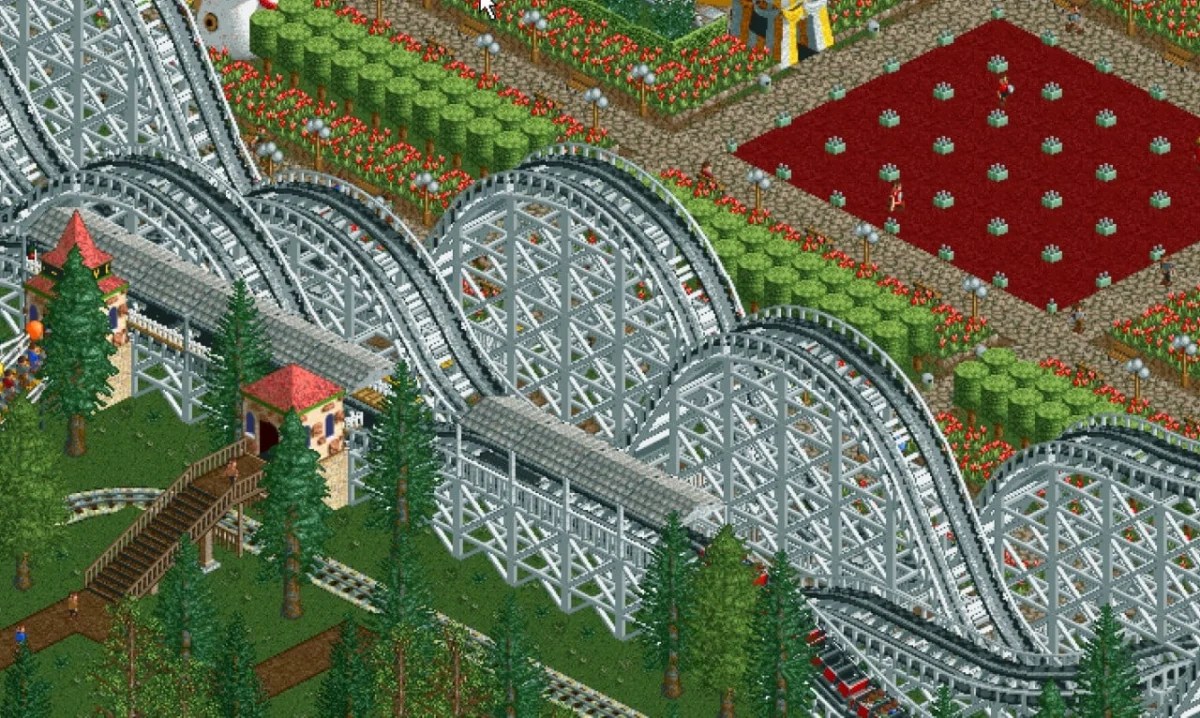
Atari breathes new life into the beloved theme park simulator, offering a refreshed experience for existing fans and newcomers alike.
Atari has announced the highly anticipated release of RollerCoaster Tycoon Classic for the Nintendo Switch 2, introducing a dedicated "Switch 2 Edition" alongside a compelling upgrade path for existing owners of the Nintendo Switch version. Both offerings are now available on the Nintendo eShop, promising to deliver the intricate park management and thrilling coaster design that fans have cherished for decades. This move signifies Atari’s commitment to revitalizing classic gaming experiences for modern platforms, catering to both nostalgia and the burgeoning capabilities of new hardware.
The Switch 2 Edition boasts significant enhancements, including the integration of precise mouse controls, a feature long requested by players seeking the granular control that defined the original PC releases. Furthermore, the game promises "enhanced resolution," suggesting a sharper visual presentation that will take full advantage of the Switch 2’s improved graphical prowess. This commitment to visual fidelity and refined control schemes aims to immerse players even deeper into the world of theme park creation and management, offering a smoother and more intuitive gameplay experience.
For those who have already invested in the Nintendo Switch version of RollerCoaster Tycoon Classic, Atari is providing a cost-effective upgrade path. This option allows existing players to transition to the enhanced Switch 2 edition at a reduced price of £4.50 / $5.00, ensuring that their loyalty is rewarded. The standalone Switch 2 Edition, on the other hand, will retail for a premium of £26.99 / $29.99, reflecting the added features and optimizations for the new hardware. This tiered approach demonstrates Atari’s consideration for its player base, offering flexibility and value.
A Legacy Reimagined: The Enduring Appeal of RollerCoaster Tycoon Classic
RollerCoaster Tycoon Classic is a potent distillation of two of the most revered entries in the franchise: the original RollerCoaster Tycoon (1999) and its equally beloved sequel, RollerCoaster Tycoon 2 (2001). This compilation faithfully recreates the core gameplay loop that captivated a generation of PC gamers. Players are tasked with the monumental challenge of designing, building, and managing their very own theme parks. This involves everything from crafting breathtaking roller coasters with intricate track designs to strategically placing food stalls, managing staff, and ensuring the happiness and safety of every park guest.
The game’s enduring appeal lies in its deep simulation mechanics, coupled with a charming and accessible presentation. It strikes a delicate balance between strategic planning and creative freedom, allowing players to unleash their inner architect and impresario. The sheer scope of customization, from the tiniest path tile to the most ambitious coaster layout, provides endless replayability. Furthermore, the inclusion of 95 diverse scenarios, drawn from the original PC games and their extensive expansion packs, offers a wealth of challenges and objectives to conquer. These scenarios range from building a park from scratch with limited funds to revitalizing a struggling attraction or achieving specific guest satisfaction ratings.
The legacy of RollerCoaster Tycoon is undeniable, having spawned numerous sequels, spin-offs, and inspired countless other simulation titles. Its influence can be seen in many modern management games, a testament to its groundbreaking design and the sheer addictive nature of its gameplay. The decision to bring a polished version to the Nintendo Switch 2 is a clear indication that this classic formula still holds significant sway with gamers, eager to experience its magic on a portable and versatile platform.
A Journey Through Time: The Evolution of RollerCoaster Tycoon on Nintendo Consoles
The journey of RollerCoaster Tycoon Classic to Nintendo platforms has been a gradual but ultimately rewarding one. While the franchise has a rich history on PCs, its transition to consoles, particularly Nintendo’s hybrid offerings, presented unique challenges and opportunities.
The initial release of RollerCoaster Tycoon Classic on the Nintendo Switch in late 2024 was met with considerable enthusiasm. Critics and players alike praised its faithful recreation of the PC experience, a remarkable feat given the complexities of translating such a deep simulation to a controller-based interface. Alex’s review on Nintendo Life awarded the game a commendable 8/10, highlighting its engaging gameplay and nostalgic charm.
However, the Switch version was not without its initial criticisms. A notable omission, pointed out in the review and subsequently echoed by the community, was the lack of native touch controls. For a game that thrives on precise placement and intricate menu navigation, this was a significant hurdle for many players accustomed to the direct manipulation offered by touchscreens on other platforms.
Recognizing the validity of these concerns, Atari and the development team demonstrated a commendable commitment to player feedback. In a significant update released approximately a month after the initial launch, the Switch version received a much-requested touch control patch. This update not only introduced the ability to use the touchscreen for gameplay but also incorporated new options for visual settings and cursor control speeds. This proactive approach to addressing player feedback significantly improved the overall usability and enjoyment of the game on the Switch, solidifying its position as a viable and enjoyable console port.
The upcoming Switch 2 Edition builds directly upon this foundation. The inclusion of mouse controls, a staple of the original PC versions, signifies a desire to cater to a more traditional control preference while still acknowledging the flexibility of the Switch’s hardware. The "enhanced resolution" further suggests that the developers are leveraging the Switch 2’s improved processing power to offer a visually superior experience, making the park management even more visually appealing and detailed. This progression from the initial Switch release to the enhanced Switch 2 edition showcases a dedication to refining the experience and adapting to the evolving capabilities of Nintendo’s hardware.
Unpacking the Enhancements: What the Switch 2 Edition Brings to the Table
The Switch 2 Edition of RollerCoaster Tycoon Classic is not merely a port; it represents a thoughtful evolution of the game designed to take advantage of the next generation of Nintendo’s portable hardware. The core gameplay remains intact – the addictive loop of park creation, coaster design, and guest satisfaction – but several key enhancements promise to elevate the experience.
Enhanced Controls: Precision at Your Fingertips (and Cursor)
One of the most significant upgrades in the Switch 2 Edition is the introduction of mouse controls. This feature directly addresses a long-standing desire among fans of the original PC titles, who often found controller-based interfaces less intuitive for the intricate tasks of park management. The ability to use a mouse (presumably via a docked setup or a compatible peripheral) offers a level of precision that is invaluable when placing individual tiles, designing complex coaster tracks, or navigating through extensive menus. This harkens back to the original PC experience, allowing for a more direct and granular control over every aspect of the park.
Complementing the mouse controls, the game also features enhanced cursor control speeds. This allows players to fine-tune how quickly the cursor moves across the screen, further contributing to a smoother and more responsive gameplay experience. Whether you are meticulously sculpting a new roller coaster or quickly surveying your bustling park, the ability to adjust cursor speed ensures that the interface never feels sluggish or cumbersome.
While the press release specifically highlights mouse controls, it’s important to acknowledge the improvements made to controller-based gameplay as well. Building on the lessons learned from the Switch 1 version, it is highly probable that the developers have further optimized controller navigation and button mapping to ensure a seamless experience for those who prefer to play in handheld mode or without a mouse peripheral.
Visual Fidelity: A Sharper, More Immersive World
The promise of "enhanced resolution" is another key selling point for the Switch 2 Edition. This suggests that the game will run at a higher resolution than its Switch predecessor, resulting in sharper visuals, more detailed textures, and a generally clearer presentation. For a game that often involves observing a multitude of small details – from the individual guests wandering through your park to the intricate designs of your rides – this visual upgrade can significantly enhance immersion.
The enhanced resolution will likely benefit from the Switch 2’s more powerful hardware, allowing for more complex environments and a greater draw distance. This means that players can expect to see their meticulously crafted parks in greater detail, with less visual clutter and a more cohesive aesthetic. The charming art style of RollerCoaster Tycoon Classic, with its iconic isometric perspective, will undoubtedly benefit from this visual polish, making every brick, every sign, and every towering coaster look its best.

An Accessible Upgrade Path: Rewarding Loyalty
Atari’s decision to offer an upgrade path for existing Nintendo Switch owners is a welcome gesture that fosters goodwill within the player community. The ability to acquire the enhanced Switch 2 Edition for a mere £4.50 / $5.00 is a significant incentive for those who have already invested in the game on the previous generation of Nintendo hardware. This approach ensures that players are not forced to repurchase the full game and instead can seamlessly transition to the improved experience, benefiting from the new features and optimizations without a substantial financial outlay.
This tiered pricing strategy also acknowledges the different market segments Atari is targeting. Newcomers to the game on the Switch 2 can purchase the standalone edition for £26.99 / $29.99, gaining access to the full, enhanced experience. Meanwhile, existing players are presented with an attractive and affordable option to elevate their gameplay, making the transition to the new hardware a logical and cost-effective choice.
Supporting Data: The Enduring Popularity of RollerCoaster Tycoon
The continued relevance and commercial success of the RollerCoaster Tycoon franchise, even decades after its initial release, speaks volumes about its inherent quality and enduring appeal. While specific sales figures for the Nintendo Switch version of RollerCoaster Tycoon Classic are not publicly available, the game’s consistent presence on eShop charts and the enthusiastic community reception provide strong anecdotal evidence of its popularity.
The original PC releases, RollerCoaster Tycoon and RollerCoaster Tycoon 2, were massive commercial successes for their time. RollerCoaster Tycoon alone sold over 11 million copies worldwide, a phenomenal achievement for a simulation game in 1999. Its sequel, RollerCoaster Tycoon 2, also garnered significant sales and critical acclaim, further cementing the franchise’s place in gaming history.
The decision to release RollerCoaster Tycoon Classic on various platforms, including mobile devices and now the Nintendo Switch and Switch 2, is a testament to the evergreen nature of its gameplay. The game’s core mechanics are timeless, offering a deep and engaging simulation that appeals to a broad demographic of players. The satisfaction derived from meticulously planning a park, optimizing ride layouts for maximum profit and thrill, and witnessing the delighted squeals of virtual guests is a universal pleasure that transcends generational boundaries.
The continued demand for this classic experience is further supported by the vibrant modding communities that have kept the original PC games alive for years. Players have created countless custom scenarios, rides, and scenery objects, demonstrating an ongoing passion for the franchise and a desire to expand its already vast possibilities. This enduring engagement with the game’s content and creative potential directly translates into a receptive audience for updated console versions.
Furthermore, the success of other classic simulation titles on modern consoles indicates a growing market for well-executed retro experiences. Games that offer deep, strategic gameplay coupled with a nostalgic appeal often find a strong footing on platforms like the Nintendo Switch, which caters to both dedicated gamers and those seeking accessible yet engaging experiences. RollerCoaster Tycoon Classic, with its proven track record and refined presentation, is perfectly positioned to capitalize on this trend.
Official Responses: Atari’s Vision for Classic Gaming
Atari’s strategic approach to re-releasing and enhancing its classic titles, as exemplified by the RollerCoaster Tycoon Classic Switch 2 Edition, signals a clear commitment to leveraging its storied IP for a modern audience. While direct quotes from Atari executives regarding this specific release are not yet widely available, the company’s recent actions and statements have consistently pointed towards a renewed focus on its heritage.
In recent years, Atari has been vocal about its intention to explore its back catalog and bring beloved games to contemporary platforms. This strategy aims to not only capitalize on the nostalgia factor but also to introduce these timeless experiences to new generations of gamers who may not have had the opportunity to play them in their original form. The success of titles like RollerCoaster Tycoon Classic on the Nintendo Switch likely emboldened Atari to invest further in its popular franchises and to explore the potential of newer hardware.
The decision to implement specific enhancements for the Switch 2, such as mouse controls and improved resolution, indicates a developer-led initiative to not simply port older games but to adapt and improve them for the target platform. This proactive approach suggests a desire to offer the best possible experience, rather than a bare-bones conversion. The "enhanced resolution" implies a dedication to visual quality, while the reintroduction of mouse controls speaks to a deep understanding of the game’s original design principles and the preferences of its core audience.
The existence of an upgrade path further underscores Atari’s customer-centric approach. By offering a discounted transition for existing players, Atari demonstrates an appreciation for its loyal fanbase and a desire to reward their continued support. This strategy fosters a positive relationship between the company and its players, encouraging continued engagement with their gaming ecosystem.
Atari’s ongoing strategy appears to be one of thoughtful revitalization, aiming to preserve the essence of their classic games while integrating them seamlessly into the modern gaming landscape. The RollerCoaster Tycoon Classic Switch 2 Edition is a prime example of this philosophy in action, promising a familiar yet enhanced experience for fans old and new.
Implications: The Future of Classic Simulation on Switch 2
The release of RollerCoaster Tycoon Classic on the Nintendo Switch 2, with its dedicated enhancements and upgrade path, carries several significant implications for the future of classic simulation titles on Nintendo’s latest console.
Firstly, it signals a strong endorsement of the Switch 2 as a viable platform for deep and engaging simulation games. The success of the original Switch version, coupled with the promised improvements for the Switch 2, suggests that there is a significant market for these types of experiences on Nintendo hardware. This could pave the way for other beloved simulation franchises, both classic and modern, to find a home on the platform.
Secondly, the focus on enhanced controls, particularly the reintroduction of mouse support, highlights a growing understanding of how to best adapt complex PC games for a console environment. This approach acknowledges that simply porting a game with controller support might not be sufficient for titles that thrive on precision. The successful implementation of mouse controls on the Switch 2 could set a precedent for future ports, encouraging developers to invest in nuanced control schemes that cater to the strengths of the hardware and the preferences of the player base.
Thirdly, the upgrade path strategy demonstrates a smart business model that rewards player loyalty and encourages seamless transitions to new hardware. This approach can foster a more positive and engaged community, as players feel valued and supported by the developers. It also reduces the barrier to entry for existing fans wanting to experience their favorite games on newer, more powerful hardware.
Finally, the continued success of RollerCoaster Tycoon Classic on the Switch 2 could encourage Atari to explore further opportunities within its extensive back catalog. The possibility of seeing other classic Atari titles, perhaps from genres beyond simulation, receive similar thoughtful remasters or enhanced ports on the Switch 2 becomes increasingly plausible. This could usher in a new era for Atari, where its rich gaming history is actively curated and presented to a new generation of players.
In essence, the RollerCoaster Tycoon Classic Switch 2 Edition is more than just a game release; it’s a statement of intent. It underscores the enduring appeal of classic gameplay, the importance of thoughtful adaptation for new platforms, and the potential for a thriving ecosystem of classic simulation titles on the Nintendo Switch 2. The loop-de-loop of excitement around this release suggests a promising future for both Atari’s legacy and the simulation genre on Nintendo’s latest console.











No comments yet. Be the first to join the conversation!