Nana
Nana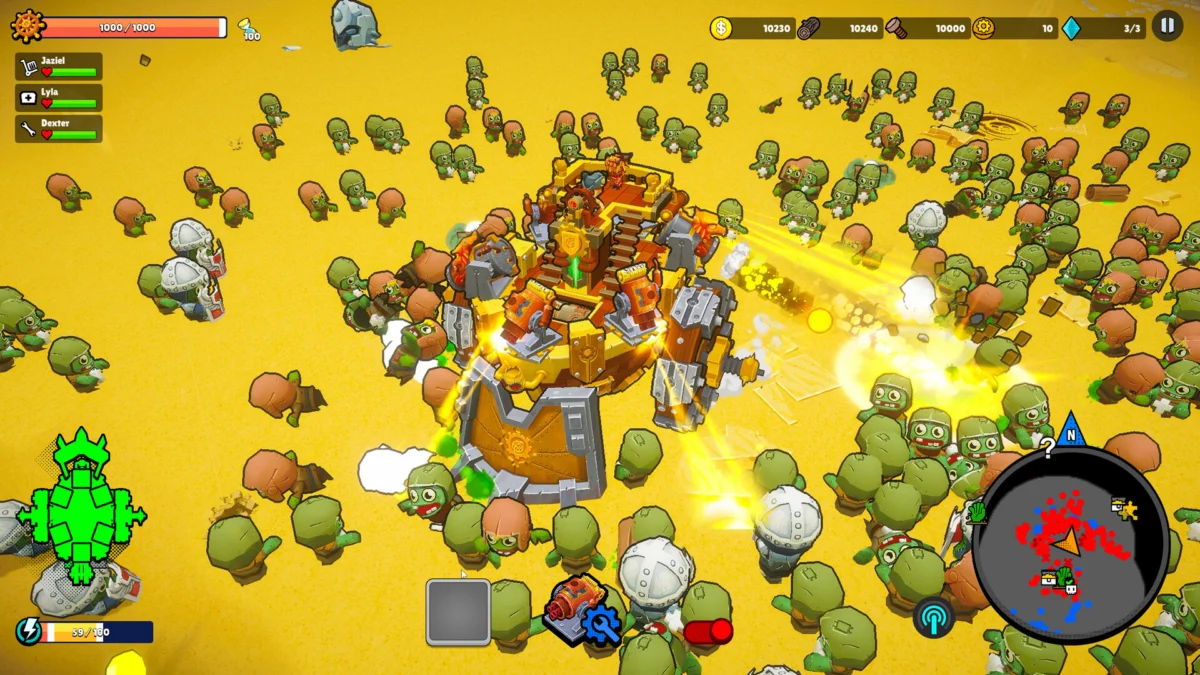
In the saturated landscape of survival games, it is rare to find a title that dares to merge the methodical tension of vehicular management with the chaotic, arcade-style satisfaction of a horde shooter. Zombie Rollerz: The Last Ship does exactly that. Developed for players who crave both tactical depth and high-octane action, this title tasks you with commanding a colossal, customizable tank through a desolate, zombie-infested wasteland. It isn’t just about survival; it’s about engineering your way out of the jaws of death, one gear-crushing encounter at a time.
The Core Concept: Managing the Mobile Fortress
At its heart, Zombie Rollerz: The Last Ship is a masterclass in risk-reward balancing. You are not a soldier on foot; you are the captain of a makeshift mobile fortress. Your objective is simple in theory but brutal in execution: survive against waves of the undead until the clock ticks down to zero.
The game world is expansive, comprised of various pockets of infected territories. As you navigate these regions, you must manage your ship’s structural integrity while simultaneously engaging with threats that emerge from every direction. Unlike traditional shooters where you might take cover behind a wall, your "cover" is your tank itself. The vehicle features distinct health zones—front, back, and sides—requiring players to be acutely aware of their positioning. Taking damage is inevitable, and the game forces you to constantly calculate whether to push deeper into a horde for loot or retreat to safety to allow your ship’s automated repair systems to kick in.
A Chronology of Survival: From Scrap Metal to Siege Engine
The progression loop of Zombie Rollerz is one of its most compelling features. The experience generally follows a distinct chronological arc within each session, beginning with a vulnerable, underpowered vehicle and ending—hopefully—in a display of armored superiority.
Early Game: The Scavenger Phase
The initial minutes of any run are defined by desperation. Armed with little more than basic weaponry, players must navigate the map to scavenge for "fallen gears." These gears serve as the primary currency for survival. Every zombie destroyed has a chance to drop these components, which are essential for repairing your hull and reinforcing your turrets. During this phase, mobility is your greatest weapon. You aren’t strong enough to stand your ground, so you must dart between pockets of zombies, picking them off while avoiding being surrounded.
Mid-Game: The Customization Pivot
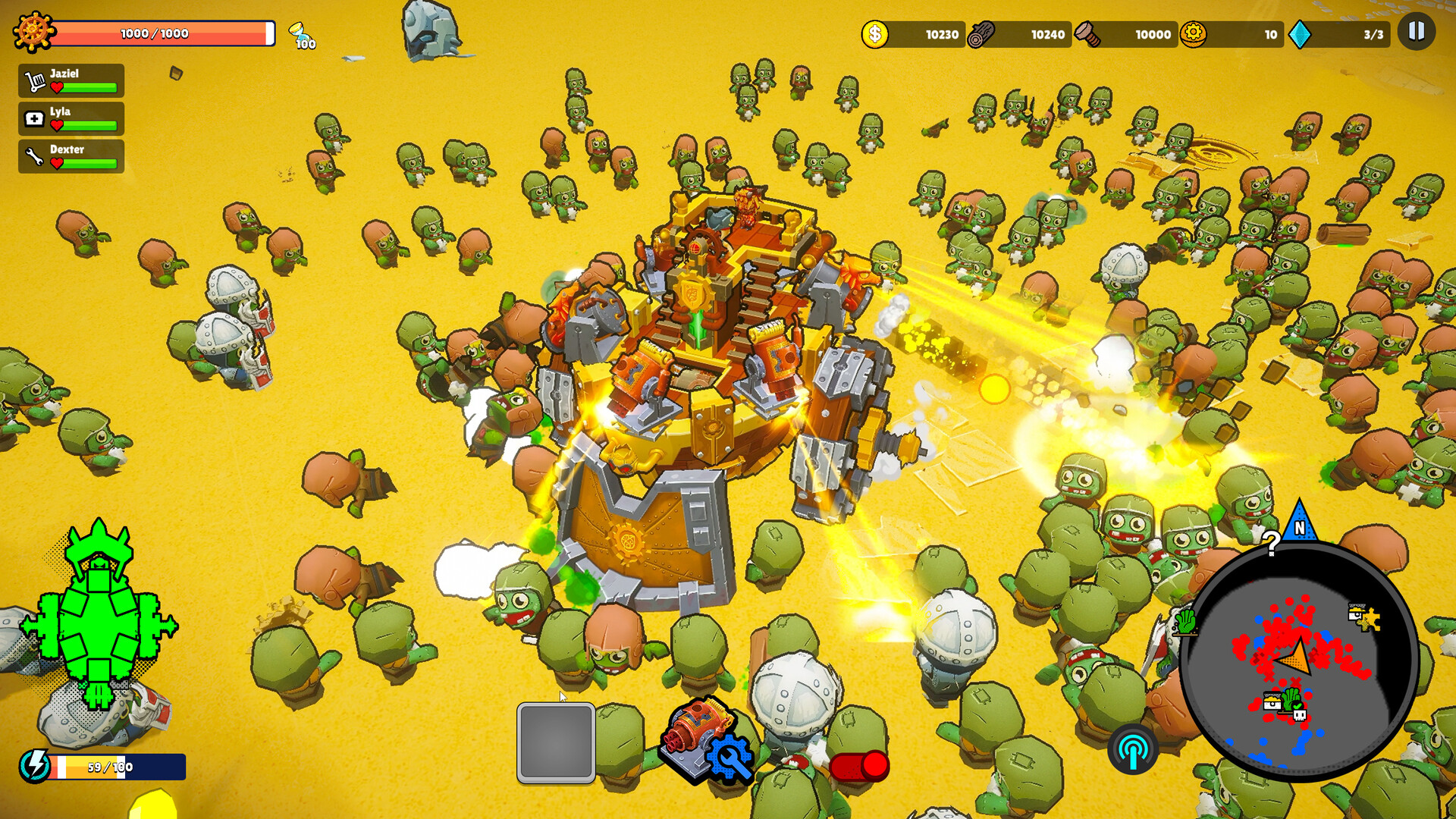
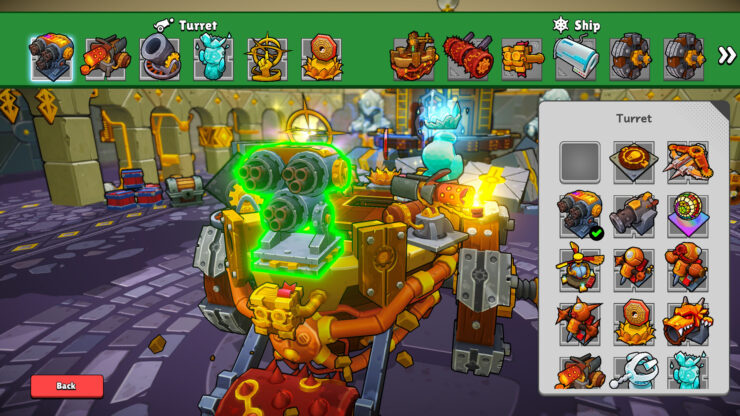
As your pile of gears grows, the game transitions into a strategic upgrade phase. This is where the depth of Zombie Rollerz truly shines. You aren’t just increasing numbers; you are altering the behavior of your ship. By opening chests found within the map, you are presented with critical choices—often a binary selection of trinkets. These might grant you faster reload speeds, increased critical hit rates, or specialized elemental damage for your turrets.
The customization extends beyond weapons. Players can swap out wheels, add spikes for ramming maneuvers, and integrate unique, salvaged parts that fundamentally change how the tank handles. The act of "rolling over" zombies becomes an offensive strategy in itself, turning your tank into a physical projectile.
The Final Stand: The Boss Encounter
The climax of every level is the boss fight. When the timer expires, the game stops being a survival exercise and becomes a test of your build’s viability. If you spent your time efficiently, upgrading your turrets and reinforcing your armor, you stand a chance. If you ignored the management aspect of the game, the boss serves as a brutal gatekeeper. These encounters are intense, often requiring the player to master the "clunky" but intentional physics of the heavy vehicle to dodge incoming attacks while keeping their own weaponry trained on the target.
Supporting Data and Mechanics: Why the "Clunk" Works
One of the most interesting design choices in Zombie Rollerz is the intentionally heavy, slightly unresponsive movement of the tank. In a modern gaming climate that prioritizes twitch-reflex responsiveness, this might initially feel like a hurdle. However, it is a deliberate design choice that enhances the immersion. You are driving a massive, makeshift structure of wood and metal; it should feel like a struggle to turn and accelerate.
This "clunkiness" is a mechanical pillar. It forces players to plan their movements in advance. If you realize a massive wave of zombies is approaching, you cannot simply jerk the wheel to turn around; you must commit to a path. This adds a layer of anxiety to every decision. You are constantly calculating: Do I have enough time to finish this encounter and move to the next, or will I be caught in the open during the transition?
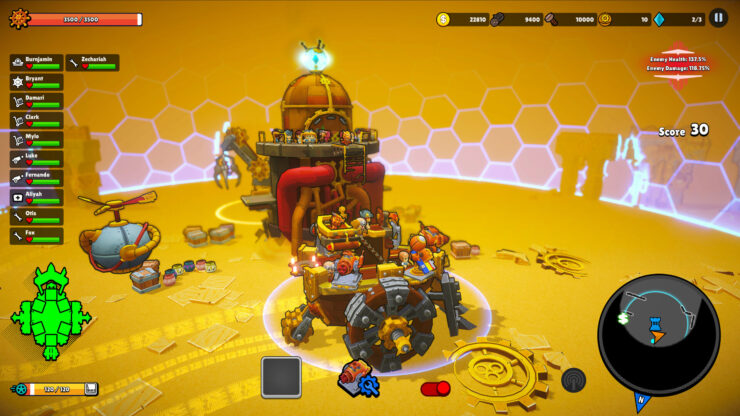
The data-heavy nature of the post-match screen serves as a testament to the game’s complexity. Following each session, players are presented with an intricate breakdown of their performance, including efficiency ratings, upgrade paths taken, and time spent in combat versus repair. This creates a "just one more run" mentality, as players analyze their failures and strategize how to better allocate their gears in the next attempt.
Official Perspectives: The Developer’s Intent
While the community has embraced the game’s unique blend of genres, the developer’s goal was clearly to move away from the "run-and-gun" tropes of the zombie genre. By forcing the player to be stationary or slow-moving, the focus shifts from personal skill (aiming) to strategic decision-making (build paths and positioning).
In promotional materials and early development logs, the focus was always on the "Last Ship" narrative—the idea that you are a scavenger in a world that has already ended, clinging to the only piece of safety you have. The inclusion of survivors you can rescue along the way adds a layer of humanity to the mechanical grind. These NPCs aren’t just flavor text; they provide tangible bonuses, reinforcing the idea that in this apocalypse, your survival is linked to the resources and allies you can manage to keep on board.
Implications for the Indie Survival Genre
Zombie Rollerz: The Last Ship occupies a fascinating space in the current market. By combining the "horde survival" subgenre—popularized by titles like Vampire Survivors—with vehicle management, it provides a tactile experience that many of its peers lack.
The Rise of "Vehicle-Centric" Roguelikes
This game suggests a broader trend in indie development: the movement toward "vehicle-centric" survival games. Players are increasingly drawn to games where the base of operations is mobile, creating a constant sense of progression and forward momentum. The implications for the genre are clear: players want to feel like they are building something, even while they are running for their lives.
Replayability through Complexity
The depth of the upgrade system ensures that no two runs feel the same. Because the trinket system forces you to choose between two mutually exclusive upgrades, players are forced to commit to a specific "build" for their tank. One run might see you focusing on a high-speed ramming build with spiked wheels, while the next might lean into a long-range turret platform. This modularity is what gives Zombie Rollerz its staying power. It respects the player’s intelligence by offering a high skill ceiling hidden behind a deceptively simple premise.
Conclusion: A Worthy Addition to the Library
Zombie Rollerz: The Last Ship is more than just another zombie game. It is an exercise in management, tactical positioning, and persistent, satisfying growth. Whether you are playing on the Nintendo Switch or PC, the core loop remains addictive, challenging, and deeply rewarding.
For those who enjoy the thrill of the horde but are tired of the standard "lone survivor" tropes, this game offers a fresh, metallic breath of air. It asks you to look at a heap of scrap, a set of rusty gears, and a swarm of enemies, and see a path to victory. It is a game that demands you to be not just a fighter, but an engineer of your own destiny. With its intricate stats, challenging boss encounters, and deep upgrade trees, Zombie Rollerz: The Last Ship is a definitive indie experience that proves the genre still has plenty of life—and death—left in it.
You can test your own engineering skills by picking up Zombie Rollerz: The Last Ship on both the Nintendo eShop and Steam.


 Asro
Asro
 Nana Wu