

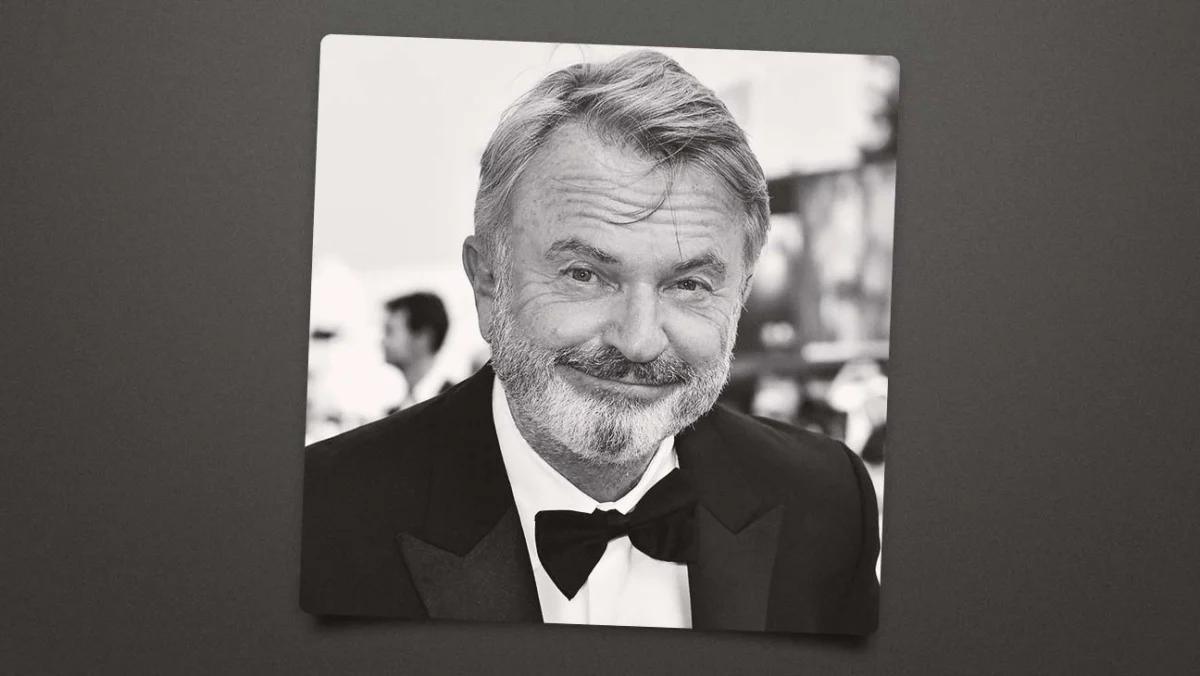
Sam Neill, the distinguished New Zealand actor whose career spanned five decades, crossing genres from blockbuster science fiction to intimate period dramas, has passed away at the age of 78. His death was confirmed on Monday, July 13, in Sydney, Australia.
Known for an uncanny ability to inhabit characters defined by moral ambiguity and quiet intensity, Neill became one of the most recognizable faces in global cinema. From the terror-stricken plains of Jurassic Park to the windswept, emotional landscapes of The Piano, Neill was a rare talent who moved effortlessly between the art-house circuit and the most ambitious tentpole productions of the 20th and 21st centuries.
A Sudden Loss: The Official Announcement
The news of his passing was shared with the public via an official statement on Neill’s Instagram account, which noted that he was surrounded by family in his final moments.
"It is with immense sadness that the whānau of Sam Neill share the news of his passing on Monday 13th July, in Sydney, Australia," the statement read. "Sam was surrounded by family and passed with the dignity that has characterized his whole life. The loss was sudden and unexpected, but blessed by the fact that Sam remained cancer-free. They would like to express their deepest gratitude to the staff at St Vincent’s Private Hospital for their incredible care. More details will be shared later, but for now, on behalf of the family, we ask that you respect their privacy as they navigate this immeasurable loss."

While Neill had been open about his battle with angioimmunoblastic T-cell lymphoma—a diagnosis he received in 2022—the statement clarified that his death was not a direct result of his previous cancer struggle, which he had successfully fought.
A Life Defined by Ambiguity and Artistry
Nigel John Dermot Neill was born on September 14, 1947, in Omagh, Northern Ireland. The circumstances of his birth were as grounded as the man himself: he was born on a kitchen table. His father, Dermot, was a third-generation New Zealander serving with the Royal Irish Fusiliers, and his mother, Priscilla, was English.
In 1955, the family relocated to New Zealand, where the young Sam—a name he adopted as a child because he admired the grit of Westerns—began his path toward the stage. After studying English literature at Victoria University and cutting his teeth in theater, he joined the New Zealand National Film Unit. It was there that he developed his dual-track mindset: making films for the government to secure funding, and making films for himself to satisfy his creative soul.
The Rise of a Leading Man
Neill’s breakthrough came in 1977 with Sleeping Dogs, a film that signaled the birth of New Zealand’s "cinema of unease." His performance as a man caught in the machinery of a totalitarian state drew international attention, eventually leading him to Australia, where he starred in the acclaimed My Brilliant Career (1979).

Throughout the 1980s, Neill became a fixture of high-stakes drama and psychological thrillers. He played the antichrist in The Final Conflict (1981) and headlined the iconic British series Reilly: Ace of Spies (1983), a role that cemented his status as a leading man of immense gravity. By the time he appeared alongside Nicole Kidman and Billy Zane in the taut thriller Dead Calm (1989), he was firmly established as an actor who could command any screen.
The 1993 Pinnacle
If any year defined the trajectory of Sam Neill’s career, it was 1993. He appeared in two films that were as different as they were legendary. In Steven Spielberg’s Jurassic Park, he portrayed Dr. Alan Grant, the cynical paleontologist who becomes the surrogate father figure for two children while facing the prehistoric terrors of an island gone wrong. Simultaneously, he played the chillingly cruel Alisdair Stewart in Jane Campion’s The Piano, a performance that highlighted his willingness to take on roles that were deeply uncomfortable and morally reprehensible.
Chronology of an Extraordinary Career
- 1977: Breakthrough role in the seminal New Zealand film Sleeping Dogs.
- 1979: International acclaim for My Brilliant Career.
- 1983: Captivates television audiences in Reilly: Ace of Spies.
- 1993: Achieves global superstardom with Jurassic Park and critical prestige in The Piano.
- 1994: Collaborates with John Carpenter on the cult horror classic In the Mouth of Madness.
- 1997: Stars in the sci-fi horror cult hit Event Horizon.
- 2007: Portrays Cardinal Wolsey in the acclaimed series The Tudors.
- 2013–2014: Joins the cast of Peaky Blinders as the formidable Inspector Chester Campbell.
- 2016: Reunites with Taika Waititi for the hit Hunt for the Wilderpeople.
- 2022: Returns to the Jurassic franchise for Jurassic World Dominion.
- 2024: Stars in the Peacock drama Apples Never Fall.
The "Half-Farmer, Half-Thespian"
While the world knew him as a Hollywood icon, Neill often insisted that acting was only one half of his identity. In 1983, he purchased land in Central Otago, New Zealand, establishing the Two Paddocks vineyard. For Neill, winemaking was a grounding force—a way to escape the artifice of celebrity.
"I don’t expect people to take me seriously, but I’m determined that they respect my wine," he told The London Times in 2014. He viewed his vintages with the same pride he took in his craft, famously celebrating when his wine won awards in London, calling it his "up yours" factor to those who doubted a movie star could produce a world-class Pinot Noir.

He famously avoided the trappings of fame, once noting that he never "signed up" to be a celebrity. "You can be an actor—hopefully a very good actor—but it’s another job to be a celebrity, and that’s one you can sign up for or not. And I never signed up for that."
Reflections on Mortality
In his final years, Neill became an unexpectedly vital voice on the subject of living with purpose. After his 2022 cancer diagnosis, he channeled his energy into his memoir, Did I Ever Tell You This?, and continued to work, appearing in Apples Never Fall.
His attitude toward the end of his life was characteristically pragmatic. In an October 2023 interview with Australian Story, he remarked, "I’m not in any way frightened of dying. That doesn’t worry me. It’s never worried me from the beginning. But I would be annoyed, because there are things I still want to do."
Legacy and Impact
Sam Neill’s legacy is not merely one of box-office receipts or award nominations; it is one of consistency and curiosity. He occupied a unique space in the industry where he could stand toe-to-toe with dinosaurs, play a corrupt inspector in 1920s Birmingham, or disappear into the role of a grieving father. He was a master of the "shade of gray," consistently finding the humanity in characters that others might have played as caricatures.

He was a mentor to many, a friend to his peers, and, as his family noted, a man of immense dignity. His survivors include his children—Andrew, Tim, and Elena—and six grandchildren.
As the film world mourns, the consensus is clear: Sam Neill was a rare breed. Whether he was reciting Shakespeare, battling the supernatural in a John Carpenter flick, or tending to his vines in the shadow of the Southern Alps, he approached his life with a singular, quiet intensity. He leaves behind a body of work that will continue to challenge and entertain for generations to come, standing as a testament to a man who truly lived every chapter of his life.










