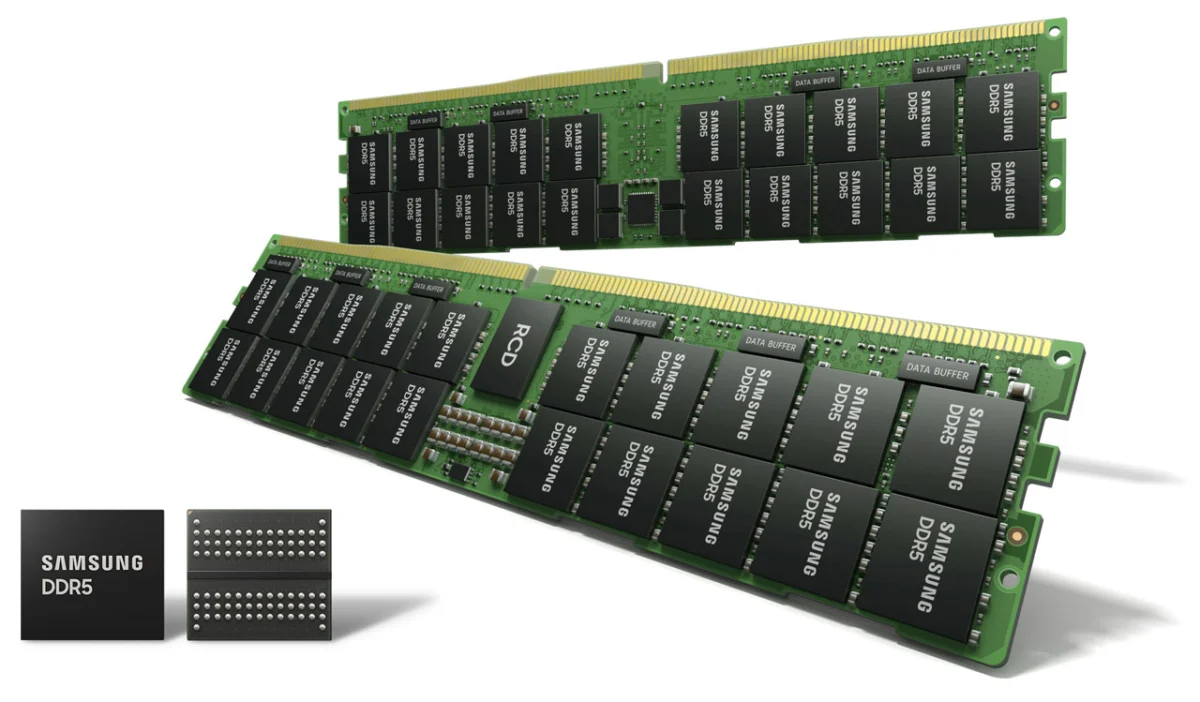
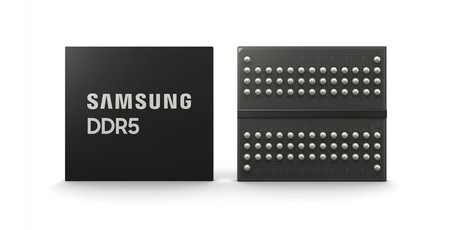
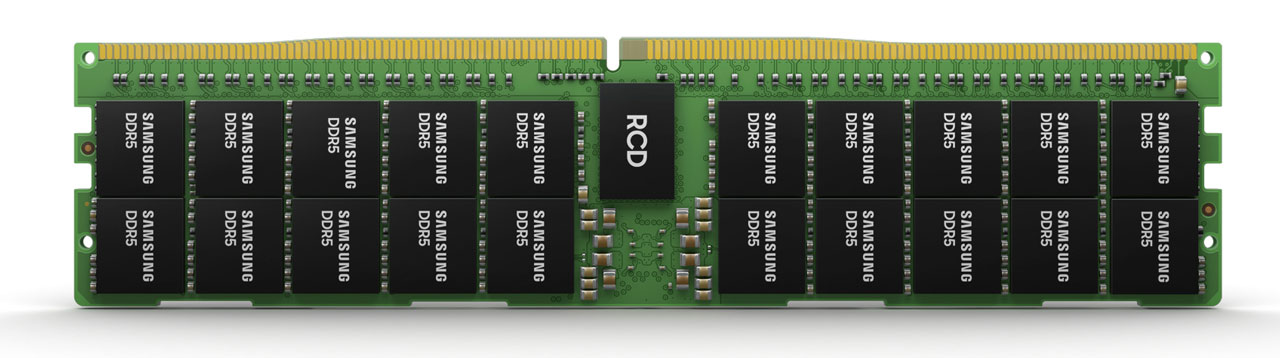
In a landmark achievement for the semiconductor industry, Samsung Electronics has officially commenced mass production of its most advanced memory solution to date: the industry’s smallest 14-nanometer (nm) Extreme Ultraviolet (EUV) DDR5 DRAM. This move marks a significant leap in memory engineering, promising to redefine performance, capacity, and energy efficiency for the next generation of computing hardware. As the world shifts toward data-intensive paradigms such as 5G, Artificial Intelligence (AI), and the burgeoning metaverse, Samsung’s latest innovation arrives as a critical pillar for high-performance infrastructure.
A Legacy of Innovation: The Road to 14nm EUV
Samsung’s journey toward this milestone began in earnest back in 2020, when the company made waves as the first in the industry to successfully ship EUV-enabled DRAM. EUV lithography is a sophisticated manufacturing process that allows for significantly higher precision in pattern creation on silicon wafers. By utilizing light with an extremely short wavelength, Samsung can overcome the physical limitations of traditional ArF (Argon Fluoride) immersion lithography.
Following that initial success, the company spent the better part of a year refining its photolithography processes to shrink the physical footprint of its memory cells. Today’s announcement of 14nm DRAM represents the culmination of this iterative process. By incorporating a five-layer EUV process, Samsung has achieved the highest level of density ever recorded for a commercial DRAM product. This achievement effectively establishes a new benchmark for how much data can be stored within the smallest possible physical area, a fundamental requirement for the ever-shrinking footprint of modern electronics.
Technical Specifications and Performance Metrics
The shift from the previous generation of memory to this cutting-edge 14nm EUV DDR5 standard is not merely a nominal improvement; it is a transformative leap in capability. According to internal testing conducted by Samsung, the new memory modules offer a productivity boost of approximately 20% compared to previous generations.
Bridging the Speed Gap
Perhaps the most notable metric for enthusiasts and enterprise clients alike is the sheer data transfer speed. The new DDR5 standard, when combined with Samsung’s 14nm process, is capable of reaching speeds of up to 7.2 gigabits per second (Gbps). To put this into perspective, the current industry standard, DDR4, typically operates at roughly 3.2 Gbps. This represents more than a twofold increase in throughput, effectively eliminating the memory bottleneck that has historically constrained high-performance processors in heavy multitasking or complex computational environments.
Power Efficiency and Capacity
Beyond raw speed, the 14nm process brings significant improvements in energy efficiency—a critical factor for data centers where power consumption and thermal management are the primary drivers of operational cost. Samsung anticipates a roughly 20% improvement in power efficiency, which will be essential as memory density increases. Furthermore, Samsung has indicated plans to refine this 14nm technology further to increase Integrated Circuit (IC) density to 24 gigabits (Gb). Such a feat would technically enable the production of 768GB DDR5 DIMMs, a capacity that was once the exclusive domain of specialized server hardware, now potentially accessible for high-end workstations.
Official Perspectives: Shaping the Future of Data
Jooyoung Lee, Senior Vice President and Head of the DRAM Product & Technology team at Samsung Electronics, framed the announcement as a milestone in extreme miniaturization. In an official press statement, Lee emphasized that the application of 14nm EUV technology is not just an incremental step, but a necessary evolution for the "data-driven world."
"The application of EUV technology has allowed us to overcome the physical scaling challenges that have plagued the semiconductor industry for years," Lee noted. "By delivering this level of density and efficiency, we are providing our partners and customers with the building blocks necessary for the next generation of AI-driven platforms and the immersive experiences promised by the metaverse."
Samsung’s strategy is clearly aimed at the high-growth sectors of the industry. By aligning its production roadmap with the requirements of 5G infrastructure and AI model training, the company is positioning itself to remain the primary supplier for global tech giants who require high-bandwidth, high-capacity memory to run their complex algorithms and cloud services.
The Market Landscape: DDR5 Adoption and Pricing Realities
While the technical specifications of Samsung’s 14nm DDR5 are undeniably impressive, the transition to the new standard comes with significant financial implications for the end-user. As the industry migrates to new platforms—most notably Intel’s Alder Lake-S—the market is bracing for a period of transition.
The "D4" Compromise
To mitigate the impact of potentially high costs for early adopters, motherboard manufacturers are taking a bifurcated approach. We have already seen evidence of this in the industry, with companies like Asus registering multiple versions of their Z690-series motherboards. These boards are appearing in two distinct variants: one supporting the new DDR5 standard, and another—denoted by the ‘D4’ suffix—designed to remain compatible with existing, more affordable DDR4 modules. This strategy allows consumers to upgrade to new CPUs while delaying the more expensive investment in DDR5 memory until prices stabilize or until they require the increased performance.
The Early Adopter Tax
The necessity of such compromise is driven by the reality of early-market pricing. Recent retail listings, such as those spotted on Newegg, provide a sobering look at what consumers can expect to pay at launch. A 32GB (2 x 16GB) kit of GeIL Polaris RGB SYNC DDR5-4800 memory was recently listed at $349.99. When factoring in regional variations, similar kits have appeared in markets like Japan for over 45,000 JPY.
For the average consumer, this price point represents a substantial premium over existing DDR4 kits of similar capacity. While early adopters of high-end systems will likely absorb these costs for the sake of performance, mainstream consumers may find themselves waiting for the inevitable increase in supply and production yields before making the jump.
Broader Implications for the Industry
The implications of Samsung’s move are far-reaching. By successfully mass-producing 14nm EUV DRAM, Samsung has effectively set the pace for the rest of the industry, including competitors like SK Hynix and Micron.
- Enterprise and Data Centers: The promise of 768GB DIMMs and increased efficiency will drastically lower the TCO (Total Cost of Ownership) for massive data centers. As AI and machine learning become the backbone of global commerce, the ability to pack more memory into smaller spaces while reducing power consumption will be a key differentiator in the server market.
- Consumer Computing: While DDR5 pricing is currently prohibitive, it is an essential step toward higher performance in gaming and content creation. As developers begin to optimize software for the bandwidth afforded by DDR5, the "performance gap" between the new and old standards will widen, eventually making the upgrade not just desirable, but necessary.
- Semiconductor Manufacturing: The success of the five-layer EUV process proves that the industry has matured in its handling of this complex lithography. This gives manufacturers the confidence to continue shrinking nodes beyond 14nm, potentially pushing toward the 10nm barrier and beyond in the coming years.
Conclusion
Samsung’s mass production of 14nm EUV DDR5 DRAM stands as a testament to the relentless pace of semiconductor innovation. While the current market is defined by the high costs of early adoption and a transitional period of dual-standard motherboard support, the long-term outlook is clear. We are entering an era where memory capacity and speed will no longer be the bottlenecks they once were, but rather the enablers of a new digital age.
As the industry matures and production volumes increase, the price of DDR5 will inevitably follow the path of its predecessors, eventually becoming the standard for all computing platforms. For now, Samsung has firmly planted its flag as the leader in this transition, ensuring that the hardware of tomorrow is built upon the most advanced, dense, and efficient memory technology currently available. Whether for the data centers powering the metaverse or the high-end workstations driving the AI revolution, the 14nm EUV era has officially begun.