

In a rapidly evolving wearable technology market, Samsung has set the stage for its next major disruption. In an official newsroom announcement released today, the tech giant signaled a paradigm shift for its flagship wearable series, positioning the upcoming Galaxy Watch not merely as a fitness tracker, but as a sophisticated, AI-driven health companion. While the company remained coy regarding specific branding—stopping short of explicitly naming the Galaxy Watch 9 or the sequel to the Galaxy Watch Ultra—the message is clear: the future of Samsung’s ecosystem lies in the seamless integration of proactive artificial intelligence.
Main Facts: The Evolution of the Smartwatch
At its core, Samsung’s latest teaser focuses on moving away from the passive recording of health metrics toward an era of active, interpretive wellness. For years, smartwatches have functioned as glorified digital logs, capturing heart rate data, step counts, and sleep duration. Samsung’s new approach intends to change this by utilizing on-device and cloud-based AI to synthesize this data into actionable, real-time insights.
The upcoming lineup promises a trifecta of improvements: enhanced AI-driven analysis, upgraded internal hardware, and significantly improved battery longevity. By leveraging these "all-new internal components," Samsung aims to solve the industry’s greatest bottleneck: the need to frequently remove the device for charging, which creates gaps in critical longitudinal health data. With longer battery life and faster processing, these new watches are designed to remain on the user’s wrist for longer periods, ensuring that health monitoring—from nocturnal sleep apnea tracking to daily cardiovascular strain—remains continuous and uninterrupted.
Chronology: The Road to Galaxy Unpacked
The trajectory of Samsung’s wearable strategy has been accelerating since the release of the Galaxy Watch 7 series. Throughout the past year, the company has heavily invested in the "Samsung Health" platform, rolling out features like the Energy Score and personalized AI health coaching.
- Early 2025: Samsung expands its Health ecosystem with generative AI features designed to summarize daily activity and stress levels.
- Spring 2025: Rumors begin to circulate regarding the "internal component" overhaul, with industry analysts predicting a move to a more power-efficient 3nm processor architecture.
- September 2025: Samsung officially confirms the "AI-powered health companion" vision, teasing a series of short clips highlighting refined tracking capabilities.
- July 22, 2025: The highly anticipated Galaxy Unpacked event is scheduled to take place at 9:00 AM ET, where the full specifications, pricing, and availability of the new watches will finally be unveiled to the public.
Supporting Data and Technical Aspirations
While specific technical specifications remain under wraps, the industry consensus is that Samsung is preparing for a significant leap in sensor accuracy. The "all-new internal components" likely refer to a new generation of BioActive sensors capable of measuring vitals with higher precision, even during high-intensity interval training (HIIT) or in challenging environmental conditions.
The integration of AI into the watch interface is expected to be deeply personalized. Samsung has hinted at an "intuitive daily insight" engine that learns the user’s circadian rhythms. If a user consistently struggles with sleep quality on specific days of the week, the watch will not just report the data; it will cross-reference that with activity levels and stress markers to provide a proactive suggestion—such as recommending a specific cooldown routine or an earlier bedtime.
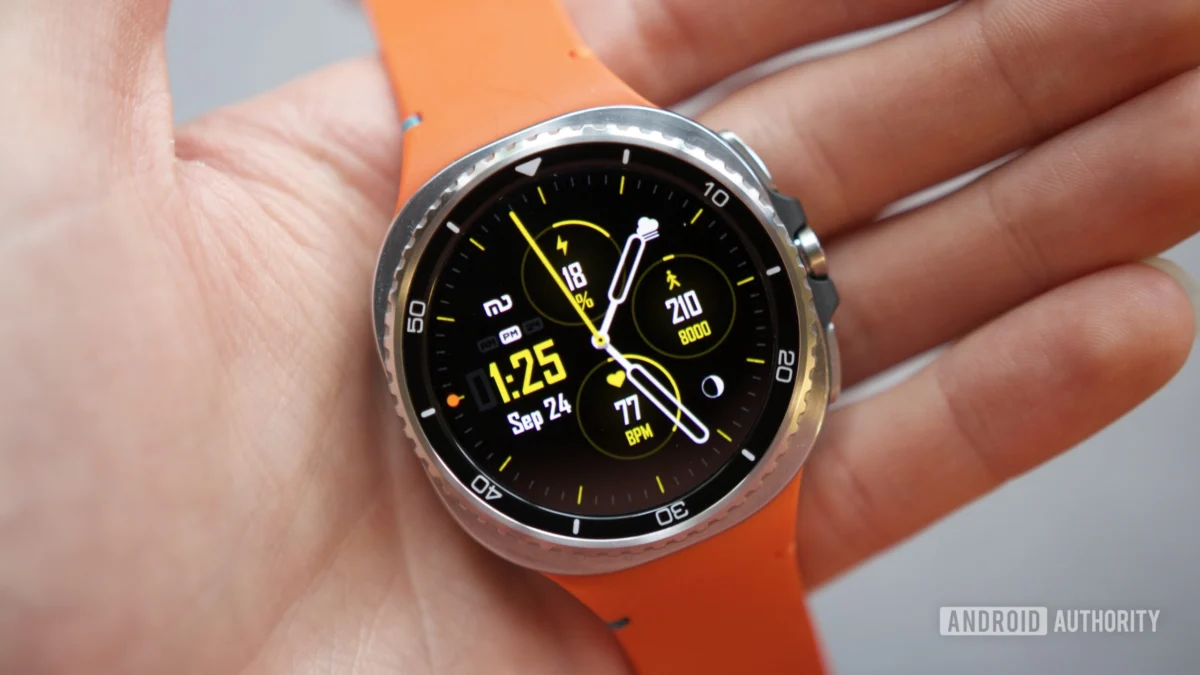
Furthermore, the teaser clips released by Samsung showcase a vibrant, high-fidelity interface. One particular highlight is a specialized activity watch face tailored for runners, which appears to prioritize data density—showing heart rate zones, pace, and recovery metrics at a glance without cluttering the screen.
Official Responses and Strategic Vision
Samsung’s official statement frames the upcoming watch as a "key part of the company’s broader vision for personalized AI." By embedding AI into the wearable, Samsung is attempting to create a "closed-loop" health system. This system involves the phone, the watch, and the user’s historical data working in tandem.
"The goal is to evolve from a device that records to a device that understands," a representative hinted in the announcement. By making the health insights proactive rather than reactive, Samsung hopes to increase user engagement. The company believes that by providing a "personalized health coach" that actually speaks to the user’s unique habits, they can drive better health outcomes and, consequently, greater brand loyalty.
The focus on "seamlessness" is also a strategic move to differentiate the Galaxy Watch from competitors like Apple or Garmin. By automating the interpretation of health data, Samsung is lowering the barrier to entry for users who find complex health dashboards intimidating or time-consuming.
Implications for the Wearable Market
The shift toward AI-centric hardware has profound implications for the industry.
1. The Death of Passive Tracking
The market is reaching a saturation point where basic heart rate and step tracking are considered "table stakes." For Samsung, the competitive advantage no longer lies in the sensor hardware alone, but in the software layer that processes that data. If Samsung can prove its AI is more accurate at detecting anomalies—like early signs of illness or overtraining—they will set a new industry standard.
2. Battery Life as a Health Metric
For years, manufacturers have prioritized screen brightness and app speed over battery life. Samsung’s acknowledgment that longer battery life is essential for "health monitoring over longer periods" suggests a shift in priorities. If these watches can reliably hit multi-day battery life even with advanced tracking enabled, they will become far more attractive to the medical community and professional athletes who rely on continuous data.
3. The Ecosystem Lock-in
By deepening the synergy between Samsung Health and the Galaxy Watch, the company is effectively building a "walled garden" of wellness. Users who invest time in training their "AI health coach" will be less likely to switch to competing platforms, as the personalized data model is tethered to the Samsung ecosystem.
4. Future-Proofing for Clinical Integration
The mention of "Sleep Apnea tracking" and "Heart Rate monitoring" as core features suggests that Samsung is looking toward future FDA clearances for more advanced medical features. As wearables become more sophisticated, they are increasingly being viewed as primary care tools. By refining the AI to handle this data, Samsung is positioning its watches to be a vital partner for primary care physicians, potentially allowing users to share AI-summarized health reports directly with their doctors.
Conclusion: A Turning Point
As the countdown to the July 22 Unpacked event begins, the expectations for the new Galaxy Watch are at an all-time high. Samsung has moved beyond the "smartwatch as a notification mirror" phase of development. Instead, the company is betting on the idea that users want a device that knows them better than they know themselves—a device that can predict a fatigue crash before it happens or recognize a decline in cardiovascular health before it manifests as a symptom.
The challenge, of course, will be in the execution. Can Samsung’s AI provide truly actionable advice, or will it be another layer of digital noise? Will the hardware improvements truly facilitate a better user experience, or will the battery demands of advanced AI negate the gains? We will have our answers on July 22, but for now, it is clear that the Galaxy Watch is shedding its skin, preparing to emerge as something much more ambitious than a simple wrist-worn gadget. It is poised to become a central pillar in the future of personalized, AI-assisted human performance.











