Basiran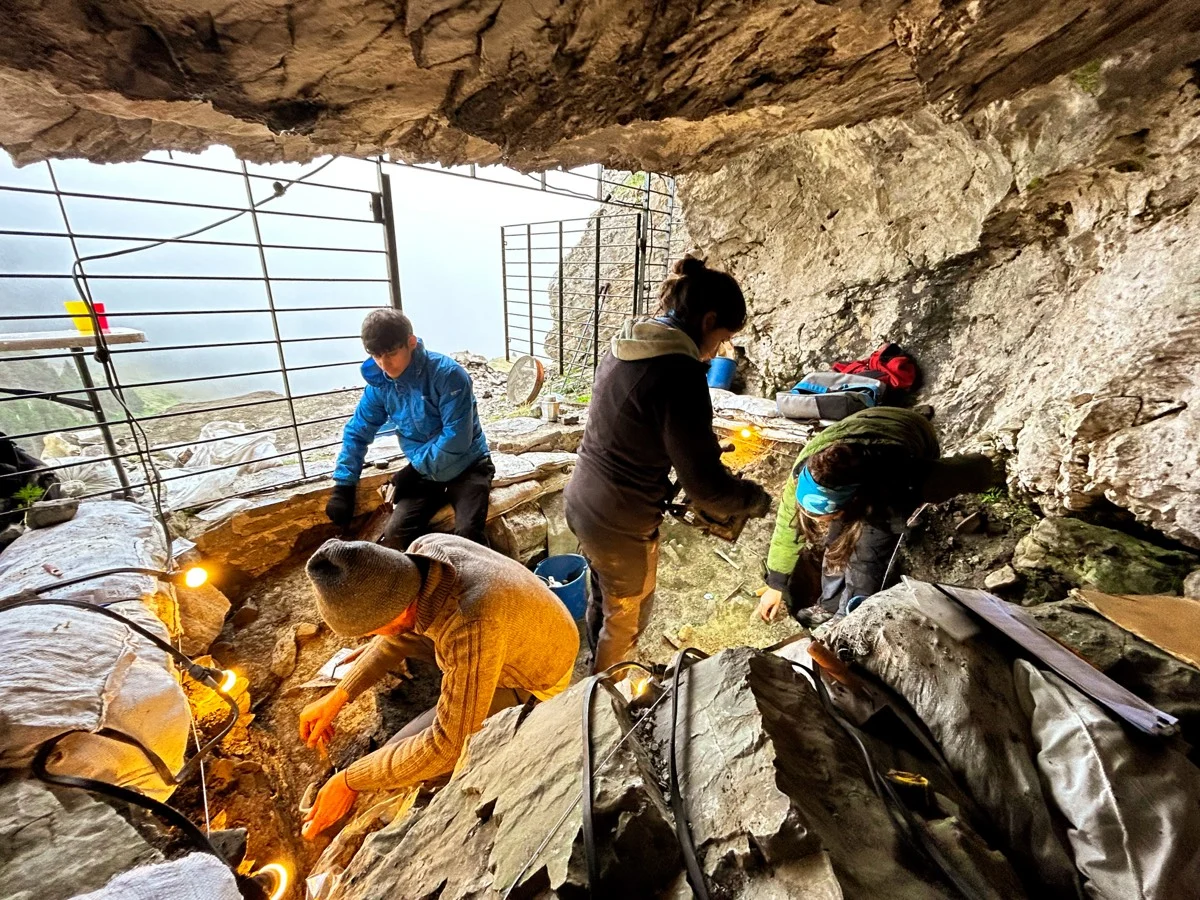
In the relentless cycle of scientific advancement, groundbreaking research is published at a pace that often outstrips the public’s ability to keep up. While major headlines capture global attention, a wealth of fascinating, niche, and transformative discoveries frequently teeters on the edge of obscurity. This month, we pull back the curtain on a selection of these overlooked stories—from the ancient metallurgical secrets of the Pyrenees to the complex, physics-defying nature of modern political polarization.
1. The Smelters of the Pyrenees: A Prehistoric Industrial Hub
High within the rugged, mist-shrouded peaks of the eastern Pyrenees, a recent archaeological excavation has fundamentally altered our understanding of prehistoric human activity. Between 2021 and 2023, a team of researchers from the Catalan Institute of Human Paleoecology and Social Evolution (IPHES-CERCA) conducted intensive fieldwork in a cave site that is now believed to have been a sophisticated hub for copper smelting.
Main Facts and Chronology
The site, known as Cova 338, yielded artifacts dating back 4,000 to 5,500 years. The most striking discovery involved 23 distinct hearths found across the second and third archaeological layers. These hearths were laden with crushed green mineral fragments that exhibited clear signs of intentional heating, whereas surrounding materials remained thermally untouched.
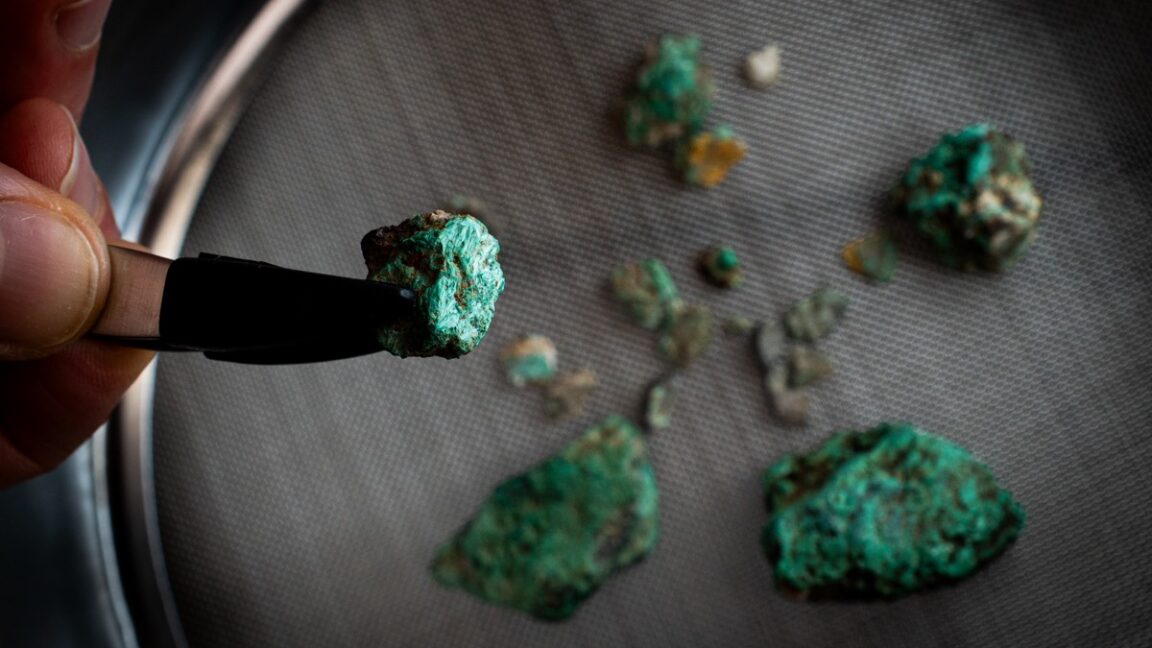
While the team is currently conducting chemical analysis to confirm the identity of these minerals, preliminary evidence points strongly to malachite—a copper-rich ore. If confirmed, this would categorize the site not merely as a temporary shelter, but as a site of early industrial-scale metallurgy. The chronology of the hearths suggests a consistent, long-term human presence, contradicting earlier assumptions that such high-altitude caves were used only sporadically.
Implications
The discovery of a child’s baby tooth and a human finger bone among these industrial artifacts raises profound questions. Does the presence of human remains suggest that these ancient miners lived, worked, and buried their dead within the same mountain sanctuary? As excavations continue into deeper, older layers of the cave, the potential for discovering formal burial sites remains high, promising to provide a clearer window into the social hierarchy and daily lives of the Bronze Age pioneers who mastered the fire-forging of metal.
2. The Neural Wiring of “Singing” Mice
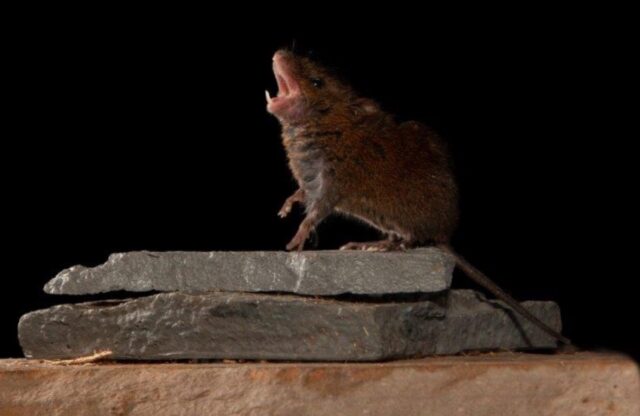
The cloud forests of Costa Rica are home to the Scotinomys teguina, or the singing mouse. Known for their intricate, chirping call-and-response duets, these small rodents have long been a subject of interest for neuroscientists studying the origins of human language.
Supporting Data
In 2019, researchers identified the brain circuits responsible for these vocalizations. However, a recent study published in Nature by the Cold Spring Harbor Laboratory (CSHL) has pushed the investigation further. By employing a groundbreaking molecular barcoding technique, lead researcher Anthony Zador and his team mapped the neuronal architecture of these mice, comparing them to closely related, non-singing species.
The data reveals that the "singing" ability is not the result of a massive evolutionary leap in brain complexity. Instead, it arises from targeted changes in existing wiring patterns. Specifically, the singing mice possess roughly three times as many neurons connecting the motor cortex (which controls mouth movement) to the auditory cortex and a midbrain structure responsible for vocalization. This "re-wiring" allows for the precise, rhythmic coordination required for their complex duets.
Official Responses and Future Directions
The authors suggest that this discovery is a watershed moment in evolutionary biology. If vocalization complexity can be achieved through specific, quantifiable neural re-wiring rather than entirely new brain regions, the prospect of "singing" laboratory mice becomes a tangible scientific goal. This provides a modular framework for understanding how complex behaviors—and potentially human speech—might have emerged through incremental, directed evolutionary tweaks.
3. Microeledone galapagensis: The Deep-Sea Blue Wonder
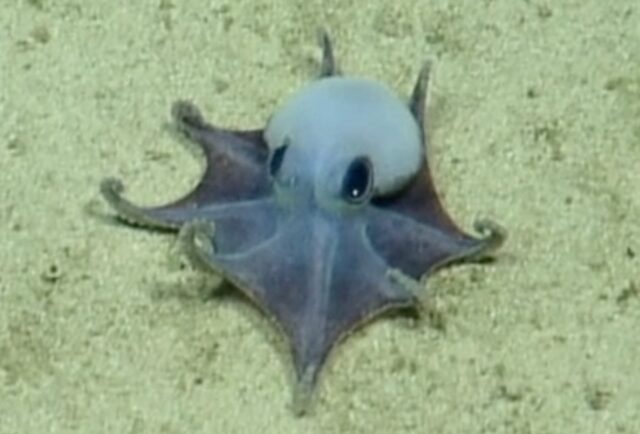
The deep ocean remains Earth’s final frontier. In 2015, aboard the exploration vessel Nautilus, researchers encountered an anomaly: a tiny, vibrant blue octopus captured on camera at a depth of 5,800 feet (1,773 meters) near the Galapagos Islands.
The Technological Breakthrough
Because only one specimen was recovered, scientists were hesitant to perform a traditional, destructive dissection. Instead, the team at the Charles Darwin Foundation utilized high-resolution mini-CT scans to perform a "virtual dissection." This allowed for the analysis of internal soft tissues without compromising the integrity of the unique physical specimen.
The scan revealed a fascinating anatomy: the creature lacked an ink sac, possessed short, sucker-sparse arms, and exhibited a unique, large rachidian tooth. Officially named Microeledone galapagensis, this discovery highlights the incredible, hidden biodiversity of the deep sea. It serves as a stark reminder that our oceans contain countless species that we have yet to categorize, many of which may be highly specialized to their extreme environments.
4. The Acoustics of Slapsticks: Foley Arts and Physics
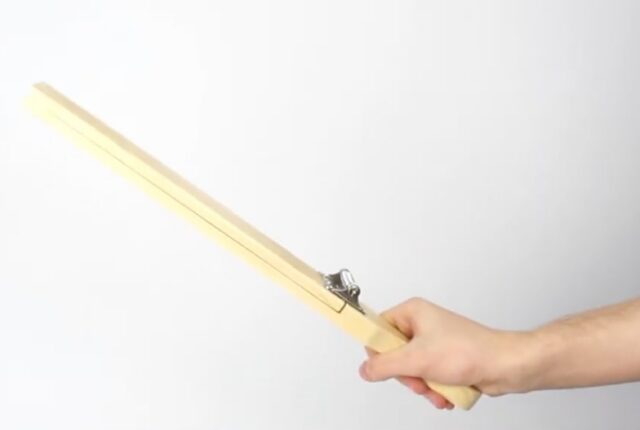
In the world of film and live performance, the "slapstick"—a wooden percussion instrument—is the industry standard for mimicking the sharp crack of a whip. From Leroy Anderson’s Sleigh Ride to classic cinema foley, the sound is iconic. However, Daniel Ludwigsen of Kettering University recently subjected these instruments to rigorous acoustic testing at the Acoustical Society of America.
Experimental Findings
Testing five commercial models in an anechoic chamber, Ludwigsen analyzed the frequency responses and sound directionality of each. His research confirmed that while all slapsticks share a high-frequency roll-off and a spectral peak between 1,000 and 3,000 Hz, their performance varies wildly based on physical construction.
The findings suggest that size and hinge type are critical: smaller, spring-hinged slapsticks excel in high-frequency reproduction, whereas larger models, like the "Sleighride Special," dominate the lower-frequency spectrum. This study provides a scientific foundation for foley artists to select the correct instrument for specific sonic textures, proving that even in the art of sound effects, physics dictates the quality of the illusion.
5. The Topological "Golden Rule" of Abstract Art
Why do some abstract paintings move us while others seem like incoherent splashes of color? A recent study in PLoS Computational Biology suggests that the answer lies in computational topology.
The Mathematics of Aesthetics
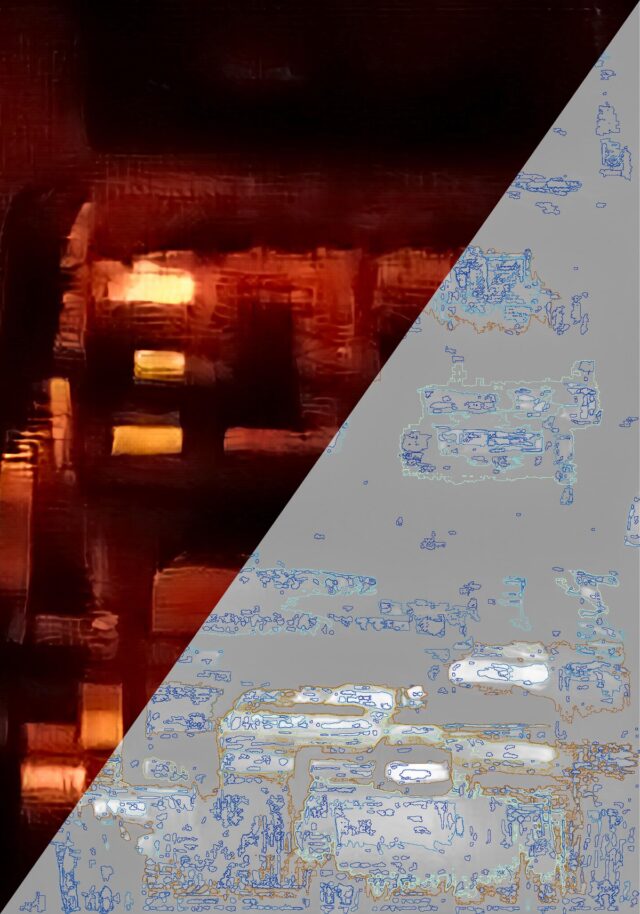
Researchers developed a method using "persistent homology"—a technique that measures the structure of data across multiple scales—to analyze works by masters like Jackson Pollock, Wassily Kandinsky, and Mark Rothko. When compared against AI-generated "pseudo-art," the human masterpieces exhibited a distinct, recurring topological signature.
The study further correlated these mathematical patterns with human eye-tracking and brain activity. Participants viewing authentic art showed more stable, integrative brain processing, and their gaze patterns aligned with the specific topological features identified by the software. This suggests that there is a "hidden grammar" to abstract art—a mathematical structure that our brains are hard-wired to perceive and find aesthetically satisfying.
6. Political Polarization as a Phase Transition
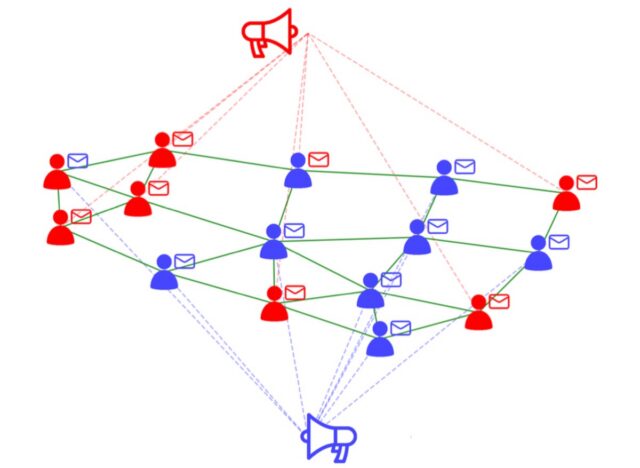
Political science often focuses on the "candidate-spend-to-vote-share" ratio, but physicists at the Complexity Science Hub (CSH) have applied statistical mechanics to reach a more unsettling conclusion: political polarization is a phase transition.
The Critical Threshold
Analyzing over 6,000 House races between 1980 and 2020, the team identified a "critical spending threshold" of $1.8 million per district.
- Below the Threshold: Community influence, local dynamics, and grassroots efforts drive the electoral outcome.
- Exceeding the Threshold: Once a campaign spends past this tipping point, the impact of local community social dynamics is effectively drowned out.
The researchers noted that when both parties exceed this threshold, the margin of victory rarely shifts, but polarization deepens significantly. Spending becomes a tool for antagonism rather than persuasion. This model offers a sobering look at modern democratic processes, suggesting that the sheer volume of campaign finance acts as a physical force that alters the "phase" of political discourse, shifting it from a social interaction to an industrial-scale ideological conflict.
7. The Silver Vine Preference
For generations, catnip has been the gold standard for inducing euphoric behavior in domestic cats. However, a recent study in the Journal of Chemical Ecology reveals that many cats—particularly in Japan—prefer a different botanical: silver vine (matatabi).
Official Observations
Researchers monitored six free-roaming cats over 10 nights, offering both fresh catnip and silver vine. The results were lopsided: five cats responded to silver vine, while zero responded to the catnip. Even when tested with extracts, 15 out of 22 captive cats preferred silver vine.
The paradox? Catnip extracts contained 170 times more bioactive compounds than silver vine. The researchers hypothesize that catnip’s odor is simply too intense in its living form, potentially explaining why commercial catnip is typically dried and processed. As botanist Philip Miller noted as far back as 1768, the feline response to catnip is often dampened by the intensity of the living plant, whereas silver vine provides a more "palatable" olfactory experience for the discerning cat.

Conclusion
From the deep-sea depths of the Galapagos to the cold, high-altitude caves of the Pyrenees, these stories underscore a fundamental truth: scientific inquiry is not limited to the grand, headline-grabbing discoveries. It thrives in the nuanced observations, the unexpected data points, and the meticulous re-evaluations of what we thought we already knew. Whether it is a singing mouse, a topological analysis of a Rothko, or the physics of a campaign budget, the world remains a vast, complex, and endlessly fascinating place for those willing to look closely.


 Rifan Muazin
 Nila Kartika Wati