

Microsoft Build, the tech giant’s premier annual developer conference, has served as a bellwether for the software industry since its inception in 2011. This year, however, the stakes feel fundamentally different. As the conference convenes at the historic Fort Mason Center in San Francisco—marking the first time the event has migrated from its long-time Seattle home since 2016—the atmosphere is charged with a singular, transformative theme: the maturation of AI agents.
With a highly exclusive, in-person attendance capped at 2,500 developers, Microsoft is clearly positioning Build 2026 not as a broad-market festival, but as a high-level summit for the architects of the next generation of software. CEO Satya Nadella’s opening keynote framed the era not merely as a continuation of generative AI, but as a fundamental shift in how software is conceived, built, and maintained.
The Evolution of the Developer Paradigm: From Syntax to Intent
For the past year, the industry has watched as tools like GitHub Copilot and the Model Context Protocol (MCP) moved from experimental previews to hardened production environments. Build 2025 introduced the world to the concept of autonomous coding agents; Build 2026 is tasked with demonstrating the scalability of that vision.
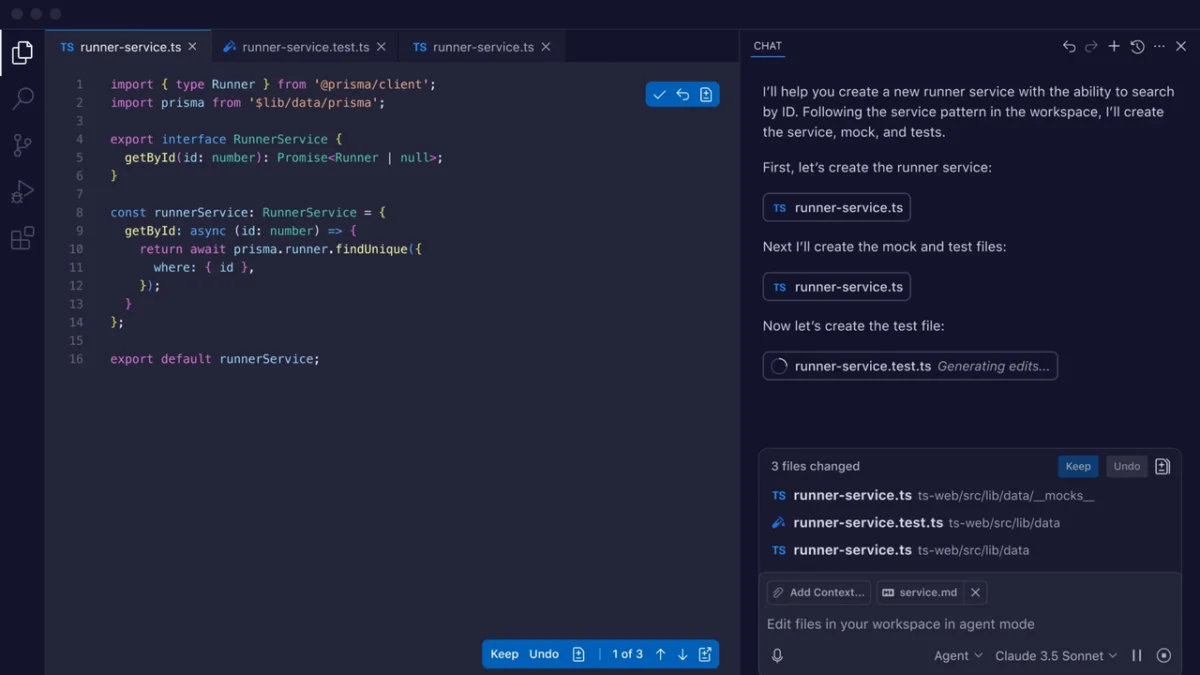
The central evolution here is the transition from "code-first" to "intent-first" programming. In a traditional development workflow, the developer is the primary author of every line of syntax, tasked with manual debugging, manual integration, and explicit logic mapping. In the burgeoning intent-first model, the developer’s role shifts toward that of a director. By providing a natural language description of a desired outcome, the developer triggers an agentic workflow where the AI handles execution, error iteration, and architecture.
This shift is not merely stylistic—it is structural. Microsoft’s investment in the Microsoft Agent Framework 1.0, which reached general availability in April 2026, provides a commercial-grade SDK for .NET and Python developers. This allows for complex, multi-agent orchestration, moving away from simple "chat-with-code" interfaces toward systems that can manage memory, observability, and long-term task execution.
Chronology of the Agentic Revolution
To understand why Build 2026 is so pivotal, one must look at the rapid acceleration of the past 24 months:
- 2025 (The Emergence): Microsoft introduces the concept of autonomous coding agents at Build 2025. The initial offering focused on isolated tasks, such as generating unit tests or simple documentation.
- Late 2025 (The Sandbox): At Ignite 2025, Microsoft unveils the Windows Agent Arena, providing a sandbox for developers to test agentic behavior within the Windows ecosystem.
- Early 2026 (Production Readiness): In April 2026, the Microsoft Agent Framework reaches general availability, converging research projects AutoGen and Semantic Kernel into a unified runtime.
- May 2026 (Studio Integration): The Copilot Studio Agentic Workflow Builder hits general availability, providing a no-code/low-code bridge for business logic integration.
- June 2026 (Build 2026): The conference focuses on the integration of these tools into a cohesive "production stack," emphasizing multi-agent collaboration and on-device inference via the Windows Copilot Runtime.
Supporting Data: The Enterprise Mandate
The move toward agentic workflows is being driven by more than just technological enthusiasm; it is a direct response to enterprise demand. According to data cited by Microsoft from a PwC study, approximately 80% of enterprises have now integrated some form of agent-based AI into their operations.
This statistic highlights a growing "workflow gap." While initial AI tools were excellent at generating isolated code snippets or answering simple queries, businesses require systems that handle end-to-end tasks—such as updating a legacy database, running a security audit, and deploying a patch—without human intervention for every minor step.
The economic implications are significant. By automating the "boilerplate" of software development, firms are looking to reduce the time-to-market for complex applications. However, the data also reveals a caution: as reliance on AI increases, the need for "human-in-the-loop" verification becomes the primary bottleneck for quality assurance.
Key Technical Pillars of Build 2026
1. GitHub Copilot and Multi-Agent Orchestration
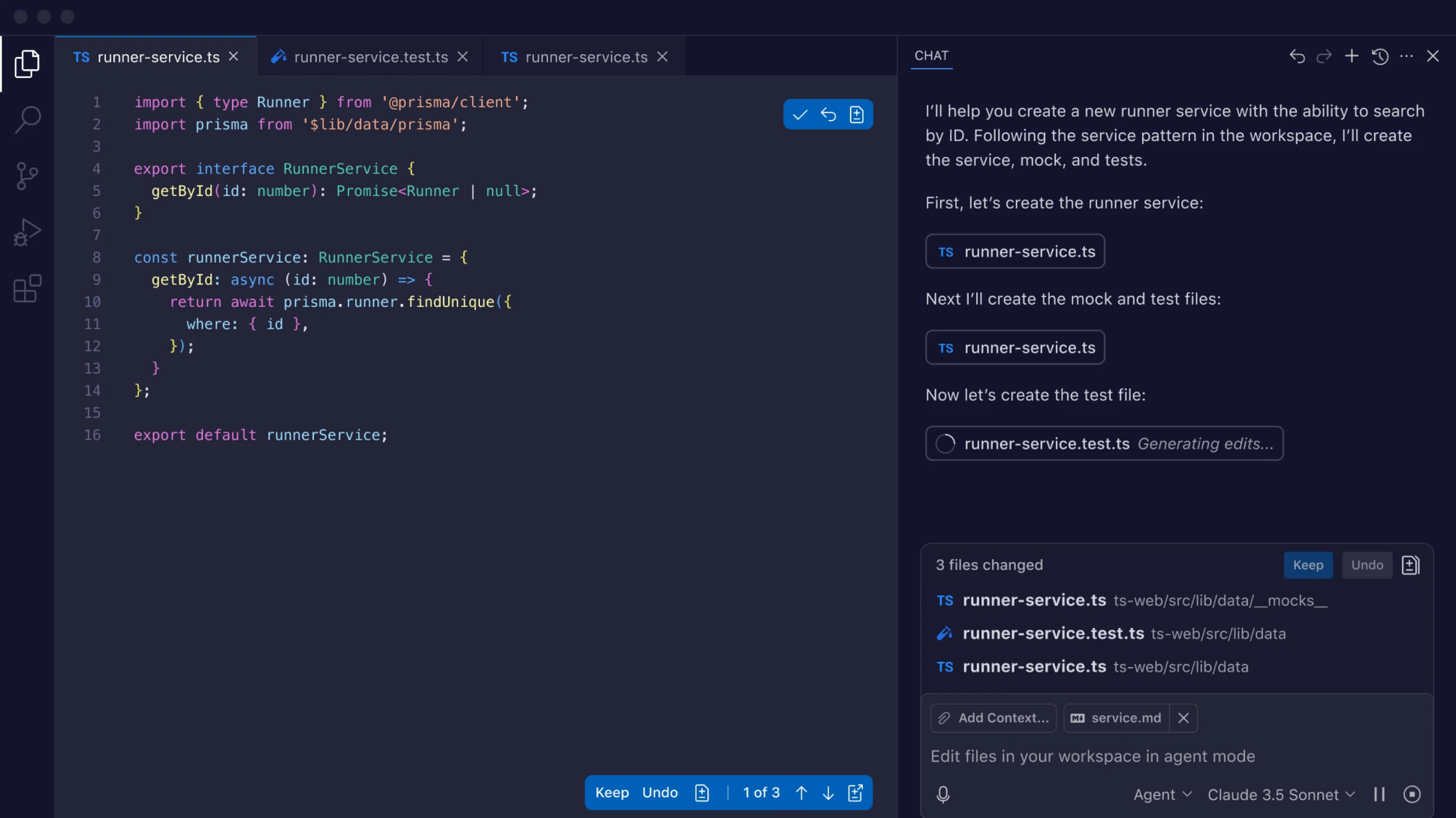
The star of the show remains GitHub Copilot. The current iteration of Agent Mode allows developers to describe a feature, watch as the agent plans the implementation across multiple files, and then execute terminal commands to test the result. At Build 2026, the focus has shifted to "multi-agent coding workflows," where specialized agents—perhaps one focused on security, another on performance, and a third on UI design—collaborate to solve a single GitHub Issue.
2. Azure AI Foundry
Azure AI Foundry (the successor to Azure AI Studio) has become the backbone for this ecosystem. The platform’s ability to define agents in YAML and provision compute resources instantly has turned AI deployment into a standard DevOps practice. The focus here is "sovereign local deployment," allowing enterprises to run these agents within their own secure cloud boundaries, addressing the primary concern of data privacy.
3. Windows Copilot Runtime and On-Device AI
Perhaps the most "physical" announcement at Build 2026 concerns the device layer. With the proliferation of NPUs (Neural Processing Units) in Qualcomm, Intel, and AMD chips, Microsoft is pushing for a hybrid architecture. By utilizing the Windows Copilot Runtime, developers can now route inference locally. This enables low-latency, offline-capable AI features, fundamentally changing what is possible for consumer-facing Windows applications.
Implications for the Professional Developer
The transition to an agentic future carries profound implications for the individual software engineer. As the barrier to writing code lowers, the premium on "architectural thinking" rises.
The New Skill Set
Developers are being urged to treat "prompting" as a rigorous engineering discipline. An ambiguous prompt leads to an ambiguous implementation. As agents grow more capable, the developer’s value lies in their ability to define scope, enforce constraints, and perform high-level code reviews.
The Security Imperative
There is an undeniable risk profile associated with AI-generated code. Cybersecurity researchers have consistently noted that AI models can propagate logic errors or introduce subtle vulnerabilities, such as exposed environment variables or insecure authentication patterns. Microsoft has responded by dedicating a significant portion of Build 2026 to "Responsible AI" and compliance tooling. The consensus among speakers is clear: the AI writes the code, but the human developer retains full legal and ethical accountability.
The "Intent-First" vs. "Code-First" Comparison
| Feature | Code-First | Intent-First |
|---|---|---|
| Primary Input | Explicit syntax/logic | Natural language intent |
| Developer Role | Implementation author | Outcome director/Auditor |
| Debugging | Manual intervention | Iterative agentic self-correction |
| Accountability | Full developer ownership | AI-generated, human-validated |
Conclusion: The Path Forward
Microsoft Build 2026 marks the end of the "experimentation phase" for AI in development. We are now entering a period of integration and operationalization. The tools unveiled this year—from the maturation of GitHub Spark for app building to the deep integration of the Windows Copilot Runtime—signal a future where the act of programming is less about typing characters and more about orchestrating intent.
For the developers gathered in San Francisco, the message is one of evolution. While the tools of the trade are changing, the fundamental requirements of the job remain: a deep technical understanding, a commitment to security, and the ability to distinguish between efficient, well-architected code and "plausible-looking" bloat.
As these agents move into the enterprise, they will undoubtedly accelerate development cycles and lower the cost of innovation. However, the human developer remains the final, indispensable check against the volatility of the machine. In this new era, your expertise is not being replaced; it is being scaled.












No comments yet. Be the first to join the conversation!