

The intersection of cultural translation and creative adaptation has long been a flashpoint within the anime community. Recently, this tension has resurfaced with the release of the English-language dub for Reborn as a Vending Machine, I Now Wander the Dungeon Season 3. As streaming giant Crunchyroll continues to navigate the complexities of bringing Japanese media to Western audiences, its in-house localization teams find themselves under intense scrutiny. Critics argue that the latest dub scripts have transitioned from faithful translations into what some describe as "activist fanfiction," utilizing modern Western slang and socio-political terminology that deviates significantly from the original Japanese context.
Main Facts: The Core of the Controversy
The primary point of contention centers on Episode 3 of the third season, titled "A Stay in Enemy Territory." The series, adapted from the light novel by Hirukuma, follows a vending machine otaku who is reincarnated as a sentient vending machine named Boxxo in a fantasy dungeon world. Despite his limited vocabulary—restricted to pre-recorded vending machine phrases in the physical world—his internal monologue provides the narrative’s emotional and intellectual backbone.

In the Japanese version (and the accompanying literal English subtitles), Boxxo’s internal thoughts are portrayed as analytical and somewhat reserved, reflecting his otaku nature. However, the English dub, scripted by Crunchyroll’s internal team, has introduced a significant amount of "flavor" text. This includes the use of professional wrestling terminology, modern internet slang, and references to Western legal concepts that do not exist within the show’s high-fantasy setting.
The discrepancies were highlighted by viewers who compared the subtitles—which are generally closer to a direct translation of the Japanese script—with the spoken English dialogue. The dub has been accused of "localizing like it’s 1996," a reference to an era where North American distributors (such as 4Kids Entertainment) would radically alter scripts to make them "palatable" for Western children, often erasing Japanese cultural markers in the process.

Chronology: From Light Novel to Localization Backlash
The journey of Reborn as a Vending Machine, I Now Wander the Dungeon began as a web novel on the Shōsetsuka ni Narō platform before being acquired by Kadokawa Shoten for light novel publication. Its unique premise—an isekai where the protagonist is an inanimate object—gained a cult following, leading to a successful first season produced by Studio Gokumi and AXsiZ.
- 2023–2024: The first two seasons established the tone of the series. While some localization flourishes were present, they remained largely within the bounds of standard industry practice.
- Early 2026: Season 3 premiered on Crunchyroll. Simultaneously, the industry was grappling with the "AI threat," as streaming platforms began exploring Artificial Intelligence for subtitle generation to cut costs. This move pressured human subtitle teams to prove their value through accuracy and speed.
- Mid-2026: Episode 3 of Season 3, "A Stay in Enemy Territory," was released. Almost immediately, fans noticed a sharp divergence in the English dub.
- Post-Release: Comparisons between the Japanese audio (featuring Jun Fukuyama) and the English dub (featuring Garrett Storms) began circulating on social media and niche news sites like Bounding into Comics, sparking a wider discussion on the ethics of localization.
Supporting Data: Script Comparisons and Linguistic Deviations
The controversy is best understood through a direct comparison of the text. The specific scene involves Boxxo discovering that a curse placed on a young boy named Ash by the Snow Spirit Sulream was a deception intended to keep the boy near her.

Example 1: The Revelation of the Farce
Japanese/Subtitle Version:
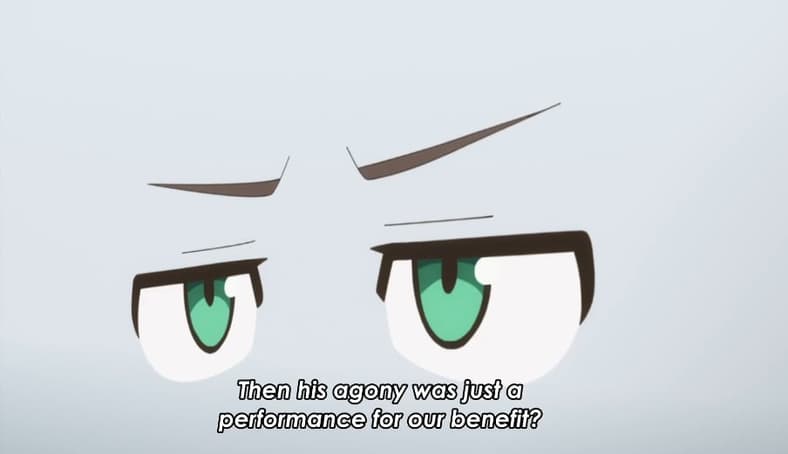
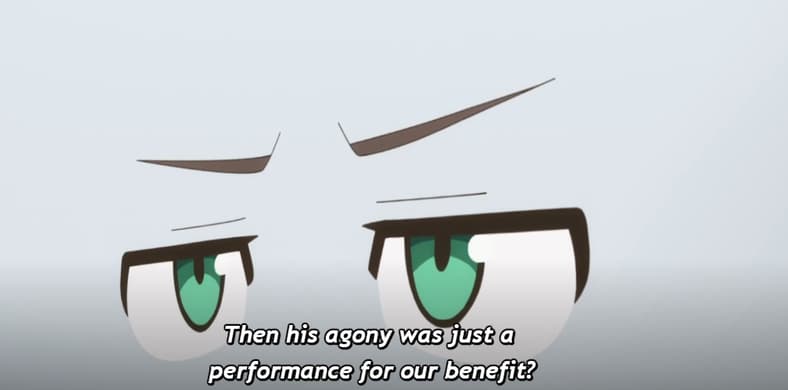
Boxxo realizes the deception and thinks: "Then his agony was just a performance for our benefit?"
English Dub Version:
Boxxo’s dialogue is rewritten as: "Meaning the munchkin went method and totally had us marking out."

Analysis:
The dub replaces a straightforward observation with "munchkin" (Western slang for a child), "went method" (a reference to Method Acting), and "marking out" (a specific term from professional wrestling meaning to believe a scripted event is real). Critics argue these terms are jarringly anachronistic for a fantasy setting and change the protagonist’s "voice" from a humble otaku to a slang-heavy Westerner.
Example 2: Addressing Predatory Behavior
Japanese/Subtitle Version:
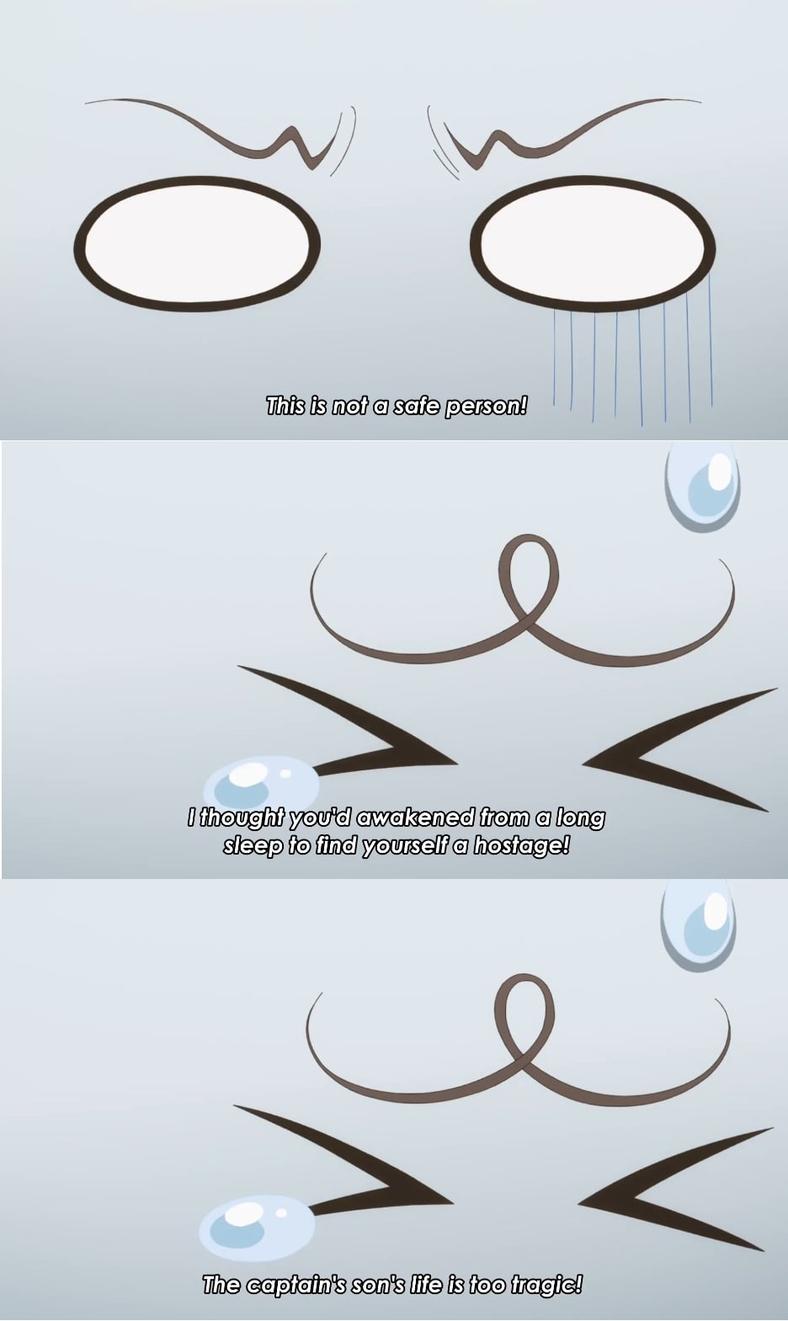
Boxxo, concerned about the Snow Spirit’s motives, pleads: "This is not a safe person! I thought you’d awakened from a long sleep to find yourself a hostage! The captain’s son’s life is too tragic!"
English Dub Version:
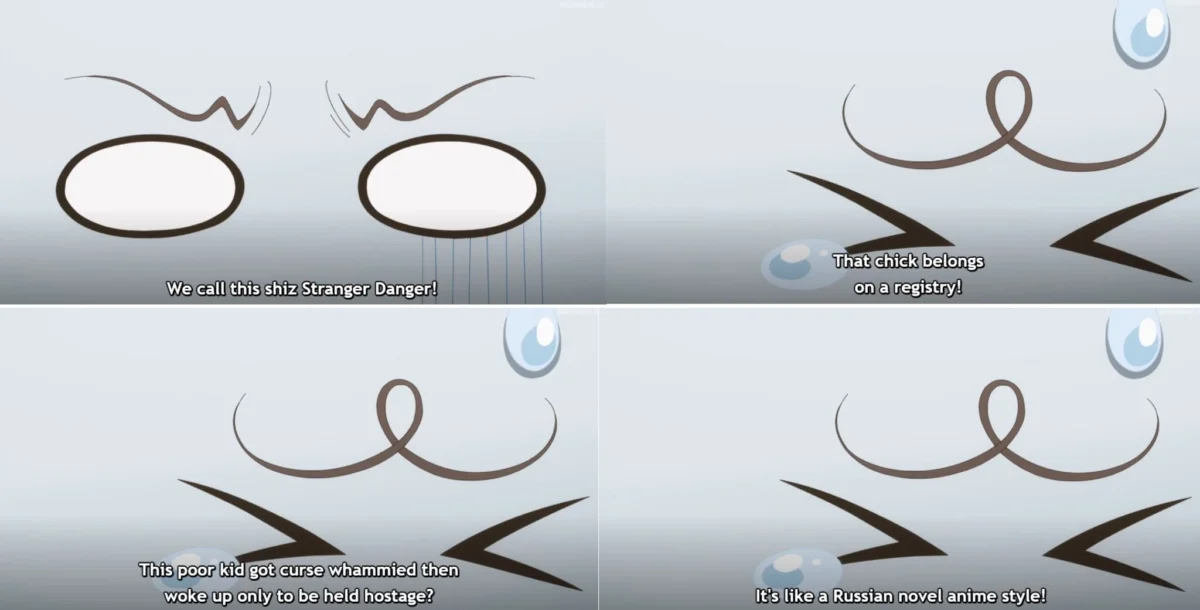
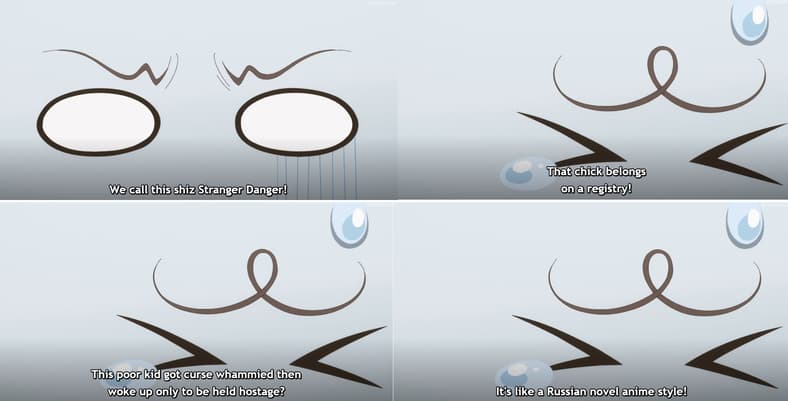
The script changes to: "That chick belongs on a registry! This poor kid got curse whammied then woke up only to be held hostage! It’s like a Russian novel, anime style!"
Analysis:
The phrase "belongs on a registry" is a direct reference to the Western legal system (specifically sex offender registries). This localization choice has been criticized for inserting heavy, real-world socio-political terminology into a lighthearted isekai series. Additionally, the reference to a "Russian novel" replaces a general sentiment of tragedy with a specific Western literary trope.
Example 3: Rationalizing the Situation
Japanese/Subtitle Version:
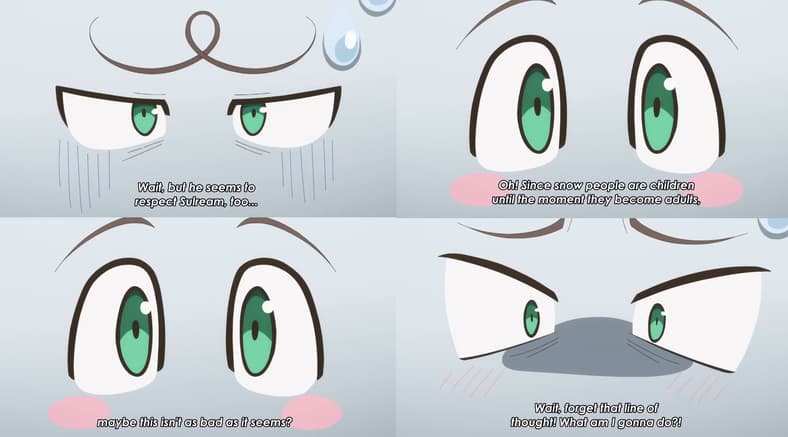
Boxxo attempts to understand the bond between the boy and the spirit: "Wait, he seems to respect Sulream, too… Oh! Since snow people are children until they become adults, maybe this isn’t as bad as it seems? Wait, forget that line of thought! What am I gonna do?!"
English Dub Version:
The dub script reads: "Why does he seem to respect that walking after-school special? Oh, lifeline! Since snow people until they suddenly become adults, maybe the ick factor is reduced? I did not just think that! This is whack!"
Analysis:
The inclusion of "after-school special," "lifeline," "ick factor," and "whack" represents a dense concentration of 1990s and 2020s slang. Critics point out that "ick factor" is a modern internet colloquialism that feels out of place in Boxxo’s internal monologue, which is supposed to be the thoughts of a man who died several years prior and is now living in a medieval-style world.
Official Responses and Industry Context
Crunchyroll has not issued a specific statement regarding the dialogue in Reborn as a Vending Machine Season 3. However, the company has recently been vocal about its broader localization strategy. In early 2024, Crunchyroll leadership discussed the testing of AI-generated subtitles, a move that was met with significant pushback from professional translators and fans alike.
The defense often provided by dub scriptwriters and ADR (Automated Dialogue Replacement) directors is that dubbing requires "lip-flapping" synchronization. Because English and Japanese have different sentence structures and syllable counts, scripts must be massaged to fit the animation. Localizers often argue that adding slang or "punchier" dialogue makes the show more engaging for a domestic audience.
Conversely, the "Purist" camp, supported by many in the anime community, argues that localization should be a bridge, not a filter. They contend that when localizers inject their own humor, slang, or political views, they are overstepping their role and disrespecting the original creators’ intent.
Implications: The Future of Anime Translation
The backlash against the Vending Machine dub is symptomatic of a larger "culture war" within the anime industry. There are several long-term implications for this trend:
- Erosion of Trust: As fans become more aware of script deviations, they may gravitate away from English dubs in favor of subtitles, or seek out "fan-subs" that promise more literal translations. This could impact the commercial viability of high-budget dubbing projects.
- The "Uncanny Valley" of Slang: Using hyper-specific modern slang (like "ick factor" or "marking out") dates a production rapidly. While it may seem "current" today, it often becomes cringe-worthy or incomprehensible to future viewers, potentially shortening the shelf-life of the dub.
- Creative Friction: There is a growing movement of original creators in Japan expressing concern over how their work is represented abroad. If Japanese production committees feel their IP is being "misinterpreted" or "rebranded" by Western distributors, it could lead to stricter oversight or changes in licensing agreements.
- The Role of AI: Paradoxically, the move toward "extreme localization" by human writers may inadvertently strengthen the case for AI translation. If human localizers are perceived as being "too creative" or "unfaithful," companies may use this as justification to switch to more literal, albeit drier, AI-generated scripts to ensure "accuracy" and reduce controversy.
In the case of Reborn as a Vending Machine, I Now Wander the Dungeon, the debate continues as the season progresses. Whether Crunchyroll will pivot its strategy in response to fan feedback remains to be seen, but the divide between those who want an "adapted experience" and those who want a "faithful translation" has never been wider. For now, Boxxo continues his journey, though his voice—at least in English—remains a subject of intense atmospheric pressure.










No comments yet. Be the first to join the conversation!