

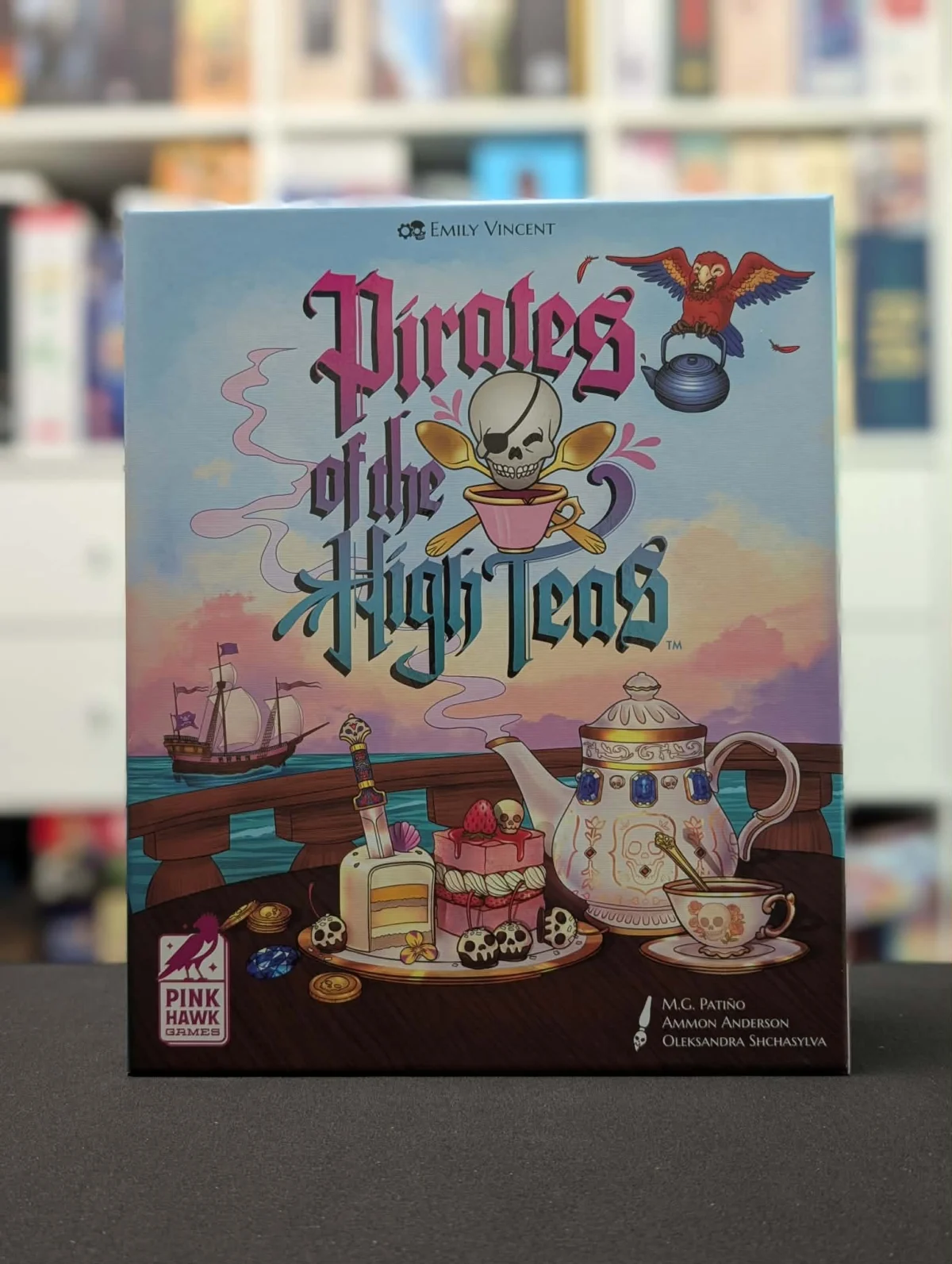
There is an inherent absurdity to the image of a rugged, eye-patched buccaneer delicately balancing a porcelain teacup on a rolling deck. Yet, it is precisely this juxtaposition—the clash between the gritty high seas and the refined sensibilities of an afternoon tea service—that makes Pirates of the High Teas such a captivating entry into the modern board game landscape.
While most pirate-themed tabletop experiences focus on plunder, mutiny, and naval warfare, Pirates of the High Teas takes a decidedly softer approach. It posits that a captain’s true worth isn’t measured by the weight of their gold, but by the elegance of their pastry spread. As a strategy game, it manages to distill the complex mechanics of worker placement into a breezy, lighthearted, and visually stunning experience that proves some of the best treasure is, in fact, a proper snack.
Main Facts: The Mechanics of the Menu
At its core, Pirates of the High Teas is an exercise in resource management and set collection, played out over exactly nine rounds. The objective is straightforward: earn the most "doubloons" by curating the perfect tea-and-treat pairings for your captain.
The board features an action row where players place their pirate meeples. The spatial logic of the game is its most vital component: the further to the right a space is located, the more powerful the action, but opting for those potent rewards often comes at the cost of your turn order in the subsequent round. This creates a delicate push-and-pull dynamic where players must constantly weigh the immediate gratification of a superior treat card against the long-term benefit of going first in the next phase.
Tea cards serve as the primary scoring objectives. These cards dictate specific ingredient requirements or color-coded dish combinations that must be fulfilled to "serve" the tea. Successfully meeting these conditions results in payouts, with bonuses awarded for complex, multi-layered sets. The game demands a constant balance of timing, card acquisition, and tactical flexibility, ensuring that no two sessions feel entirely identical.

A Chronology of Play: The Nine-Round Voyage
To understand the flow of Pirates of the High Teas, one must look at the structural rhythm of a single game. The experience is broken down into three distinct acts, each comprising three rounds of play.
Phase 1: The Gathering (Rounds 1–3)
In the opening rounds, the primary focus is on establishing an engine. Players rush to the action row to secure basic dish cards—pastries, scones, and cakes—that will serve as the foundation for their future scoring sets. During this time, the board is flush with options, and the pressure is relatively low. Savvy players use these early rounds to claim the most efficient tea objectives, setting the stage for mid-game success.
Phase 2: The Service (Rounds 4–6)
By the midpoint of the game, the tempo shifts. Players begin to fulfill their first sets of tea and treats. The tension rises as the action spaces become more contested. Because turn order is dictated by the placement of workers in the previous round, players must start sacrificing their "first-player" status to ensure they can secure the specific, high-value ingredients required for their more demanding tea cards.
Phase 3: The Grand Finale (Rounds 7–9)
The final three rounds are a race against the clock. The focus shifts from engine building to point optimization. The "doubloon" count becomes the central concern, and players often find themselves pivoting strategies to complete one last high-scoring set before the ninth round concludes. The game reaches a satisfying crescendo, leaving players with a clear view of their successes and their near-misses.
Supporting Data: Player Counts and Pacing
One of the most impressive feats of Pirates of the High Teas is its consistency across various player counts. In the world of strategy games, "downtime"—the period spent waiting for opponents to act—is often the enemy of engagement.

Our analysis of the game’s pacing reveals a remarkably steady rhythm:
- Two-Player Mode: Each player controls two workers. This keeps the board active and prevents the game from feeling too "empty," though it adds a layer of complexity regarding the movement of your own team.
- Three-Player Mode: Widely considered the "sweet spot" of the design. The balance of competition for spaces and the speed of turns creates a seamless experience.
- Four-Player Mode: While the board feels crowded, the turn order remains fluid. Even at maximum capacity, the game rarely exceeds its estimated play time, making it one of the most approachable worker-placement games currently on the market.
Official Design Philosophy: The "Cozy" Revolution
When speaking to the design philosophy behind Pirates of the High Teas, it is clear that the developers aimed to bridge the gap between heavy hobbyist games and family-friendly fare. By eschewing the "take-that" mechanics common in pirate-themed games—such as stealing cards or destroying opponent structures—the designers have prioritized a "parallel play" style.
This philosophy is reflected in the game’s aesthetic. The pastel color palette—dominated by soft blues, lavenders, and rose-pinks—was a deliberate choice to distinguish the game from the "dungeon-crawl" aesthetic typical of the genre. The goal was to create a "cozy" tabletop environment where the primary competition is against the game’s own constraints, rather than against other players. This design choice ensures that the table atmosphere remains relaxed and welcoming, even during high-stakes turns.
Implications for the Hobby: Broadening the Demographic
The success of Pirates of the High Teas has significant implications for the board game industry. It serves as a gateway product, perfectly positioned for parents who are hobbyists themselves and wish to introduce their children to the mechanics of worker placement and set collection without the barrier of steep learning curves or aggressive, conflict-heavy gameplay.
The "Family-Friendly" Factor
The game’s reliance on iconography rather than text-heavy cards makes it accessible to younger players. A six-year-old, for instance, can easily grasp the concept of matching colors and shapes, even if they struggle with the long-term planning required for the advanced captain cards. By removing the "reading tax," the game lowers the threshold for entry, allowing families to enjoy a strategic experience that feels both sophisticated and inclusive.

Strategic Depth for Veterans
Despite its whimsical appearance, the game does not lack depth for veteran players. The inclusion of "Pirate Captain" variants—each providing unique scoring bonuses—adds a layer of replayability that allows seasoned gamers to tailor their strategies. These variants force players to adapt their playstyles; a captain who rewards "scone-heavy" diets will fundamentally change how a player prioritizes their actions on the board, preventing the gameplay from becoming static.
Conclusion: A Treasure Worth Keeping
Pirates of the High Teas is an exceptional study in how theme and mechanics can coalesce into a unified, delightful experience. It is a game that does not try to be the most complex, the most cutthroat, or the longest on your shelf. Instead, it succeeds by being remarkably well-paced and visually inviting.
For those who enjoy the satisfaction of building a cohesive, point-generating engine but prefer to avoid the stress of direct confrontation, this game is a standout. It offers a rare, refreshing break from the intensity of modern board gaming. Whether you are playing with a competitive group of friends or introducing a younger generation to the world of strategy, Pirates of the High Teas proves that sometimes, the most rewarding adventure is the one that ends with a perfectly brewed cup of tea. It is a testament to the idea that in gaming, as in life, a little bit of whimsy goes a long way.











No comments yet. Be the first to join the conversation!