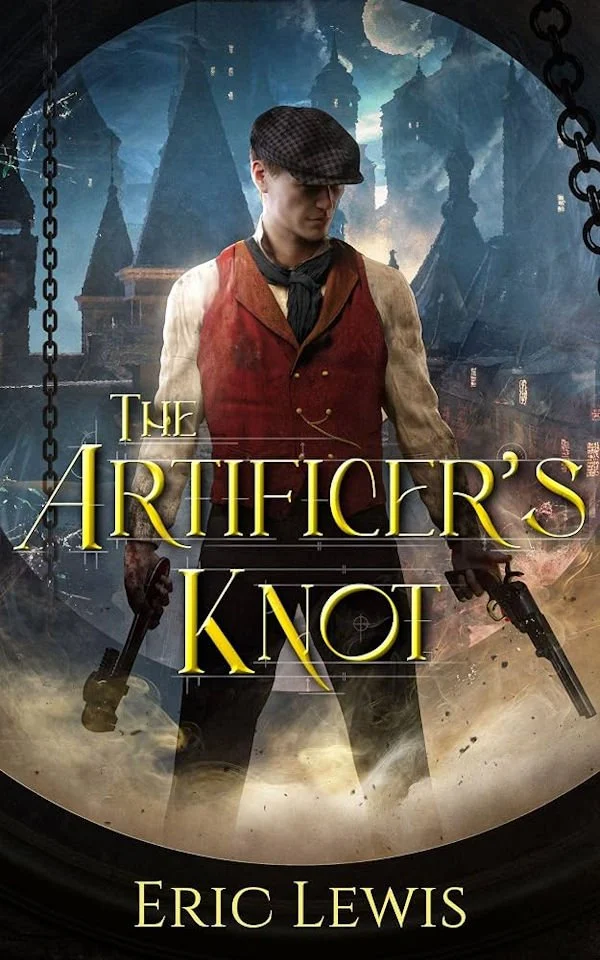
In the competitive landscape of modern fantasy literature, the Self-Published Fantasy Blog-Off (SPFBO) stands as a definitive proving ground for independent voices. As the competition reaches the crucial semi-final stages of its eleventh annual installment, one title has emerged as a lightning rod for debate: The Artificer’s Knot. A gaslamp fantasy that eschews traditional magical tropes in favor of industrial espionage, energy monopolies, and the gritty morality of the underworld, the novel has proven both polarizing and compelling.
As the judges of Fantasy Faction deliberate on which titles will proceed to the finals, The Artificer’s Knot serves as a fascinating case study in how genre-bending narratives—those that sit uncomfortably between historical fiction and speculative fantasy—are received by a discerning readership.
The Core Premise: Innovation Amidst Corruption
At the center of the narrative is Randyll “Ran” Tephius, a brilliant but disgraced student Artificer. In a world powered by "Vril," an energetic substance jealously guarded by a monopolistic elite of Alchemists, Ran’s discovery of untapped petroleum deposits acts as the catalyst for his downfall. Expelled from his university and stripped of his academic standing, Ran is cast into the unforgiving streets of a city defined by class stratification and industrial greed.
His trajectory changes when he is taken under the wing of Gouger Nebb, an aging, pragmatic mob boss seeking a path to legitimacy. What follows is a high-stakes chess match. Using illicit funds to finance his inventions, Ran attempts to reshape the energy landscape while navigating a treacherous web of rival syndicates, corrupt aristocrats, and a police force that serves the highest bidder. The central conflict arises when the very Alchemists who destroyed his career offer him a Faustian bargain: wealth and redemption in exchange for his expertise, provided he helps them cement their global monopoly—a path that would require the ultimate betrayal of the man who saved him.
Chronology of a Controversial Contestant
The journey of The Artificer’s Knot through the SPFBO process has been marked by a transition from initial skepticism to intense analytical scrutiny.
- Initial Submission: The novel was selected as a semi-finalist due to its sharp prose and thematic relevance. Judges noted its departure from "standard" fantasy tropes early in the evaluation.
- The Mid-Point Evaluation: As the judging panel progressed through the text, a divide emerged. Some reviewers praised the "zip line" pacing, while others expressed concern that the narrative momentum relied too heavily on perpetual, predictable crises.
- The Final Deliberation Phase: With the announcement of the finalist pick scheduled for June 26, the judges have synthesized their findings. The discourse has moved beyond mere plot summaries to deep philosophical questions regarding the book’s moral ambiguity and the protagonist’s "over-competence."
Critical Perspectives: A Divided Panel
The panel of judges offered a multi-faceted look at the novel’s strengths and weaknesses, providing a comprehensive view of the reading experience.
The Case for Technical Mastery
E.G. Stone, a prominent judge on the panel, lauded the book’s prose, noting that it is "smooth and draws you along so you almost don’t feel like you’re reading." This sentiment was echoed by Julia, who found the narrative’s blend of gaslamp fantasy and political intrigue to be "fast, clever, and confident." For these judges, the primary success of The Artificer’s Knot lies in its execution; the dialogue is distinct, the world-building is intentional, and the lack of grammatical friction allows for a seamless immersion.
The Critique of Pacing and Predictability
Conversely, the panel highlighted significant structural concerns. E.G. Stone noted that while the book begins as an intriguing steampunk adventure, it quickly shifts into a repetitive cycle of escalating drama that feels more akin to a gang war procedural than high fantasy. "It wasn’t so much overwhelming as underwhelming and a bit predictable," Stone observed, citing a loss of interest by the 60% mark.
This critique of the plot’s "convenience" was a recurring theme. While Adawia initially struggled with the characterization of the mob boss, Nebb, she ultimately found that the story’s complexity salvaged her interest. However, others, like Kerry, felt the character archetypes leaned too heavily on established tropes—the "brilliant student" and the "vicious but amiable gangster."
The "Over-Competence" Dilemma
A significant point of contention among the judges was the protagonist, Randyll. Julia noted that Ran’s "undeniable over-competence" serves as both the engine of the plot and its primary weakness. Because Ran is capable of solving almost any problem with relative ease, the sense of genuine danger—and therefore the stakes of the conflict—is occasionally diminished. Despite this, the judges agreed that the internal struggle—the erosion of Ran’s values and his navigation of ethical gray areas—provided the necessary emotional anchor to keep the reader invested.
Thematic Implications: Real-World Resonance
Perhaps the most significant takeaway from the critical discourse surrounding The Artificer’s Knot is its uncomfortable proximity to real-world issues. The novel’s focus on the transition from one energy source (Vril) to another (petroleum) mirrors the historical and modern-day debates surrounding energy monopolies and the environmental and moral costs of industrial "progress."
Maureen, another panelist, highlighted that the book does not shy away from the moral rot inherent in the pursuit of power. The refusal of the author to provide "easy answers" is viewed by the judging panel as the book’s greatest strength. The world of The Artificer’s Knot is one where survival is inextricably linked to compromise, and the reader is forced to question the protagonist’s choices as much as the antagonist’s cruelty.
Official Responses and Future Outlook
As of the current phase of the competition, the editorial team at Fantasy Faction has expressed their appreciation for the courage required to submit work to the SPFBO. The competition, now in its eleventh year, continues to prioritize voices that challenge the conventions of the genre.
For the author of The Artificer’s Knot, the feedback represents a microcosm of the challenges facing self-published authors: the need to balance character-driven drama with plot-driven tension, and the risk of leaning into genre tropes while simultaneously trying to subvert them.
Key Takeaways for the Industry:
- Genre Hybridization: Readers are increasingly interested in "gaslamp" or "steampunk" narratives that utilize historical crime structures.
- Moral Complexity: Modern audiences are gravitating toward protagonists whose successes feel costly, rather than those who win through pure capability.
- The Predictability Threshold: High-octane drama must be tempered with stakes that feel personal and irreversible, lest the narrative become "predictable" to seasoned readers.
As the June 26 announcement approaches, the fate of The Artificer’s Knot remains a subject of intense speculation. Regardless of whether it advances to the final round, the novel has succeeded in its primary objective: it has sparked a conversation. It has forced judges and readers alike to confront the mechanisms of power, the allure of the mob, and the ethical weight of the machines we build to change the world.
The SPFBO process continues to serve as an essential barometer for the health of independent fantasy, and titles like The Artificer’s Knot remind us that the best stories are often those that leave us feeling a little uncomfortable—not because of the monsters in the dark, but because of the choices made in the light.