

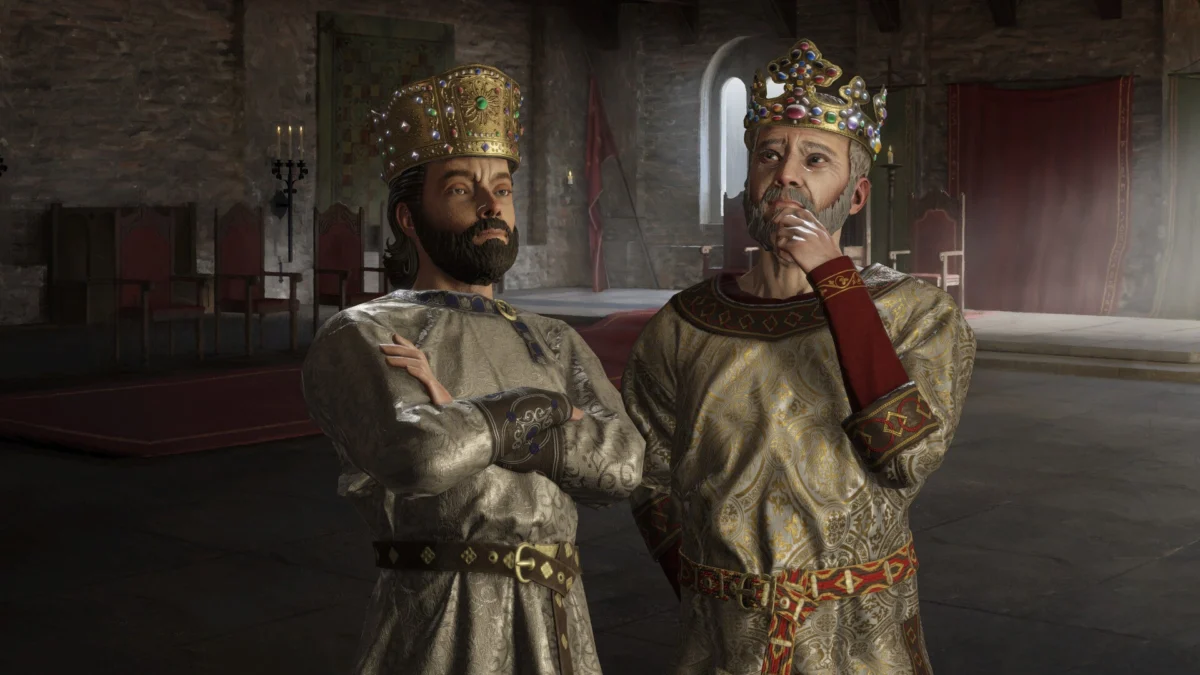
In the complex, web-like political landscape of Crusader Kings 3, secrets are the currency of power. For years, players have navigated a treacherous world of dynastic marriages, backstabbing courtiers, and the occasional illicit tryst. However, a recent technical hiccup introduced in the 1.19 update threatened to turn the medieval simulator into a reality television drama, as the game’s engine began broadcasting illicit affairs to the entire court the moment they occurred.
Paradox Interactive has now deployed a critical patch to address this “public broadcast” of infidelity, alongside a series of balance adjustments designed to preserve the sanctity of the game’s strategic depth. As the developers wryly noted, "It’s the Middle Ages, not a Coldplay concert"—a sentiment that underscores the need for discretion in a game defined by legacy and reputation.
The Infidelity Glitch: When Secrets Become Public Property
The core issue stemmed from the version 1.19 update, which inadvertently broke the logic governing the exposure of secrets. In Crusader Kings 3, the discovery of an affair is meant to be a high-stakes event, often requiring a character to possess a “Hook” or to successfully use the “Find Secrets” scheme. Instead, the update caused the game to announce these indiscretions to the entire court immediately upon occurrence.
This created a chaotic narrative environment. Players found their characters—many of whom were attempting to maintain the image of pious, honorable rulers—suddenly besieged by scandal, with their legitimacy crumbling under the weight of transparent infidelity. The mechanical failure effectively removed the “stealth” element of the game’s intrigue system, stripping players of the agency to manage their reputation or blackmail their rivals.
The Patch and the "Legacy" Problem
The fix, while comprehensive, comes with a caveat: the "ghosts" of the previous version. Paradox has clarified that any pregnancies initiated during the window of version 1.19.0.4 will still trigger the unintended notification. In effect, the game’s historical logs are still carrying the data of those illicit unions, meaning that if a character is currently expecting a child from an affair, the scandal is effectively already "baked in." Players are left with the choice of dealing with the fallout or, as is common in the Crusader Kings community, finding more creative ways to "resolve" the pregnancy—a dark testament to the game’s brutal decision-making.
Chronology of the 1.19 Update Cycle
The timeline of these events reflects the iterative nature of modern live-service strategy games.
- Initial Release (Version 1.19): Paradox Interactive rolls out a substantial update focusing on the Ledger, an overhaul of the Accolade system, and various graphical fixes.
- The Unintended Consequence: Shortly after deployment, players report a surge in "instant scandals." The community discovers that the game’s event triggers for infidelity were firing globally rather than locally.
- Community Backlash: Forums and social media platforms are flooded with memes and complaints regarding the impossibility of maintaining a stable dynasty under the "glaring eyes" of the court.
- The Hotfix (Current): Paradox acknowledges the issue, deploying a targeted patch that restores the intended secrecy mechanics while simultaneously addressing secondary bugs, such as the Iberian Dominance exploit and concubine management issues.
Supporting Data: Balancing the Mechanics of Power
Beyond the headline-grabbing infidelity fix, the latest patch addresses several systemic issues that had begun to degrade the competitive balance of the game.
Addressing the Iberian Dominance Loop
One of the more significant balance changes concerns the "Iberian Dominance" ending. Previously, players had discovered an exploit that allowed them to trigger the conclusion of the Iberian struggle repeatedly. By doing so, they could farm infinite Renown—a resource that acts as the primary currency for dynastic legacies. This exploit essentially allowed players to max out their dynasty’s traits in a fraction of the intended time, trivializing the mid-to-late game experience. By patching this, Paradox has restored the scarcity of Renown, ensuring that prestige is earned through gameplay rather than engine manipulation.
Concubine Management and Population Control
The patch also introduces a quality-of-life adjustment regarding the concubine system. Previously, players who hit their cap of concubines found it difficult to maneuver within their own courts, leading to what some players jokingly called "concubine overcrowding." The ability to now offer concubines to other characters provides a much-needed "pressure valve." This not only helps with court management but also introduces a new diplomatic layer: the ability to offload unwanted spouses or concubines onto vassals or rivals as a form of social maneuvering.
Official Response: The Developer’s Perspective
The tone from Paradox Interactive has remained consistently lighthearted yet firm. By stating, "Your infidelity will no longer be broadcasted to everyone as it happens," the developers acknowledged the frustration of the player base while simultaneously poking fun at the absurdity of the bug.
This communication style is emblematic of the Crusader Kings development team, who frequently engage with the community’s penchant for "medieval drama." The developers emphasized that the goal of the patch was to ensure that the game remains a simulator of power and intrigue, not a game of involuntary exposure. They reminded players that while the game allows for "strategic shagging," the consequences of such actions should remain tied to the game’s established intrigue mechanics, not to a coding error.
Implications for the Future of Crusader Kings 3
The immediate implication of this patch is a return to normalcy for long-term campaigns. For players focused on roleplay, the restoration of secrecy is vital; it allows for the cultivation of long-term character arcs where an affair might be kept hidden for decades, only to be revealed at a moment that maximizes political damage.
Preparing for New Expansions
With the developer having previously teased upcoming content, including "playable popes" and "money-grabbing republican merchants," the stability of the core intrigue engine is more important than ever. If players are to take on the roles of the most powerful religious and economic figures in the Middle Ages, the systems governing secrets and social reputation must be robust.
If the game cannot handle the complexity of a simple affair, it would struggle to manage the weight of a Papal scandal or the economic intrigue of a Merchant Republic. By cleaning up the code now, Paradox is ensuring that the foundation of the game is secure before layering on more complex systems.
The Evolution of Player Agency
The "concubine fix" serves as a microcosm for the broader design philosophy of Crusader Kings 3. It highlights the developers’ commitment to giving players tools that feel grounded in the setting while providing enough mechanical flexibility to allow for emergent storytelling. Whether it is using a crowd of concubines as a "modesty screen" or carefully managing who knows about one’s romantic dalliances, the game continues to lean into the idea that in the Middle Ages, everything is a tool for survival.
As the game continues to evolve, the challenge for Paradox remains the same: keeping the complex, interconnected systems of the game from collapsing under the weight of their own interactions. While bugs like the "infidelity broadcast" are frustrating, they also serve as a reminder of the sheer complexity that makes Crusader Kings 3 a unique experience in the strategy genre. For now, rulers can return to their secret chambers, confident that their scandalous private lives will remain, as they should be, in the shadows.












No comments yet. Be the first to join the conversation!