

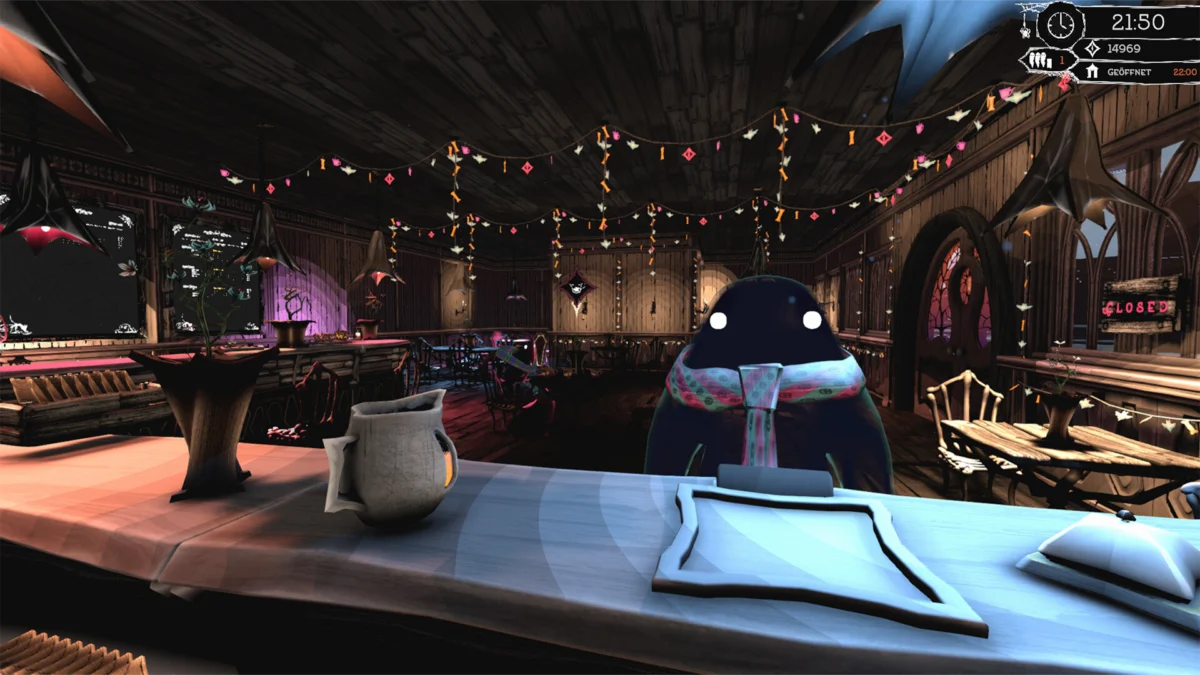
The cozy gaming genre has long been dominated by sun-drenched farms, pastoral villages, and pristine bakeries. However, a new trend is emerging that blends the comforting loop of management simulations with the macabre charm of the supernatural. Enter My Little Cafe Nightmare, a first-person management title that tasks players with running a coffee shop—not for the living, but for the restless spirits of the afterlife. Available now on Steam Early Access, the game invites players to balance the mundane chores of hospitality with the eerie demands of ghostly clientele, all under the watchful, judgmental gaze of a shrunken head dangling from the ceiling.
The Core Concept: Managing the Macabre
At its heart, My Little Cafe Nightmare is a structural management simulator that challenges the player to transform a crumbling, dilapidated establishment into a thriving sanctuary for the undead. You are the sole human employee, a barista in a realm where the customers have long since passed their expiration date.
The gameplay loop is deceptively simple: you take orders, brew beverages, and collect “bone tokens” from satisfied customers. However, the game quickly expands beyond basic service. Players must manage their inventory, restock supplies, and maintain the functionality of their equipment. Because you are the only entity in the cafe with physical limbs, you are responsible for everything from sweeping up phantom dust bunnies to ensuring your espresso machine doesn’t succumb to the spectral decay of the building itself.
Chronology: From Ruin to Restoration
The progression in My Little Cafe Nightmare follows a satisfying arc of restoration. When you first step into the cafe, you are greeted by rot, cobwebs, and an atmosphere that is anything but welcoming. The “Nightmare” in the title is literal; the building is a reflection of the spirits’ own unsettled states.
- Phase One: Survival. The initial hours are spent mastering the basics of the coffee machine and learning the unique—and often bizarre—tastes of the ghostly patrons. During this stage, your primary goal is to generate enough bone tokens to keep the lights on and the beans stocked.
- Phase Two: Restoration. As your reputation among the spectral community grows, you gain access to tools and funds necessary to repair the physical structure. This involves clearing debris, fixing broken fixtures, and scrubbing away the years of neglect.
- Phase Three: Customization. Once the foundational work is complete, the game shifts focus to aesthetic management. You are tasked with turning the haunt into a “cozy” space. While the definition of cozy remains subjective in a world of ghosts, the game encourages players to curate a space that is inviting, warm, and tailored to the needs of its supernatural visitors.
Supporting Data: The Mechanics of Chaos
While the game succeeds in its atmosphere, it introduces a unique, albeit challenging, approach to interior design. Unlike traditional management sims that offer a “build mode” or a paused interface for decorating, My Little Cafe Nightmare operates entirely in real-time.
The Real-Time Design Dilemma
This mechanic serves as a double-edged sword. On one hand, the freedom to move any object at any time provides a level of immersion rarely seen in the genre. You are not confined to a grid or a menu; you are physically manipulating your environment.
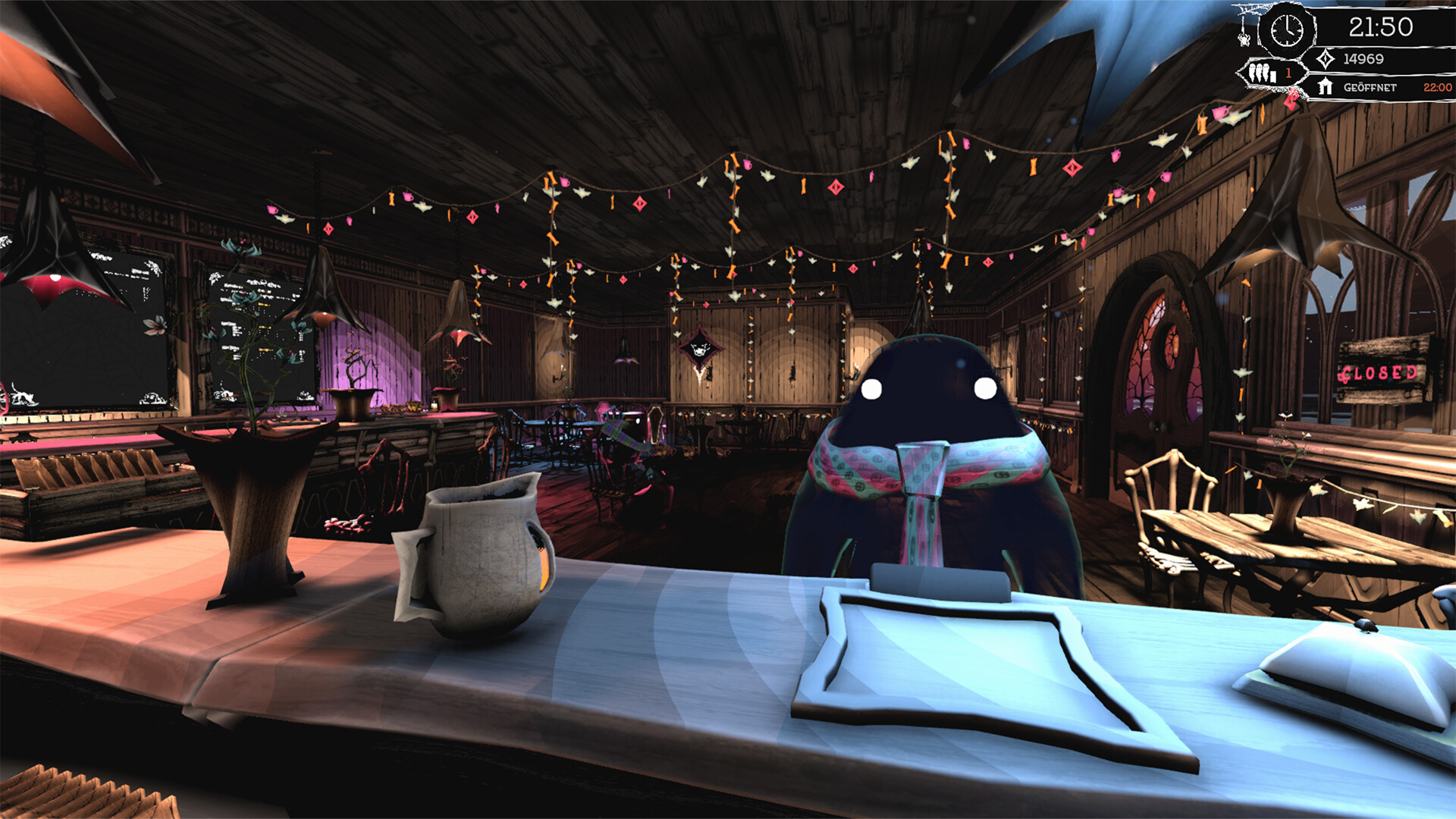
However, this freedom comes with significant risks. The game’s physics engine can be temperamental. Because you can move items at any moment, it is dangerously easy to accidentally grab a countertop or a structural element, causing it to auto-rotate or clip through walls. Reports from early testers suggest that a misplaced object can turn a functional kitchen into an unplayable mess, with vital tools—such as the essential coffee kettle—frequently becoming trapped behind walls or beneath the floorboards.
Spatial Management and Accessibility
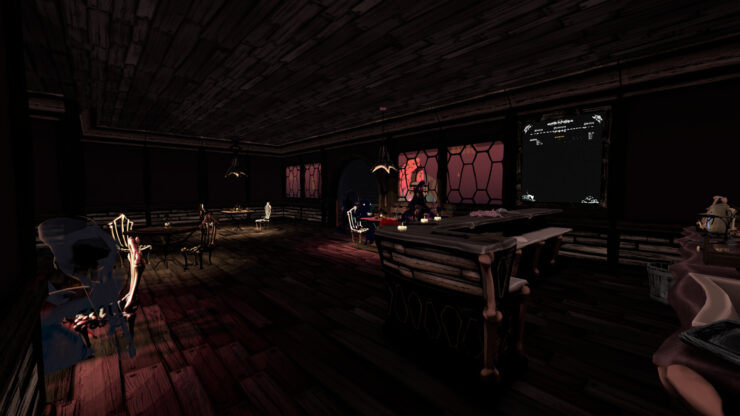
The game’s rooms are intentionally designed to be large and forgiving, providing ample space for creativity. The developers have clearly prioritized the player’s ability to create unique layouts. The ghosts, surprisingly, are not malicious; they are often grateful for the effort a human takes to cater to their specific, otherworldly preferences. This creates a feedback loop where the player feels a genuine desire to improve the cafe, not just for the sake of profit, but for the comfort of the characters they serve.
Official Perspectives and Development Context
The team behind My Little Cafe Nightmare has positioned the game as a “cozy horror” experience. By merging the aesthetic of a haunted house with the satisfying, repetitive tasks of a cafe sim, they are tapping into a niche but highly engaged demographic of gamers who enjoy the “low-stakes, high-atmosphere” style of play.
In early communications, the developers have emphasized that the “nightmare” aspect of the title is meant to be more aesthetic than difficult. They are currently soliciting feedback via the Steam Community hub regarding the physics-based decorating system. As the game remains in Early Access, the developers have committed to refining the object-snapping mechanics to prevent the frustrating clipping issues currently experienced by some players.
Implications for the Management Genre
My Little Cafe Nightmare represents a broader shift in indie development: the “cozy-fication” of traditionally darker themes. We have seen this with titles like Graveyard Keeper or Cult of the Lamb, where players are asked to perform morbid tasks within a cute, stylized, or low-stress framework.
This game specifically adds to the conversation about spatial freedom in management games. By removing the “menu-based” construction barrier, the developers are asking players to treat their cafe as a physical space rather than a set of stats. If they can iron out the technical kinks regarding physics and object collision, the game could set a new standard for how players interact with their virtual environments.
Final Verdict: Is It Worth the Haunting?
For those who enjoy the meticulous nature of cafe management—ordering supplies, managing equipment, and satisfying a stream of customers—My Little Cafe Nightmare offers a refreshing twist. It is a game that respects the player’s time while offering enough environmental storytelling to keep the experience from feeling like a chore.
However, players who prefer the precision of grid-based building may find the free-form decoration system more chaotic than creative. It requires patience, a steady hand, and perhaps a sense of humor when your kettle inevitably glitches into the void.
If you are a fan of indie titles that favor atmosphere and player-driven narrative over intense combat or complex combat mechanics, My Little Cafe Nightmare is a compelling, if slightly buggy, addition to your library. As development continues, the potential for this title to become a staple of the “cozy horror” sub-genre is high. For now, it remains a charmingly spooky endeavor that invites you to pull up a chair—just make sure it’s not a chair made of bone—and start brewing.
About the Author
Jupiter Hadley is a veteran indie game journalist with a career spanning over a decade. Her work has appeared in prominent outlets such as Metro UK, Big Boss Battle, and AlphaBetaGamer. As a fierce advocate for the indie scene, she frequently covers game jams, evaluates early-access titles, and maintains a vast database of global game development events via indiegamejams.com. Her commitment to highlighting smaller, experimental titles ensures that even the most niche projects receive the spotlight they deserve.









No comments yet. Be the first to join the conversation!