For decades, the sense of smell was dismissed by the scientific community as a vestigial, "bestial" trait—an evolutionary leftover we traded away for the luxury of higher intellect. Yet, as millions of people worldwide grapple with the long-term olfactory consequences of the Covid-19 pandemic, that outdated perspective is crumbling. New research suggests that our sense of smell is far from a trivial luxury; it is a critical sensory bridge to our memories, our emotions, and, most crucially, our neurological health.
The Awakening: A Global Health Crisis
Fourteen years ago, Chrissi Kelly, a traveler visiting family in the Czech Republic, contracted a routine virus. While her other symptoms faded, one did not: her ability to smell. What followed was a frustrating odyssey of medical consultations, ranging from general practitioners to ear, nose, and throat specialists. Each visit ended in the same, hollow advice: "You will have to learn to live with it."
For Kelly, the loss was not merely an inconvenience; it was a profound stripping away of her identity. "After about six months of complete loss, I was just climbing the walls, and I did not feel like myself anymore," she recalls.
Kelly’s experience was once an outlier, but today it represents a massive global cohort. Researchers estimate that up to 22 percent of the human population lives with some form of smell impairment, including hyposmia (partial loss) or anosmia (total loss). Others suffer from parosmia, where familiar, pleasant scents like coffee or freshly baked bread are distorted into the smell of feces or rotting meat. For years, these conditions were largely ignored by the medical establishment.
The arrival of SARS-CoV-2 changed the landscape of olfactory research forever. With over 780 million reported cases of Covid-19, and nearly 60 percent of patients reporting smell loss, the virus forced the scientific community to confront a sensory deficit it had long minimized. The resulting influx of funding and academic interest has revealed a startling truth: the nose is a vital diagnostic window into the brain.
Chronology: From "Bestial" to Essential
The history of olfactory science is a story of long-term neglect. In the 19th century, French brain researcher Paul Broca labeled olfaction "the bestial sense," arguing that as humans evolved, our brains prioritized visual and auditory processing over the "primitive" nose. This narrative stalled progress for over a century.
However, the tide turned in the early 1990s when Linda Buck and Richard Axel identified a massive family of 1,000 genes—roughly 3 percent of the human genome—dedicated to olfactory receptors. Their discovery, which earned a Nobel Prize in 2004, finally provided a biological basis for our sensory experience.
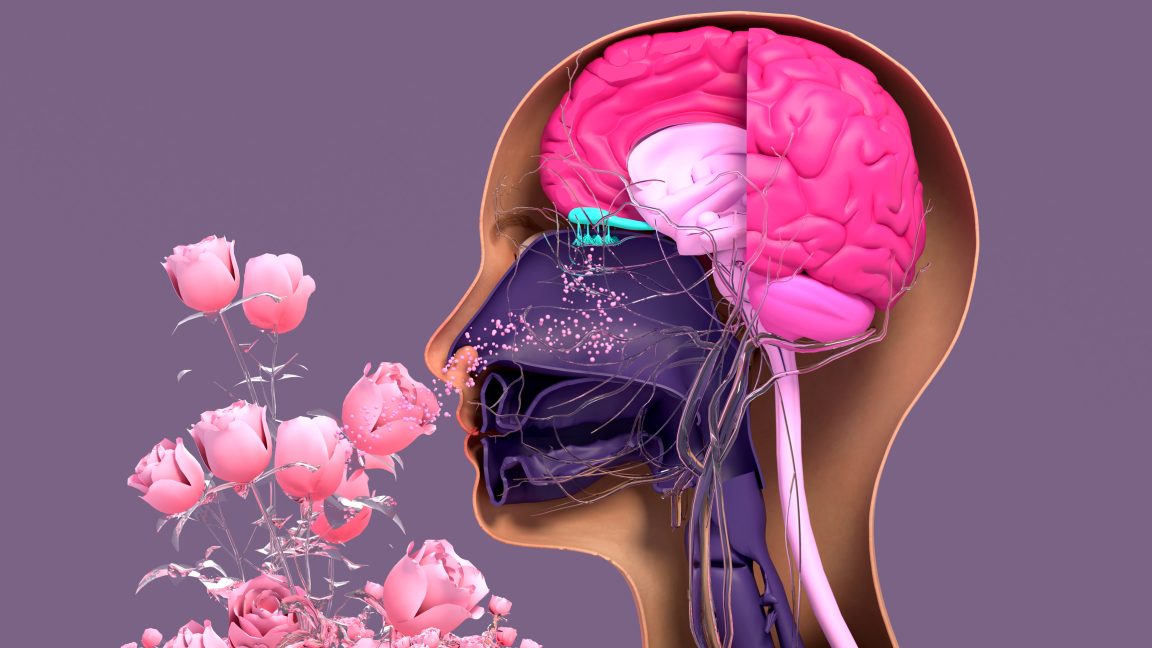
In the years since, we have learned that the olfactory system is unique. Unlike vision or hearing, which are filtered through the thalamus—the brain’s central relay station—olfactory signals travel directly into the limbic system, specifically the amygdala and hippocampus. This direct connection explains why a single scent can trigger a vivid, emotional memory with more potency than a photograph or a song.
Furthermore, the olfactory bulbs are among the few regions in the adult brain that actively generate new neurons. This neurogenesis allows the brain to adapt to changing environments, but it also makes the system remarkably vulnerable. As the primary point of contact between the external environment and the brain, the olfactory bulbs act as a potential gateway for viruses, toxins, and even microplastics to infiltrate the central nervous system.
The Neurology of Decay: When Smell Loss Signals Trouble
Perhaps the most alarming implication of recent research is the link between smell loss and neurodegenerative disease. For many, a diminished sense of smell is not a stand-alone condition, but a harbinger of deeper neurological degradation.
Consider the case of "Dave," a wine enthusiast who lost his sense of smell 20 years ago. He spent years "faking it" during vineyard tours, assuming it was a minor, isolated issue. It wasn’t until he began experiencing tremors and a slowed gait that he received a diagnosis of Parkinson’s disease.
Neurologists like Ethan G. Brown of the University of California, San Francisco, note that we are only just beginning to understand the "prodromal" stages of Parkinson’s. A hallmark of the disease is the loss of dopamine-producing cells in the substantia nigra. Emerging imaging suggests that before these motor symptoms appear, toxic proteins may accumulate in the olfactory bulbs. This suggests that smell loss is often one of the earliest, silent warning signs of the disease.
The connection extends beyond Parkinson’s. Zara M. Patel, director of the Stanford Initiative to Cure Smell and Taste Loss, points out that olfactory dysfunction is present in a staggering 139 neurological and physical conditions, including Alzheimer’s disease, Lewy body dementia, schizophrenia, depression, and autism. Whether the loss of smell is a byproduct of these diseases or a contributing factor that exacerbates cognitive decline remains a subject of intense, ongoing study.
Clinical Implications and Potential for Recovery
For those living with smell loss, the primary concern remains: can the sense be restored?

The current front-line intervention is "olfactory training," a technique that functions like physical therapy for the nose. Patients are instructed to smell a consistent set of potent scents—typically rose, lemon, clove, and eucalyptus—twice daily. The goal is to stimulate the olfactory nerves and harness the brain’s inherent neuroplasticity to "rewire" the connections.
A 2024 meta-analysis of 36 studies confirmed that olfactory training has a statistically significant positive impact on olfactory function. While the success rates vary—with some studies showing improvements in 11 to 68 percent of patients—the therapy is low-cost, accessible, and carries virtually no risk.
Dr. Patel’s research, which includes the first randomized controlled trial of this training in the United States, suggests that pairing the exercises with steroid sinus rinses can increase recovery rates to as high as 50 percent. Even more promising is the emerging data suggesting that this training may improve verbal fluency and working memory in older adults, potentially acting as a protective barrier against cognitive decline.
Reclaiming the World: The Human Perspective
Beyond the clinical data, the personal impact of recovering one’s smell is profound. Chrissi Kelly, who went on to found nonprofit patient advocacy groups and co-author over 30 academic papers, describes her own recovery as a "quickening of the insides."
Two years into her olfactory training, while trekking through the Austrian Alps, she suddenly caught the scent of pine needles and damp sawdust. "There was this flutter in my stomach," she recalls. "It was like, ‘I’m alive.’"
For Kelly and millions like her, the goal of olfactory research is not just about detecting the scent of a cup of coffee or a dangerous gas leak. It is about the fundamental human desire to be reconnected with the environment.
As scientists continue to "crack the code" of how the brain processes the trillions of odor molecules that surround us, one thing is clear: the sense of smell is a cornerstone of our cognitive and emotional health. What was once dismissed as a "bestial" relic is now recognized as a sophisticated sensory system that protects us, remembers for us, and, when it begins to fail, provides a critical early warning for the future of our neurological well-being. The "forgotten sense" has finally been found, and the implications for medicine and public health are only just beginning to unfold.