Rifan Muazin
In a move that underscores the evolving landscape of artificial intelligence hardware, PieceMakers—a DRAM design house backed by memory giant Nanya—has officially commenced trading on Taiwan’s Emerging Stock Board. As the semiconductor industry pivots from the training-heavy architectures that defined the last two years toward a future dominated by massive, real-time AI inference, PieceMakers is positioning itself as the critical architect of a new category of memory.
The company’s debut on September 16, with a reference price of NT$740, serves as a litmus test for investor appetite regarding unconventional memory solutions. While global markets remain fixated on the supply chain constraints of High Bandwidth Memory (HBM), PieceMakers is charting a contrarian course, betting that the future of inference lies in specialized, processor-stacked DRAM rather than the generalized high-speed stacks currently utilized by Nvidia and its peers.
The Chronology of a Market Debut
The path to the Taipei Exchange’s pre-listing market has been methodical, reflecting the long lead times inherent in the semiconductor industry.
- Early 2026: PieceMakers solidifies its business model, moving away from commodity DRAM designs to focus heavily on AI-driven custom design services. Internal reports indicate that this shift began to bear fruit, with custom AI work accounting for roughly 40% of revenue in the first half of the year.
- September 7, 2026: Chairman Joseph Ting provides clarity to TechNews, tempering immediate market expectations by noting that the company’s first high-volume customer program is not projected to contribute to the bottom line until at least 2027.
- September 16, 2026: PieceMakers officially debuts on the Emerging Stock Board. With 60.4 million shares outstanding, the company opens at NT$1,035, surging to a daily high of NT$1,205 before closing at NT$915—a 23.6% gain over the NT$740 reference price.
- Post-Listing Horizon: The company enters a transitional period, shifting from a design-fee-reliant revenue model toward a production-volume model as its proprietary stacked-memory designs move toward commercial silicon.
The Architecture of Inference: Why PieceMakers is Skipping the HBM Craze
To understand the valuation of PieceMakers, one must understand the fundamental divergence between training and inference workloads.
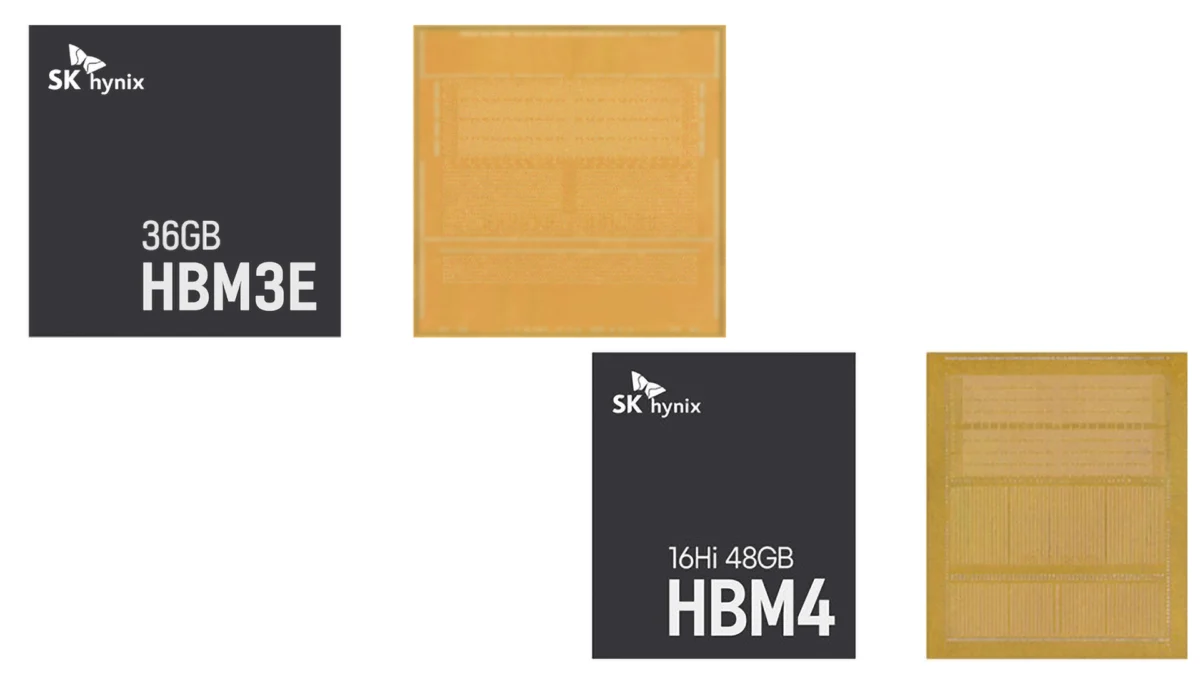
Most current AI infrastructure relies on HBM—a dense, power-hungry memory solution that is ideal for moving massive datasets during the training of Large Language Models (LLMs). However, PieceMakers President Lee Hsiao-wen argues that inference—the process of running a pre-trained model to answer queries—requires a different memory profile. Inference requires lower latency and higher energy efficiency, but it does not necessarily require the massive, wide-bus capacity of HBM.
The "Goldilocks" Strategy
PieceMakers is targeting a technological "Goldilocks" zone. They are designing DRAM that sits directly on the processor, leveraging hybrid bonding—a sophisticated packaging technology that allows for extremely high-density, low-latency vertical interconnects.
By placing this DRAM directly on the processor, PieceMakers aims to bridge the performance gap between:
- SRAM-only architectures: Exemplified by chips like the Groq LPU, which offer incredible speed but are limited by the physical size and cost of on-chip SRAM.
- HBM-based architectures: Which provide massive capacity but suffer from the power-delivery constraints and costs associated with complex, off-chip memory stacks.
This hybrid approach allows for a "memory-near-compute" architecture that could prove essential for edge AI and data-center inference tasks that demand sub-millisecond response times.
Financial Foundations and Market Valuation
The market’s reaction to the PieceMakers debut—closing at NT$915—reflects a valuation of approximately NT$44.7 billion (USD $1.4 billion). This valuation is particularly striking given the company’s current revenue structure.
Design Fees vs. Chip Sales
Currently, PieceMakers functions more like a specialized design house than a traditional semiconductor manufacturer. During the first half of 2026, the company generated the bulk of its revenue through design fees for AI-specific custom hardware. This is a strategic necessity; developing, testing, and validating custom DRAM, especially when paired with hybrid bonding, involves significant R&D costs and long qualification cycles with customers.
Chairman Joseph Ting’s transparency regarding the 2027 revenue horizon for volume shipments suggests that the company is currently in a "build-out" phase. Investors are not currently buying the company for its immediate DRAM output; they are buying a seat at the table for the next generation of AI silicon, betting that PieceMakers’ design IP will become a standard component in future AI inference processors.
Official Responses and Strategic Rationale
In discussions with industry analysts and media outlets, PieceMakers’ leadership has been careful to manage the narrative surrounding their relationship with Nanya and the broader memory market.
President Lee Hsiao-wen has emphasized that PieceMakers is not trying to displace HBM providers like SK Hynix or Samsung. Instead, the company is positioning itself as a complement to these systems. "We are not an HBM company," Lee told Cnyes in a pre-listing interview. "We are an inference-optimization company."
This distinction is vital for institutional investors. By clearly defining its role, PieceMakers avoids direct competition with the deep-pocketed giants of the memory world, instead focusing on the niche but high-growth sector of specialized AI silicon. The support of Nanya, a titan in the DRAM sector, provides both credibility and potential manufacturing synergy, which likely contributed to the high opening price of the stock.
Implications for the Semiconductor Industry
The success of PieceMakers’ market debut holds several implications for the broader semiconductor and AI landscape.
1. The Proliferation of "Memory-Near-Compute"
If PieceMakers succeeds, it will provide proof of concept for the "memory-near-compute" paradigm. This trend seeks to solve the "memory wall"—the bottleneck where the CPU/GPU spends more time waiting for data from memory than actually performing calculations. By integrating DRAM directly onto the silicon via hybrid bonding, the company is at the forefront of a movement that could redefine how AI chips are designed.
2. A Shift in Valuation Metrics
The fact that PieceMakers is being valued at over $1 billion largely on the strength of its design services and its future potential indicates that the market is beginning to value "AI-readiness" and specialized IP as much as it values current factory output. Investors are increasingly looking for companies that own the "connective tissue" of the AI stack.
3. The Future of Taiwan’s Emerging Board
The strong trading volume and volatility seen during PieceMakers’ first day underscore the vibrancy of the Taipei Exchange’s pre-listing market. As global capital flows toward AI, Taiwan’s ecosystem of design houses and memory specialists is attracting international attention. The market’s reaction suggests that investors are willing to tolerate the risks of a pre-revenue or early-stage hardware company if the technology addresses a clear, high-growth pain point like AI inference.
Conclusion
As the dust settles on PieceMakers’ debut, the company finds itself at a crossroads. It has successfully captured the attention of the market, securing a valuation that reflects high expectations for its hybrid-bonding, processor-stacked DRAM. However, the path forward remains rigorous.
The transition from a design-fee-reliant business to a volume-production model is fraught with technical and supply-chain challenges. To maintain its current valuation, PieceMakers must successfully transition its prototype designs into high-volume silicon, prove the reliability of its hybrid-bonding process at scale, and demonstrate that the "inference gap" is as large as they believe.
For now, PieceMakers serves as a compelling case study in modern semiconductor strategy. By refusing to follow the crowd into the saturated HBM market, and instead focusing on the specialized requirements of future inference workloads, the company is attempting to carve out a permanent, indispensable role in the architecture of artificial intelligence. Whether this bet on inference-specific memory will pay off in 2027 remains to be seen, but the initial market signal is clear: the era of specialized AI memory has officially arrived.

 Muslim
 Azzam Bilal Chamdy