

Mobile Legends: Bang Bang (MLBB) stands as a titan in the mobile MOBA arena, boasting a massive global player base ranging from eager novices to seasoned Immortal champions. Its accessible yet deep gameplay has captivated millions, fostering a vibrant and passionate community. However, beneath the surface of thrilling victories and epic comebacks, a pervasive and often frustrating theory has taken root: the "Dark System." This community-driven concept posits that MLBB’s matchmaking algorithm intentionally orchestrates unfavorable conditions for players, particularly after winning streaks, to "balance" their progression or extend playtime.
This article aims to thoroughly dissect the "Dark System" theory. We will explore its origins and definition, delve into the psychological and anecdotal evidence that fuels its belief, examine the conspicuous absence of official developer commentary, and analyze its broader implications for player experience and community dynamics. Finally, we will offer practical, player-centric strategies to navigate the challenges that often lead to the perception of such a system.
The Genesis of a Theory: Unpacking the "Dark System"
The "Dark System" is not an official feature announced by Moonton, MLBB’s developer. Instead, it is a deeply entrenched community-made theory that began circulating several years ago, gaining traction through shared experiences and mounting frustration among players. At its core, the theory suggests that after a series of successful ranked matches – a coveted winning streak – the matchmaking system deliberately pairs a skilled player with teammates who are perceived as detrimental to the team’s success. These teammates often include:
- New or Inexperienced Players: Those unfamiliar with fundamental game mechanics, hero roles, or strategic objectives.
- Trolls or Disruptive Players: Individuals who intentionally undermine team efforts, refuse to cooperate, or engage in toxic behavior.
- AFK (Away From Keyboard) Players: Those who leave the game prematurely or remain inactive, effectively turning a 5v5 into a disadvantaged 4v5 or worse.
- One-Trick Ponies with Niche Heroes: Players who exclusively pick certain heroes, often perceived as "meme" heroes like Zilong or Hanabi, regardless of team composition or counter-picks, and refuse to adapt.
The perceived purpose of this algorithmic manipulation, according to proponents, is multifaceted. Some believe it’s designed to enforce a roughly 50% win rate, preventing players from climbing ranks too quickly. Others suggest it’s a mechanism to prolong engagement, forcing players to grind more matches to overcome artificial hurdles. The sentiment is that the system actively "punishes" success by creating scenarios where individual skill becomes insufficient to secure victory.
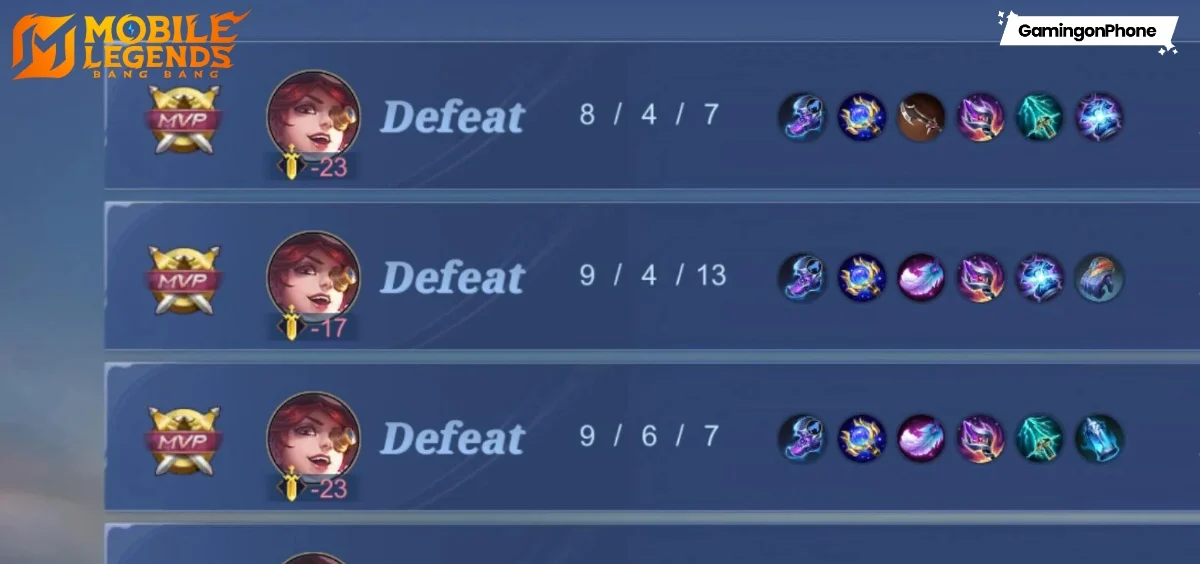
This theory resonates deeply with many, including seasoned solo queue players who recount numerous instances of experiencing significant win streaks abruptly followed by a string of disheartening losses. The pattern often involves a player performing exceptionally well, carrying their team through several matches, only to find themselves in subsequent games paired with allies who exhibit poor decision-making, lack basic map awareness, or simply refuse to communicate. This stark contrast fuels the belief that these aren’t merely random occurrences but rather orchestrated events by an underlying, unseen "Dark System."
The Psychological Underpinnings and Anecdotal Evidence
While lacking concrete data, the "Dark System" theory thrives on powerful psychological phenomena and a wealth of anecdotal evidence shared across various community platforms.
Confirmation Bias and Attribution Error
One of the primary drivers behind the belief in the "Dark System" is confirmation bias. Players who suspect the system is rigged are more likely to notice and remember instances that confirm their belief, while dismissing or forgetting instances that contradict it. A series of good matches might be attributed to personal skill, but a subsequent losing streak is quickly blamed on the "system," rather than on individual mistakes, genuine bad luck, or the skill of the opposing team.
Coupled with this is the attribution error, where individuals tend to attribute their successes to internal factors (their own skill) and their failures to external factors (bad teammates, a "rigged" system). In the high-stakes environment of ranked MLBB, where personal performance is intrinsically linked to team outcome, it’s psychologically easier to externalize blame when things go awry, especially after a period of strong individual performance.
The Echo Chamber of Shared Frustration
The "Dark System" theory gains immense traction in community forums, social media groups, and live streams, effectively creating an echo chamber where shared negative experiences reinforce the belief. When countless players report similar patterns of winning streaks followed by inexplicable losing streaks due to seemingly incompetent or disruptive teammates, it creates a powerful collective narrative. This shared frustration validates individual experiences, making the theory feel more tangible and real, even without official verification.

The "Meme" Heroes: Zilong and Hanabi
The prevalence of specific heroes becoming "memes" within the context of the "Dark System" further illustrates the community’s frustration. Zilong and Hanabi, for instance, are frequently cited as archetypal "Dark System" heroes. While both can be effective in the right hands and circumstances, they are often picked by newer players due to their straightforward kits or by stubborn players unwilling to adapt. When encountered in ranked matches, especially after a win streak, they become symbols of the perceived incompetence or unwillingness to cooperate that the "Dark System" supposedly inflicts upon skilled players. A player seeing multiple Zilong or Hanabi mains in a row after a flawless winning streak might view it as undeniable proof of the system’s machinations. These aren’t just beginners; these are often players who, despite being offered advice or suggestions for team composition, refuse to listen, compounding the frustration.
The "Elo Hell" Experience: Epic, Legend, and Early Mythic
The "Dark System" is most frequently reported in the middle-to-upper tiers of MLBB’s ranked ladder: Epic, Legend, and early Mythic. These ranks represent a critical juncture for many players. In Epic, players are striving to escape the perceived chaos of lower ranks. Legend is often seen as a significant hurdle, and early Mythic is where aspirations for higher competitive play begin to solidify.
These ranks are particularly susceptible to the "Dark System" phenomenon for several reasons:
- Skill Disparity: There can be a wide range of skill levels within these tiers. Players who have grinded their way up with raw mechanics might lack strategic depth, while others might be highly strategic but struggle with execution.
- Player Pool Size: Depending on the region and time of day, the matchmaking system might struggle to find 10 perfectly balanced players, leading to wider skill gaps within teams.
- Increased Stakes: As players climb, the emotional investment in each game increases. A loss feels more impactful, especially after a hard-won streak, making the search for external blame more appealing.
The combination of these factors creates fertile ground for the "Dark System" theory to flourish, transforming what might be random occurrences or genuine skill differences into evidence of an insidious algorithmic plot.
Moonton’s Stance: Silence and Speculation
Perhaps the most defining aspect of the "Dark System" theory is the complete lack of official confirmation or denial from Moonton, the developers of Mobile Legends: Bang Bang. Despite years of discussions, countless forum posts, and viral social media content dedicated to the theory, Moonton has remained conspicuously silent on the matter.
The Absence of Official Commentary
This silence is often interpreted in two primary ways by the community:
- It’s a Myth: If the "Dark System" truly doesn’t exist, Moonton might see no reason to address a baseless rumor. Engaging with such speculation could lend it undeserved credibility or open a Pandora’s box of further conspiracy theories. Their focus might be on promoting the game positively rather than debunking community myths.
- It’s a Secret: Conversely, some believe Moonton’s silence is an implicit acknowledgment of the system’s existence. They argue that revealing such an algorithm would be detrimental to player trust and the game’s competitive integrity. Developers often keep their matchmaking algorithms proprietary for competitive reasons and to prevent exploitation.
General Matchmaking Principles vs. "Dark System"
While Moonton hasn’t addressed the "Dark System" directly, they, like most MOBA developers, employ sophisticated matchmaking algorithms designed to create fair and balanced matches. These systems typically use:
- Matchmaking Rating (MMR) or Elo Rating: A numerical value representing a player’s skill level.
- Win/Loss Ratios: To gauge recent performance.
- Role Preference: Attempting to match players into their preferred roles (though often imperfect).
- Ping and Server Location: To ensure a stable connection for all players.
A common approach for these algorithms is to balance the average MMR of two opposing teams. This means that a highly skilled player with a very high MMR might sometimes be paired with lower-MMR players to bring the team’s average MMR closer to that of the opposing team, which might consist of moderately skilled players. While this is a standard practice to create what the algorithm perceives as a balanced match, it can feel like a "Dark System" to the high-MMR player who suddenly finds themselves with seemingly less competent teammates.
Furthermore, factors beyond the algorithm’s control contribute to perceived imbalance:

- Player Mood/Performance: Even skilled players have off days, experiment with new heroes, or play while distracted.
- Communication Barriers: Language differences or a lack of in-game communication can cripple team coordination.
- Player Pool Size: At certain times or in less populated regions, the system might have a limited pool of players, forcing it to create less ideal matches.
These legitimate complexities of matchmaking, when combined with the psychological biases mentioned earlier, can easily be misinterpreted as an intentional "Dark System" by frustrated players seeking an explanation for their losing streaks.
The Broader Implications for the MLBB Community
The belief in the "Dark System," whether founded or not, carries significant implications for the Mobile Legends: Bang Bang community, affecting player morale, engagement, and the overall game environment.
Erosion of Player Morale and Engagement
Perhaps the most direct impact is on player morale. Believing that an invisible system is actively working against them can lead to feelings of helplessness and injustice. Players might feel that their individual skill and effort are being undermined, leading to burnout and reduced enjoyment. This can translate into players playing less frequently, taking extended breaks, or even abandoning the game altogether, especially if they feel perpetually "stuck" due to perceived algorithmic sabotage. The passion for competitive climbing diminishes when the climb feels unfairly steepened.
Increased Toxicity and Blame Culture
The "Dark System" theory provides a convenient scapegoat for losses. Instead of engaging in self-reflection or constructive criticism, players might immediately attribute a loss to "Dark System teammates" or the "rigged" matchmaking. This fosters a blame culture within the game, leading to increased in-game toxicity, verbal abuse towards teammates, and a general breakdown of positive communication. If players believe their teammates are intentionally imposed upon them by a malevolent system, there’s little incentive to collaborate or empathize. This toxicity can drive away new players and discourage existing ones from solo queueing.
Strain on Developer-Community Relationship
While Moonton has remained silent, the persistence of the "Dark System" theory can strain the relationship between the developers and their player base. A segment of the community feels unheard and unacknowledged, leading to a sense of distrust. This can make players more skeptical of official announcements, updates, and even new features, as they might view everything through the lens of a potentially manipulative system. A healthy relationship relies on transparency and perceived fairness, both of which are challenged by the "Dark System" narrative.
Impact on Competitive Integrity and Strategic Play
For those who aspire to high-level competitive play, the belief in a "Dark System" can undermine the perceived integrity of the ranked ladder. If success is seen as being dictated by an external, arbitrary force rather than pure skill and teamwork, the competitive spirit can wane. Players might become less inclined to theorycraft, practice new heroes, or meticulously analyze their gameplay if they believe the outcome is pre-determined. This can subtly shift focus from genuine self-improvement to simply "playing around" the perceived system, which can be detrimental to skill development and strategic depth.
Navigating the Perceived "Dark System": Practical Strategies for Players
While there’s no guaranteed way to "avoid" a system that may or may not exist, players can adopt strategies to mitigate the frustration and improve their overall experience, regardless of matchmaking quirks. These tips focus on controlling what is within a player’s power: their mindset, their team composition, and their individual performance.
1. Strategic Breaks and Mindset Reset
One of the most crucial pieces of advice is to take a solid break after a few consecutive losses. The phenomenon of "tilt queueing" – continuing to play while angry or frustrated – is a surefire way to exacerbate losing streaks. When tilted, decision-making deteriorates, focus wavers, and communication often becomes aggressive.
- Recognize the Signs: Pay attention to your emotional state. Are you feeling angry, frustrated, or overly critical? These are indicators to step away.
- Short Breaks: Even a 15-30 minute break can help reset your mindset. Step away from the screen, do something else, and return with a clearer head.
- Alternate Game Modes: Instead of forcing ranked games, switch to less stressful modes like Brawl, Classic, or the rotating Arcade modes such as the new Tide Siege. These modes allow for casual play, practice with new heroes, or simply decompress without the pressure of rank points. This helps prevent a winning streak from spiraling into a devastating losing streak.
2. The Power of Team Play: Duo, Trio, and Five-Man Squads
The solo queue experience is where the "Dark System" is most frequently reported, primarily because players have no control over their teammates. The most effective way to counter this perceived randomness is to play with friends or reliable teammates whenever possible.

- Guaranteed Synergy: Playing with a duo, trio, or a full five-man squad ensures better communication, coordinated drafting, and pre-established strategies. You know your teammates’ playstyles, hero pools, and reliability.
- Role Fulfillment: With friends, you can ensure all essential roles (Tank, Support, Jungler, Gold Laner, EXP Laner) are filled by competent players, avoiding crucial gaps in team composition.
- Reduced Variance: While not entirely immune to bad luck, a pre-made team significantly reduces the chance of encountering AFK players, intentional feeders, or those unwilling to cooperate.
- Effective Communication: Voice chat with friends allows for instant calls, rotations, and objective control that are difficult to achieve with random teammates.
Even a trio queue can drastically improve your chances of winning compared to solo queuing, as you control 60% of your team’s composition and coordination.
3. Consistent Personal Performance and Adaptability
Ultimately, the best way to climb the ranks, regardless of matchmaking quirks, is to always give your best and focus on improving your own gameplay.
- Master Multiple Roles and Heroes: Don’t be a one-trick pony. Being proficient in at least 2-3 heroes per role (especially your main and secondary roles) allows you to adapt to team compositions, counter-picks, and fill gaps.
- Map Awareness and Objective Control: Beyond just getting kills, focus on map awareness, securing objectives (Turtle, Lord, Turrets), and understanding wave management. These macro plays often win games more reliably than individual heroics.
- Positive Attitude and Shot-Calling: Even with difficult teammates, maintaining a positive attitude and attempting clear, concise shot-calling can sometimes turn the tide. Leading by example can be contagious.
- Leverage MVP and Protection Points: Performing well, even in a losing effort, can earn you MVP points, protection points, or bonus star points for a comeback. These rewards, while small, still contribute to your overall progression and can soften the blow of a loss. Focusing on your own performance means you are always improving, making you a stronger player capable of carrying more consistently.
4. Emotional Regulation and Avoiding Tilt
Related to taking breaks, avoiding playing when you are already angry or tilted is paramount. Your emotional state directly impacts your performance.
- Self-Awareness: Before queuing for a ranked match, take a moment to assess your mood. If you’re stressed from work, an argument, or a previous bad game, it’s not the time for ranked.
- Mindfulness Techniques: Simple techniques like deep breathing exercises can help calm your nerves.
- Focus on the Process: Instead of focusing solely on winning or losing, focus on making good decisions, executing plays correctly, and learning from each game.
- The Downward Spiral: Playing while angry often leads to reckless plays, blaming teammates prematurely, and making irrational decisions that actively throw the match. This then reinforces the "Dark System" belief, creating a vicious cycle.
Instead of ranked, channel that competitive energy into Classic or Arcade modes, where the stakes are lower, and you can simply enjoy the game or practice without the added pressure.
Final Thoughts
The "Dark System" in Mobile Legends: Bang Bang remains a potent and widely discussed community theory. While Moonton has offered no official confirmation, the anecdotal evidence and psychological factors contributing to its belief are undeniably powerful for many players. It functions as a compelling narrative to explain the often-frustrating inconsistencies and perceived unfairness inherent in competitive online matchmaking.
Whether it’s a genuine, hidden algorithm designed to manipulate player progression or simply a collective misinterpretation of standard matchmaking complexities, its impact on player morale, community dynamics, and overall game enjoyment is undeniable. From experiencing multiple "Zilong mains" in a row after a triumphant win streak to battling seemingly uncooperative teammates, the perceived reality of the "Dark System" is very real for those who experience it.
Ultimately, players must navigate the competitive landscape of MLBB with a focus on what they can control. By prioritizing mental well-being, fostering team play, consistently striving for personal improvement, and regulating emotions, players can enhance their experience and climb the ranks, regardless of the perceived machinations of the "Dark System." The journey in Mobile Legends: Bang Bang, like any competitive endeavor, is as much about resilience and self-mastery as it is about in-game skill.












No comments yet. Be the first to join the conversation!