Main Facts:
Forza Horizon 6, the latest installment in Playground Games’ acclaimed open-world racing series, arrives with a familiar roar, transporting players to a stunning, meticulously crafted rendition of Japan. While undeniably beautiful and brimming with content, the game largely adheres to the established formula that has made its predecessors so successful, offering an experience that prioritizes broad appeal and iterative refinement over groundbreaking innovation. After dozens of hours navigating its winding roads and bustling cityscapes, it becomes clear that Horizon 6 is content to stay the course, delivering a polished, expansive, and undeniably fun car-collecting simulator, albeit one that may leave those yearning for a significant departure wanting more.
Chronology:
The journey into Forza Horizon 6 begins with the series’ signature confident flourish. From the moment the game loads, players are greeted by an opening song carefully selected to encapsulate the vibrant, festival-like atmosphere the series is known for. This immediate auditory cue is coupled with the iconic main menu, featuring dynamic, looping shots of desirable automobiles and the energetic crowds that surround them – a comforting visual for long-time fans.
Upon hitting ‘play’, players are instantly thrust into an exhilarating introductory drive. This initial sequence serves as a grand tour, showcasing a small but diverse segment of the game’s new headline location: a captivating blend of downtown Tokyo’s neon-lit urban sprawl and the serene, picturesque rural areas that surround it. Within minutes, the game subtly outlines the loose competitive structure of the Horizon Festival, culminating in the player’s first meaningful decision: the selection of their initial vehicle. This swift immersion, a hallmark of the series, ensures players are quickly engaged and eager to explore the vast world laid out before them.
Supporting Data:
The core philosophy of Forza Horizon 6 quickly reveals itself: it is, first and foremost, a car-collecting driving game, rather than a hardcore racing simulator in the vein of a Gran Turismo or even some Need for Speed titles. This distinction is crucial. The game rarely demands mastery of intricate circuit layouts, nor does it necessitate obsessive tuning to conquer challenging events. Should a race prove too difficult, the path to victory is often simplified: players can easily adjust AI difficulty settings, or, more engagingly, leverage the extensive car acquisition and customization systems. Investing in a more powerful vehicle, or downloading community-created tunes (a feature that, while occasionally limited pre-launch, is a staple of the series), often provides a straightforward solution to any perceived competitive hurdles. This accessibility ensures a broad player base can always find a comfortable level of engagement.
The game’s progression is bifurcated into two parallel, yet intertwined, systems designed to encourage exploration and continuous engagement. The first is the familiar Wristband system, which gates access to increasingly prestigious events. Participation in any Festival race contributes points towards filling a progress bar, with significant bonuses awarded for podium finishes. Early tiers are forgiving, allowing players to advance even with moderate success. Complementing traditional races are the ubiquitous PR Stunts, which offer an alternative means of earning points. These include smashing XP Boards strategically placed throughout the environment, challenging speed cameras, and attempting to set records in speed or drift zones. The sheer density of these activities ensures there’s always something to do, even if their predictability is a double-edged sword for veteran players.
Running concurrently is Discover Japan, a distinct progression track focused on showcasing the diversity of the game’s ten regions and introducing a cast of thinly sketched characters who guide players through unique experiences. This system is where Forza Horizon 6 truly allows its new setting to shine, offering activities that diverge from traditional circuit racing. Players might find themselves delivering food packages through bustling city streets, rigorously testing freshly restored classic cars on secluded mountain passes, or leading convoys on scenic tours across the landscape. These activities are generally more relaxed, prioritizing the joy of driving through stunning environments over competitive timings, and are incredibly effective at fulfilling the fantasy of experiencing exotic locales in dream cars.
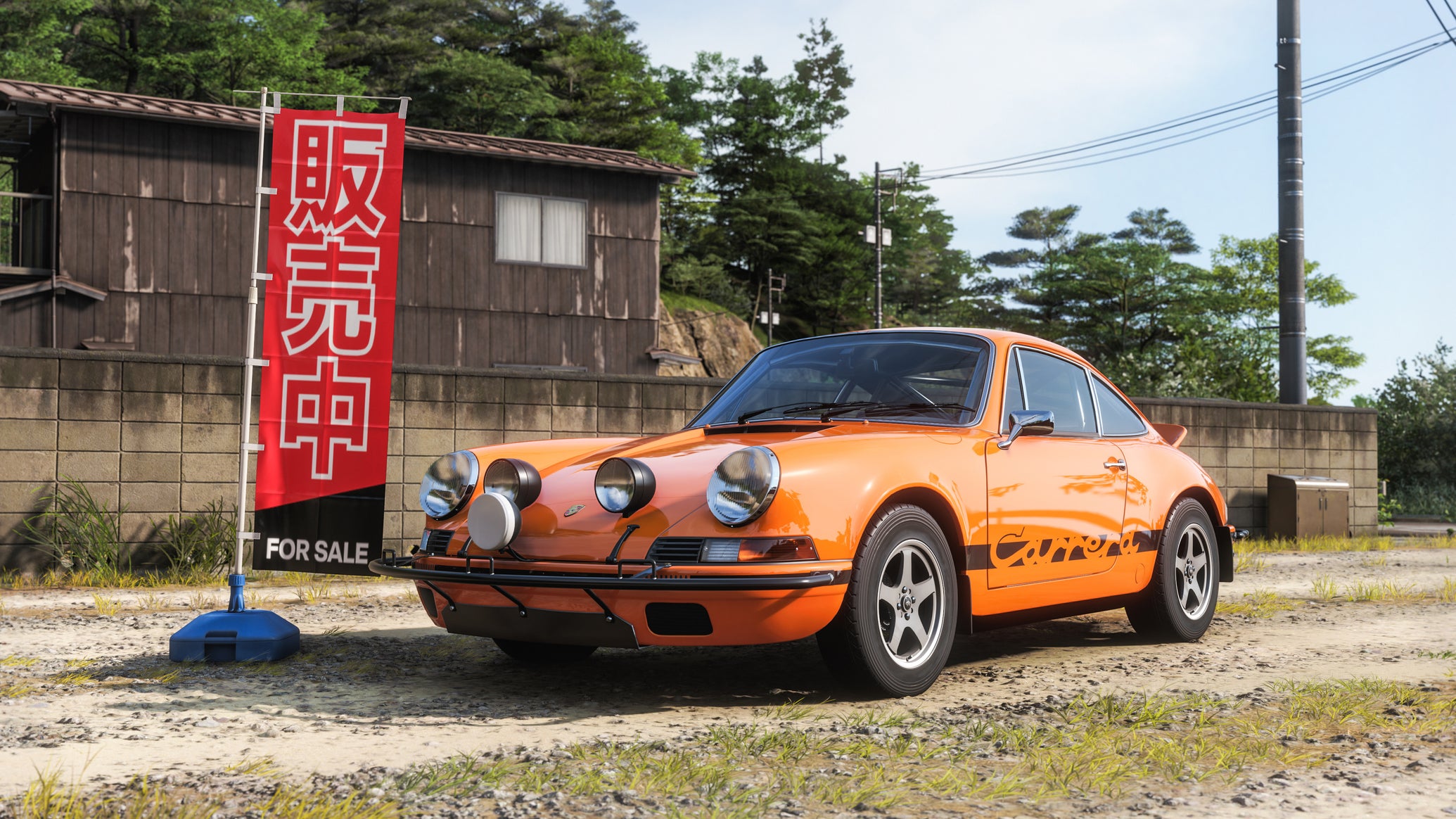
Discover Japan is also home to more distinct racing styles, such as the challenging Touge events, which pit drivers against winding mountain roads, and the exhilarating street races that weave through urban environments, often at night, creating a heightened sense of speed and danger. The system also cleverly reimagines classic Horizon features. The beloved Barn Finds, where players hunt for derelict classic cars based on vague map clues, find a new analogue in Treasure Cars. Instead of a radius on a map, players are presented with a photograph of a car set against specific landmarks, requiring keen observation and geographical knowledge to pinpoint the exact location. While equally rewarding, the Treasure Cars often felt slightly easier to locate than the notoriously hidden barns, whose dense forest environments could often make them frustratingly elusive.
The game’s user interface and menu structure further exemplify its commitment to player comfort. Upon first launch, the menus are intentionally streamlined, with many activity tiles locked. This gradual unlocking mechanism, a smart design choice iterated upon from previous titles, prevents new players from being overwhelmed by the sheer volume of content available. For seasoned fans, the slow drip-feed of new challenges feels less like a restriction and more like a carefully paced unveiling, allowing for a comfortable re-acclimatization to the Horizon ecosystem.

Among the new activities, Horizon Rush events stand out as a genuine highlight. These bespoke challenges take place on makeshift circuits – essentially elaborate obstacle courses characterized by sharp corners, narrow passages, and a deliberate lack of explicit guidance, forcing players to react instinctively. Unlike most other events where car choice and tuning can heavily influence performance, Rush races often feature pre-determined vehicles, forcing players to truly understand and adapt to a specific car’s handling characteristics. These time-trial based events demand a level of precision and focus rarely seen elsewhere in Horizon 6, making them a refreshing and genuinely demanding test of skill.
Visually, Forza Horizon 6 is a technical marvel, particularly when leveraging the power of ray tracing. In areas rich with natural detail and lush foliage, the game achieves an almost photorealistic quality. Reflections on wet roads, the interplay of light and shadow, and the overall fidelity of environmental details elevate the experience, making the world feel incredibly tangible and immersive. It’s in these moments, especially during a relaxed cruise through a sun-dappled forest or a rainy urban street, that the line between a video game and a real-world photograph blurs, showcasing the significant advancements in graphical rendering. This visual splendor, while demanding on hardware, adds another layer to the game’s escapist fantasy.
Beyond raw graphical power, the game also champions accessibility. While many options cater to specific needs, a particularly useful feature for all players is the proximity radar. This 360-degree visual indicator warns players of nearby vehicles, proving invaluable in close-quarter racing, especially when attempting tactical blocks or navigating dense traffic. Its customizable nature ensures it can be tweaked to suit individual preferences, making it a powerful tool, particularly for those who prefer the immersive challenge of a first-person cockpit view. This commitment to inclusivity underscores a broader industry trend towards making games enjoyable for the widest possible audience.
However, despite its many strengths, Forza Horizon 6 does not entirely escape some long-standing frustrations inherent to the series. The inconsistent AI behavior remains a contentious point. Players might find themselves effortlessly pulling away from opponents by the third turn in one race, only to face seemingly unbeatable lead cars in the next, regardless of car choice or driving skill. The AI can swing wildly between being overly aggressive, reminiscent of a chaotic online lobby, and exhibiting flawless, almost robotic precision on the racing line. This unpredictability, while sometimes adding an unexpected layer of challenge, often feels arbitrary, leading to moments of genuine frustration where success or failure feels less tied to player skill and more to the capricious whims of the game’s difficulty scaling.

Official Responses (Inferred Design Philosophy):
Playground Games’ approach with Forza Horizon 6 appears to be a deliberate and calculated strategy of refinement rather than revolution. There’s no explicit "official response" within a review, but the game’s design speaks volumes about the developer’s philosophy. The decision to maintain the core gameplay loop, progression systems, and overall "feel" of the series suggests a strong belief in the existing formula’s success. This iterative development path likely stems from several factors:
- Mass Appeal: The Horizon series has cultivated an enormous and dedicated fanbase precisely because of its accessible, joyous, and non-punishing nature. Deviating too far could alienate this core audience.
- Game Pass Strategy: As a flagship title for Xbox Game Pass, ensuring a consistent, high-quality, and broadly appealing experience is paramount to attracting and retaining subscribers. Horizon 6 fits perfectly into this "comfort food" role.
- Refinement Over Reinvention: Rather than overhaul established mechanics, Playground Games has focused on polishing what works, leveraging new hardware capabilities (like ray tracing) to enhance immersion, and introducing smaller, well-integrated features like Horizon Rush and Treasure Cars that add variety without disrupting the fundamental experience. The "diminishing edge" isn’t a flaw in this context, but a deliberate choice to ensure maximum enjoyment for the widest demographic. The goal is to perfect the existing fantasy, not invent a new one.
Implications:
Forza Horizon 6’s iterative nature carries significant implications for both the series and the wider racing game genre. For the series itself, it solidifies its position as the undisputed king of the open-world driving fantasy. It reinforces the expectation that future installments will continue to deliver stunning new locations, an ever-expanding roster of vehicles, and a vast array of activities, all built upon a foundation of approachable, enjoyable gameplay. The question, however, remains: how long can this iterative approach sustain itself before players begin to crave more substantial innovation? The absence of truly revolutionary mechanics might, over time, lead to a sense of déjà vu, especially for those who have played every entry since the original.
For the genre, Forza Horizon 6 sets an incredibly high bar for visual fidelity, world design, and accessibility. Its success reinforces the viability of the "driving game" niche, distinct from hardcore racing simulators. It demonstrates that there’s a huge audience for games that prioritize the sheer joy of driving and car culture over rigorous competitive challenge. However, it also highlights a potential stagnation at the very top of the genre, where the biggest players might feel less pressure to innovate drastically, instead relying on tried-and-true formulas.
Ultimately, Forza Horizon 6 is a triumph of polish and refinement. For those who come to the Horizon Festival seeking an unparalleled space to live out their automotive fantasies – collecting hundreds of cars, customizing them endlessly, and driving them through breathtaking, real-world-inspired locations – there is simply no game that does it better. It’s a beautifully crafted, endlessly engaging experience that delivers exactly what its predecessors promised. However, for players who were hoping for a departure from the familiar, a bolder vision, or a greater degree of rewarding friction and challenge, Forza Horizon 6’s steadfast adherence to its winning formula means they might need to look elsewhere for their next adrenaline fix. It is, by all measures, an excellent game, but one that firmly prioritizes comfort over cutting-edge.

Reviewed on PC, code provided by publisher.