

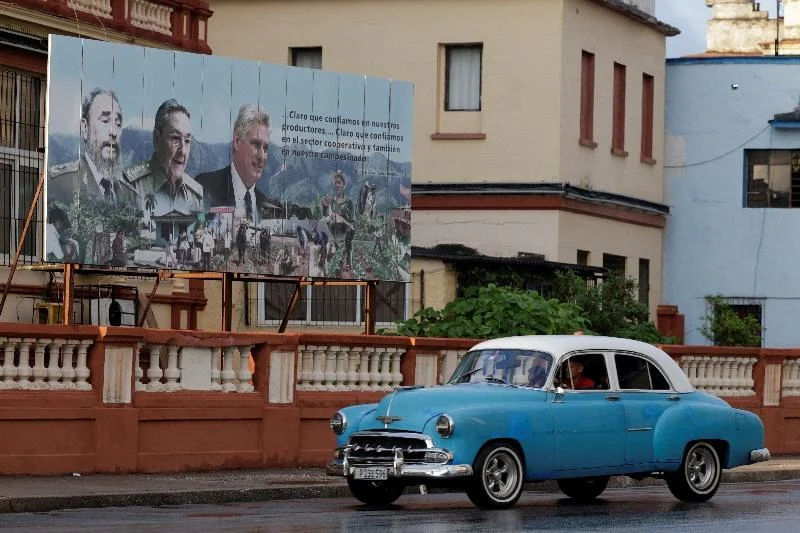
HAVANA/WASHINGTON — The long-standing, volatile relationship between the United States and Cuba has reached a perilous new juncture. Reports emerging from Washington suggest that the U.S. Department of Justice is preparing to indict Raul Castro, the 94-year-old former president and revolutionary icon, in connection with the 1996 downing of two humanitarian aircraft. This development, occurring as Cuba grapples with its most debilitating economic and fuel crisis in decades, threatens to dismantle the remaining remnants of bilateral diplomacy and push the two nations into an era of unprecedented hostility.
The Core Conflict: A Legacy of Aerial Aggression
The potential indictment centers on the February 1996 shootdown of two civilian planes operated by Brothers to the Rescue, a humanitarian group based in Miami that flew missions to spot and assist Cuban rafters fleeing the island.
When the Cuban military intercepted and destroyed the planes over the Florida Straits, the incident sparked international outrage. Cuba maintained that the aircraft had violated its sovereign airspace, justifying the strike as a necessary defensive action. However, the International Civil Aviation Organization (ICAO) conducted an exhaustive investigation, ultimately concluding that the attack took place in international waters.
For decades, the incident remained a festering wound in U.S.-Cuba relations. While Fidel Castro famously stated that the military acted on "standing orders" to protect the nation’s borders, he claimed that his brother, Raul—who served as Minister of the Armed Forces at the time—did not issue a direct command to fire on the specific planes. The U.S. government now appears prepared to challenge that narrative, treating the incident not as a defensive skirmish, but as a criminal act of aggression.
Chronology of a Deteriorating Relationship
The path to this moment has been paved with six decades of ideological warfare and intermittent diplomatic thawing.
- 1959: Fidel Castro’s revolution topples the U.S.-backed government of Fulgencio Batista, triggering a rapid transition toward a socialist state and a strategic alliance with the Soviet Union.
- 1960–1961: The U.S. imposes the first trade embargoes, followed by the failed Bay of Pigs invasion and the subsequent formalization of the total economic blockade.
- 1996: The Brothers to the Rescue incident occurs, leading to the enactment of the Helms-Burton Act, which tightened the blockade.
- 2008–2018: Raul Castro assumes the presidency, overseeing a period of slow, controlled economic liberalization and a historic, albeit brief, rapprochement with the Obama administration.
- 2019–2026: The Trump administration pivots back to a "maximum pressure" campaign, systematically dismantling engagement policies, increasing sanctions, and enforcing what many observers describe as a de facto fuel blockade.
Supporting Data: An Island Under Siege
The current crisis in Cuba is multifaceted. Severe fuel shortages have paralyzed public transportation, disrupted the distribution of food and medicine, and crippled the tourism industry, which serves as a vital pillar of the island’s foreign exchange earnings.
Economic analysts note that the pressure campaign has reached a critical threshold. By targeting shipping lines and energy providers, the U.S. has effectively cut off the island’s access to the petroleum necessary for daily life. The result is a population struggling with systemic scarcity. Foreign companies, including Canadian miner Sherritt International, have been forced to reconsider their operations or exit the Cuban market entirely, fearing the extraterritorial reach of U.S. sanctions.
Despite the economic hardship, the Cuban government remains unyielding. During a recent meeting of BRICS foreign ministers, Bruno Rodriguez, Cuba’s Foreign Minister, characterized the U.S. pressure as an infringement on national sovereignty. "Despite the embargo, sanctions, and threats of the use of force, Cuba continues on a path of sovereignty towards its socialist development," Rodriguez stated.
Official Responses and Diplomatic Fallout
The threat of an indictment against a figure as significant as Raul Castro—who remains the ideological heartbeat of the Cuban Revolution despite his formal retirement from power—has elicited a range of responses from defiance to deep concern.
The Washington Perspective
In Washington, the narrative is framed as a matter of justice and the rule of law. The Trump administration has drawn parallels between the potential prosecution of Raul Castro and the recent criminal charges brought against Venezuelan leader Nicolas Maduro. In the latter case, the U.S. government executed what it termed a "law enforcement operation" to apprehend the leader, a move that critics argue serves as a blueprint for potential regime-change operations in Havana.
The Havana Perspective
In Havana, the public reaction is a mix of fatigue and patriotic indignation. For many, the prospect of the U.S. prosecuting a foundational figure like Raul Castro is viewed as an existential threat to the nation itself.
"Cubans must always keep moving forward," said Sonia Torres, 59, a teacher in Havana. "If they try to process Raul, we will defend Cuba with sticks and rocks if we have to."
Others, like 45-year-old Eliecer Diaz, echo the government’s historical stance: "That (1996) was an invasion of our sovereignty, and you have to defend yourself. If they are now thinking of prosecuting him, I think that is a profound injustice."
Implications: The End of Diplomacy?
Experts on U.S.-Cuba relations suggest that an indictment would be a point of no return. Peter Kornbluh, a renowned author and researcher on U.S.-Cuba diplomatic history, argues that the move represents a "diplomatic endpoint."
"This is an ultimatum: it is do-or-die time," Kornbluh explained. "By filing these charges, the U.S. is essentially providing a ‘fig leaf of legality’ for any future military operations, whether that entails an attempt to seize Raul Castro or a justification for more aggressive kinetic action."
The implications are dire. Should the U.S. attempt to enforce such an indictment, the regional instability could be catastrophic. The diplomatic channels, already thin, would likely sever entirely, leading to a total blackout in communication. This could exacerbate the humanitarian crisis, as international aid organizations would find it increasingly difficult to navigate the legal and political minefield created by the U.S. sanctions regime.
Furthermore, the move risks isolating the United States within the hemisphere. Many Latin American nations have expressed reservations about the extraterritorial application of U.S. law, viewing it as a return to the "Big Stick" policy of the early 20th century. By moving against a revolutionary icon, the U.S. may galvanize internal support for the Cuban government, as the populace rallies around a symbol of national identity in the face of what is perceived as foreign bullying.
A Watershed Moment
As 2026 progresses, the world watches to see if the U.S. will move forward with the indictment. If they do, it will signal that the era of normalized relations is officially buried. The decision will not only affect the future of the Castro family but will also determine the fate of millions of Cubans caught in the middle of a geopolitical struggle that has outlived the Cold War. Whether the goal is justice for the 1996 shootdown or a calculated push for regime change, the consequences of this decision are certain to reshape the Caribbean’s political landscape for decades to come.
© Thomson Reuters 2026. All rights reserved.











No comments yet. Be the first to join the conversation!