

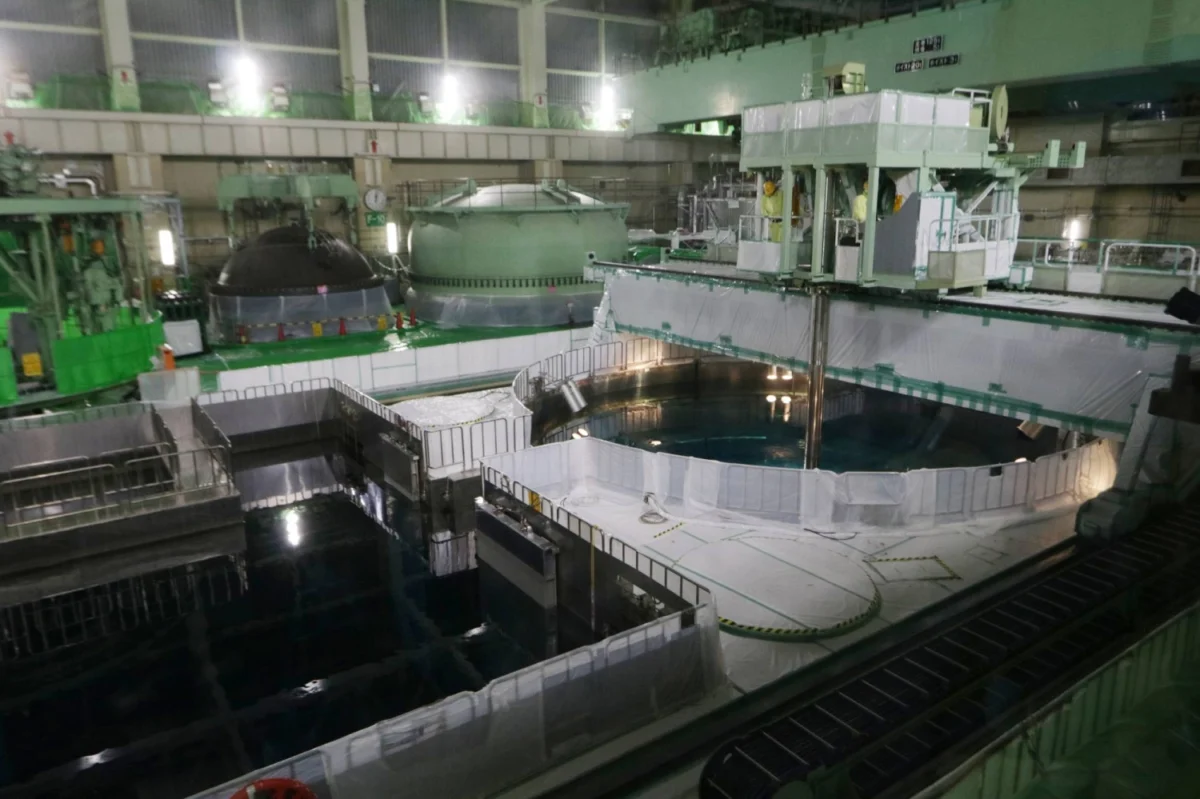
SENDAI — Tohoku Electric Power Co. announced a temporary suspension of operations at the No. 2 reactor of its Onagawa nuclear power plant in Miyagi Prefecture late Friday. The decision to halt the reactor comes in response to the detection of a localized steam leak within the turbine building, an incident that has prompted an immediate investigation by both the utility operator and national nuclear safety regulators.
The development marks a significant setback for the facility, which had only recently returned to the grid following a rigorous period of maintenance and safety upgrades. While officials have stressed that the incident presents no immediate threat to public health or the surrounding environment, the timing of the leak—occurring mere days after the reactor resumed power generation—has triggered renewed scrutiny regarding the operational readiness of the plant.
Main Facts: The Nature of the Incident
At approximately 5:10 p.m. on Friday, a routine inspection patrol conducted by Tohoku Electric Power staff identified a steam leak originating from a sump pit in the basement of the reactor’s turbine building. The sump is designed to collect wastewater generated by various pieces of plant equipment.
Upon discovery, plant technicians attempted to isolate the source of the leak by tightening the valve associated with the sump. However, the steam discharge persisted, forcing management to initiate a controlled shutdown of the reactor.
According to preliminary data released by the utility company, the radioactivity levels detected in the water collected on the basement floor were negligible, measured at approximately one-thousandth of the government’s mandatory reporting threshold. Tohoku Electric Power emphasized that the steam was confined to the building’s containment area and that there were no releases into the external atmosphere or the surrounding maritime environment.
Crucially, the company confirmed that the incident was unrelated to the seismic activity recorded off the coast of Miyagi Prefecture later that same evening. The reactor’s automated safety systems were not triggered by the earthquake, and the manual shutdown was entirely precautionary.
Chronology of Events
To understand the scope of the incident, it is necessary to examine the timeline of the reactor’s recent operational history:
- Pre-Restart Phase: The No. 2 reactor had been undergoing an extended period of periodic inspection and maintenance. This phase is standard protocol for Japanese nuclear facilities, involving rigorous testing of structural integrity, cooling systems, and containment vessel monitoring.
- Monday: The reactor was officially restarted following the successful completion of the inspection period. The restart was a milestone for Tohoku Electric Power, representing the facility’s return to the national energy supply chain.
- Thursday Night: The facility reached a critical juncture, successfully resuming power generation. Engineers had begun the ramp-up process toward full commercial operations, which were slated for early June.
- Friday, 5:10 p.m.: A patrolling technician observed steam escaping from the basement sump in the turbine building.
- Friday, Evening: After attempts to mitigate the leak via valve adjustment failed, the company made the decision to halt the reactor to ensure the safety of personnel and the structural integrity of the plant.
- Friday, Late Night: A separate seismic event occurred off the coast of Miyagi. Tohoku Electric Power confirmed that the reactor was already in the process of being secured and was unaffected by the tremors.
Supporting Data and Technical Context
The Onagawa plant has long been a focal point of Japan’s nuclear energy policy. Located in the northern prefecture of Miyagi, the facility is situated in a region that was devastated by the 2011 Great East Japan Earthquake. In the aftermath of that disaster, Onagawa underwent extensive safety reinforcements, including the construction of a 29-meter-high seawall—one of the tallest in Japan—and the installation of upgraded emergency power systems.
The sump in question is part of the plant’s secondary cooling cycle, which handles steam that has passed through the turbines. While this steam is technically categorized as "radioactive" due to its proximity to the reactor core, it is distinct from the primary coolant loop. The low radioactivity levels recorded by the utility confirm that the leak did not involve primary coolant water, which would have contained significantly higher concentrations of radioactive isotopes.
Regulatory Thresholds
In Japan, the Nuclear Regulation Authority (NRA) mandates strict reporting thresholds for any radioactive discharge. The fact that the detected level was one-thousandth of the reporting limit serves as a critical data point for the utility company’s argument that the leak was a mechanical failure rather than a radiological incident. However, the NRA is expected to launch an independent review to determine why the valve failed to seal correctly and whether the steam leak indicates an underlying material fatigue issue in the piping infrastructure.
Official Responses and Stakeholder Reaction
Tohoku Electric Power issued a formal apology to the local community and stakeholders, expressing regret for the disruption caused by the suspension. In a press conference held Saturday morning, a spokesperson for the company stated: "Our priority remains the safety of the local residents and our employees. While the radioactivity levels were well within safety margins, we believe that a full investigation into the mechanical integrity of the sump valve is the only responsible course of action."
The Miyagi Prefectural government has also stepped in, demanding a detailed report on the cause of the leak. Local officials have expressed concern over the "reputational damage" caused by repeated interruptions at the plant, which has been a contentious subject since the 2011 disaster.
The Nuclear Regulation Authority (NRA) has sent a team of inspectors to the site to oversee the troubleshooting process. Their investigation will focus on whether the valve failure was an isolated mechanical defect or a result of improper maintenance procedures during the recent inspection cycle.
Implications for Japan’s Nuclear Strategy
The incident at Onagawa occurs at a delicate time for Japan’s energy policy. The national government has been pushing to restart idled nuclear reactors to reduce dependence on imported fossil fuels and to meet aggressive carbon neutrality targets by 2050.
1. Public Trust and Social License
The most immediate implication is the challenge to public trust. Even minor incidents at nuclear facilities are amplified by the collective memory of the Fukushima Daiichi accident. Every time a reactor is halted due to an "unexpected" leak, the narrative of "nuclear safety" is challenged, making it harder for the government to gain support from local municipalities for continued operations.
2. Operational Costs and Financial Impact
For Tohoku Electric Power, the financial implications are significant. The delay in achieving full commercial operations means that the capital invested in the recent maintenance and upgrade cycle will not yield returns as quickly as planned. The company must now absorb the costs of an unscheduled shutdown and the subsequent engineering labor required to replace or repair the faulty valves.
3. Engineering and Maintenance Standards
The failure of a valve immediately after a comprehensive maintenance shutdown raises questions about the thoroughness of the inspection protocols. If the valve appeared functional during the testing phase but failed shortly after operation began, it may suggest that the testing conditions did not adequately simulate the pressures and temperatures of a live operational environment. The utility will likely face pressure to implement more rigorous stress testing on all peripheral valves and piping components.
4. Energy Security
While the Onagawa No. 2 reactor is only one unit in a larger national fleet, the intermittency of nuclear power in Japan has been a chronic issue. The government is currently managing a delicate balance between energy security and public safety. If this incident leads to a prolonged suspension, it could force the grid to rely more heavily on thermal power plants, which are currently being squeezed by high global fuel costs and international carbon reduction commitments.
Looking Ahead: The Path to Remediation
As the dust settles on the immediate response, the focus shifts to the technical repair phase. Tohoku Electric Power has announced that it will perform a complete disassembly and inspection of the affected valve and the associated sump pump system.
The company has not provided a firm date for when the reactor will attempt to restart. A spokesperson noted that the restart will only occur once the NRA is satisfied with the corrective measures and the company can guarantee the reliability of the system under operational load.
For the residents of Miyagi, the incident is a reminder that the post-2011 "new era" of nuclear safety is not without its challenges. The plant, which was once hailed as a model for disaster resilience, now faces the more mundane but equally critical test of operational excellence. Whether this event is viewed as a minor technical glitch or a systemic failure will depend entirely on the transparency and thoroughness of the investigation that follows.
In the coming weeks, the industry will watch closely. The incident serves as a microcosm of the broader challenges facing nuclear energy in the 21st century: the difficulty of maintaining aging infrastructure, the necessity of absolute precision, and the unforgiving nature of public scrutiny in the wake of past failures. For now, the No. 2 reactor at Onagawa remains cold, its future once again in the hands of engineers and regulators.












No comments yet. Be the first to join the conversation!