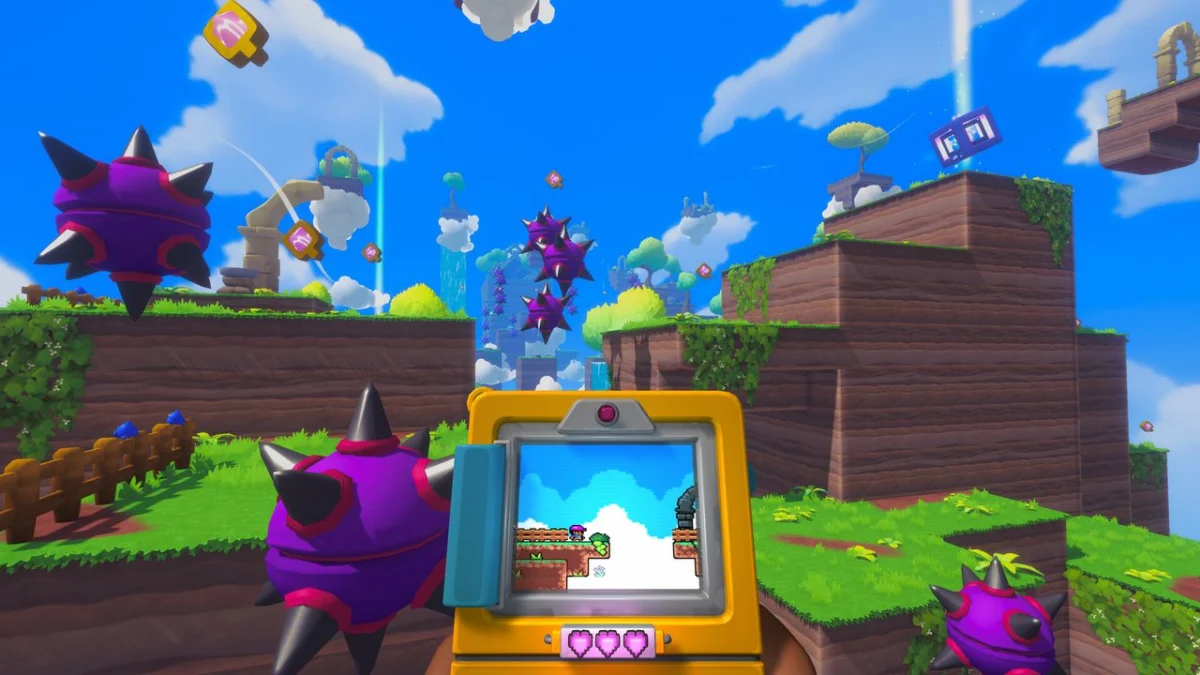
In the landscape of modern independent gaming, the most compelling innovations often arrive not through sheer graphical fidelity, but through high-concept mechanical daring. Every so often, a title emerges that challenges our fundamental understanding of how a player interacts with a virtual space. Screenbound, the latest project from publisher and developer Crescent Moon Games, is precisely that: a "5D" odyssey that tasks players with navigating a 3D world while simultaneously controlling a 2D platformer on a handheld device that reflects the environment around them.
Since its initial unveiling in 2024, Screenbound has captured the imagination of the gaming community, turning a 28-second viral trailer into one of the most anticipated experiments in recent memory. By bridging the gap between retro nostalgia and modern technical ambition, the game is set to redefine the boundaries of spatial awareness in gaming.
The Genesis: From Concept to Co-Development
When the first teasers for Screenbound hit social media, the reaction was immediate and visceral. The concept was elegant in its audacity: a first-person 3D adventure where the player holds a Game Boy-inspired handheld console (the "Qboy"). The screen on this device mirrors the immediate 3D surroundings, rendering them as a 2D platforming level. To move forward, the player must juggle the spatial navigation of the 3D world with the precise, side-scrolling platforming mechanics of the 2D version.
However, as is often the case with high-concept indie prototypes, the initial reveal was more of a "proof of concept" than a fully realized game. Translating such a complex mechanical interplay into a cohesive, playable experience required more than just creative vision—it required seasoned technical expertise.
This is where Radical Forge, a studio renowned for its prowess in indie co-development, entered the fray. Known for their work on chaotic multiplayer hits like Gang Beasts and various Vampire Survivors spin-offs, the team at Radical Forge was tasked with turning a "bare bones" prototype into a functional reality.
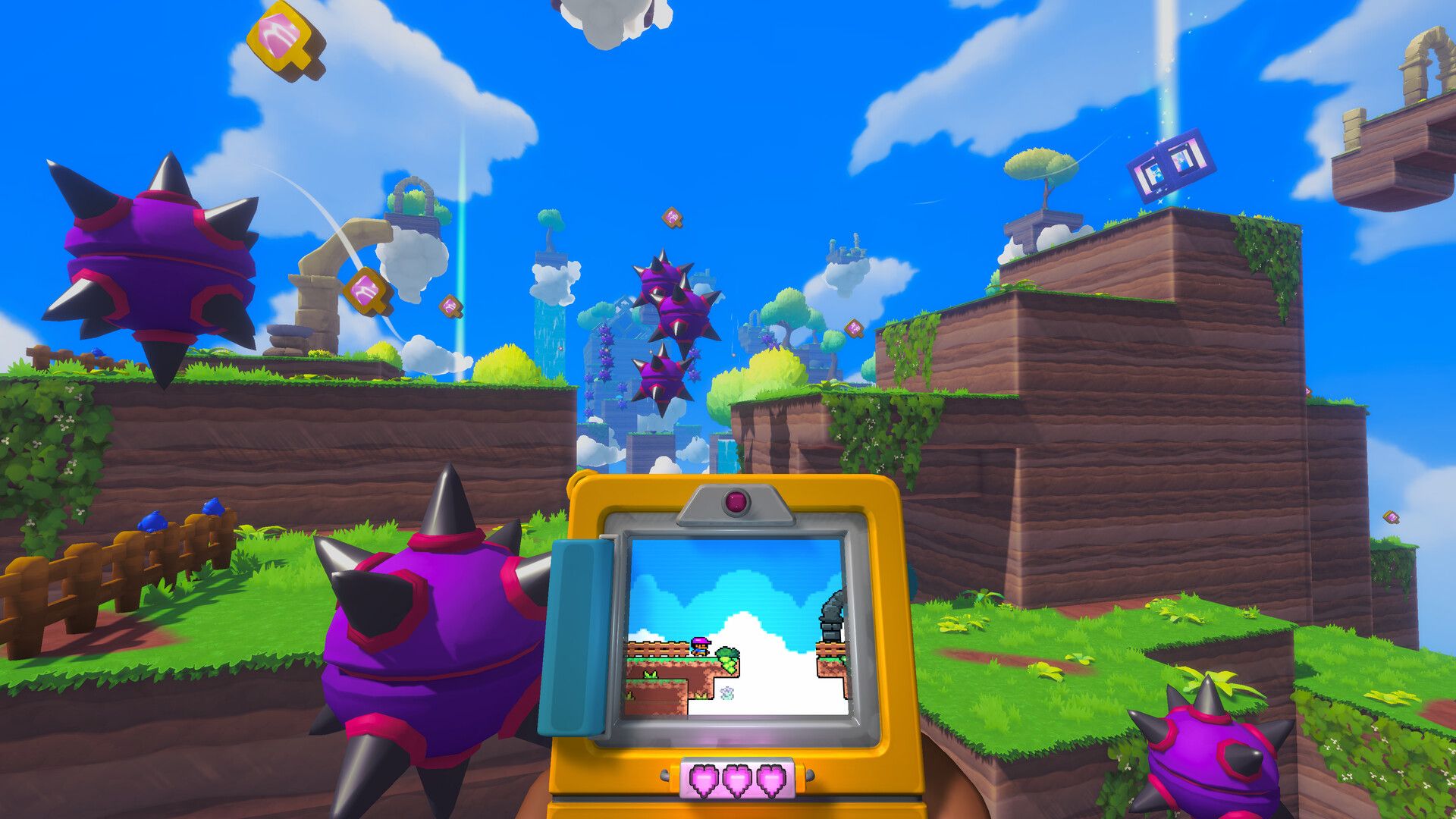
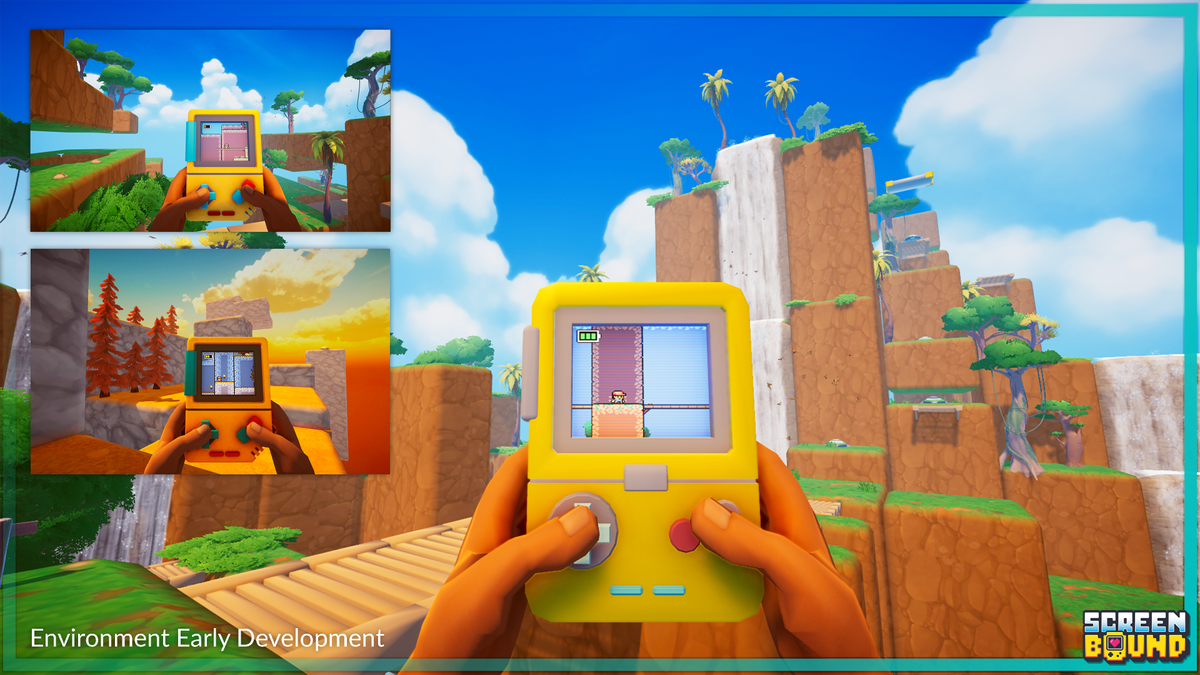
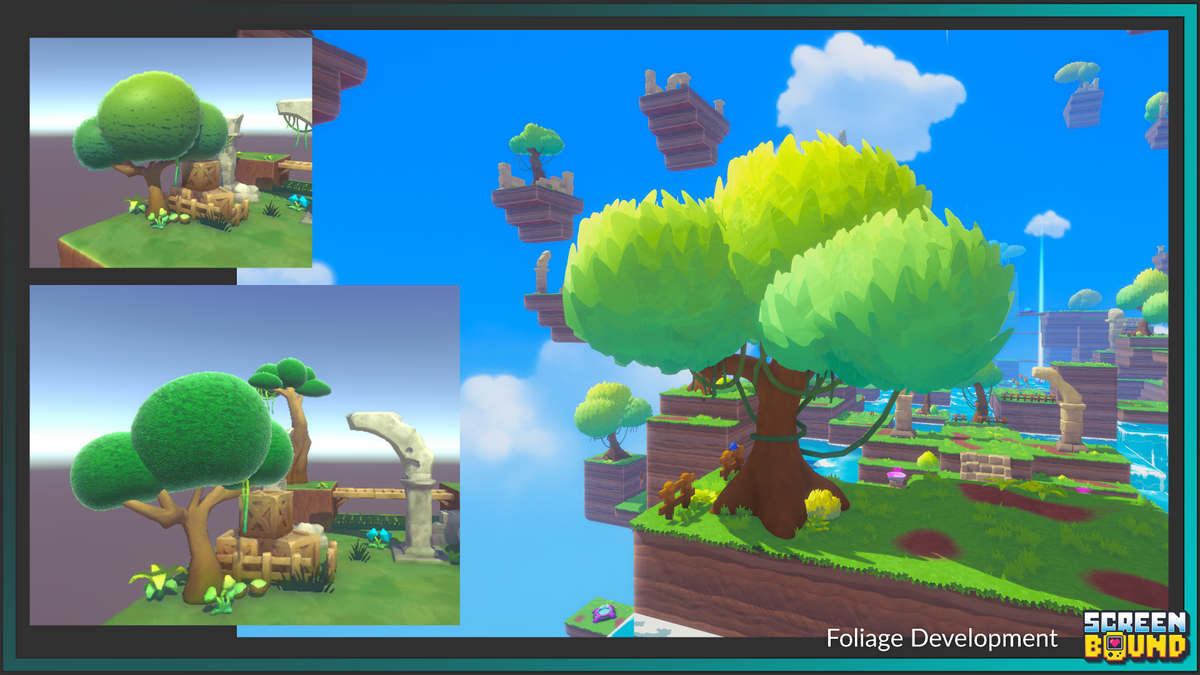
"A lot of it was just mockups with very basic artwork that used a lot of asset packs," explains Lyra Owen, lead tech artist at Radical Forge. "When we got hold of it, we started again in a lot of respects, especially from the 3D side where we redeveloped how the terrain system works. We remade all the foliage. Back then, everything was very much just blocky and smooth."
Chronology of Development: Rebuilding the Foundation
The development cycle of Screenbound has been a lesson in iterative design. The early prototype relied heavily on placeholder assets, creating an aesthetic that felt somewhat derivative of the "blocky" style popularized by Minecraft. To achieve the desired level of depth and polish, the team had to pivot toward a more modern design language.
Drawing inspiration from vibrant 3D platformers like the Mario series—specifically the terrain design seen in Mario + Rabbids—the team began to refine the 3D world. Simultaneously, they had to tackle the monumental task of the 2D layer. They enlisted the skills of pixel artist Daniel Cossaboon to craft the visual identity of the Qboy’s display, ensuring it felt authentic to the 80s and 90s era of handheld gaming while remaining distinct enough to avoid being a mere parody.
The technical challenge was twofold: how to create a 3D environment that feels organic, and how to proceduralize a 2D level that maintains parity with that environment. "We found that procedural generation was the best way to get parity between the two worlds," Owen notes. "A lot of the procedural systems had to be redone and restarted to ensure that when you move in 3D, the 2D world understands its own boundaries and constraints."
The Logic of 5D: Making 2D Work in 3D
The term "5D" used by the developers isn’t just a marketing gimmick; it refers to the complexity of managing two distinct dimensional planes of gameplay simultaneously. The practical solution for this was the implementation of "Z-depth layers."
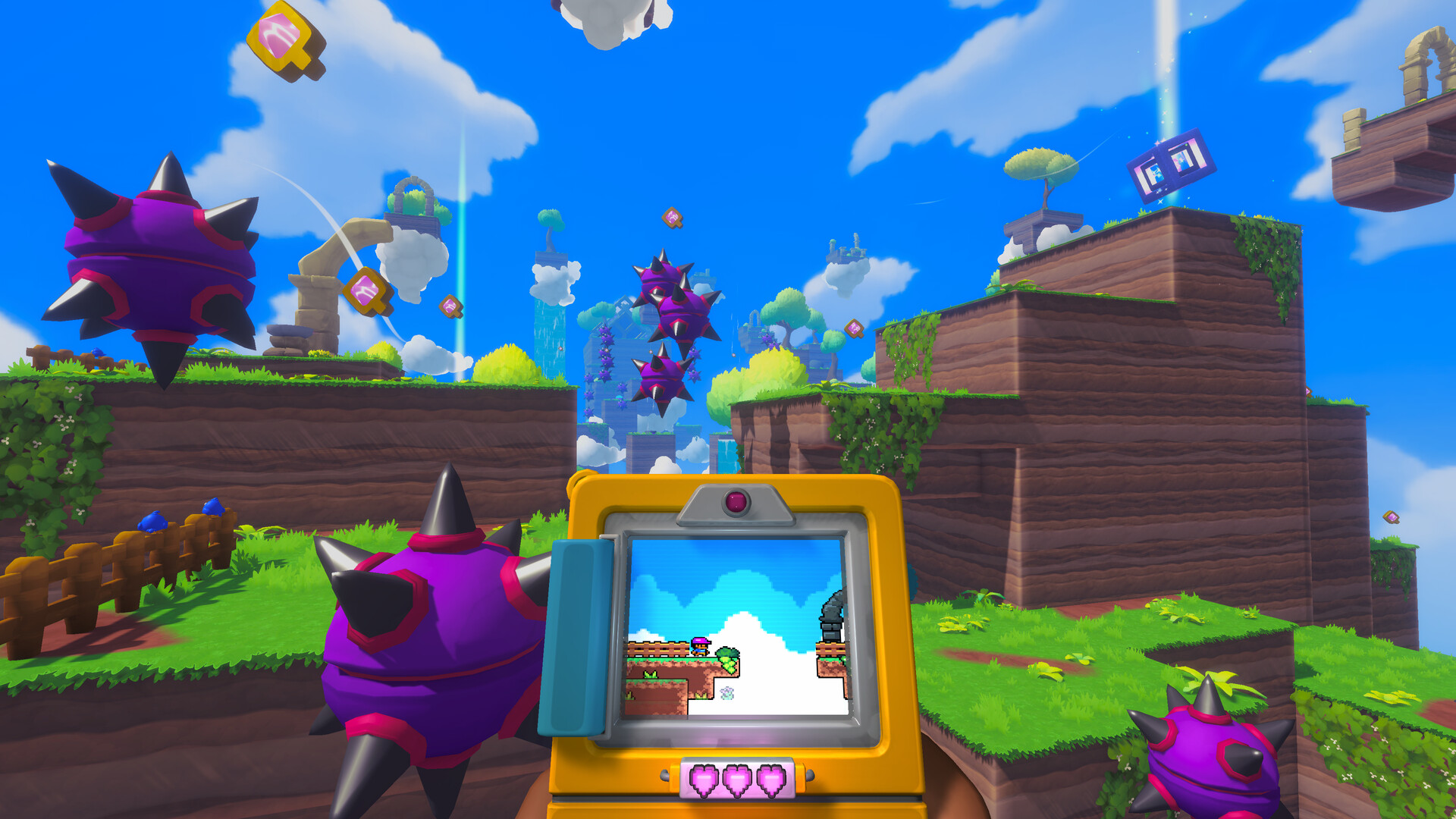
In the game’s editor, the 3D world is constructed in layers. Each layer represents a specific track or corridor in the 3D space. As the player moves through the 3D environment, the 2D game on the Qboy dynamically updates to reflect the corresponding Z-layer. This allows the game to function like a classic left-to-right platformer while the player is physically walking through a 3D forest or ruin.
However, this creates a significant design hurdle: player focus. If the player is constantly looking down at their virtual handheld, they might ignore the 3D world. If they look at the 3D world, they might miss the 2D platforming cues. To mitigate this, the developers have introduced "in-and-out" mechanics.
"What we don’t want is to be like a DS, where you have a map on one screen and you’re playing a 3D game," Owen explains. "We want the focus to be fluid. There are things that are in and out of the 2D and 3D worlds—enemies that might disappear in the 3D world and appear in the 2D, or platforming hazards that only exist in one dimension."
Implications for Gameplay: Breaking the Rules
The most intriguing aspect of Screenbound is how it eventually begins to break its own rules. The Qboy is not merely a screen; it is a tool. Players can hold the console up to their face to focus exclusively on 2D platforming, or they can use it as a viewfinder to spot secrets hidden in the 3D environment. In some instances, the device even functions as a ranged weapon, allowing the player to aim and shoot at targets that are invisible in the 3D plane but present in the 2D representation.
This creates a high skill ceiling. A player who masters the ability to switch between perspectives will be able to navigate areas that seem impassable to the casual observer. It turns the game into a puzzle of spatial awareness, where the player must process two streams of visual information to survive.
Official Responses and Delay Strategy
Crescent Moon Games recently announced a delay for Screenbound, pushing the title back from its original September release window. While delays are often met with frustration, in the context of Screenbound, it appears to be a necessary step to ensure the "5D" concept is not diluted.
The team is currently focused on "balancing the feel." The core issue is ensuring that the player understands the relationship between the two worlds intuitively. If the game feels like two separate experiences, the magic is lost; if it feels like one cohesive unit, it becomes something truly special.
"Essentially, it’s two games running on top of each other," Owen says. "There are no separate things happening; when you are running through the 3D world, you are actually also running through the 2D world. That’s kind of the magic of it."
Conclusion: The Future of Spatial Gaming
Screenbound represents the pinnacle of what indie developers can achieve when they stop asking, "Is this possible?" and start asking, "How do we make this feel natural?" By forcing the player to exist in two places at once, the game challenges our reliance on traditional camera systems and standard platforming tropes.
As we await the final release on PC, the demo remains available on Steam, offering a glimpse into a world where the boundary between hardware and environment is permanently blurred. Whether it will successfully pull off its ambitious, rule-bending design remains to be seen, but Screenbound has already achieved the most difficult task for an indie developer: it has made the world stop and take notice of a new way to play.
In an era of remakes and sequels, Screenbound is a reminder that there is still vast, unexplored territory in the world of video game design—sometimes all you need is a 3D world and a 2D handheld to find it.