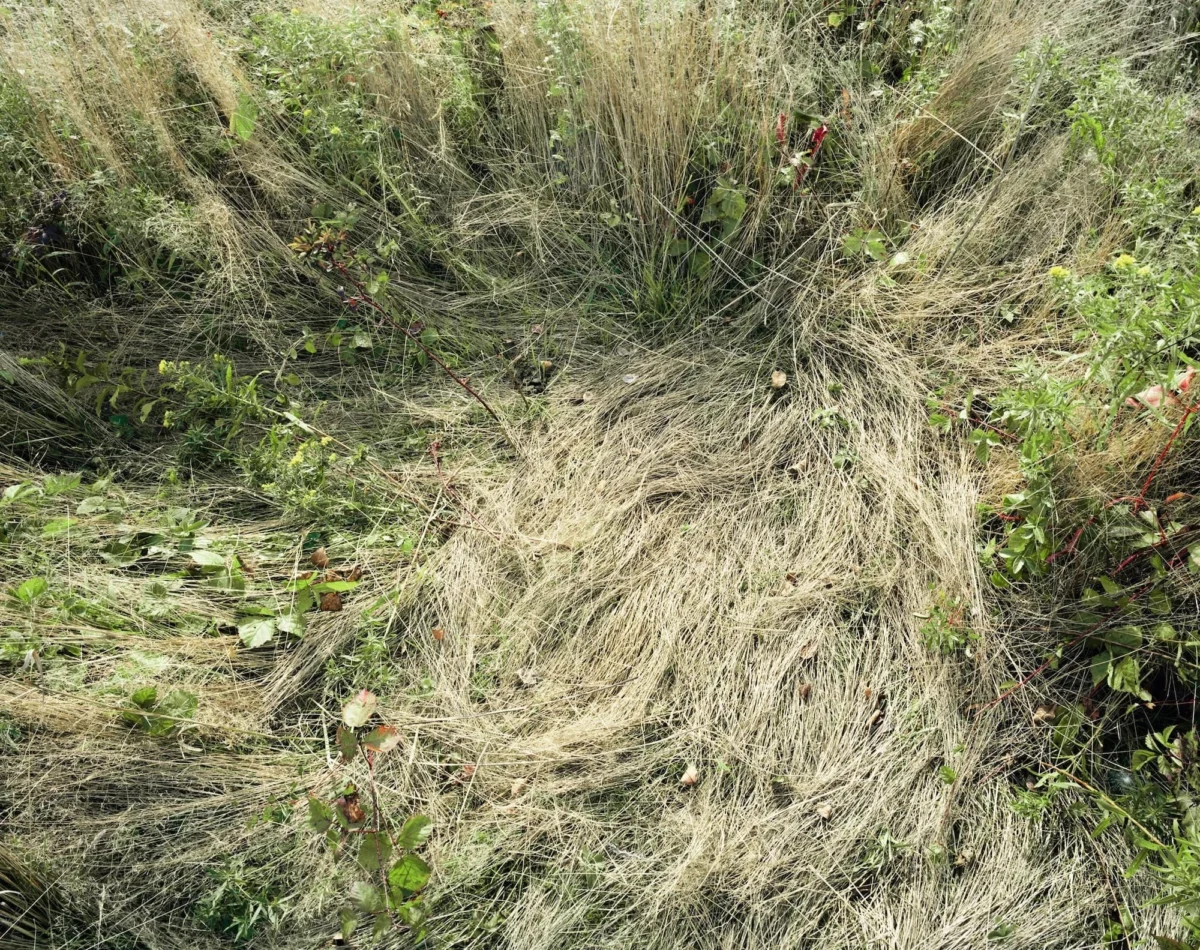
In the quiet, windswept meadows of Block Island, located just a few miles off the coast of Rhode Island, photographer Katherine Wolkoff has spent years pursuing a ghost. She is not chasing the deer that roam the island’s grassy terrain, but rather the ethereal, flattened impressions they leave behind when they rise to vanish into the brush. Her photographic series, Deer Beds, serves as a poignant meditation on presence, absence, and the fragile intersection between human observation and the wild.
By capturing these "nests" of matted grass—the literal imprints of a resting animal—Wolkoff shifts the focus of nature photography. Instead of the typical "hunt" for the subject, she elevates the void, documenting the fleeting marks of life that remain long after the creature has moved on.
The Genesis of a Project: From Science to Sight
The conceptual roots of Deer Beds trace back to Wolkoff’s childhood. Her mother, a science teacher, first introduced her to the concept of deer bedding areas—the specific, repetitive locations where cervids choose to rest. Unlike human homes, which are static and permanent, these beds are ephemeral, existing only as long as the grass holds the shape of the body that once pressed into it.
"My mother, a science teacher, first mentioned deer beds to me, and I began walking the fields, following deer paths to find them," Wolkoff explains. "That solitary, meditative search is still central to how I work today."

This search became a ritualistic practice for the artist. For Wolkoff, the act of walking the meadows is as much a part of the art as the final print. It is a slow, observant process that requires a heightened sensitivity to the environment. She wanders the terrain, tracing the paths established by the local deer population, looking for those subtle depressions in the vegetation that signal a recent visitor.
The Art of the Absence: Technical and Aesthetic Approaches
When Wolkoff finds a bed, she does not merely document it; she honors the space. She prints her images at nearly life-size, a choice that forces the viewer to engage with the subject on an intimate scale. These are not grand landscape photos; they are "horizonless meditations." By removing the horizon line, Wolkoff eliminates the traditional contextual markers of landscape photography, pulling the viewer’s eye directly into the textures of the grass, the earth, and the slight, lingering curve of the bed.
The Critique of the "Hunt"
In a 2023 review for Artforum, critic Eva Diaz astutely observed the philosophical shift in Wolkoff’s work. She wrote, "The prevailing metaphor of photography is that of the hunt. Photographers shoot, even stalk, their subjects; in the case of Katherine Wolkoff’s work, the absence of ‘prey’ itself becomes the subject of the project."
This framing is essential to understanding the series. By removing the animal from the frame, Wolkoff bypasses the voyeuristic nature of traditional wildlife photography. She acknowledges the "startled" reality of the encounter—the moments when she happens upon a deer that bolts at her presence—but chooses to focus on the moments when the deer is absent. In doing so, she invites the viewer to ponder the deer’s life, their movements, and their sense of place without the intrusive gaze of the observer.

Chronology of Observation
Wolkoff’s exploration of these spaces has unfolded over several years, mirroring the cyclical nature of the island’s ecosystems.
- Initial Discovery (The Early Years): Inspired by her mother’s scientific curiosity, Wolkoff began mapping the deer paths on Block Island, learning the patterns of where and when deer choose to rest.
- The Development of the Series: Through persistent fieldwork, she developed a rhythm of observation. She learned that while deer do not sleep in the exact same spot every night, they operate within a "home range" that includes several preferred bedding sites to which they return repeatedly.
- The Exhibition Phase: The resulting images, displayed in galleries like Benrubi, moved the work from the field to the public sphere, sparking academic and critical discourse regarding the "absence" in photography.
- Current Endeavors: Wolkoff is currently pivoting toward a new series, using pinhole photography to capture the experience of migrating birds, further deepening her exploration of the Anthropocene.
Supporting Data: The Ecology of Deer Beds
To understand the significance of Wolkoff’s work, one must understand the biological necessity of these beds. According to wildlife biologists, deer beds are more than just a place to sleep; they are critical survival structures.
Deer typically choose bedding sites that provide security, comfort, and thermal regulation. They look for areas that offer cover from wind and predators, often selecting tall grasses or dense brush that allow them to remain camouflaged. The "home range" concept is vital here: a deer’s territory may contain several bedding locations based on weather conditions, seasonal food availability, and human activity.
Wolkoff’s photographs document these sites in various states of decay. Some are fresh, with the grass still vibrant and flattened, indicating a very recent departure. Others are overgrown, showing the slow reclamation of the space by the surrounding meadow. This serves as a visual timeline of the animal’s presence and its eventual disappearance into the landscape.

The Anthropocene and the Fragile Future
Wolkoff’s work is not merely an aesthetic exercise; it is deeply rooted in the context of the Anthropocene—the current geological age where human activity is the dominant influence on climate and the environment. Her photography serves as a silent witness to the tension between human expansion and natural habitats.
By focusing on the "bed" rather than the "deer," she highlights the vulnerability of these creatures. They are creatures of habit living in an environment that is increasingly unstable due to climate change. Her work asks a silent question: What happens when the land itself can no longer support these quiet, hidden resting places?
From Deer to Migrating Birds
The artist’s current project, which will be featured at the Benrubi Gallery next spring, takes this concern to a more urgent level. By utilizing pinhole photography, she captures the frantic, blurred perspective of migrating birds traversing the Atlantic Flyway.
"The resulting pictures have a blurred, frantic quality that I think of as visualizing the birds’ depletion," Wolkoff notes. "The chaos of an animal pushed to its limits over open water and unfamiliar coastline, flying through the night with no guarantee of where it will land or whether it will survive the crossing."

This new work represents an evolution from the stillness of the deer bed to the kinetic desperation of the migrant bird. Both series, however, are united by a common thread: the attempt to visualize the invisible struggle of animals living in a world transformed by human impact.
Official Responses and Critical Reception
The art community has responded to Wolkoff’s work with significant praise, noting the technical mastery of her large-format printing and the intellectual rigor behind her approach. Her exhibitions at the Benrubi Gallery have been hailed as a breath of fresh air in a genre often cluttered with digital manipulation and high-speed action shots.
Critics often highlight the "meditative" quality of the work. By forcing the viewer to slow down—much like the artist herself had to slow down to find the beds—the photography encourages a state of mindfulness. There is no instant gratification in a Wolkoff print; the reward comes from the quiet realization of what is being depicted: a home, a moment of rest, a life lived in the margins.
Implications for the Future of Nature Photography
Katherine Wolkoff’s Deer Beds is a transformative series that challenges the ethics and aesthetics of nature photography. It suggests that perhaps we do not need to "capture" the animal to document its existence. By shifting the focus to the traces left behind, she offers a model for a more sustainable, respectful, and reflective way of seeing.

As the climate crisis continues to reshape our landscapes, the work of artists like Wolkoff becomes increasingly vital. They remind us that nature is not just a backdrop for human adventure; it is a complex, sentient system of paths, beds, and migrations. If we look closely enough—at the flattened grass, at the blurred wings—we might finally begin to see the urgency of what we are losing, and the beauty of what we are currently failing to protect.
Wolkoff’s upcoming exhibition at the Benrubi Gallery is expected to be a landmark event, bridging the gap between the quiet intimacy of her deer series and the urgent, global narrative of the Atlantic Flyway. As she continues to plumb the relationship between humans and the land, her work remains a beacon of thoughtful, observant, and deeply humanistic art in an increasingly noisy world.