
 Siti Muinah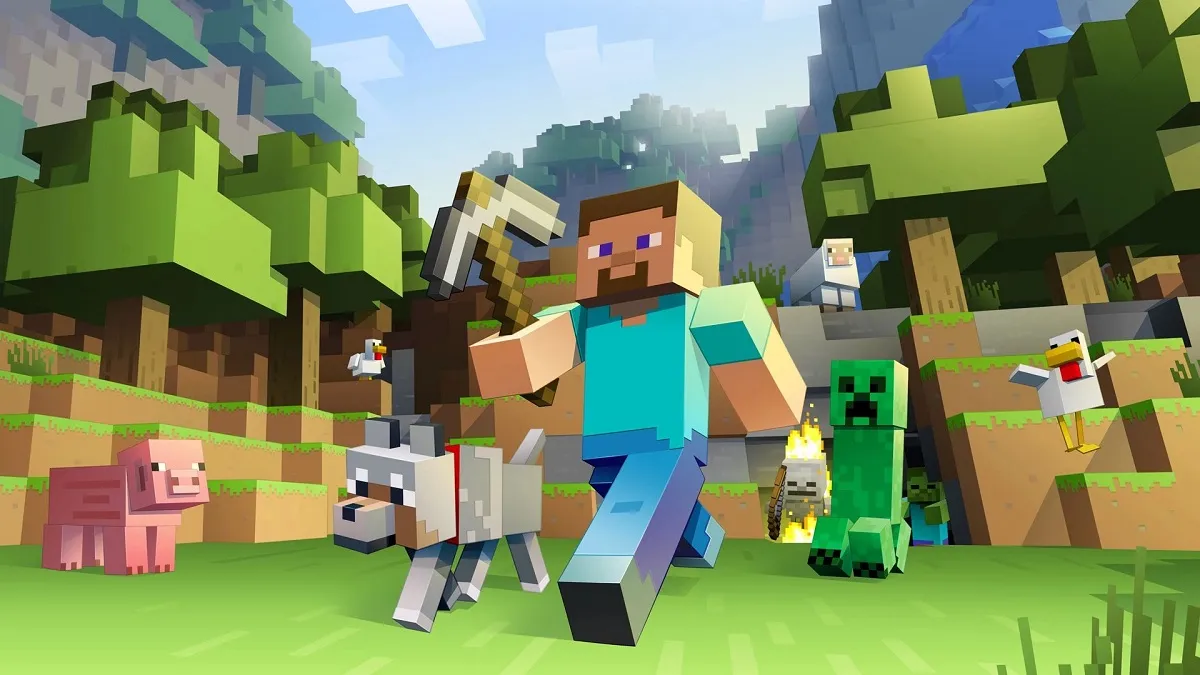
In the modern gaming landscape, the bridge between content creation and commerce has never been more robust. A groundbreaking report from monetization platform Tebex has shed light on the mechanics of "creator codes"—those short, alphanumeric strings entered at checkout that provide a nod to a streamer or YouTuber while unlocking rewards or discounts for the player.
The data suggests that these codes are far more than mere promotional tools; they are powerful engines for new user acquisition and significant revenue amplification. However, the report also highlights a stark reality: the creator economy is not an egalitarian landscape, but one dominated by a "winner-takes-most" dynamic that leaves smaller influencers struggling to capture a slice of the pie.
The Core Findings: Revenue and Acquisition
The study, which analyzed over 1.5 million transactions involving 635,000 players over a two-year period, provides the most granular look at the creator economy to date.
The most compelling takeaway is the effectiveness of these codes in bringing fresh blood into game ecosystems. According to the research, 80.4% of players who utilize a creator code are doing so during their very first purchase on a platform. Perhaps even more impressively, half of these new users complete that initial purchase on the exact same day they register.
This data directly challenges the cynical view that creator codes merely "cannibalize" sales—that is, rewarding influencers for sales that would have happened regardless. Instead, Tebex posits that creators are acting as primary conduits for new customer acquisition, funneling audiences from external platforms like YouTube, Twitch, and TikTok directly into the game’s storefront.
Furthermore, the "basket uplift" is substantial. When a player applies a creator code to their mobile webstore transaction, the average basket value jumps from $27 to $52—a 93% increase. This suggests that the psychological association between the player and their favorite creator encourages a higher level of spending, whether through "whale" behavior or a desire to support the content creator’s sustainability.
The Power Law: The Dominance of the Few
While the headline figures are optimistic, the distribution of this success reveals a heavy skew. The study highlights a classic "Power Law" distribution: the top 100 creators, representing a mere 1.6% of the total creator pool, accounted for a staggering 75.9% of the total Gross Merchandise Value (GMV).
To put this into perspective, a single, unnamed creator generated $4.9 million in revenue through the platform. This effectively refutes the popular industry narrative that a vast network of "micro-influencers" can consistently outperform a handful of high-tier giants.
However, the report is careful not to dismiss the value of smaller creators entirely. While they may not move the needle on total GMV, "long-tail" creators play a vital role in niche geographic markets. These creators often provide localized translations, community management, and cultural nuance that larger, global stars cannot, effectively acting as the boots-on-the-ground sales force for game operators in emerging markets.
Chronology: The Evolution of the Creator-Driven Storefront
The rise of the creator code system is a relatively recent phenomenon in the context of the gaming industry’s history, yet it has evolved rapidly.
- Phase 1: The Coupon Era. Initially, codes were strictly discount-based. Their purpose was to incentivize a hesitant customer to complete a transaction.
- Phase 2: The Loyalty Era. As the creator economy matured, developers realized that fans often used codes even when no discount was provided. The code became a badge of identity—a way to signal, "I am part of this creator’s community."
- Phase 3: The Integration Era. Today, platforms like Tebex have integrated these codes directly into the checkout flow of massive ecosystems like Minecraft and FiveM. This seamless integration has moved creator-driven commerce from a "marketing experiment" to a foundational revenue pillar.
Data from the last two years shows that 87.4% of players use only one creator’s code in their lifetime. This indicates that once a player aligns themselves with a specific creator, that relationship is remarkably sticky. The fact that half of all tracked codes offered no discount reinforces the theory that these transactions are fueled by community loyalty rather than price sensitivity.
The Landscape: Minecraft vs. FiveM
The research provides a fascinating look at the two titans of this ecosystem: Minecraft and FiveM.
The Minecraft Maturity
Minecraft serves as the gold standard for creator-led monetization. With nearly 30% of its total GMV attributed to creator codes, it is clear that the game’s server architecture and modding community have successfully commodified the "influencer-to-player" pipeline. Players in the Minecraft ecosystem are accustomed to supporting server operators and content creators, making this a high-trust environment.
The FiveM Opportunity Gap
In contrast, FiveM—the wildly popular Grand Theft Auto V roleplay platform owned by Rockstar Games—presents a different story. With a massive total GMV of $366.9 million, only 3.9% is currently attributed to creator codes.
Tebex labels FiveM as "one of the most visible, high-value opportunity gaps in the gaming sector today." This suggests that Rockstar and the developers of the most popular FiveM servers have barely scratched the surface of influencer-driven monetization. If FiveM were to reach the same level of creator integration as Minecraft, the potential revenue increase would be astronomical.
Official Perspectives and Industry Response
While Tebex has provided the data, the gaming industry is currently digesting the implications. Game publishers are increasingly viewing content creators not as "third-party marketers," but as extension departments of their own business development teams.
Industry analysts suggest that the "80% new user" statistic is the most important metric for developers. For a game to survive, it must constantly refresh its player base. By aligning with creators, developers are effectively offloading the cost of customer acquisition to influencers, who are rewarded only when a sale is actually made. This "performance-based marketing" is highly efficient compared to traditional advertising models like programmatic display ads or social media sponsored posts, which rarely guarantee a conversion.
The Implications for the Future
The findings of this report signal a shift in how games will be designed and marketed in the coming decade.
1. The Death of the "One-Size-Fits-All" Marketing Strategy
Publishers will likely move away from broad, expensive marketing campaigns in favor of deepening relationships with top-tier creators. If the top 100 creators are driving 75% of the revenue, it is mathematically sound to invest heavily in the infrastructure that supports them.
2. Gamified Loyalty
Since the majority of players use only one code and often receive no discount, the "creator code" is evolving into a loyalty program. We can expect to see more developers gamify this, offering in-game items, badges, or "supporter status" for players who consistently use a specific creator’s code, further entrenching the influencer within the game’s meta.
3. Localization through the Long Tail
While the top 1% drives the revenue, the long-tail creators will become the primary vehicle for global expansion. Developers will likely launch "Creator Ambassador" programs that incentivize small creators in Brazil, Indonesia, or Poland, utilizing their local influence to navigate language barriers and cultural expectations that a global brand might miss.
4. Ethical Considerations
As the industry leans further into this model, questions of transparency will inevitably arise. The "loyalty-driven" nature of these codes means that players are effectively participating in an affiliate marketing scheme. Regulators and industry watchdogs may eventually require more prominent disclosures regarding how much of a player’s purchase goes to the creator versus the game developer.
Final Thoughts
The Tebex report paints a portrait of a maturing ecosystem. We have moved past the "Wild West" days of influencer marketing into a data-driven era where the creator is the primary gateway to the storefront.
For developers, the message is clear: if you are not building a creator-code ecosystem, you are leaving millions of dollars on the table. For creators, the data confirms that while the path to the top is narrow, the rewards are immense. And for the players, the message is equally simple: your support for your favorite streamer is not just a gesture of fandom—it is the financial bedrock upon which the future of the games you love is built.
As we look toward the next two years, it is likely that the "opportunity gaps" identified in platforms like FiveM will be closed rapidly. The competition for the attention of top-tier creators will heat up, and the integration of these codes will become as standard as the login screen itself. The creator-code revolution has only just begun.


 Suro Senen
 Evan Lee Salim




