

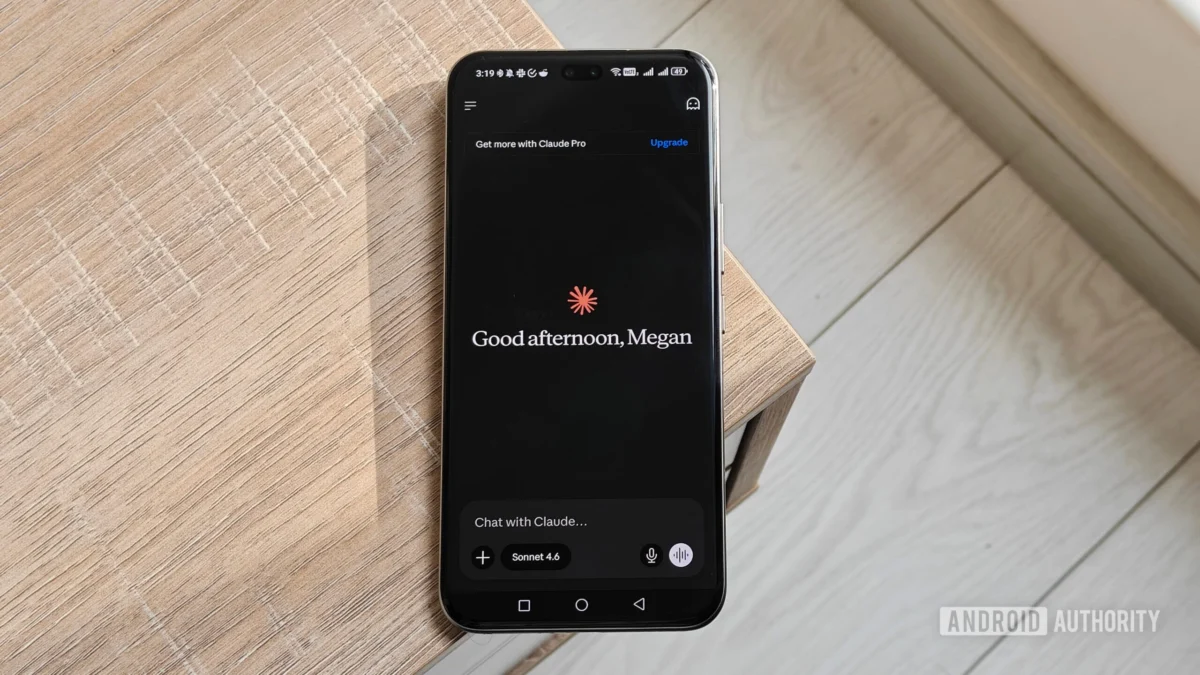
The landscape of generative artificial intelligence is moving at a velocity that challenges even the most diligent industry analysts. In the time it takes for a user to master the nuances of one large language model (LLM), a successor has often already arrived, promising greater efficiency, smarter reasoning, and a more intuitive interface. The latest milestone in this rapid evolution comes from Anthropic, which has officially launched Claude Sonnet 5, a model designed to bridge the chasm between premium, high-cost performance and mid-tier accessibility.
As the AI market moves away from simple chatbot interfaces toward "agentic" workflows—systems capable of executing multi-step tasks independently—Sonnet 5 arrives as a critical piece of infrastructure. By balancing near-flagship capabilities with a cost-efficient price point, Anthropic is positioning Sonnet 5 as the new workhorse for both individual power users and enterprise-scale developers.
The Core Facts: What Defines Sonnet 5?
At its heart, Claude Sonnet 5 is not merely an incremental update to its predecessor, Sonnet 4.6. Instead, it represents a fundamental shift in how Anthropic envisions the relationship between the user and the machine.
Key Capabilities
- Agentic Autonomy: Anthropic has explicitly marketed Sonnet 5 as its "most agentic model yet." Unlike previous iterations that functioned primarily as conversational search engines, Sonnet 5 is architected to perform complex, multi-stage operations.
- Tool Integration: The model is now capable of navigating the web autonomously, interacting with developer terminals, and executing code in real-time, effectively reducing the need for human "hand-holding" during technical workflows.
- Performance Parity: Perhaps the most significant technical achievement is the model’s ability to narrow the gap with the flagship Opus 4.8. Through a new "effort" setting, users can push the model to dedicate more computational resources to specific problems, allowing it to match or exceed the performance of more expensive, larger models in high-complexity tasks.
A Chronological Perspective: The Road to 2026
The trajectory of Anthropic’s development has been characterized by a constant tension between safety and utility. To understand the significance of the Sonnet 5 launch, one must look at the recent history of the company’s model lineage.
- Early 2025 – The Rise of Opus 4.8: Anthropic solidified its position as a leader in reasoning-heavy tasks, with Opus 4.8 serving as the gold standard for complex analysis. However, its high cost of inference made it a luxury for many businesses.
- Mid-2025 – The Sonnet 4.6 Benchmark: The release of Sonnet 4.6 provided a more balanced alternative, becoming the favorite for daily productivity. It set the stage for a model that could handle 80% of tasks at 20% of the cost.
- Early 2026 – The Fable 5 Experiment: Anthropic attempted to introduce the "Fable 5" model, which focused heavily on extreme safety protocols. While intended to curb misuse, the model was widely criticized for being overly restrictive, particularly for cybersecurity researchers and developers. Its subsequent discontinuation marked a pivotal lesson for the company.
- May 2026 – The Present: The official launch of Claude Sonnet 5 synthesizes the lessons of the previous year. It maintains the rigorous safety standards of the modern era while stripping away the inhibitory friction that plagued Fable 5, creating a model that is both secure and genuinely useful.
Supporting Data: Efficiency vs. Capability
Anthropic has released a suite of performance metrics that underscore why Sonnet 5 is a paradigm shift. In side-by-side evaluations, Sonnet 5 does not merely iterate on Sonnet 4.6; it displays a marked improvement in logical consistency and instruction following.
The "Effort" Variable
The most compelling data point involves the model’s "effort" parameter. In standard configurations, Sonnet 5 maintains an impressive speed-to-performance ratio, ideal for daily tasks like email drafting or summarizing documents. However, when the user engages the "High Effort" mode, the model triggers deeper chain-of-thought processing. Internal testing indicates that in this mode, the model consistently matches the performance of the Opus 4.8 flagship, effectively democratizing top-tier AI reasoning.
Pricing Structure
The economic implications are equally significant. Anthropic has structured its API pricing to encourage widespread adoption:
- Introductory Pricing (Until Aug 31, 2026): $2/million input tokens, $10/million output tokens.
- Standard Pricing (Post-August): $3/million input tokens, $15/million output tokens.
This pricing strategy is clearly designed to undercut competitors while ensuring that startups and independent developers can integrate Sonnet 5 into their own proprietary applications without prohibitive overhead.
Official Responses and Strategic Philosophy
In the wake of the Fable 5 controversy, Anthropic’s leadership has been vocal about the "middle ground" they have sought with Sonnet 5.
"Our goal was never to create a model that refuses to perform useful tasks," noted a spokesperson for Anthropic during the launch event. "Our goal was to create a model that understands the intent behind a request. Sonnet 5 is designed to challenge incorrect user assumptions and pivot away from harmful trajectories, not because of a rigid set of filters, but because it has a better grasp of contextual logic."
This represents a pivot from "hard" safety (blocking words and topics) to "intelligent" safety (analyzing the logic of the prompt). By making cybersecurity safeguards the default, Anthropic aims to protect the ecosystem from malicious actors—such as those attempting prompt-injection attacks—while allowing white-hat hackers and developers to utilize the model’s terminal-interaction capabilities for legitimate purposes.
Implications: The Future of Agentic AI
The release of Claude Sonnet 5 carries profound implications for the software industry and the broader job market.
1. The Death of the "Prompt Engineer"
As models like Sonnet 5 become more "agentic," the burden of task management shifts from the user to the AI. The ability to plan multi-step tasks means that users no longer need to provide step-by-step instructions for complex operations. The AI is becoming a collaborator that can be handed a goal, rather than a tool that requires constant instruction.
2. The Enterprise Pivot
For businesses, the cost-to-performance ratio of Sonnet 5 makes large-scale deployment feasible. Companies that previously felt locked out of high-end AI due to budget constraints can now deploy agents that can browse, code, and analyze across internal datasets. This is likely to trigger a surge in autonomous workflow integration within corporate environments.
3. The Cybersecurity Arms Race
By including advanced safety protections that specifically target prompt-injection and adversarial attacks, Anthropic is essentially building a defense mechanism into the model’s core logic. As Sonnet 5 gains wider adoption, we can expect a new wave of research focusing on whether these "intelligent" safeguards are truly sufficient to stop sophisticated bad actors, or if they merely raise the bar for the complexity of future attacks.
4. A New Standard for Accessibility
By making Sonnet 5 the default for both Free and Pro users, Anthropic is effectively pushing the state-of-the-art into the hands of the general public. This will likely force competitors like OpenAI and Google to accelerate their own "middle-tier" model releases, further compressing the price of advanced intelligence.
Conclusion: The Horizon of 2026
Claude Sonnet 5 is more than just a new entry in a crowded market; it is a declaration that the era of "chatbots" is coming to a close. We are entering the era of "agents"—systems that don’t just talk, but do.
By successfully blending the high-end reasoning of the Opus line with the efficiency of the Sonnet line, and by refining their approach to safety after the lessons of the Fable 5 era, Anthropic has set a high bar for the remainder of 2026. For the user, the promise is simple: a more capable, more independent, and more affordable partner in the digital workspace. As we look toward the remainder of the year, the question is no longer "what can this AI do," but rather "what will we choose to do with it?"











