

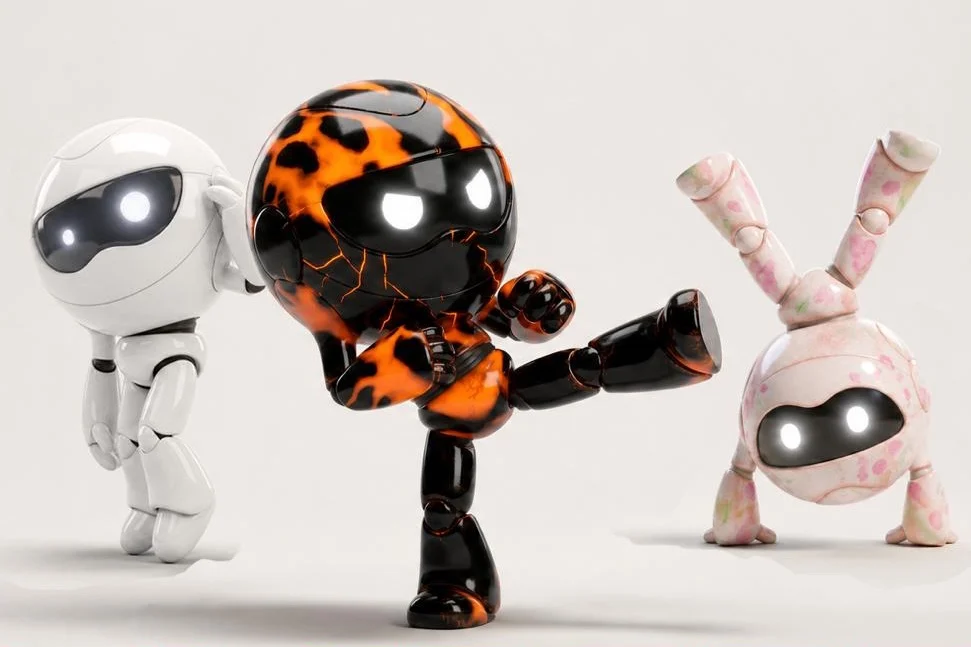
In a landmark move that signals a potential shift in the trajectory of generative media, UK-based production house Evolutionary Films has announced an exclusive worldwide partnership with Kling AI. The collaboration centers on the upcoming animated feature Minibots, a project positioned not merely as a film, but as a manifesto for the responsible integration of artificial intelligence into mainstream cinematic storytelling.
As the entertainment industry grapples with the existential anxieties sparked by generative AI, Evolutionary Films is attempting to chart a third way: a model that rejects the narrative of automation and cost-cutting in favor of an "artist-led" framework. By aligning with Kling AI—a subsidiary of the Chinese tech giant Kuaishou—the production aims to prove that next-generation synthetic tools can serve as a canvas for human imagination rather than a replacement for it.
The Genesis of a Technological Alliance
The partnership between Evolutionary Films and Kling AI is as much a technological commitment as it is a creative one. Under the terms of the agreement, Kling AI will serve as the exclusive global “technological brand partner” for Minibots. This role entails far more than the simple licensing of software; Kling is providing comprehensive production support, deep-level platform access, and, most crucially, a dedicated Creative Partnership Programme.
This programme is specifically designed to support the film’s high-profile AI artist team, providing them with a sandbox to refine their workflows. For Kling AI, which has already gained traction among high-profile creators—including House of David creator Jon Erwin—the partnership offers a high-stakes proving ground. By embedding their tools into a feature-length narrative pipeline, Kling seeks to demonstrate that their video generation technology can sustain the complexity and emotional depth required for feature-length theatrical release.
A Narrative Built for the Digital Age
The film itself, Minibots, serves as a meta-commentary on the themes it explores. Set against the backdrop of a high-tech robotics summer camp, the story follows three teenage geniuses who inadvertently bring to life a group of miniature sentient robots. When these creations escape into the broader human society, the film navigates the friction between technology, identity, and the essence of humanity.
The pedigree behind the project suggests that Evolutionary Films is serious about narrative substance. The script is being crafted by an ensemble of heavy-hitting writers, including Michael Ferris—best known for his work on Terminator 3: Rise of the Machines and The Simpsons—alongside Alistair Audsley and Scott Christian Sava, the creative force behind the animated success Animal Crackers. This combination of sci-fi pedigree and family-friendly animation expertise suggests a film intended to resonate with both general audiences and critics of the "AI-in-cinema" trend.
The "Performance-First" Charter: Establishing Ethical Boundaries
Perhaps the most significant element of the Minibots announcement is the implementation of a strict "performance-first" AI charter. In an era where deepfakes and the unauthorized digital cloning of actors have triggered industry-wide strikes and legal battles, Evolutionary Films is proactively defining its ethical stance.
The production has pledged that all character performances will remain entirely human-created and actor-owned. By framing the AI as a tool for visual augmentation rather than a substitute for human nuance, the producers are attempting to bypass the ethical pitfalls that have plagued other AI-driven experiments. John Adams and Diane Shorthouse, the co-founders of Evolutionary Films, have explicitly stated that the project was designed as a direct response to industry fears. Their "performance-first" mandate ensures that while the aesthetic environment may be generated or enhanced by AI, the soul of the performance remains firmly rooted in human agency.
This commitment has already yielded tangible results. According to Adams and Shorthouse, the ethical clarity of the production has attracted significant interest from A-list voice talent, many of whom have previously been wary of participating in AI-forward projects.
The Creative Team: Bridging Two Worlds
The technical backbone of Minibots is an elite group of practitioners operating at the bleeding edge of AI-cinematic storytelling. The AI creative team includes producer Giulio Musi, supported by a collective of specialists: Samuele Poggi, Sebastian Kamph, Edmond Yang, Billy Boman, Erica Montanaro, and Josef Samuel.
These artists are not merely technicians; they are visionaries who have spent years exploring how latent space and neural networks can be harnessed to serve traditional storytelling. Their role is to translate the writers’ vision into a visual language that feels fresh and groundbreaking, while maintaining the narrative cohesion required to sustain a feature-length experience. This team represents the new vanguard of cinema: individuals who speak both the language of traditional cinematography and the syntax of algorithmic image generation.
Official Perspectives: The Synergy of Tech and Art
The partnership is anchored by a shared vision of the future of media. John Adams, in a statement regarding the partnership, emphasized the shift in focus:
"Minibots is not about replacing artists. It’s about empowering some of the most exciting new creative voices in filmmaking with extraordinary new tools. We believe the future belongs to productions that combine cutting-edge technology with genuine artistic authorship and strong ethical standards. Audiences don’t care whether something was made with AI; they care whether it’s imaginative, emotional and visually unforgettable."
Yushen Zeng, Head of Operations at Kling AI, echoed these sentiments, highlighting the project as a blueprint for the industry:
"Minibots represents exactly the kind of creative collaboration we believe AI should enable: artist-led, ambitious and responsibly executed. We’re proud to support a project pushing cinematic storytelling forward while placing human creativity firmly at the center of the process."
Implications for the Future of Filmmaking
The implications of the Minibots project extend far beyond the box office. If Evolutionary Films succeeds in delivering a high-quality, emotionally resonant feature that successfully integrates AI without alienating the labor force or the audience, it could establish a new industry standard.
For years, the conversation surrounding AI in film has been dominated by fear—the fear of obsolescence, the fear of legal gray zones, and the fear of a "soulless" aesthetic. By adopting a transparent, ethics-first charter, Evolutionary Films is attempting to normalize the technology, stripping away the stigma by tethering it to the traditional studio model.
Moreover, the backing of a major player like Kling AI suggests that the resources required for such high-end AI production are becoming increasingly accessible. The project acts as a bridge between the rapid-fire experimentation of the tech sector and the deliberate, slow-burn process of traditional Hollywood filmmaking.
Chronology and Industry Context
Evolutionary Films has long positioned itself as a boutique house willing to push boundaries. With a portfolio that includes the Paramount+ thriller Curfew, the action-oriented I Am Vengeance, and the collaboration with Irvine Welsh on The Magnificent Eleven, the company has shown a willingness to engage with diverse genres and unconventional talent.
Minibots follows a period of intense scrutiny of generative video tools. While early AI films were largely experimental, short-form, and often dismissed as novelties, the shift toward feature-length, studio-backed production marks a transition into the mainstream. The industry is currently observing a "wait and see" approach, but the involvement of established writers and the promise of A-list voice talent signals that the major players are beginning to take this technological shift seriously.
Conclusion: A New Standard?
As Minibots moves through production, the industry will be watching closely to see if the "artist-led" rhetoric holds up against the practical challenges of feature filmmaking. The success of the project will likely be measured by its ability to synthesize technical efficiency with the emotional depth that audiences expect from theatrical animation.
In a rapidly evolving landscape, Evolutionary Films is making a calculated bet: that the future of cinema is not a zero-sum game between humans and machines, but a synthesis where the tools of the future are wielded by the storytellers of the present. Whether Minibots becomes the benchmark for a new era or a cautionary tale, it is undeniably one of the most important productions in the current cinematic landscape, setting the stage for a debate that will define the next decade of entertainment.











No comments yet. Be the first to join the conversation!