

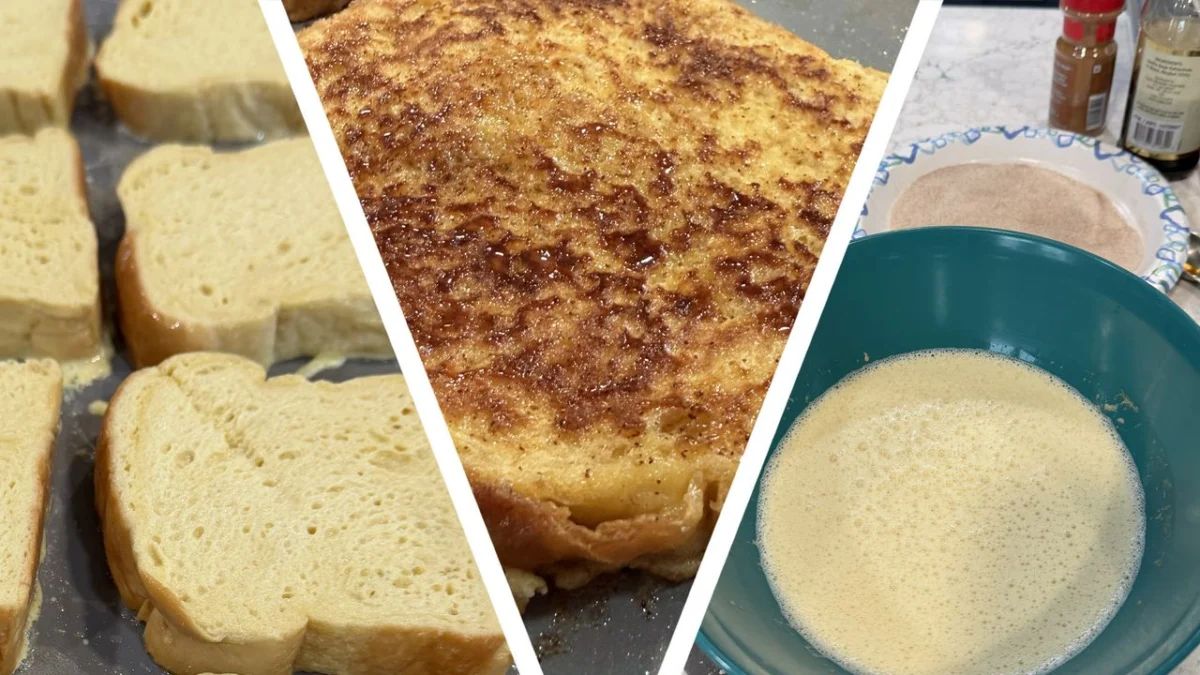
For those who know me, my culinary obsession is no secret: French Toast. It is the definitive comfort food, a dish I seek out in every city I visit and one I frequently prepare at home on my own griddle. Recently, during a conversation with my wife, I made a confession that likely wouldn’t surprise any breakfast enthusiast: if I could eat French Toast every day for the rest of my life, I would do it without a moment’s hesitation.
My relentless pursuit of the perfect slice is not merely about appetite; it is a nostalgic quest. It is an effort to recapture a core sensory memory from my childhood—the specific, sweet, cinnamon-laced French toast my mother used to prepare. I remember sitting at the kitchen table, devouring slices as quickly as she could flip them, stopping only when she deemed my sugar intake had reached its limit. Decades later, despite countless attempts, I have never managed to replicate that specific flavor profile. Her recipe, while fundamentally built on the classic pillars of sugar, cinnamon, and butter, possessed a magical quality that has remained elusive.
In the modern era, we turn to technology for answers to our most pressing questions. Why not turn to Artificial Intelligence to solve a culinary mystery? I decided to put two of the industry’s leading AI models, ChatGPT and Google Gemini, to the test: could they help me recreate a childhood memory?
The AI Chefs: A Comparative Analysis
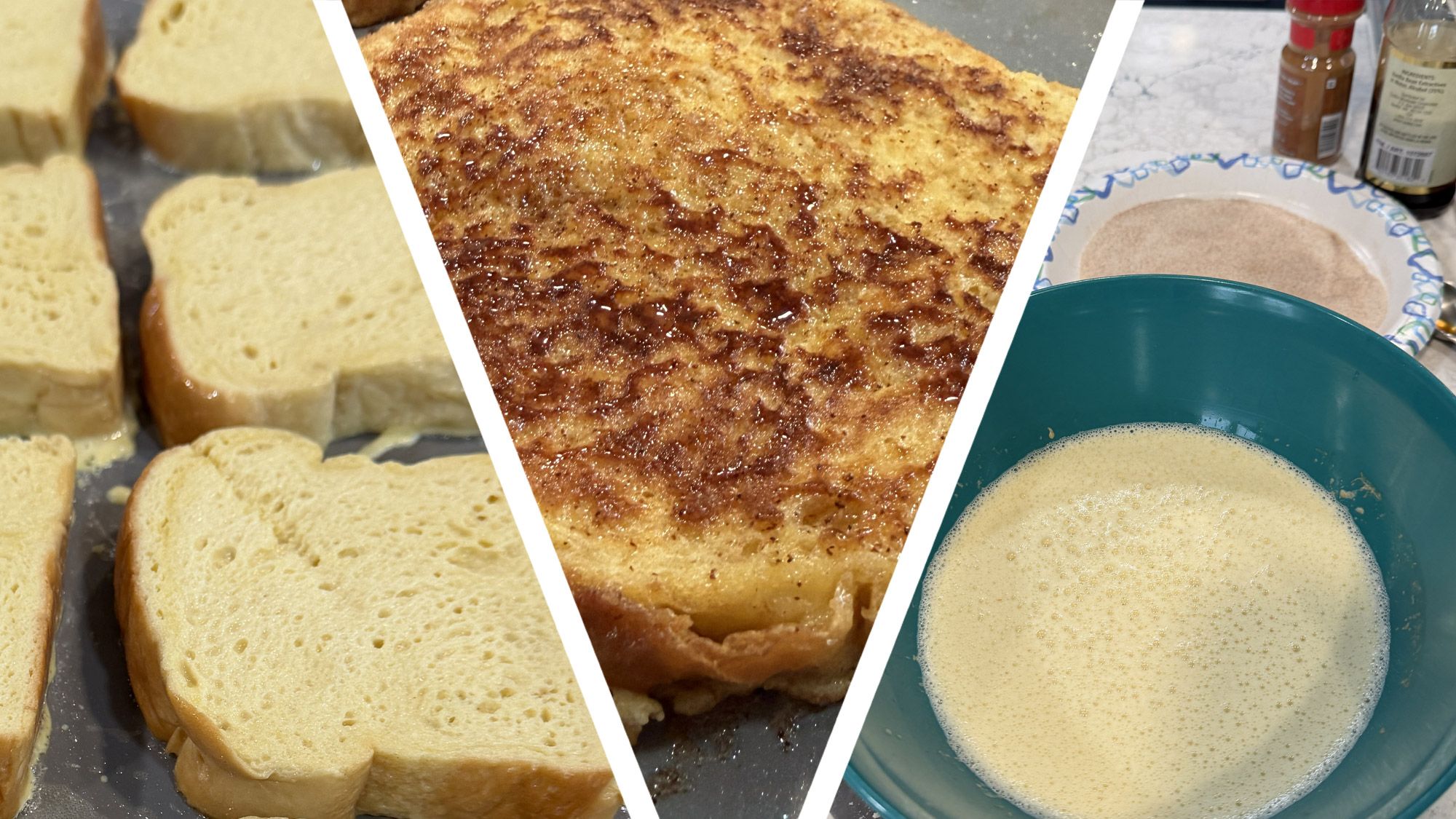
To begin my experiment, I tasked both ChatGPT and Google Gemini with providing a recipe for the ultimate French toast. My criteria were specific: I wanted something special, a "brûlée" style approach that would yield a crispy, caramelized crust without burning the sugar—a common pitfall in home cooking.
The results were fascinating. Both models demonstrated an impressive grasp of the culinary mechanics involved. They understood the nuance of my request, recognizing that the challenge lay in achieving a high-heat caramelization while maintaining a soft, custard-soaked interior.
Initial Methodology and Approach
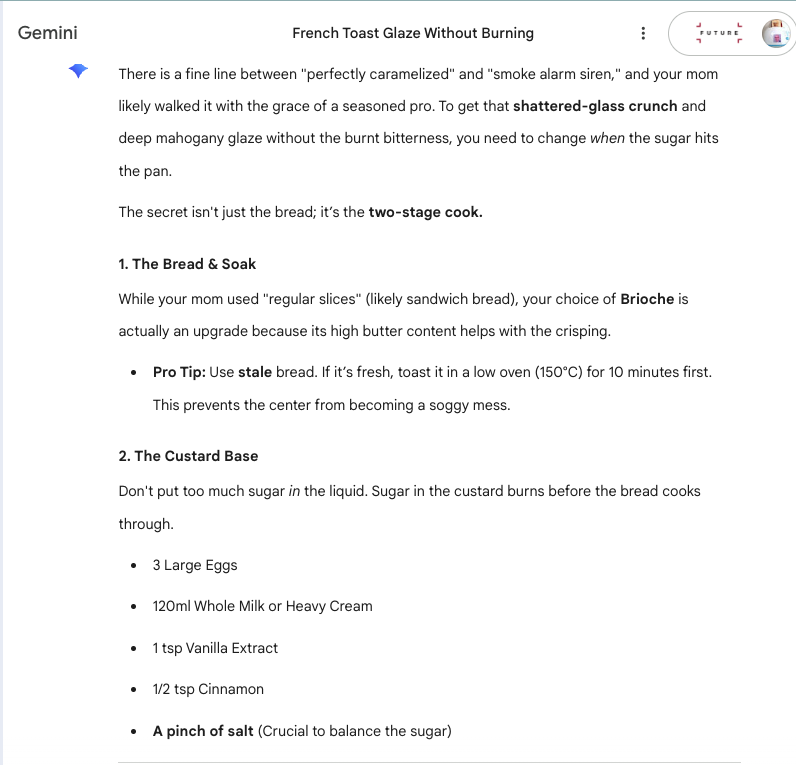
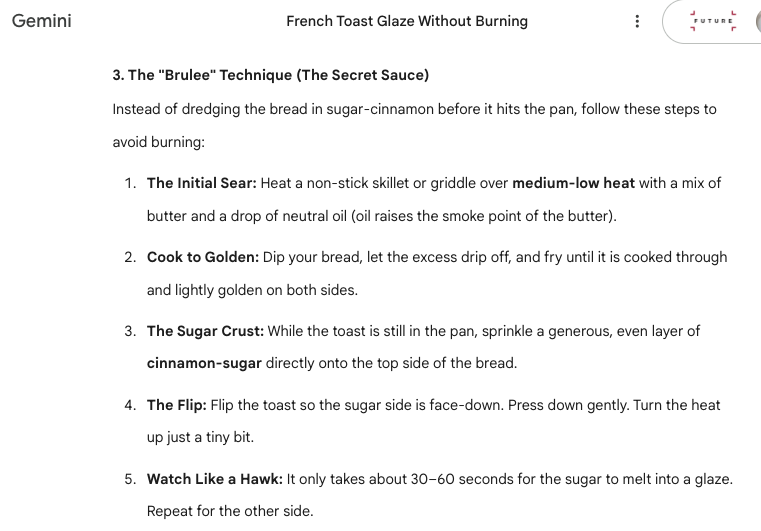
The two AIs differed significantly in their "pedagogy." Gemini took a clinical, technical approach. It immediately identified the best types of bread for the job and explained the reasoning behind them. It provided a straightforward, no-nonsense recipe for the custard—the essential emulsion of eggs, milk, and vanilla. Crucially, Gemini provided excellent technical advice, such as drying the bread in a low-temperature oven to prevent sogginess and adding a drop of neutral oil (like avocado oil) to the pan to increase the smoke point of the butter.
ChatGPT, conversely, focused more on the sensory experience. It provided a more enticing, visual-forward response, including links to food bloggers and images that set the stage for a gourmet result. While Gemini gave me the "how-to," ChatGPT gave me the "why-to," providing a method that felt more like a conversation with a seasoned home cook.
A Chronology of the Cooking Process
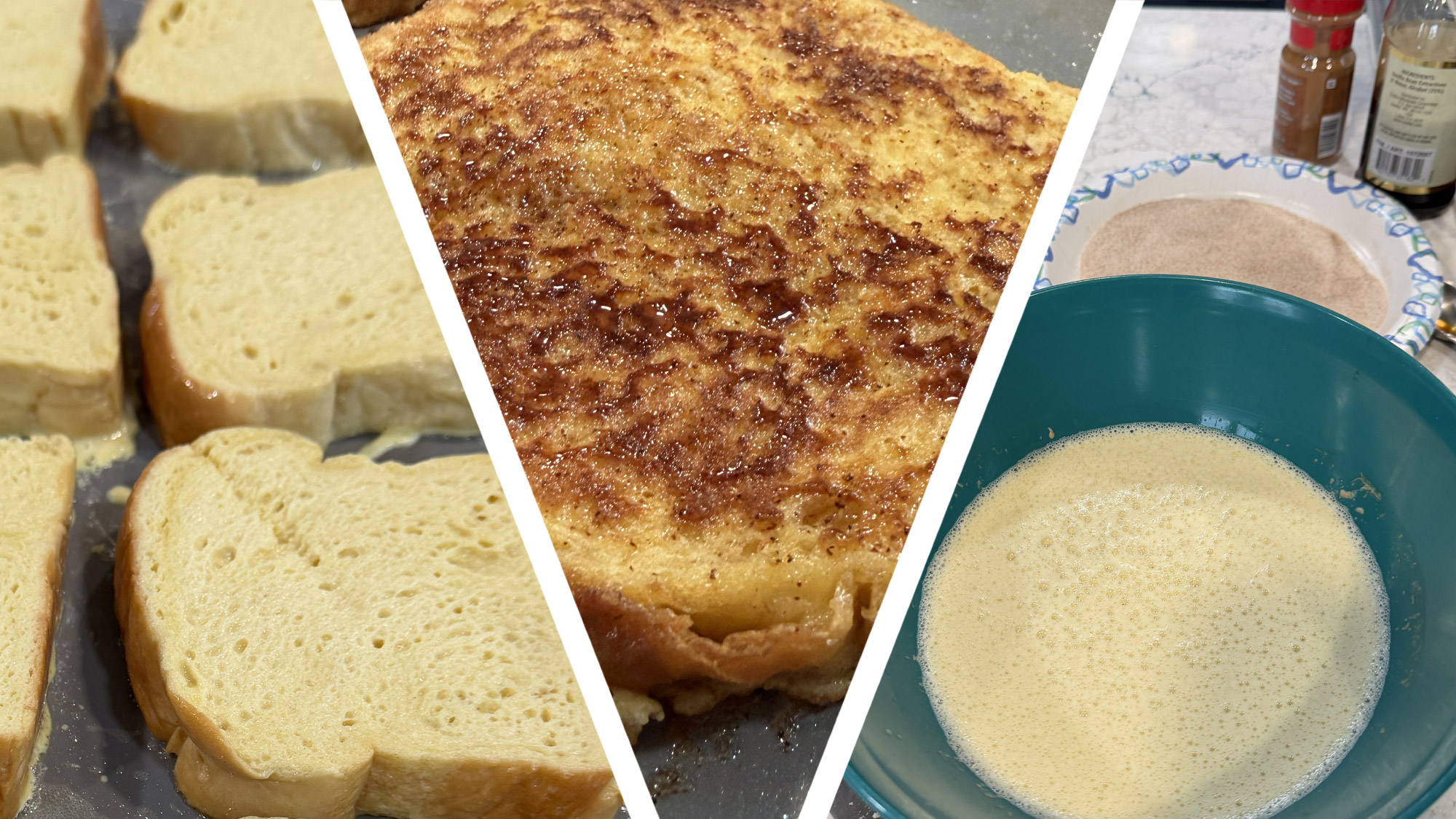
To determine which approach was superior, I conducted a side-by-side cooking session. I utilized a combination of brioche—a classic choice for its high fat content—and standard white sandwich bread to see if the AI advice held up across different mediums.
Step 1: The Prep and The Custard
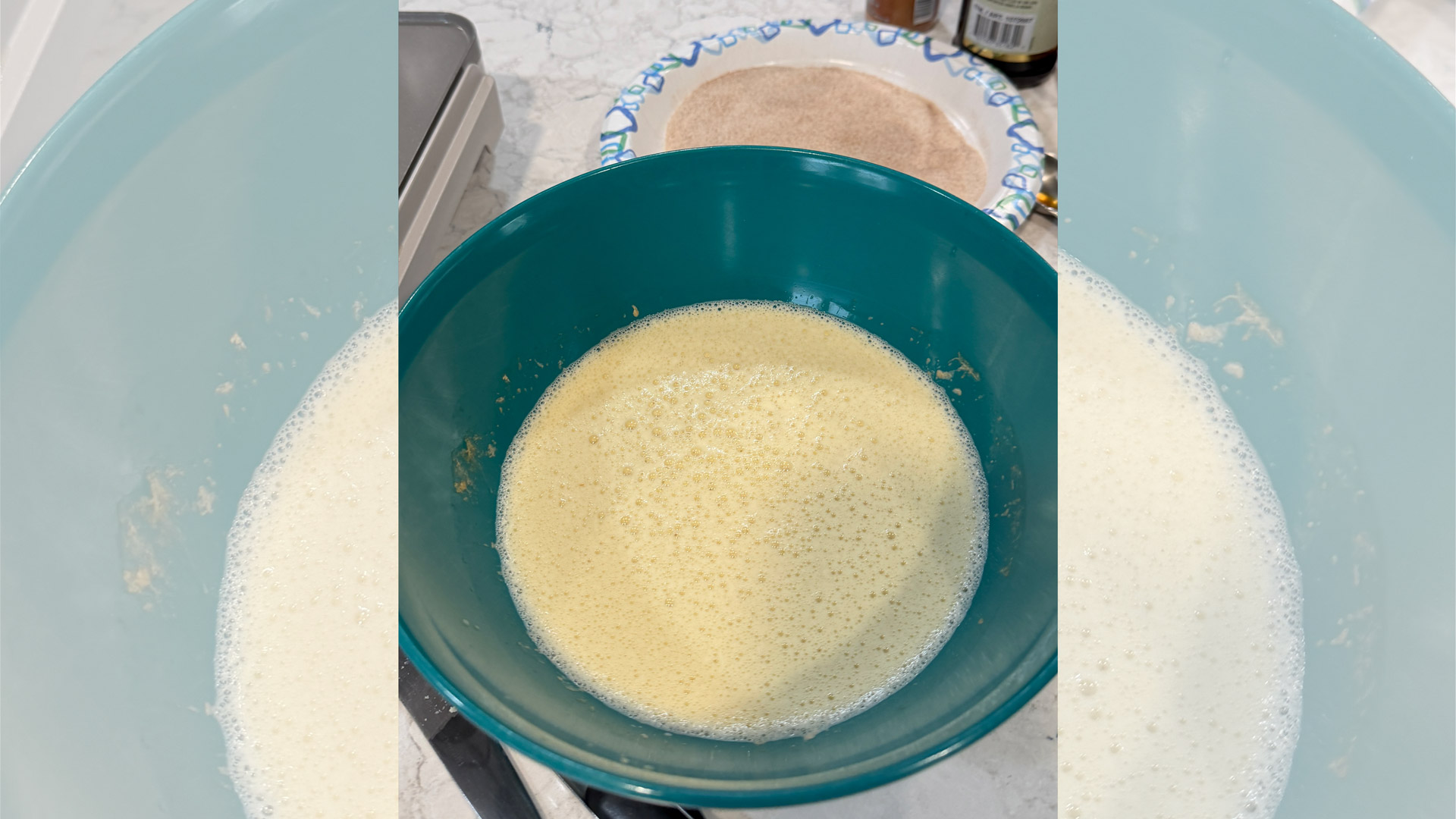
Both models agreed on the basic custard composition, though I opted to double the quantities to accommodate a larger batch. Following Gemini’s advice, I toasted the bread in the oven for a few minutes to reduce its moisture content. This is a pro-level tip; it allows the bread to soak up more custard without falling apart on the griddle.
Step 2: The Sugar Dilemma
This is where the two models diverged sharply. Gemini suggested sprinkling sugar directly onto the toast while it was on the griddle, waiting for it to melt into a glaze. I was immediately skeptical. Spreading sugar on a hot pan is a recipe for a sticky, uneven mess that is prone to burning before it ever caramelizes.
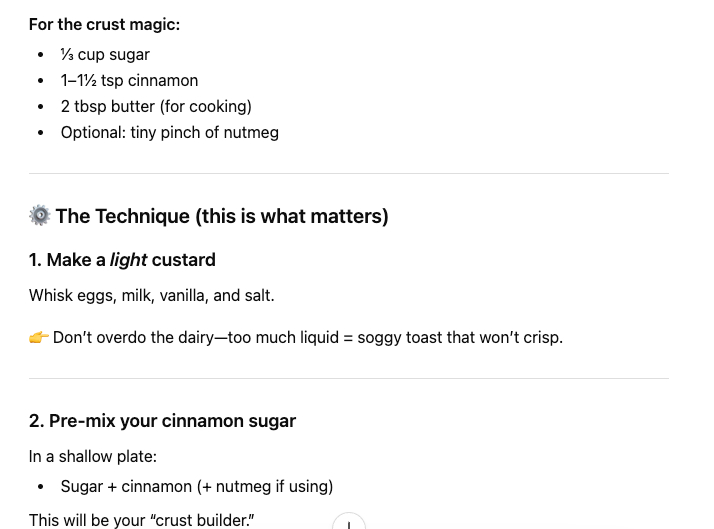
ChatGPT offered a more sophisticated workflow. It instructed me to create a dedicated cinnamon-sugar mixture on a flat plate. The process involved browning the bread in the custard first, removing it from the heat, dipping each side into the sugar mixture, and then returning the slices to the griddle for a final, quick sear.
Step 3: Execution and Refinement
I followed the ChatGPT methodology with a few adjustments. I utilized the avocado oil suggested by Gemini to stabilize the heat and used the "sugar-dip" method suggested by ChatGPT. The result was a controlled, consistent, and remarkably beautiful caramelization. The sugar didn’t just sit on top; it integrated into the crust, creating a shatter-crisp layer that mirrored the texture of a crème brûlée.
Data and Observations
| Feature | Gemini Method | ChatGPT Method |
|---|---|---|
| Instruction Style | Technical/Procedural | Descriptive/Encouraging |
| Sugar Application | Direct sprinkle (risk of burning) | Pre-mixed dip (controlled) |
| Bread Advice | High emphasis on drying bread | Broad application (Brioche/White) |
| Visual Guidance | Minimal | High (Image samples) |
The cooking time was a point of contention. Both AIs suggested one to two minutes per side for the final caramelization. In practice, I found this insufficient. To achieve the deep, golden-brown crust, I needed to exercise more patience. Lowering the heat slightly and extending the time proved to be the key. It was a reminder that while AI provides the roadmap, the "human in the loop"—the cook at the stove—is the final arbiter of quality.
Implications: The Evolution of Culinary Guidance
This experiment serves as a microcosm for how we are increasingly utilizing Generative AI for "life tasks." For decades, we relied on cookbooks or static recipe websites. Today, we interact with models that understand context, intention, and, occasionally, emotion.
The Human-AI Symbiosis
The most significant implication of this experience is the realization that AI is at its best when it functions as an assistant rather than an oracle. By combining the technical, logical precision of Gemini with the creative, user-friendly approach of ChatGPT, I was able to create something that actually approached my childhood memory.
The "Black Box" of Memory
One of the most profound takeaways is the subjective nature of nostalgia. My mother’s French toast was not necessarily a "better" recipe by culinary standards; it was a better recipe because of the emotional resonance attached to it. AI cannot recreate the environment of my childhood kitchen, nor the specific way my mother used to smile as she flipped the bread. However, it can provide the technical tools to reach a standard of quality that honors those memories.
Conclusion
In the end, the ChatGPT-inspired method—refined by the technical rigor of the Gemini model—delivered a result that was sweet, crunchy, and, in its own way, magical. My mother would likely be both amused and impressed to learn that her secret recipe was "cracked" by a series of algorithms.
As we move forward, the role of AI in the kitchen will only expand. We are seeing a shift from passive consumption of information to active, conversational guidance. Whether you are trying to replicate a lost family recipe or simply looking for the perfect breakfast, the integration of these tools into our daily lives offers a new frontier for creativity.
If you are a fan of French toast, I recommend you try this: take the technical advice from one model, the creative method from another, and add your own intuition. You might find that the perfect breakfast is just one prompt away.









No comments yet. Be the first to join the conversation!