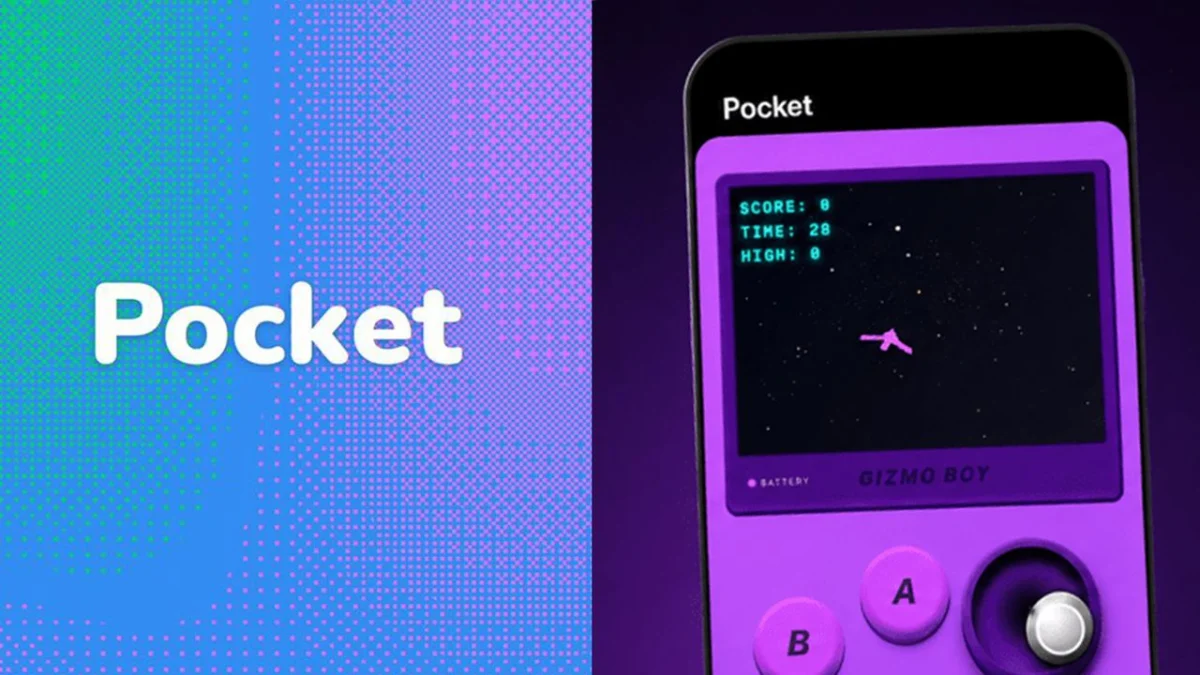
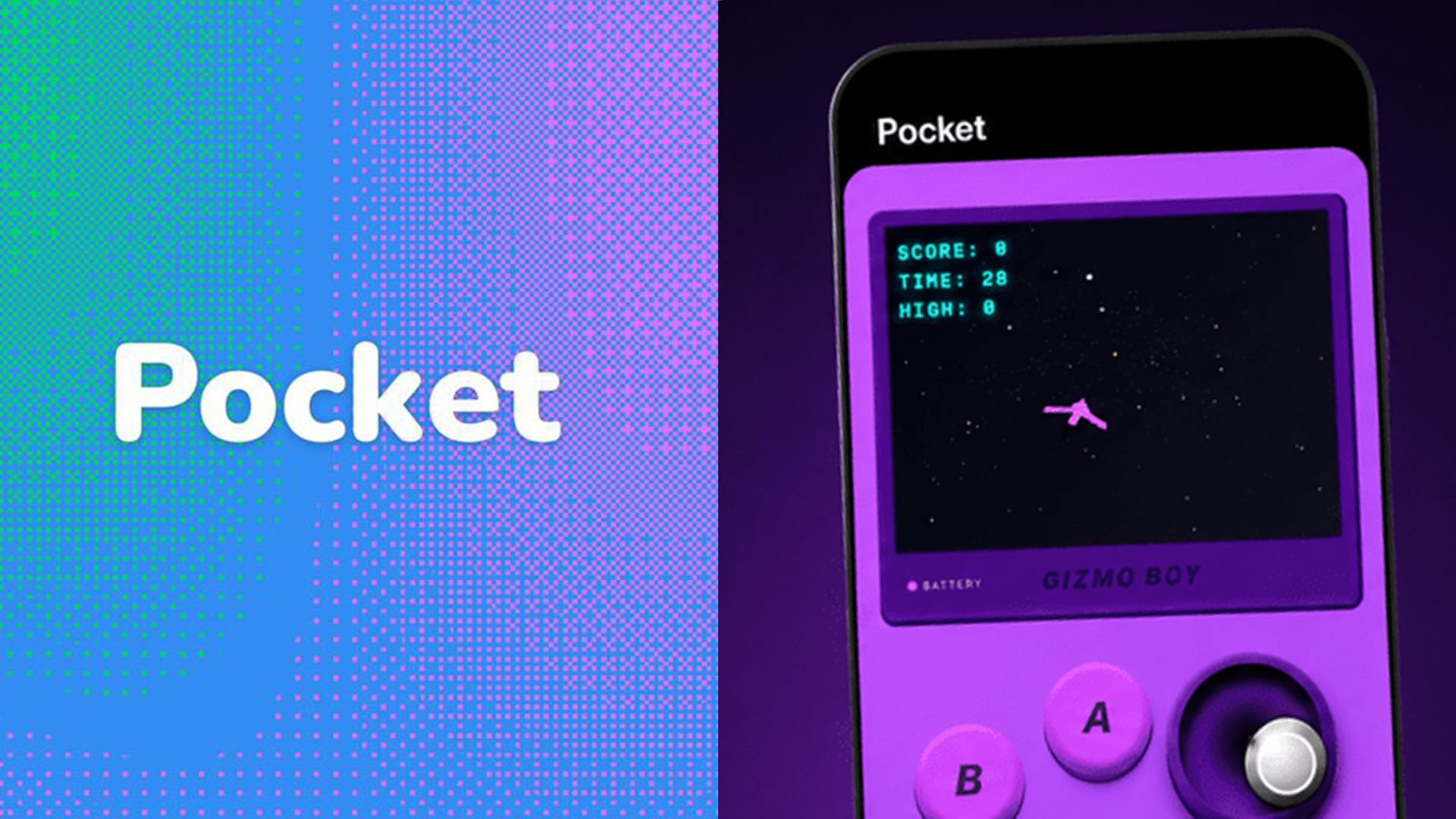
While the design world remained fixated on the subtle nuances of Instagram’s latest logo update, Meta was quietly executing a pivot of far greater consequence. The company has officially launched "Pocket," an experimental social media application that departs from the traditional static feed of images and videos. Instead, Pocket introduces users to a world of "gizmos"—AI-generated mini-games and interactive digital toys that can be created, shared, and remixed via simple text prompts.
This launch represents a significant shift in Meta’s strategy, moving away from merely documenting social interaction toward facilitating the generative creation of digital experiences. As the tech industry grapples with the definition of "vibe coding"—the ability to create software through natural language prompts—Meta is betting that the future of social engagement lies not in what we watch, but in what we can manifest on the fly.
The Core Concept: What is Pocket?
Pocket is, at its essence, a democratized game engine disguised as a social network. While professional developers rely on robust suites like Unreal Engine 5 or Unity, the average user lacks the technical syntax to build interactive software. Pocket bridges this gap by leveraging generative AI to translate colloquial language into functional, interactive "gizmos."
These gizmos are not intended to be the next Grand Theft Auto VI. Instead, they are bite-sized experiences—quizzes, puzzles, and sensory challenges—that utilize the full suite of modern smartphone hardware. A user might prompt the AI to "create a game where I have to tilt my phone to catch falling stars," and the app will generate the code and logic required to interface with the device’s gyroscope, camera, and microphone. Once created, these gizmos live in a feed where they can be played, "liked," and, most importantly, "remixed" by other users.
A Chronology of the Pivot
The path to Pocket was not a singular event but a calculated evolution of Meta’s internal research and acquisition strategy:
- The Atma Sciences Acquisition: The term "gizmo" and the underlying engine architecture were inherited from Atma Sciences, a boutique developer that had already begun experimenting with generative AI in gaming. Meta moved to license the technology and, crucially, brought the core engineering team in-house to integrate the tech into the Meta ecosystem.
- The Brazil Pilot: Before a broader release, Meta initiated a quiet, low-stakes testing phase in Brazil last month. This allowed the company to observe user behavior in a contained environment, specifically looking at how "remixing" culture—already popularized by TikTok—would translate to interactive software.
- The US Launch: Building on the data gathered during the Brazil pilot, Meta recently deployed the app to both the Apple App Store and the Google Play Store in the United States. This marks the transition from internal R&D to a public-facing experimental product.
- The Muse Spark Integration: The engine driving these experiences is Meta’s "Muse Spark" model. Unlike large language models (LLMs) that focus purely on text, Muse Spark is fine-tuned for real-time interactivity, allowing it to translate intent into functional game loops.
The "Vibe Coding" Paradigm Shift
The emergence of Pocket comes at a time when "vibe coding"—a colloquialism for building software by describing the "vibe" or outcome one desires rather than writing rigid lines of code—has reached a fever pitch.
This movement has been met with both enthusiasm and pushback. For instance, the open-source game engine Godot recently implemented a ban on AI-generated code. This decision, aimed at protecting the sanity of human maintainers who were being inundated with AI-generated pull requests, highlights the growing friction between traditional software development and the "move fast and break things" philosophy of the AI era.
Pocket positions itself on the opposite side of this debate. By removing the barrier to entry, it aims to make game development a form of vernacular communication. In this future, you don’t just send a friend a link to a video; you send them a link to a game you created while waiting for the bus.
A Wave of Experimental Projects
Pocket is not a standalone gamble; it is one of several experimental projects launched by Meta as the company seeks to reclaim its mantle as an innovator. Having largely weathered the skepticism surrounding its pivot to the Metaverse and the subsequent rebrand, Meta is now adopting a strategy reminiscent of Google’s "Area 120" incubator, testing a variety of high-risk, low-stakes applications:
- Forum: A platform designed around Facebook Groups, clearly aimed at capturing the Reddit-style, interest-based discussion market.
- Instants: A Snapchat-inspired feature that functions as both a standalone app and an integrated module within Instagram, focusing on fleeting, ephemeral interactions.
- Seller: A dedicated interface designed to streamline the experience for Meta Marketplace vendors.
- Vibe: A project focused on generative AI video production, signaling Meta’s intention to compete directly with platforms like Runway and OpenAI’s Sora.
Implications for the Future of Social Media
The launch of Pocket raises significant questions about the longevity and utility of AI-generated content. As we look at the landscape, three major implications emerge:
1. The Death of Static Content
If users can generate their own interactive experiences, the value of static media may decline. Why scroll through a feed of someone else’s vacation photos when you can play a "gizmo" that recreates the feeling of their environment? The shift from passive consumption to active creation could fundamentally alter how we define "engagement" on social platforms.
2. The Quality vs. Quantity Dilemma
While democratization is a noble goal, the internet is already flooded with mediocre content. If every user is empowered to generate a thousand "gizmos," the signal-to-noise ratio in our social feeds will plummet. Meta will need to develop sophisticated curation algorithms—likely AI-driven themselves—to ensure that the "best" games rise to the top of the feed.
3. The Regulatory and Ethical Landscape
Meta’s track record—including the controversial "pervert glasses" (Meta Ray-Bans) and the failed promise of the Metaverse—means that public trust remains a significant hurdle. Furthermore, OpenAI’s attempt at a generative social app (Sora) lasted only six months before public interest waned, proving that generative AI is not a magic bullet for user retention.
Conclusion: A New Era of Play
Whether Pocket will become a staple of the digital diet or join the graveyard of failed tech experiments remains to be seen. What is clear, however, is that Meta is no longer content to merely facilitate human connection; they want to provide the tools that allow humans to manifest their creativity in real-time.
By betting on "gizmos" and "vibe coding," Meta is attempting to turn the internet into a giant, collaborative sandbox. It is a bold, albeit risky, strategy that acknowledges a simple truth about modern technology: users no longer want to just use the apps provided to them—they want to be the architects of their own digital worlds. As we watch this experiment unfold, the success of Pocket will depend less on the power of the Muse Spark model and more on whether these AI-generated games can offer something that the current deluge of short-form video cannot: a sense of agency, play, and genuine human interaction.