Sagoh
Sagoh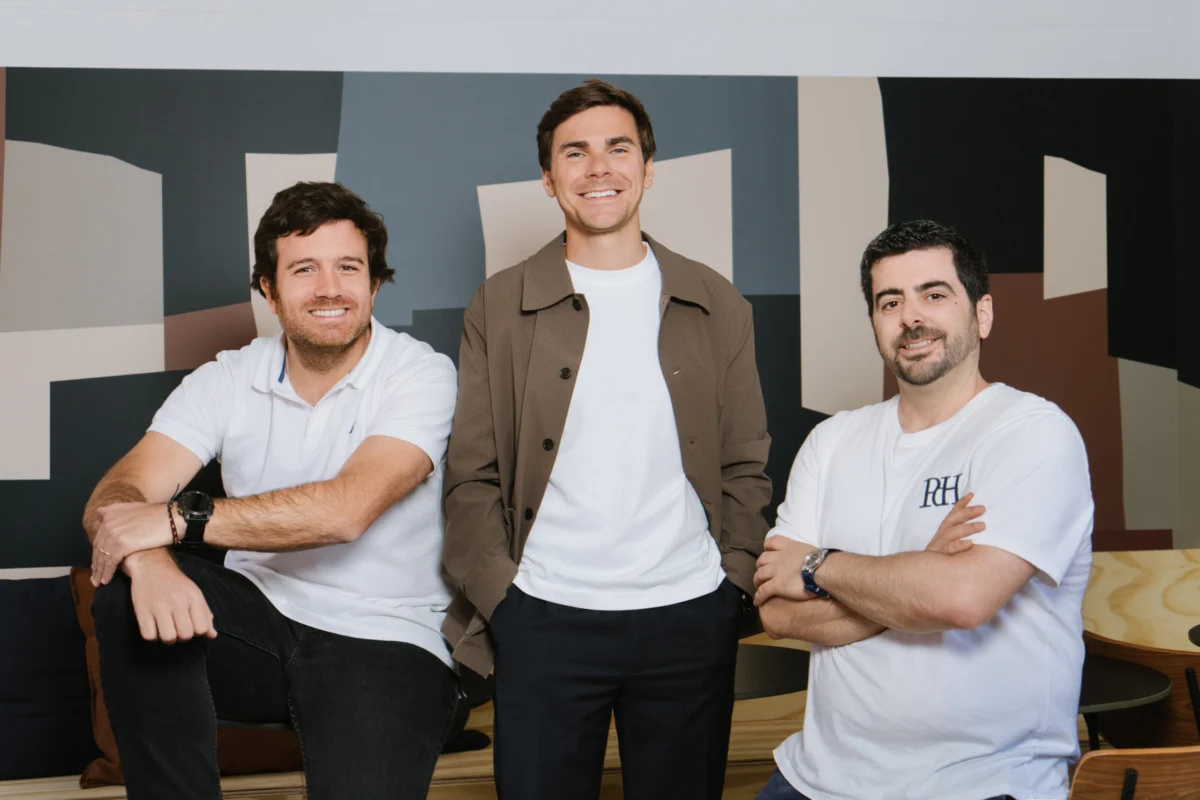
The "human infrastructure" that powers the global economy—the 2.7 billion workers in healthcare, retail, logistics, and hospitality—has long operated in the shadows of digital transformation. While corporate offices have embraced sophisticated SaaS platforms for decades, the frontline workforce has largely remained tethered to legacy processes: fragmented spreadsheets, manual phone calls, and high-touch administrative overhead.
Orbio, an enterprise startup launched in 2025, is betting that artificial intelligence is the key to finally bridging this gap. Founded by Sergi Bastardas, Nacho Travesí, and Antonio Melé, the company aims to move beyond simple automation to create a fully autonomous management layer for non-desk workers. On Monday, the company announced a $21 million Series A funding round led by Dawn Capital, signaling a massive vote of confidence in their vision to provide the frontline workforce with their long-overdue "AI moment."
Main Facts: A New Operating System for the Frontline
Orbio’s platform functions as an autonomous management suite, deploying specialized AI agents—named Maria, Daniel, and Claire—to handle the lifecycle of an employee from recruitment to retention. Unlike traditional HR software, which serves as a passive repository of data, Orbio’s agents are active participants in the workforce ecosystem.
The startup’s value proposition is built on the integration of these agents. For instance, the "recruiting" agent’s performance data feeds directly into the "onboarding" agent, while "exit interview" insights help the "hiring" agent refine its criteria for future candidates. By creating this feedback loop, Orbio aims to reduce the friction that plagues high-turnover industries.
With $26 million in total funding to date, including backing from Visionaries and 2100 Ventures, Orbio is rapidly scaling. The startup already boasts an impressive roster of enterprise clients, including YUM! Brands (the parent company of KFC, Pizza Hut, and Taco Bell) and Poke, proving that the technology is ready for the rigors of global, high-volume operations.
Chronology: From Amazon and Colvin to Orbio
The genesis of Orbio can be traced back to the professional experiences of its founders. Sergi Bastardas, having spent a decade navigating the massive, complex logistics and workforce demands of Amazon and the floriculture startup Colvin, identified a recurring failure in corporate strategy: the lack of efficient human infrastructure.
- 2015–2024 (The Observation Phase): Bastardas witnessed the immense difficulty of managing frontline staff at scale. Whether it was the rapid hiring cycles of retail or the complex scheduling of logistics, the tools available were consistently inadequate for the human element of the operation.
- Early 2025 (The Launch): Alongside co-founders Nacho Travesí and Antonio Melé, Bastardas officially launched Orbio to address these systemic inefficiencies.
- Mid-2025 (The Pilot Phase): Orbio began deploying its AI agents in live environments, specifically targeting companies with high-volume, frontline-heavy workforces.
- Late 2025 (The Scaling Phase): The startup moved from pilots to full-scale deployments. A notable success story includes The Stepping Stones Group, a behavioral health provider where Orbio now manages the entire U.S. operation, resulting in a 20% increase in successful candidate hires.
- Present Day (The Series A): With $21 million in fresh capital, the company is set to aggressively expand its headcount and develop more specialized AI agents to handle increasingly complex workforce management tasks.
Supporting Data: Efficiency at Scale
The shift toward AI-driven management is not merely a trend for Orbio; it is a measurable necessity for enterprises operating in volatile labor markets. The data coming out of their early deployments suggests that the traditional, manual approach to workforce management is significantly suboptimal.
At The Stepping Stones Group, the implementation of Orbio’s autonomous agents led to a 20% improvement in hiring throughput. By automating the screening, interviewing, and assessment of fit, the platform eliminated the bottleneck of manual resume review and phone scheduling.
Furthermore, the interconnected nature of the agents provides a data-rich environment for management:
- Onboarding Signals: By tracking how new hires engage with the onboarding agent, the system can predict long-term performance.
- Retention Analytics: Through daily, AI-led check-ins, the platform can flag employee dissatisfaction long before a resignation occurs, allowing management to intervene proactively.
- Recalibration Loops: When an employee leaves, the exit interview agent synthesizes the reasons for departure, automatically adjusting the recruitment agent’s filters to avoid hiring candidates who might have similar churn risks.
Official Responses and Strategic Vision
In a statement regarding the funding, the Orbio team emphasized that their mission is not to replace human management, but to augment it with "human infrastructure."
"This will be a transformation for businesses, but also the workforce," Bastardas noted during the announcement. "The 2.7 billion people who keep healthcare, retail, logistics, and hospitality running, most of whom don’t have a corporate email address, have previously got nothing. This is their AI moment."
The company is positioning itself not just as a competitor to existing HR software, but as a challenger to the "legacy approach"—the status quo of fragmented spreadsheets, siloed communication, and manual oversight. While competitors like Paradox (which focuses on recruitment automation) and WorkJam (which focuses on frontline workforce management) exist, Bastardas believes that Orbio’s focus on the full lifecycle and autonomous agents provides a unique competitive moat.
Implications: The Future of Non-Desk Work
The rise of Orbio signals a broader shift in the enterprise software landscape. For years, the "digital transformation" conversation was dominated by white-collar tools like Slack, Salesforce, and Zoom. As we move into the next phase of the AI era, the focus is shifting toward the "real-world" economy.
1. The Death of the Spreadsheet
For industries like retail and hospitality, the spreadsheet has been the primary tool for managing workers. Orbio’s success suggests that these industries are ready to abandon these manual tools in favor of intelligent, autonomous systems that can manage complex tasks—such as conflict resolution, shift check-ins, and performance monitoring—without human intervention.
2. The Democratization of Support
One of the most profound implications of Orbio’s technology is the "AI-enabled support" it provides to the individual worker. Because these workers often lack corporate email addresses or easy access to HR departments, they have historically been left to navigate their jobs with little guidance. By providing a 24/7 AI agent that serves as a point of contact, companies can offer standardized support, feedback, and engagement to every employee, regardless of their role or location.
3. Ethical and Operational Challenges
While the promise of efficiency is high, the deployment of AI agents in human management raises important questions. As these agents become responsible for interviewing, monitoring output, and conducting exit interviews, companies must navigate the balance between automation and human connection. The "human infrastructure" that Bastardas speaks of must be carefully calibrated to ensure that employees feel supported, rather than surveilled by an algorithm.
4. The Competitive Landscape
Orbio enters a crowded market. The race to define the "operating system for the frontline" is intensifying. With the infusion of $21 million, Orbio is now in a strong position to build out its agent roster and solidify its presence in the U.S. and beyond. The battle will ultimately be won by the startup that can best integrate into the complex, messy, and high-velocity reality of frontline work.
Conclusion
Orbio’s journey is in its early stages, but the premise is compelling. By treating the frontline worker not as an afterthought, but as the core of the digital infrastructure, they are addressing one of the most significant labor challenges of the decade. As AI agents like Maria, Daniel, and Claire become standard features in the workforce, the way we hire, manage, and retain the people who keep our society running will be fundamentally altered. For businesses, the choice is clear: adapt to the age of autonomous management, or remain tethered to the spreadsheets of the past.


 Asro
Asro
 Rifan Muazin